
Optischer Schnittstellenpegelsensor (Öl-Wasser)
Ein optischer Interface-Pegelsensor hilft, die Grenze zwischen Öl und Wasser zu erkennen, wenn sich zwei nicht mischbare Flüssigkeiten in einem Tank trennen, Separator, Sumpf, oder Prozessbehälter. Für Käufer, Die Herausforderung besteht nicht einfach darin, "Flüssigkeit vorhanden" oder "Flüssigkeit fehlt" zu erkennen; Es wird der Grenzpunkt gefunden, an dem sich die Brechungsindexbedingung um das optische Prisma von einer Flüssigkeitsphase zur nächsten ändert.
HojellyTek stellt photoelektrische optische Sensorlösungen in Shenzhen für OEM/ODM-Projekte her, Hersteller industrieller Ausrüstung, Lieferanten für Tanküberwachung, und Systemintegratoren. Wir helfen Käufern, Öl-Wasser-Schnittstellensensoren mit geeignetem Prismendesign zu konfigurieren, Benetzte Materialien, Montage, Ausgangssignal, sowie Kabel-/Steckeroptionen.
Fähigkeiten zur Erkennung optischer Schnittstellen
Für Öl-Wasser-Anwendungen, Der Sensor muss um die reale Medienbedingung herum ausgewählt werden, nicht nur die Beckengröße. Eine klare Öl-Wasser-Grenze ist leichter zu erkennen als ein schmutziger Sumpf mit Schlamm, Schaum, Schwebende Feststoffe, oder eine Emulsionsschicht. Der optische Schnittstellenpegelsensor wird typischerweise dort verwendet, wo das System einen Schaltpunkt oder eine Signaländerung benötigt, wenn das Prisma einer anderen Flüssigkeitsphase ausgesetzt ist.
Typische Projektfähigkeiten umfassen:
- Nachweis der Öl-Wasser-Grenze in Separatoren, Sammeltanks, Sammelbehälter, und kompakte Prozessanlagen
- Fotoelektrische Prismenerkennung mit IR-LED, Fototransistor, und die optische Brechungsantwort
- Maßgeschneidertes Punkt-Level-Interface-Switch-Design für OEM-Geräte
- Optionale kontinuierliche oder mehrpunktige Konfigurationsüberprüfung, wenn sich die Schnittstellenposition über einen größeren Bereich verschiebt
- Ausgabeoptionen wie NPN, PNP, Relaiskompatibles Signal, Benutzerdefinierte digitale Ausgabe, oder 4–20 mA, wo das Systemdesign dies erfordert.
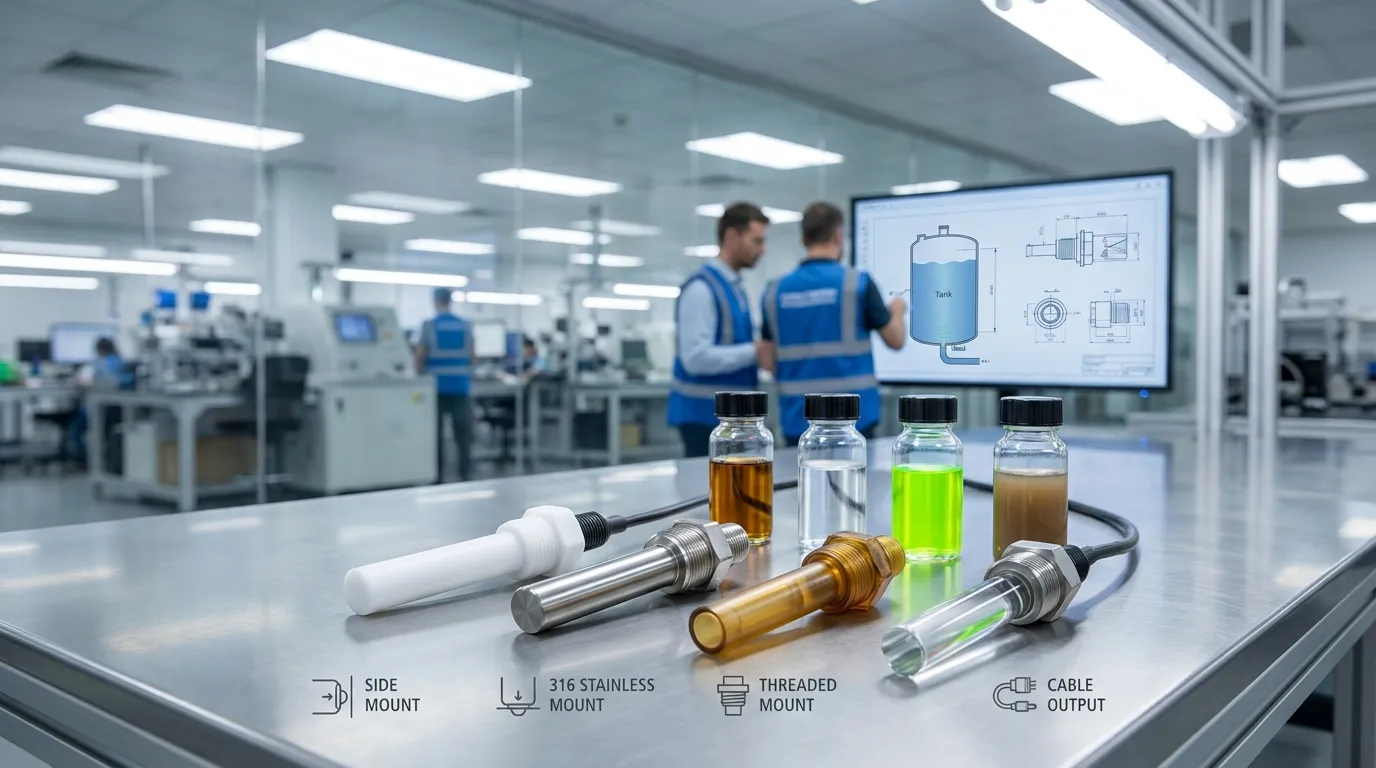
- Auswahl benetzter Materialien einschließlich Netzteil, PTFE, 316 Edelstahl, Glasprisma, sowie anwendungsspezifische Dichtungs- und Kabelwahl
- Gewinde, Panel, Seitenwand, Unteres, oder individuell montierte Panzerformate, abhängig von der Installation,
Für eine umfassendere Erklärung der Standardprinzipien der optischen Sensorik, Siehe unsere Optischer Pegelsensor Leitfaden. Diese Seite konzentriert sich speziell auf die Auswahl des Zwei-Flüssig-Öl-Wasser-Schnittstellendienstes.
Nachweis der Öl-Wasser-Grenze durch Änderung des Brechungsindex
In vielen Separatoren und Sumpfen, Öl und Wasser bilden zwei Schichten, da sie sich nicht gleichmäßig vermischen. Das Problem des Käufers besteht darin, die Grenze zwischen diesen Schichten zu lokalisieren, damit das System Wasser ableiten kann, Löse einen Alarm aus, Stopp eine Pumpe, Nachgelagerte Geräte schützen, oder die Trennungsleistung bestätigen.
Ein photoelektrischer optischer Schnittstellensensor verwendet eine Lichtquelle und einen Empfänger im Sensorkörper. Die Sensorspitze enthält normalerweise ein Prisma. Wenn das Prisma Luft ausgesetzt ist, Öl, Wasser, oder eine andere Flüssigkeit, Der Lichtweg ändert sich, weil jedes umgebende Medium einen anderen optischen Zustand hat. Im Inneren des Sensors, eine IR-LED strahlt Licht in Richtung des Prisma aus, und ein Phototransistor empfängt das zurückgegebene oder gebrochene Licht. Die Elektronik wandelt diese optische Antwort in ein Ausgangssignal um.
Für Öl-Wasser-Versorgung, Der wichtige Punkt ist, dass Öl und Wasser nicht immer dieselbe Prismenreaktion erzeugen. Der Sensor kann so konfiguriert werden, dass sich der Ausgang ändert, wenn das Prisma von einer Phase in die andere wechselt. Deshalb wird dringend empfohlen, mit echtem Öl und echtem Wasser zu testen. Diesel, Schmiermittel, Hydrauliköl, Abwasser, Kühlmittel, emulgiertes Wasser, und Prozesschemikalien können sich unterschiedlich verhalten.
Wie das Prisma auf Öl reagiert, Wasser, und Luft
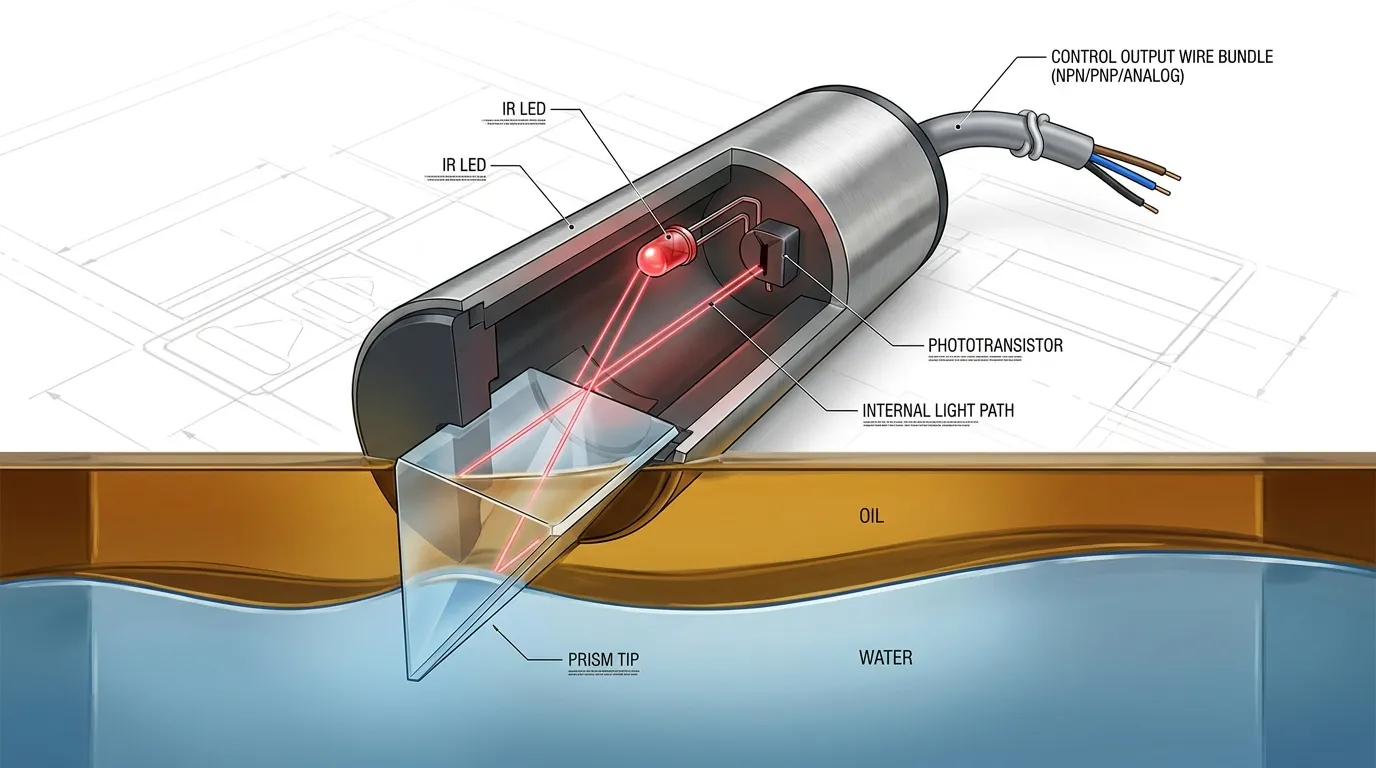
In einem Standard-Trocken-/Nass-Optikschalter, Die Prismenantwort ändert sich, wenn Flüssigkeit die Messspitze bedeckt. Bei der Erkennung von Öl-Wasser-Schnittstellen, Die Anforderung ist spezifischer: Der Sensor muss möglicherweise feststellen, ob sich das Prisma in der Ölschicht befindet, Wasserschicht, oder manchmal in Luft über der Flüssigkeit.
Das praktische Verhalten hängt von ab:
- Der Unterschied im Brechungsindex zwischen den beiden Flüssigkeiten
- Klarheit der Flüssigkeit um das Prisma herum
- Ob das Öl das Prisma nach der Belichtung beschichtet
- Ob Wasser Schwebstoffe enthält, Reinigungsmittelmittel, Kühlmittel, oder chemische Zusatzstoffe
- Ob die Schnittstellenschicht scharf oder emulgiert ist
- Sensorausrichtung und Installationstiefe
Für einen sauberen Trenner, Ein seitlich montierter Sensor kann auf der Höhe der Zielschnittstelle positioniert werden. Wenn Wasser steigt oder das Öl auf dieses Niveau fällt, Die optische Antwort ändert sich und der Controller empfängt ein Schaltsignal. Für einen Sumpf, Der Sensor kann zur Erkennung von Kohlenwasserstoffen verwendet werden, Wasseransammlung, oder eine bestimmte Schicht, abhängig vom Tankdesign und Kalibrierungsziel.
Wenn das Projekt eine Pegelverfolgung über einen Bereich erfordert, statt eines Schaltpunktes, Überprüfen Sie unsere Optischer kontinuierlicher Pegelsensor Optionen.
Anwendungs- und Medienkompatibilität
| Anwendung | Medienpaar | Schnittstellenbedingung | Empfohlener Sensoransatz | Materielle Anmerkungen |
|---|---|---|---|---|
| Öl-Wasser-Trenner | Ölschicht / Wasserschicht | In der Regel klarere Grenze, kann Lichtemulsion enthalten | Seitlich montierter Punktschnittstellensensor an der Zielgrenzhöhe | 316 Edelstahl- oder PTFE-Gehäuse, abhängig von der chemischen Exposition |
| Industriesumpf | Kohlenwasserstoffe / Wasser / Luft | Schmutzige Flüssigkeit, Schlamm, Beschichtungsrisiko | Kompakter optischer Schalter mit zugänglicher Reinigungsposition | Kabelmantel bestätigen, Siegel, und Prismabeständigkeit gegenüber Brennstoff oder Abwasser |
| Abwasseröltank | Abwasseröl / Wasserbodenschicht | Dunkles Öl, Sediment, Variable Viskosität | Individuelle Prismenposition oder geschützte Spitzenkonstruktion | PTFE oder Edelstahlgehäuse können für harte Medien bevorzugt werden |
| Kühlmittelrückgewinnungsbehälter | Ölfilm / Wasserbasiertes Kühlmittel | Dünne Ölschicht, Zusatzstoffe, Tenside | Der Anwendungstest vor der Produktion empfohlen | Bestätigen Sie die Kompatibilität mit der Kühlmittelchemie und Reinigungsflüssigkeit |
| Treibstofflager-Unterstützungssystem | Kraftstoff / Wasseransammlung | Wasserschicht unter dem Brennstoff | Untere oder niedrige Schnittstellenerkennung | Kraftstoffkompatible Dichtung und Kabelmaterial müssen ausgewählt werden |
| OEM-Prozessskid | Prozessöl / Wasser abspülen | Kontrollierte Trennung, Wiederholbarer Prozess | Maßgeschneiderter Gewinde- oder Panel-montierter optischer Schnittstellensensor | Ausgang und Stecker sollten dem Design von SPS oder Steuerplatine entsprechen |
Trenner, Sumpf, und Geräteintegrationsanwendungen
Öl-Wasser-Abscheider benötigen oft ein zuverlässiges Signal, wenn die Grenze einen Abflusspunkt erreicht, Pumpstart-Level, oder Alarmstufe. Ein optischer Schnittstellensensor kann helfen, das Pumpen der falschen Phase zu vermeiden, Reduzieren Sie manuelles Überprüfen, und unterstützen automatisierte Entladungssteuerung.
In Eindämmungssumpfen, Der Sensor kann zur Unterscheidung von Kohlenwasserstoffen und Wasser oder zur Detektion abnormaler Flüssigkeiten verwendet werden. Die Installation sollte eine Reinigung ermöglichen, da Sumpfflüssigkeiten oft Schmutz enthalten, Biofilm, Ölrückstände, oder Sediment. Wenn Öl das Prisma beschichtet, Der Sensor kann den beschichteten Zustand auch nach der tatsächlichen Schnittstelle weiterhin sehen, Deshalb sind das Reinigen von Zugriff und Testvalidierung von Bedeutung.
Für OEM-Ausrüstung, Die häufigste Anforderung ist nicht allein ein Katalogsensor. Käufer benötigen in der Regel die Sensorgehäusslänge, Faden, Kabelausgang, Ausgangslogik, Steckverbinder, und Materialansatz an das Ausrüstungsdesign angepasst. HojellyTek unterstützt OEM/ODM-Optische Sensorprojekte für Exportkunden in den USA, WIR, Indien, und andere Märkte.
Ausgangsoptionen und Steuerkompatibilität
Die Ausgabe sollte von Anfang an mit dem Kontrollsystem des Käufers übereinstimmen. Für einfache Alarm- oder Pumpensteuerung, NPN- oder PNP-Schaltausgänge werden häufig angefordert. Für SPS-Systeme, Der Käufer sollte den Eingabetyp bestätigen, Versorgungsspannung, Quell-/Sinking-Logik, Kabellänge, und ob normal offene oder normal geschlossene Logik erforderlich ist, ist erforderlich.
Für Überwachungssysteme, die eine proportionale Rückkopplung oder Integration mit einem analogen Eingang erfordern, 4–20 mA kann überprüft werden, wenn die Sensorkonfiguration diesen Anwendungsfall unterstützt.. Für IoT-Tanküberwachungsprojekte, Die Integration von drahtlosen Gateways oder Tuya/Smart Life-bezogenen Systemen kann diskutiert werden, wenn sie für das gesamte Produktdesign relevant ist, Aber die Kern-Schnittstellenerkennung hängt weiterhin von der optischen Sensorzustände am Prisma ab.
Für Punktvermittlungsanwendungen, das Elektro-optischer Punktpegelsensor Page ist nützlich beim Vergleich von Standard-Punktebene-Formaten.
Auswahl-Checkliste für Öl-Wasser-Schnittstellenprojekte
Vor der Bestellung, Bestätigen Sie diese Angaben:
- Identifizieren Sie beide Flüssigkeiten: Öltyp, Wasserart, Zusatzstoffe, Tenside, Brennstoff, Kühlmittel, Abwasser, oder chemischen Gehalt.
- Bestätigen Sie, ob die Grenze klar ist, bewölkt, schaumig, schmutzig, oder emulgiert.
- Definiere die erforderliche Funktion: Öl entdeckt, Wasser entdeckt, Schnittstellen erreicht, Hoher Alarm/Tiefer, Pumpensteuerung, oder Trenner-Drainageregelung.
- Wählen Sie Punkterkennung oder kontinuierliches Tracking je nachdem, ob ein Niveau oder ein bewegter Schnittstellenbereich überwacht werden muss..
- Befeuchtete Materialien bestätigen: Netzteil, PTFE, 316 Edelstahl, Glasprisma, Siegel, Kabelmantel, und Steckverbinder.
- Spezifizieren Sie die Montage: Seitenwand, Unteres, vertikale Sonde, Gewindehalterung, Flanschhalterung, Panelhalterung, oder OEM-Sondergehäuse.
- Ausgabe bestätigen: NPN, PNP, Relaiskompatibles Signal, Benutzerdefinierte digitale Ausgabe, oder 4–20 mA.
- Teile-Tank-Ziehung, Installationstiefe, Flüssigkeitstemperatur, Druckbedingungen, Kabellänge, und Controller-Eingangstyp.
- Plane eine Prismenreinigung ein, falls Ölrückstände vorhanden sind, Schlamm, Maßstab, oder Feststoffe können sich um die Messspitze sammeln.
- Fordern Sie Probentests an, wenn der Kontrast des Brechungsindex oder das Verhalten der Beschichtung unsicher ist.
Anforderungen und Spezifikationsprüfung
Für die Erkennung der Schnittstelle, Die wichtigste "Spezifikation" ist nicht eine einzelne Katalognummer. Es ist die Übereinstimmung der optischen Antwort, Medienverhalten, und Installationsposition. Während der RFQ, Unser Team überprüft das Sensorziel, Flüssiges Paar, Montagemethode, Benetztes Material, Ausgangslogik, und Anforderungen des Steuerungssystems.
Die Fabrik kann die individuelle Karosserieform überprüfen, Prismabelichtung, Gewindetyp, Kabel/Stecker, und Signalkonfiguration für OEM-Geräte. Spezifische elektrische Werte, Temperaturbereich, Druckbedingungen, und die Materialkompatibilität sollte vor der Probenzulassung mit der echten Anwendung bestätigt werden.
Optische Schnittstellensensor vs. andere Leveloptionen
| Option | Am besten geeignet für | Begrenzung | Wann man sich entscheiden sollte |
|---|---|---|---|
| Optischer Schnittstellenpunktsensor | Erkennung eines Ziel-Öl-Wasser-Grenzniveaus | Benötigt eine Medienvalidierung, falls Emulsion oder Beschichtung vorhanden ist | Trennmelder, Sumpferkennung, OEM-Punktsteuerung |
| Standard-optischer Flüssigkeitsschalter | Nachweis von Flüssigkeit anwesend/abwesend | Nicht immer für Zwei-Liquid-Unterscheidung konfiguriert | Einfache Panzer-Erkennung auf hoher und niedriger Höhe |
| Kontinuierlicher optischer Pegelsensor | Verfolgungsniveau über ein Verbreitungsgebiet hinweg | Mehr Konfigurationsaufwand als bei einem Einpunktschalter | Bewegliche Schnittstelle oder Mehrpunktüberwachung |
| Schwimmerschalter | Grundlegende Flüssigkeitsstandsregelung | Bewegliche Teile, Dichteabhängigkeit, Mechanisches Haftungsrisiko | Kostengünstige Anwendungen mit sauberen Flüssigkeiten |
| Leitfähigkeitssensor | Wasserdetektion | Öl ist in der Regel nicht leitend, Kontamination kann die Reaktion beeinflussen | Wasserpräsenzerkennung, wo die Leitfähigkeit zuverlässig ist |
Für ein standardmäßiges optisches Schaltprodukt im Katalogstil, Siehe unsere Fotoelektrischer Flüssigkeitsstandschalter.
5-Schrittprojektprozess
- Untersuchung
Senden Sie das flüssige Paar, Bewerbungsfoto, Panzerzeichnung, Montageposition, sowie die Eingabe des Kontrollsystems per WhatsApp oder E-Mail. - Überprüfung von Spezifikationen und Anpassungen
Wir überprüfen das Prisma-Antwort-Ziel, Materialauswahl, Gewinde- oder Gehäusedesign, Ausgabetyp, Kabel, Steckverbinder, und Installationsbeschränkungen. - Probenbestätigung
Eine Probe kann für reale Medientests vorbereitet werden, Vor allem beim Öltyp, Wasserchemie, oder das Emulsionsverhalten ist unsicher. - Produktion und Qualitätskontrolle
Nach der Probengenehmigung, Die Produktion folgt der bestätigten Spezifikation. Optische Antwort, Verdrahtung, Wohnen, und das Ausgabeverhalten wird gemäß dem vereinbarten Design überprüft. - Versand und Unterstützung
Sensoren werden für den Export verpackt, und unser Team unterstützt Installationsfragen, Verdrahtungsbestätigung, und zukünftige OEM-Anpassungen.
Warum sich für HojellyTek entscheiden
HojellyTek ist ein Hersteller und Exporteur aus Shenzhen, der sich auf photoelektrische optische Sensorik für Anwendungen auf Flüssigkeitsniveau spezialisiert hat.. Mit internem R&D- und OEM/ODM-Unterstützung, Wir helfen Geräteherstellern, Sensoren nach realen Installationsanforderungen zu konfigurieren, anstatt einen einheitlichen Katalogteil zu erzwingen.
Käufer arbeiten mit uns für individuelle optische Prismendesigns, Materialauswahl, Signalabstimmung, Kompakte Sensorstrukturen, sowie exportreife Unterstützung für Industrie- und OEM-Märkte.
FAQ
Kann ein optischer Interface-Pegelsensor Öl von Wasser unterscheiden??
Ja, wenn Öl und Wasser am Prisma einen nutzbaren Unterschied in der optischen Reaktion erzeugen. Das endgültige Design sollte mit echten Flüssigkeiten getestet werden, da Zusatzstoffe, Kontamination, Emulsion, und die Beschichtung kann die Detektion beeinflussen.
Ist dieser Sensor für Öl-Wasser-Separatoren geeignet??
Ja. Ein seitlich montierter oder individuell positionierter optischer Schnittstellensensor kann verwendet werden, um zu erkennen, wann die Öl-Wasser-Grenze ein Zielniveau in einem Separator erreicht, Entwässerungssystem, oder Prozesstank.
Was passiert, wenn Schaum vorhanden ist., Schlamm, oder eine Emulsionsschicht?
Schaum, Schlamm, und Emulsion kann die Erkennungszuverlässigkeit verringern, weil das Prisma möglicherweise keine saubere Phasenänderung zeigt. Der Installationspunkt, Zugang zur Reinigung, und die Probentests sollten vor der Produktion überprüft werden.
Welche Materialien für die benetzten Teile verfügbar sind?
Gängige Optionen sind PSU, PTFE, 316 Edelstahl, und Glasprismen-Designs. Die richtige Wahl hängt vom Öltyp ab, Wasserchemie, Temperatur, Reinigungsmethode, und langfristige Exposition.
Kann ich eine NPN bekommen?, PNP, oder 4–20 mA-Ausgang?
Ja, Die Ausgangskonfiguration kann während der RFQ überprüft werden. NPN und PNP sind für Wechselanwendungen üblich, während 4–20 mA berücksichtigt werden können, wenn das System eine analoge Integration benötigt.
Brauche ich einen Punktsensor oder einen kontinuierlichen Sensor zur Erkennung der Öl-Wasser-Schnittstelle??
Verwenden Sie einen Punktsensor, wenn Sie nur eine Zielgrenzebene erkennen müssen. Verwenden Sie eine kontinuierliche oder Mehrpunktlösung, wenn die Schnittstelle sich über einen größeren Bereich bewegt und eine kontinuierliche Positionsüberwachung benötigt.
Fordern Sie ein Angebot an
Senden Sie Ihre Öl-Wasser-Mediendaten, Panzerzeichnung, Montageposition, bevorzugte Ausgabe, und Materialanforderungen an HojellyTek per WhatsApp oder E-Mail. Unser Team prüft die Anwendung und empfiehlt eine geeignete optische Interface-Sensorkonfiguration für die Probenahme, OEM-Integration, oder Produktionsversorgung.
