
Raspberry Pi optischer Wasserspiegelsensor-Leitfaden
Ein optisches Wasserstandssensor-Raspberry Pi-Projekt ist nur einfach, wenn Sie zuerst ein kritisches Detail bearbeiten: Raspberry Pi GPIO-Pins verwenden 3,3V-Logik, während viele optische Wasserstandsensormodule mit 5V betrieben werden. Das bedeutet, der Sensor kann Wasser korrekt messen, aber sein Signalausgang kann für den Pi trotzdem unsicher sein, es sei denn, du vergewisserst dich, dass er 3,3V-kompatibel ist oder lässt ihn durch einen Pegelschieber laufen.
Dieser Leitfaden erklärt, wie man einen optischen Sensor an einen Raspberry Pi anschließt, das Nass-/Trocken-Signal in Python lesen, und dieses Signal für eine Pumpe verwenden, Summer, Benachrichtigung, oder Hausautomations-Auslöser.
Die erste Regel: Speise keine 5V in das Raspberry Pi GPIO ein
Ein Raspberry Pi kann sowohl 5V- als auch 3,3V-Stromstifte bereitstellen, aber die GPIO-Eingangsstifte sind für 3,3V-Logik ausgelegt. Wenn ein Sensorausgang ein 5V HIGH-Signal direkt an einen GPIO-Pin sendet., es kann den Pi beschädigen.
Viele DIY optische Infrarot-Wasserstandssensorplatten werden als 5V-Module verkauft. Einige haben Open-Collector- oder Transistorausgänge, die sicher auf 3,3V hochgezogen werden können, während andere ein volles 5V-Logiksignal ausgeben. Nicht annehmen. Überprüfe den Modulausgangstyp vor der Verkabelung.
Für ein sicheres Raspberry Pi Setup:
- Versorgen Sie den Sensor entsprechend seiner Nennspannung.
- Teilen Sie die Masse zwischen den Sensoren, Raspberry Pi, und Schnittstellenschaltung.
- Verwenden Sie einen Logikpegel-Shifter, Optokopplermodul, Transistorschnittstelle, oder bestätigter 3,3V-sicherer Ausgang, bevor das Signal GPIO erreicht.
- Fahren Sie niemals eine Pumpe direkt vom GPIO aus; Benutzen Sie ein Relais, MOSFET-Treiber, oder Pumpenregler.
Wenn du Sensoroptionen vergleichst, Eine Produktseite für eine 5V-IR-Sensormodul ist ein nützlicher Ausgangspunkt, aber bestätigen Sie immer das Signalausgangsverhalten für die Nutzung des Raspberry Pi.
Wie ein optischer Wasserstandssensor Nass- und Trockenzustände misst
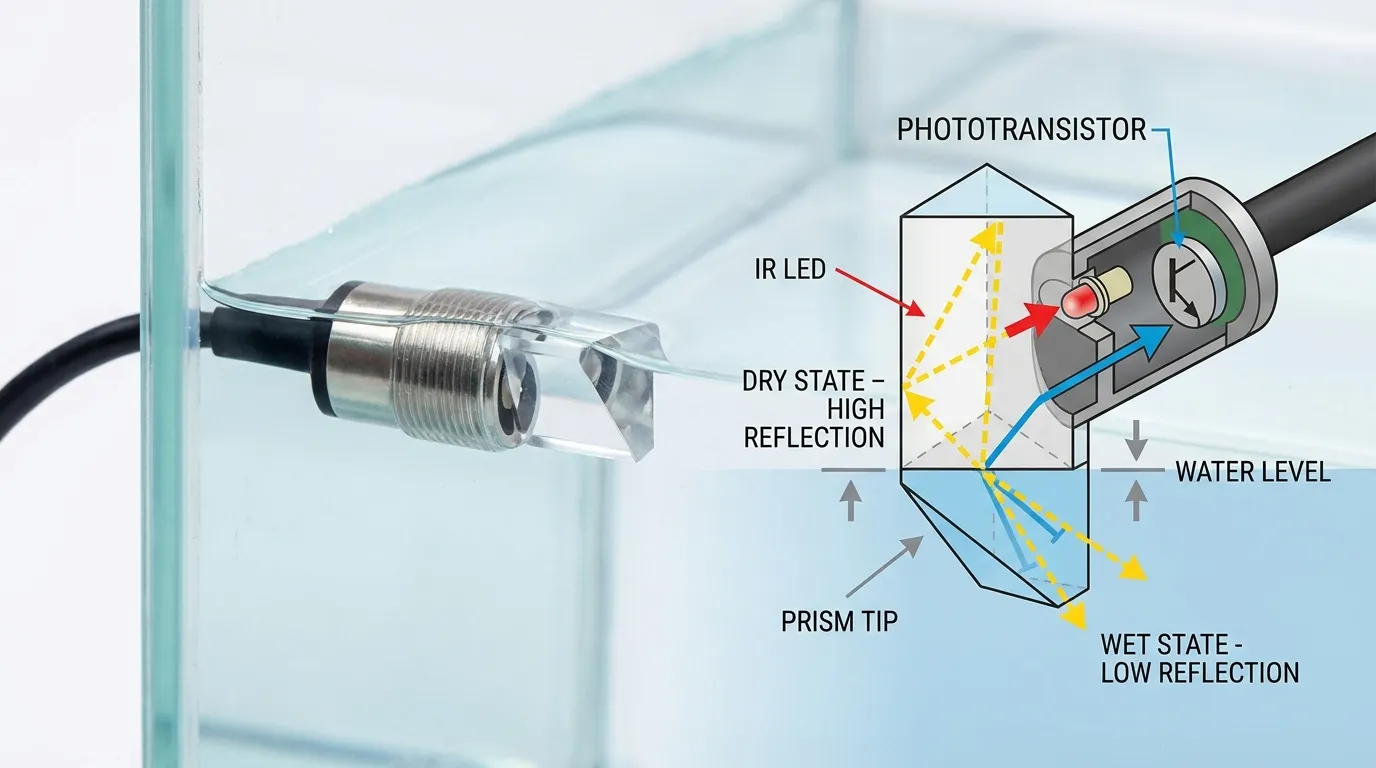
Ein optischer Wasserstandssensor verwendet photoelektrische Messung. Im Inneren des Sensorkörpers, eine Infrarot-LED sendet Licht zu einer prismaförmigen Messspitze, und ein Fototransistor oder Photodetektor empfängt das reflektierte Licht.
Wenn die Prismaspitze in der Luft ist, Das Licht reflektiert sich intern und kehrt stark zum Empfänger zurück. Wenn die Spitze von Flüssigkeit bedeckt ist, der brechungsbedingte Zustand ändert sich, Weniger Licht wird also zurückgegeben. Die Sensorelektronik wandelt diese optische Änderung in einen brauchbaren Ausgang um, wie HOCH/NIEDRIG, NPN, PNP, oder analoges/industrielles Signal, je nach Modell.
Dies macht die optische Erkennung für die Punktdetektion nützlich, wie zum Beispiel:
- Aquarium automatische Auffrischung
- Tiefpegelalarm des Anlagenreservoirs
- Sumpfüberlaufwarnung
- Erkennung von Wassertankleerungen
- Sensorisierung von Kaffeemaschinen- oder Gerätereservoirs
- Trockenlaufschutz für kleine Pumpen
- Tragbarer AC-Ablasseimer-Warnhinweis
Im Gegensatz zu Schwimmerschaltern, Optische Sensoren haben keinen beweglichen Schwimmerarm. Das hilft in kompakten Tanks oder Anwendungen, in denen mechanisches Kleben ein Problem ist. Jedoch, Die Messspitze muss noch so eingebaut sein, dass Flüssigkeit sie zuverlässig berühren kann.
GPIO-Verkabelungstabelle für Raspberry Pi
Die folgende Tabelle zeigt ein sicheres allgemeines Verdrahtungskonzept für ein 5V-optisches Sensormodul, das durch Pegelverschiebung an einen Raspberry Pi angeschlossen ist. Pin-Nummern sind Beispiele; du kannst andere GPIO-Pins in deinem Python-Skript auswählen.
| Sensor / Modulpunkt | Verbindungen zu | Raspberry Pi Beispiel | Wichtiger Hinweis |
|---|---|---|---|
| Sensor-VCC | 5V- oder Nennsensorversorgung | 5V-Pin, wenn das Modul 5V benötigt | Verwenden Sie nur die Spannung, für die der Sensor ausgelegt ist |
| Sensor GND | Gemeinsame Basis | Pi GND-Pin | Sensor, Pi, und der Treiberkreis muss sich die Masse teilen |
| Sensor OUT | Hochspannungsseite des Pegelschiebers | Nicht direkt zum GPIO, wenn der Ausgang 5V beträgt | Schützt Pi vor 5V-Logik |
| Niederspannungsseite des Levelschalters | Raspberry Pi GPIO-Eingang | GPIO17, Physischer Pin 11 | GPIO sollte maximal 3,3V erreichen |
| Relais-/MOSFET-Eingang | Raspberry Pi pump-control GPIO | GPIO27, Physischer Pin 13 | GPIO steuert einen Treiber, nicht direkt an die Pumpe |
| Pumpenleistung | Externe Pumpenversorgung | Nicht von GPIO | Pumpenspannung/-strom separat anpassen |
Für eine breitere visuelle Referenz, Sieh dir das an Schaltplan, dann passe ich die Signalseite für den Raspberry Pi 3,3V GPIO-Schutz an.
Schritt-für-Schritt Raspberry Pi Verdrahtungslogik
Fang nur mit dem Sensor an. Schließen Sie die Pumpe beim ersten Test nicht an.
Erste, Versorgen Sie den optischen Sensor entsprechend seiner Nennspannung. Ein 5V-Modul kann normalerweise vom Pi-5V-Pin für einen kleinen Test mit Strom versorgt werden, größere Systeme sollten jedoch eine stabile externe Versorgung verwenden.. Verbinden Sie die Sensor-Masse mit der Raspberry Pi-Masse.
Sekunde, Leiten Sie die Sensorausgabe durch eine sichere Schnittstelle. Wenn der Ausgang 5V Push-Pull ist, Verwenden Sie einen Level-Shifter oder Optocoupler. Wenn der Ausgang ein offener Kollektor NPN ist., Vielleicht kannst du auf der Raspberry Pi-Seite einen 3,3V-Pull-up verwenden, Überprüfen Sie jedoch die Modulschaltung, bevor Sie dies machen.
Dritte, Verbinde das sichere 3,3V-Signal mit einem GPIO-Eingang wie GPIO17. In Python, Konfigurieren Sie diesen Pin als Eingang. Je nach Sensorausgang, Vielleicht brauchst du einen internen Pull-up oder Pull-down. Wenn die Logik umgekehrt erscheint., Keine Panik; viele optische Module melden bei Trocken NIEDRIG und HOCH bei Trockenheit, während andere das Gegenteil tun.
Vierter, Teste den feuchten und trockenen Zustand, indem du nur die Prismenspitze ins Wasser tauchst.. Beobachten Sie den gedruckten GPIO-Zustand. Bestätigen Sie, ob sich die Sensoren regelmäßig ändern, bevor Sie eine Pumpe oder Automatisierung hinzufügen.
Minimale Python-Schleife: Was es tun sollte
Für den ersten Test brauchst du kein komplexes Programm. Eine minimale Python-Schleife sollte fünf Dinge erfüllen:
- Importiere eine Raspberry Pi GPIO-Bibliothek.
- Wählen Sie die BCM-PIN-Nummerierung.
- Stellen Sie den Sensorpin als Eingang ein.
- Lies den Pin wiederholt.
- Drucke "nass" oder "trocken" basierend auf dem GPIO-Zustand.
Die Schleife kann den Sensor alle halbe oder jede Sekunde überprüfen. Wenn der Eingang HOCH ist, Drucken einen Bundesstaat; wenn sie NIEDRIG ist, drucken Sie die andere. Nach dem Testen des echten Sensors, Beschrifte die Zustände korrekt in deinem Skript.
Für eine pumpengesteuerte Version, einen zweiten GPIO-Pin als Ausgabe hinzufügen. Wenn der Wasserstand niedrig ist, das Skript kann ein Relais oder einen MOSFET-Eingang aktivieren. Wenn der Sensor Wasser auf Zielniveau erkennt, Das Drehbuch schaltet die Pumpe aus. Fügen Sie eine maximale Betriebszeitbegrenzung hinzu, damit die Pumpe nicht ewig laufen kann, wenn der Sensor ausgesteckt ist, schmutzig, oder falsch installiert.
Ein sicheres Pumpenrezept sollte enthalten:
- Bestätigung des Nass-/Trockenzustands
- Verzögerung oder Debounce, um falsches Umschalten zu vermeiden
- Maximale Pump-on-Zeit
- Fehlerzustand, wenn sich die Sensormessung nicht ändert
- Manuelle Übersteuerung oder Abschaltoption
- Benachrichtigung, wenn das Wasser niedrig ist oder eine Pumpenpause eintritt
Pumpen- und Benachrichtigungsideen
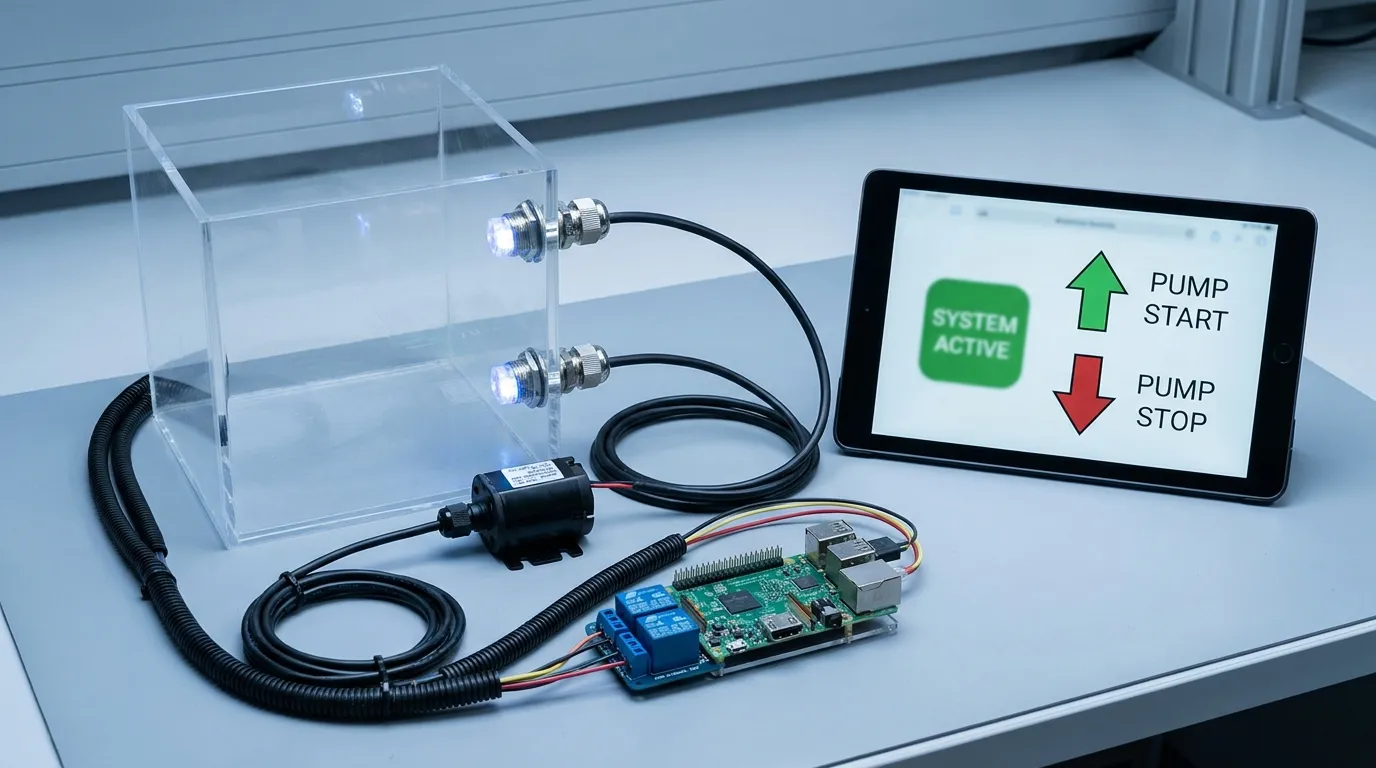
Für einen DIY-Reservoir, der Raspberry Pi kann mehr als nur den Sensor lesen. Es kann einen Summer auslösen, LED, Relaistafel, MOSFET-Pumpentreiber, E-Mail, Telegrammnachricht, MQTT-Thema, oder Home Assistant Automation.
Beispiele für gängige Logik:
- Wenn das Becken trocken ist, Sende eine Telefonbenachrichtigung.
- Wenn das Reservoir niedrig ist, Schalten Sie eine Nachfüllpumpe ein.
- Wenn der obere Sensor nass wird, Stopp die Pumpe.
- Wenn die Pumpe zu lange läuft, Schalten Sie ab und senden Sie eine Warnung.
- Wenn der Überlaufsensor feucht wird, Deaktivieren Sie die Pumpe sofort.
Zur Pumpensteuerung, Verwenden Sie ein richtig bewertetes Relais oder MOSFET-Modul. Der Raspberry Pi GPIO-Pin sollte nur ein Steuersignal liefern. Der Pumpenstrom muss von einer separaten Stromquelle kommen, die für die Pumpe ausgerichtet ist.
Für höhere Zuverlässigkeit, Viele Bauer verwenden zwei Sensoren: ein Niederstufensensor für den Pumpenstart und ein Hochstufensensor für Pumpenstopp oder Überlaufschutz. Das ist sicherer, als sich nur auf einen Punkt zu verlassen.
Hausautomations-Tie-Ins
Ein Raspberry Pi optischer Pegelsensor passt in viele Hausautomationssysteme. Mit MQTT, der Pi kann ein Thema wie Tank/Status = nass oder Tank/Status = trocken veröffentlichen. Home Assistant kann es dann als binären Sensor anzeigen und Automatisierungen auslösen.
Für Aquariennutzer, Dasselbe Konzept kann automatische Auffüllungssysteme unterstützen. Für Pflanzenzüchter, Es kann einen niedrigen Stauseespiegel melden. Zur Überwachung von Geräten, Er kann einen Abflusseimer oder kleinen Tank erkennen, der einen Warnpunkt erreicht.
Ein Arduino-Version kann für einen einzelnen Sensor und ein Relais einfacher sein, während der Raspberry Pi stärker ist, wenn man Netzwerke möchte, Holzeinschlag, Armaturenbretter, Benachrichtigungen, oder Integration mit anderen Smart-Geräten.
Wo relevant, HojellyTek kann auch Projekte zur Überwachung des Flüssigkeitsniveaus mit Fokus auf Tuya/Smart Life unterstützen, Vor allem, wenn ein Käufer einen produktiveren Weg anstrebt, statt eines lockeren Breadboard-Prototyps.
Sensorkörper, Material, Ausgabe, und Montageoptionen
Für einen Labortest, Der Modulstil ist am wichtigsten. Für eine echte Installation, Das Sensorgehäuse und der Montagestil sind genauso wichtig.
Typische Benetzungsmaterialien sind Netzteilplastik, PTFE, 316 Edelstahl, und Glas. Netzteil ist für kompakte Wasserniveauanwendungen üblich. PTFE ist nützlich, wenn chemische Beständigkeit erforderlich ist. 316 Edelstahl wird oft wegen industriellen Flüssigkeitskontakts und mechanischer Festigkeit ausgewählt. Glas kann für spezifische optische oder chemische Kompatibilitätsanforderungen nützlich sein.
Der Output-Typ ist ein weiterer wichtiger Kaufpunkt. Ein DIY-Raspberry Pi-Eingang benötigt in der Regel ein digitales Nass-/Trockensignal, das sicher auf 3,3V umgewandelt werden kann. Industrielle Systeme benötigen möglicherweise eine NPN, PNP, Relais-ähnliches Schalten, oder 4–20 mA-Ausgang für SPS- und Bedienfeldnutzung. Für Raspberry Pi, NPN- oder Open-Collector-Ausgänge lassen sich oft leichter sicher verbinden, wenn der Pull-up korrekt gehandhabt wird.
Die Montage sollte zum Tank passen. Optionen können eine Gewindemontage umfassen, Seitenwandinstallation, Vertikale Installation, Flanschmontage, oder individuelle Karosseriemaße. Die Sensorspitze muss auf der tatsächlichen Entscheidungsebene sitzen. Wenn es geneigt ist, Blockiert durch Blasen, Von Rückständen beschichtet, oder in einer toten Zone platziert, Lesungen können unzuverlässig werden.
Für produktorientierte Builds, Ein versiegelter Optischer Pegelsensor ist in der Regel zuverlässiger als ein loses DIY-Brett, das in der Nähe eines Aquariums hängt.
Häufige Fehlermodi und Fehlerbehebungen
| Problem | Wahrscheinliche Ursache | Was ist zu überprüfen? |
|---|---|---|
| GPIO zeigt immer HOCH an | Pull-up-Logik, Falscher Ausgangstyp, Keine Zustandsänderung | Teste die Nass-/Trockenzustände mit einem Messgerät |
| GPIO liest immer NIEDRIG | NPN-Ausgangsverdrahtung, Fehlende Windelhose, Falsches Gelände | Bestätigen Sie gemeinsame Erdung und Pull-up |
| Pi wird instabil | 5V-Signal in GPIO, Pumpengeräusch, Schwache Kraft | Verwenden Sie Niveauverschiebung und separate Pumpenleistung |
| Pumpe klappert ein/aus | Wellen, Platschen, Kein Debounce | Verzögerung und Bestätigung des Zustands hinzufügen |
| Falsche Nassmessung | Kondensation, Blasen, Residu auf Prisma | Die Spitze reinigen und die Befestigung anpassen |
| Keine Pumpreaktion | GPIO steuert die Pumpe direkt oder den falschen Relaiseingang | Verwenden Sie einen Relais-/MOSFET-Treiber |
| Der Sensor funktioniert am Schreibtisch, aber nicht im Tank | Schlechte Montageposition oder Kabelgeräusche | Sensor sichern und das Kabel von der Pumpenleitung wegführen |
Was man vor der Bestellung eines Sensors überprüfen sollte
Bevor Sie einen optischen Wasserstandssensor für Raspberry Pi auswählen, Bestätigen:
- Sensor-Versorgungsspannung
- Ausgangsspannung und ob sie 3,3V-sicher ist
- Ausgangstyp: Digital, NPN, PNP, oder analog
- Nass-/trockener Logikzustand
- Erforderliches Montagegewinde oder Halterung
- Kompatibilität des benetzten Materials mit der Flüssigkeit
- Kabellänge und Steckertyp
- Ob der Sensor Dampf ausgesetzt wird, Schaum, Ölfilm, oder Residu
- Ob das Projekt einen oder zwei Sensoren für eine sicherere Pumpensteuerung benötigt
Für OEM/ODM-Projekte, HojellyTek kann helfen, das Design optischer Sensoren anzupassen, Ausgabetyp, Material, Kabel, und die Montage an der Endausrüstung, anstatt ein generisches Hobby-Modul in ein Produktionsprodukt zu zwingen..
FAQ
Kann ich einen 5V-optischen Wasserstandssensor direkt an den Raspberry Pi GPIO anschließen.?
NEIN. Ein Raspberry Pi GPIO-Pin sollte kein 5V-Signal empfangen. Wenn der Sensorausgang 5V beträgt, Benutze einen Levelshifter, Optokoppler, oder bestätigter Open-Collector-Stromkreis, der auf 3,3V gezogen wurde.
Was ist die sicherste Verkabelung für ein optisches Wasserstandsensor-Raspberry Pi-Projekt.?
Versorgen Sie den Sensor mit seiner Nennspannung, Teilen Sie das Gelände, Senden Sie die Ausgabe über eine 3,3V-sichere Schnittstelle, schließen Sie es dann an einen GPIO-Eingang an. Verbinden Sie kein 5V-Signal direkt mit dem Pi.
Welchen GPIO-Pin sollte ich verwenden?
Jede verfügbare, eingabefähige GPIO kann funktionieren. GPIO17 ist ein häufiges Beispiel für den Sensoreingang, und GPIO27 ist ein gängiges Beispiel für ein Relais- oder MOSFET-Steuersignal.
Warum zeigt mein Sensor den entgegengesetzten Zustand an??
Viele optische Sensoren haben je nach interner Schaltung invertierte Logik. Teste zuerst die trockenen und feuchten Zustände, dann beschrifte HIGH und LOW korrekt in deinem Python-Skript.
Kann der Raspberry Pi die Pumpe antreiben??
NEIN. Der Pi sollte nur ein Relais oder einen MOSFET-Treiber steuern. Die Pumpe benötigt eine separate Stromversorgung, die für Spannung und Strom ausgelegt ist.
Wann sollte ich einen produktisierten Sensor statt eines DIY-Moduls verwenden??
Verwenden Sie einen produktisierten Sensor, wenn das Projekt eine versiegelte Bauweise benötigt, Wiederholbare Montage, Stabile Kabelverbindung, Materialkompatibilität, OEM-Integration, oder Langzeit-Pumpen-/Überlaufschutz.
Eine Sensorempfehlung anfordern
Ein Raspberry Pi Prototyp ist eine gute Möglichkeit, die Logik zu beweisen, Aber Produktionsanlagen benötigen eine sicherere Verkabelung, Bessere Abdichtung, Korrekter Ausgabetyp, und zuverlässige Montage. HojellyTek ist ein Hersteller und Exporteur aus Shenzhen, der sich auf photoelektrische optische Flüssigkeitspegelmessung spezialisiert hat, mit hausinternem R&D, OEM/ODM-Unterstützung, und Exporterfahrung für die USA, WIR, und Indien.
Für einen Raspberry Pi Prototyp, Pumpensteuerungsprojekt, Smart Reservoir, oder OEM-Flüssigkeitslevel-Bauteil, Fordern Sie ein Angebot über WhatsApp oder E-Mail an und teilen Sie Ihren Liquid-Typ, Sensorspannung, GPIO/Schnittstellenanforderung, Montagestil, und Ziel-Nass/Trocken-Schaltlogik.


