
Robuster elektro-optischer Pegelsensor
Unser robuster elektro-optischer Sensorservice hilft Käufern, die richtige Sensorspitze auszuwählen, Wohnen, Dichtungsverfahren, Kabelkonstruktion, Ausgabetyp und Schutzmerkmale vor der Bestellung von Mustern oder Produktionseinheiten.
Fähigkeiten robuster optischer Pegelsensoren
HojellyTek entwickelt und liefert optische Flüssigkeitspegelsensoren auf Basis photoelektrischer Messung. Im Inneren des Sensors, eine Infrarot-LED sendet Licht in eine Prismenspitze, und ein Phototransistor empfängt das reflektierte Signal. In der Luft, Das Licht reflektiert sich innerlich im Prisma. Wenn Flüssigkeit das Prisma befeuchtet,, Die Brechung ändert sich und der Empfänger erkennt ein anderes Signal. Die Elektronik schaltet dann den Ausgang für die Erkennung des trockenen oder benetzten Zustands um.
Für einen umfassenderen Überblick über Standardmodelle, Siehe unsere Optischer Pegelsensor Seite.
Für robusten Industriebetrieb, Wir helfen bei der Konfiguration:
- Punktpegelerkennung für niedrige Stufen, Hohe Ebene, Überlauf- oder Trockenlaufschutz
- Robuste Gehäuseoptionen für mobile Panzer, Industrie-Skiten und Ausrüstungsreservoirs
- Auswahl benetzter Materialien wie PSU, PTFE, 316 Edelstahl oder Glas
- NPN, PNP- und anwendungsangepasste Ausgabekonfigurationen
- Kabel, Steckverbinder- und Dehnentlastungsdesigns für vibrationsanfällige Geräte
- IP-zertifizierte Abdichtungskonzepte für Staub, Splash, Waschbecken oder Outdoor-Exposition
- Planung des elektrischen Schutzes, einschließlich Anforderungen an Überspannung und Umpolung
- OEM/ODM-Anpassung der Tankgeometrie, Montagegewinde- und Steuerplatinenschnittstelle
Für den Missbrauchsfall gebaut: Schwingung, Schock, Staub, Wasser- und Rough Handling
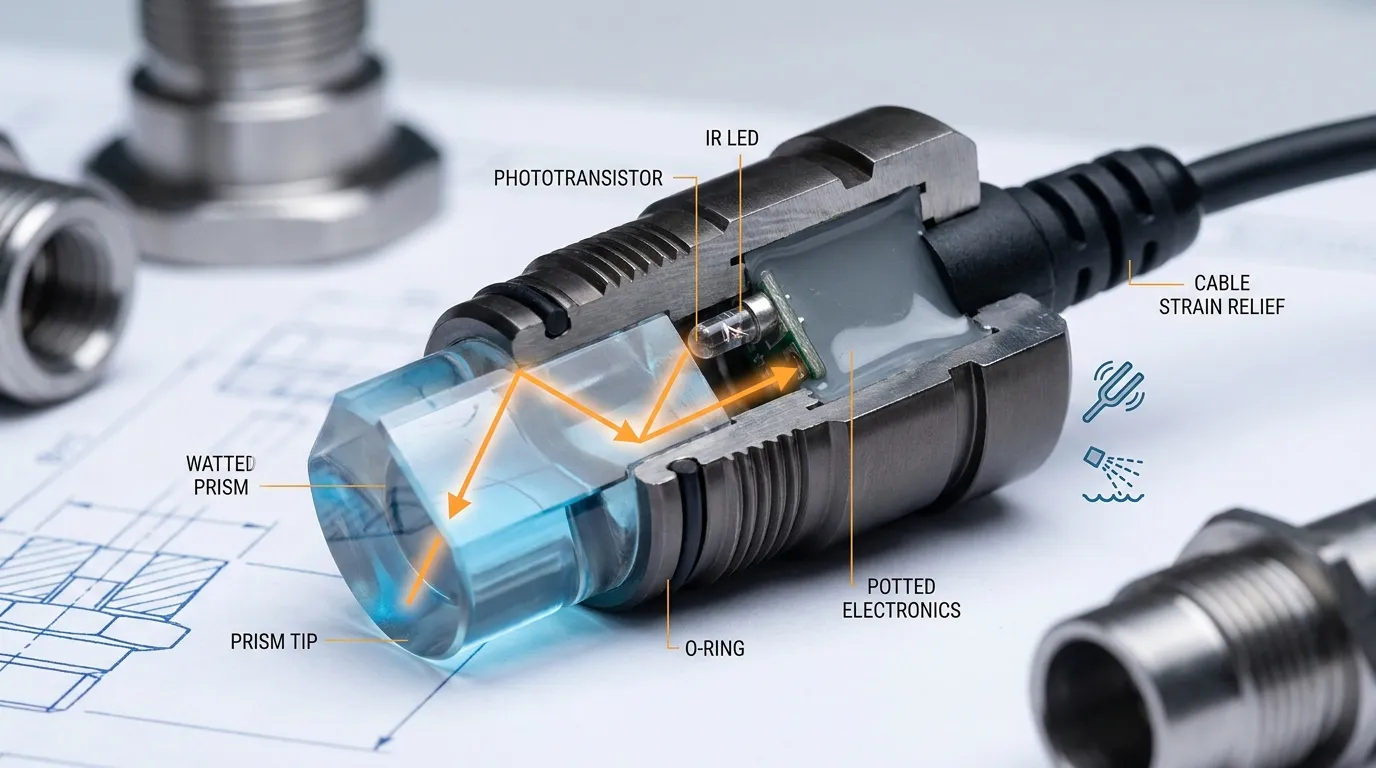
Die Messung von Schwergewichtspegeln dient nicht nur dazu, Flüssigkeit zu erkennen. Der Sensor muss die Nutzung der Maschine überleben. Mobile Ausrüstung, Industrie-Stauseen, Reinigungssysteme, Baumaschinen, Kühltanks und Außenbehälter verursachen jeweils unterschiedliche mechanische und Umweltbelastungen.
Ein normaler Sensor kann auf einer sauberen Testbank funktionieren, aber nach dem Ziehen des Kabels versagen, Schwingung, Waschbecken, Thermische Zyklierung oder wiederholte Dienstabfertigung. Für robuste elektro-optische Pegelsensoren, Das mechanische Gehäuse ist genauso wichtig wie die Sensorschaltung.
Schwingungs- und Stoßfestigkeit
Über mobile und industrielle Geräte, Vibrationen können Gewindehalterungen lockern, Ermüdungskabelausgänge, Beschädigt innere Lötstellen oder erzeugt intermittierende elektrische Kontakte. Ein robustes Design sollte den vollständigen Lastweg von der Tankwand zur Messspitze und zum Kabel berücksichtigen.
Wichtige Konstruktionspunkte sind das stabile Gewindefest, Eine sichere Körperstruktur, Innenvertopfung oder Überverformung, wo erforderlich,, und einen Kabelausgang, der nicht jede Schwingung direkt in die interne Elektronik überträgt. Der Sensor sollte außerdem das Bewegen mechanischer Schwimmer vermeiden, Weil bewegliche Teile klappern können, Kleben oder Abnutzung in vibrierenden Tanks.
Schutz vor Staub und Wassereintritt
Staub, Spritzwasser und Ausspülung können den Sensor durch den Kabelausgang befallen, Karosserieverbindung, Steckerbereich oder Gewindeschnittstellen. Aus diesem Grund, die IP-Bewertung sollte basierend auf der realen Duty-Bedingung ausgewählt werden, Nicht nur das Broschürenziel.
Ein geschütztes Design kann eine versiegelte Gehäusekonstruktion umfassen, O-Ring- oder Dichtungsplanung, Getopfte Elektronik, Geformte Kabeleinführung und korrekte Montageorientierung. Wenn die Anwendung Außenbecken umfasst, Reinigungszyklen, Straßensprühne oder staubige Industriegebiete, Teilen Sie dieses Detail während der RFQ-Phase, damit der Abdichtungsansatz korrekt abgestimmt werden kann.
Gehäusungs- und Umtopfgestaltung
Das Gehäuse ist der erste Schutz gegen Aufprall, Chemische Exposition, Raue Handhabung und Schäden an der Installation. Kunststoffkörper können für kompakte und kostenintensive Geräte geeignet sein. PTFE ist nützlich, wenn chemische Resistenz Priorität hat. 316 Edelstahl wird bevorzugt, wenn Käufer einen robusteren Metallkörper benötigen, stärkeren mechanischen Schutz oder Kompatibilität mit anspruchsvollen Industrieflüssigkeiten. Für korrosive oder sanitäre Materialdiskussionen, Überprüfen Sie unsere 316 Edelstahlkarosserie Option.
Das Eintopfen hilft, Elektronik vor Feuchtigkeit zu schützen, Schwingungs- und Handhabungsbelastung. In robusten Einheiten, Eintopfen und Abdichten sollten zusammen mit Wärmeableitung berücksichtigt werden, Reparaturfähigkeit, Seilflexibilität und Sensorgröße.
Kabeldehnentlastung und Steckverbinderwahl
Ein Kabelausfall ist eines der häufigsten realen Probleme bei mobilen und anspruchsvollen Installationen. Ein Sensor kann die elektrische Prüfung bestehen, aber später scheitern sie, weil das Kabel stark verbogen ist, während der Wartung gezogen oder in der Nähe von beweglichen Geräten geführt.
Ein robuster optischer Sensor sollte eine für die Installation geeignete Kabelaustritts- und Dehnentlastungsstruktur verwenden. Käufer sollten die Kabellänge überprüfen, Mantelmaterial, Biegenroute, Steckverbindertyp, Drahtspur, Abschirmungsanforderungen und ob das Kabel mit Öl ausgesetzt ist, Wasser, Abrieb oder wiederholte Bewegung.
Große Temperatur- und Leistungsvariation
Industriegeräte können Kaltstarts erhalten, Heiße Stauseen, Motorraumheizung, Saisonaler Wechsel im Außenbereich oder instabile Versorgungsspannung. Der Betriebstemperaturbereich sollte mit der tatsächlichen Flüssigkeitstemperatur bestätigt werden, Umgebungstemperatur und Beckenwandtemperatur.
Elektrischer Schutz ist ebenfalls wichtig. Überspannung, Umgekehrte Polarität, Überspannungsbelastung und fehlerhafte Verkabelung können die Sensorelektronik beschädigen. Während der Anpassung, Unser Ingenieurteam kann die Steuerbordeingabe überprüfen, Versorgungsspannung, Ausgabelogik und Schutzanforderungen, damit der Sensor an die Maschine angepasst werden kann, anstatt als generische Komponente behandelt zu werden.
Für Anwendungen mit höheren Temperaturen, Siehe unsere Hochtemperatursensor Seite.
Robustheitsspezifikationstabelle
| Robustheitsartikel | Was bestätigt werden soll | Warum es bei Hard Duty wichtig ist |
|---|---|---|
| IP-Bewertungsziel | Staub, Splash, Waschbecken, Außen- oder Immersionsbelichtung | Verhindert das Eindringen von Wasser oder Staub durch die Gelenke der Karosserie, Kabelausgänge und Befestigungspunkte |
| Wohnmaterial | Netzteil, PTFE, 316 Edelstahl, Glas oder maßgefertigte Karosserie | Balanciert die Stoßfestigkeit, Chemische Kompatibilität, Temperatur und Kosten |
| Umtopfen / Überformung | Ob Elektronik eine vollständige oder teilweise Verkapselung benötigt | Hilft, Feuchtigkeit zu widerstehen, Vibrations- und stoßbedingter interner Versagen |
| Kabeldehnungsentlastung | Kabelaustrittsstil, Biegerichtung, Pull Risk und Routing | Reduziert gebrochene Drähte, Intermittierende Signale und Feldausfälle |
| Temperaturbereich | Flüssigkeit, Umgebungs- und Beckenwandtemperaturen | Vermeidet Drift, Dichtungsschäden oder Materialungleichheit beim thermischen Kreislauf |
| Elektrischer Schutz | Überspannung, Umgekehrte Polarität, Überspannungs- und Verdrahtungsfehlerrisiko | Schützt Sensorelektronik in instabilen industriellen Energiesystemen |
| Ausgangstyp | NPN, PNP, Trocken/Nass-Logik oder Steuerplatinen-Schnittstelle | Stellt direkte Kompatibilität mit SPS sicher., Steuerungen oder OEM-Elektronik |
| Montagegewinde | Gewindegröße, Wanddicke des Tanks, Dichtungsmethode und Ausrichtung | Verhindert Undichtigkeiten, Lockere Installation und falsche Prismapositionierung |
| Benetztes Material | Flüssigkeitstyp, Zusatzstoffe, Öl, Kühlmittel, Wasser oder chemische Medien | Verhindert Schwellungen, Knacken, Korrosion oder optische Spitzenkontamination |
| Umgang mit Risiken | Fließbandhandhabung, Feldersatz und Versorgungszugang | Reduziert Bruch während Installation und Wartung |
Dienstliste vor der Anforderung eines Angebots
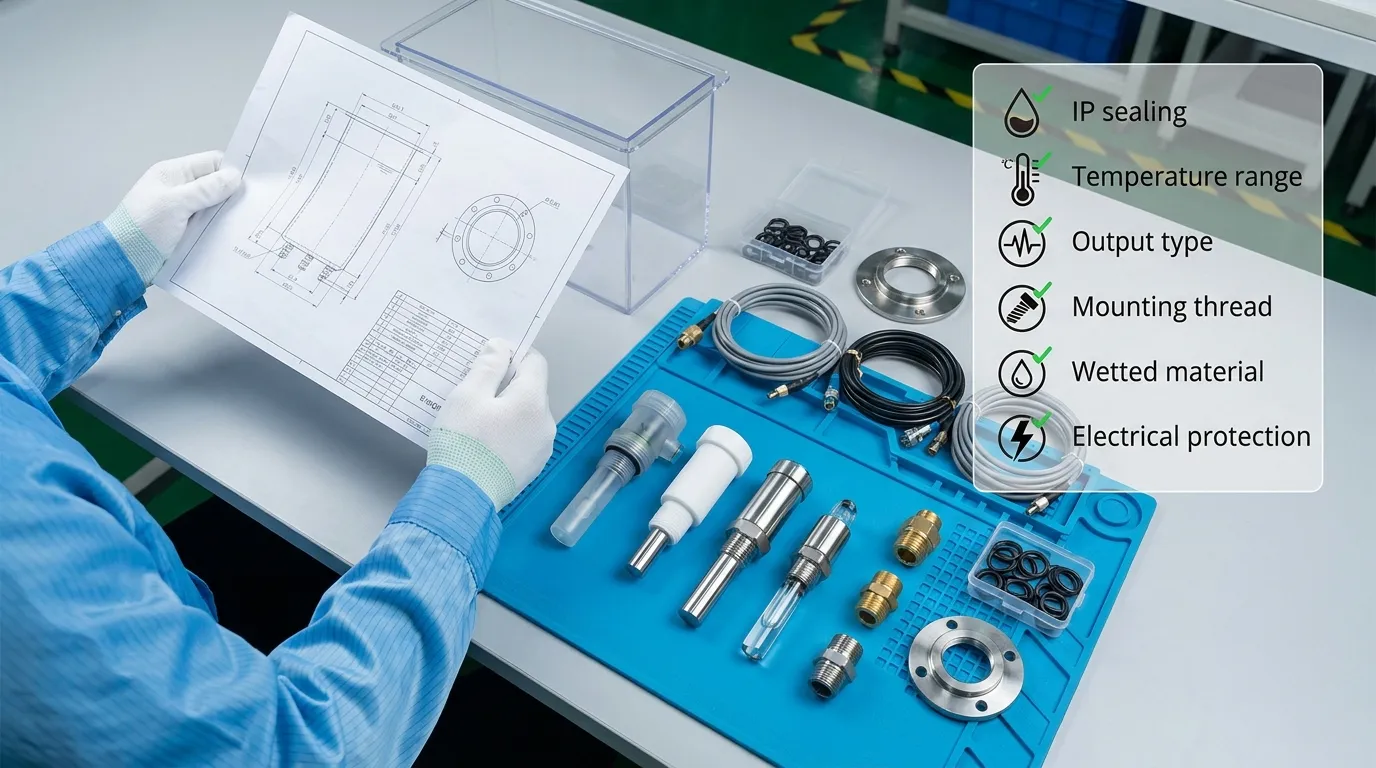
Vor der Bestellung eines robusten optischen Pegel-Schalters, Bereiten Sie die folgenden Details vor:
- Ausrüstungstyp: Mobile Maschine, Industriepanzer, Generator, Reinigungssystem, Kühlmittelbehälter oder OEM-Produkt.
- Flüssiger Typ: Wasser, Öl, Kühlmittel, Kraftstoffbezogene Flüssigkeit, Chemisches Gemisch oder Grenzflächenmedium.
- Ausfallrisiko: Schwingung, Schock, Waschbecken, Staub, Kabelziehen, Outdoor-Exposition oder raue Servicehandhabung.
- Montageposition: Seitenhalterung, Untere Montage, Top-Eintrag, Vertikale Tankwand oder kompaktes Reservoir.
- Erforderlicher Schaltpunkt: Niedrige Ebene, Hoher Stand, Überlauf, Trockenlaufschutz oder Leckdetektion.
- Präferenz für benetztes Material: Plastik, PTFE, 316 Edelstahl oder Glas.
- Produktionsbedarf: NPN, PNP, Schaltlogik, Signalrichtung oder 4–20 mA-Anforderung für verwandte kontinuierliche Überwachungsprojekte.
- Leistungszustand: Versorgungsspannung, Controller-Eingang, Überspannungsrisiko und Anforderungen an Verkabelungsschutz.
- Kabelanforderungen: Kabellänge, Steckverbinder, Mantelmaterial, Dehnungsentlastung und Führungsrichtung.
- Umweltanforderungen: IP-Ziel, Temperaturbereich, Staub-/Wasserexposition und Standort der Versorgung.
5-Schritt-Service-Prozess
1. Überprüfung der Anfrage
Senden Sie den flüssigen Typ, Panzerzeichnung, Montagerichtung, Ausgabeanforderung und Arbeitsumgebung per WhatsApp oder E-Mail. Unser Team prüft, ob ein standardmäßiger optischer Sensor, Eine robuste, maßgeschneiderte Version oder eine alternative Pegelmessungsansatz ist die bessere Wahl.
2. Spezifikation und Anpassung
Wir bestätigen das Material, Faden, Kabel, Ausgangslogik, Dichtungsverfahren und elektrische Schutzbedürfnisse. OEM/ODM-Änderungen können auch die Gehäuseform umfassen, Drahtlänge, Steckverbinder, Erkennungsrichtung und Steuerbord-Schnittstelle.
3. Probenvorbereitung
Proben können für die Passformprüfung vorbereitet werden, Elektrische Prüfungen und Flüssigkeitsnachweisprüfungen. Käufer sollten, wo möglich, den Sensor im echten Tank testen, Vor allem, wenn die Ausrüstung Schwingungen zeigt, Schaum, Spritzen oder enge Installationsfläche.
4. Produktion und Qualitätskontrolle
Die Produktion wird mit internem R übernommen&D-Unterstützung und photoelektrische optische Sensorerfahrung. QC konzentriert sich auf die Funktion, Verdrahtung, Dichtungsstruktur, Aussehen, Kabelzustand und vom Kunden vereinbarte Konfigurationsdetails.
5. Versand- und Exportunterstützung
HojellyTek ist ein Hersteller und Exporteur aus Shenzhen, der Kunden in den USA bedient, WIR, Indien und andere Märkte. Verpackungs- und Versanddetails werden anhand der Bestellmenge und des Ziels bestätigt.
Anforderungen und Konfigurationsoptionen
| Anforderung | Häufige Optionen | Kaufnotiz |
|---|---|---|
| Detektionsmodus | Punktniveau-Trocken/Nass-Schalten | Am besten für niedrige Verhältnisse, Erkennung von hohen und Überlaufpegeln |
| Ausgabe | NPN, PNP, Angepasste Signalschnittstelle | Passen Sie die PLC- oder Controller-Eingänge vor der Bestellung an |
| Kontinuierliches Signal | 4–20 mA für verwandte kontinuierliche Lösungen | Bestätigen Sie, ob Sie Punkterkennung oder kontinuierliche Messung benötigen |
| Karosseriematerial | Netzteil, PTFE, 316 Edelstahl, Glas | Auswahl nach Flüssigkeit, Temperatur und mechanische Last |
| Montage | Gewinde, kompakte Karosserie oder individuelle OEM-Montage | Überprüfen Sie die Dicke der Beckenwände und die Abdichtungsmethode |
| Kabel | Individuelle Länge, Mantel und Stecker | Wähle basierend auf der Schwingung, Öl, Wasser und Leitungsrisiko |
| Schutz | IP-zertifizierte Abdichtung und Überspannungsplanung | Bestätigen Sie die tatsächliche Belichtung, Nicht nur die Bedingungen für Indoor-Tests |
Robuster optischer Sensor vs. Standard-Schwimmerschalter
| Gegenstand | Robuster elektro-optischer Pegelsensor | Mechanischer Schwimmerschalter |
|---|---|---|
| Bewegliche Teile | Kein beweglicher Schwimmer; Optische Prismenerkennung | Verwendet einen beweglichen Schwimmer- oder Reed-Mechanismus |
| Schwingungsleistung | Besser geeignet für kompakte Vibrationsgeräte, wenn richtig montiert. | Schwimmerbewegungen können klappern oder sich abnutzen |
| Größe | Kompakter Sensortipp für kleine Tanks | Oft braucht man mehr Tankfreiheit |
| Grob Handhabungsrisiko | Kommt auf die Unterkunft an, Versenkung und Seilentlastung | Schwimmerarm oder bewegliche Teile können beschädigt sein |
| Flüssigkeitsdetektion | Schnelles Trocken-/Nass-Optikumschalten | Die mechanische Bewegung hängt von der Auftriebskraft ab |
| Instandhaltung | Geringer mechanischer Verschleiß | Kann aufgrund von Ablagerungen haften bleiben, Ablagerungen oder Viskosität |
Wichtiger Hinweis für Käufer in Gefahrengebieten
Diese robuste Service-Seite beansprucht keine Genehmigung für gefährliche Bereiche oder Explosionsschutz. Wenn dein Projekt Sprenggas beinhaltet, Dampf, Kraftstofflagerzonen oder regulierte Ex-Umgebungen, Bitte überprüfen Sie die dedizierten explosionssicherer optischer Sensor Seite und teilen Sie während der Anfrage den erforderlichen Genehmigungsstandard.
Warum sich für HojellyTek entscheiden
HojellyTek kombiniert die Produktion in Shenzhen, Inhouse-R&D- und photoelektrische optische Sensorerfahrung für OEM- und Industriekäufer. Wir unterstützen kundenspezifische Sensorkörper, Kabelbaugruppen, Ausgangslogik und anwendungsangepasste Robustheit statt nur Standardteile zu liefern.
Für Smart-Tank-Monitoring-Projekte, unser Team kann auch über Tuya sprechen / Integration von Smart Life, wo relevant,. Für industrielle OEMs, Der Hauptwert liegt in der direkten Fabrikkommunikation, Praktische Anpassung und Unterstützung von der Probenprüfung bis zur Serienproduktion.
Robuste elektro-optische Pegelsensor-FAQs
Wie funktioniert ein robuster elektrooptischer Pegelsensor?
Es verwendet eine IR-LED, Fototransistor und Prismenspitze. In der Luft, Licht reflektiert im Inneren des Prisma. Wenn Flüssigkeit das Prisma berührt, Der Strahlengang ändert sich, und die Elektronik schaltet den Ausgang um, um den feuchten oder trockenen Zustand anzuzeigen.
Ist ein optischer Pegelsensor für Schwingungen geeignet?
Ja, Es kann geeignet sein, weil es keinen beweglichen Schwimmer hat. Jedoch, Die Wohnungen, Montagegewinde, Umtopfen, Kabeldehnungsentlastung und Verkabelungsschutz müssen für die tatsächlichen Vibrations- und Stoßbedingungen ausgewählt werden.
Welches Wohnmaterial sollte ich wählen?
Netzteil ist für kompakte Industriekonstruktionen üblich, PTFE ist nützlich für die chemische Beständigkeit, 316 Edelstahl unterstützt stärkere Metallkörperanforderungen, und Glas kann dort verwendet werden, wo optische oder materialbezogene Kompatibilität sinnvoll ist. Die Flüssigkeit und der Duty Cycle entscheiden über die beste Wahl.
Kann der Sensor draußen oder in Waschgebieten verwendet werden??
Es kann für Staub- und Wassereinwirkung konfiguriert werden, aber die IP-Bewertung, Kabelausgang, Steckverbinder, Dichtungsmethode und Montageorientierung müssen vor der Bestellung bestätigt werden. Teilen Sie, ob der Sensor Splash zeigt, Waschbecken, Regen, Staub- oder Eintauchungsrisiko.
Welche Ausgabetypen sind verfügbar?
Gängige Optionen sind NPN- und PNP-Schaltausgänge zur Punktpegelerkennung. Für Projekte, die kontinuierliche Messung oder analoge Übertragung erfordern, 4–20 mA-Anforderungen sollten separat diskutiert werden, damit die richtige Sensorarchitektur ausgewählt wird.
Kann der robuste Sensor dieser Seite in explosionssicheren Bereichen eingesetzt werden??
Gehen Sie nicht davon aus, dass. Robuste Bauweise und Genehmigung für Gefahrenbereiche sind unterschiedliche Anforderungen. Für Ex- oder explosionssichere Anwendungen, Nutzen Sie den speziellen explosionssicheren optischen Sensor und geben Sie die erforderlichen Genehmigungsbedingungen bereit.
Fordern Sie ein Angebot für robuste Sensoren an
Schick deine Panzerzeichnung, Flüssigtyp, Montageposition, Kabelanforderungen, Ausgabetyp, IP-Ziel, Temperaturbedingungen und Vibrations-/Schockdetails. HojellyTek kann den Einsatzfall prüfen und eine robuste elektro-optische Pegelsensorkonfiguration für Probentests oder OEM-Produktion empfehlen. Kontaktieren Sie uns per WhatsApp oder per E-Mail, um ein Angebot anzufordern.
