
Hochtemperatur-optischer Flüssigkeitsniveausensor
HojellyTek stellt in Shenzhen photoelektrische Flüssigkeitsniveau-Sensorlösungen für OEM/ODM- und Industriekäufer her, die Materialberatung benötigen, bevor sie Muster oder Produktionschargen bestellen.
Fähigkeiten zur Messung optischer Hochtemperaturpegel
Unser Hochtemperatur-Sensorservice für optische Pegel deckt die Punktpegelerkennung für Hot-Media-Anwendungen ab, bei denen Schwimmerschalter blockieren können, Absorptionsreste, oder sich mechanisch abnutzen. Der Sensor verwendet eine Infrarot-LED, Fototransistor, und die optische Prismenspitze, um zu erkennen, ob das Prisma trocken oder von Flüssigkeit bedeckt ist..
Im trockenen Zustand, Infrarotlicht reflektiert intern im Prisma und kehrt zum Empfänger zurück. Wenn Flüssigkeit das Prisma bedeckt, der brechungsbedingte Zustand ändert sich, Licht wird in die Flüssigkeit umgeleitet, und die Ausgabe ändert ihren Zustand. Dies macht die optische Sensorik für Hochstufenalarme nützlich, Niedrig-Pegel-Alarm, Trockenlaufschutz, Nachweis des Kühlmittelbehälterniveaus, Überwachung des Ölreservoirs, und kompakte OEM-Tankintegration.
Je nach Projekt, Wir unterstützen:
- Photoelektrische Punktpegelmessung für die Detektion heißer Flüssigkeiten
- Netzteil, 316 Edelstahl, Glas, PTFE, und Mischmaterialstrukturen
- NPN, PNP, und digitale Schalter-Ausgangsoptionen
- 4–20 mA Diskussion für kontinuierliche Pegel- oder Senderprojekte
- Gewinde, kompakt, Seitenhalterung, Bodenmontage, und individuell angepasste Montagestrukturen
- OEM-Kabellänge, Steckverbinder, Ausgangslogik, und Wohnraumdesign
- Probenprüfung vor der Massenproduktion für Heißmedienanwendungen
Für allgemeine optische Punktpegelauswahl, Siehe unsere Optischer Pegelsensor Bereich.
Das eigentliche Ausfallrisiko: Kunststoffprismen und -dichtungen über dem Wert
Käufer bei hohen Temperaturen fragen meist zuerst nach der Höchsttemperatur. Das ist verständlich, Aber eine einzelne "Maximaltemperatur"-Zahl kann irreführend sein, wenn sie nur einen Teil des Sensors beschreibt.
Ein Kunststoffprisma kann einen kurzen Hot Splash überstehen, sich aber während des kontinuierlichen Eintauchens verformen. Eine Dichtung kann aushärten, Swell, oder die Kompression verliert, bevor das Metallgehäuse versagt. Ein Kabelmantel kann in der Nähe einer Heißtankwand reißen, selbst wenn die Sensorspitze noch funktionsfähig ist. Umtopfmasse, Klebstoff, Stecker-Kunststoff, und interne Elektronik kann auch zur realen Grenze werden.
Aus diesem Grund, HojellyTek empfiehlt nicht, einen heiß-flüssigen Sensor allein anhand des Körpermaterials auszuwählen. Ein Edelstahlgehäuse bedeutet nicht automatisch das Kabel, Siegel, optisches Fenster, und Elektronik teilen sich die gleiche Decke. Eine Glasspitze kann härtere Medien verarbeiten als viele Kunststoffe, Aber die Baugruppe benötigt noch eine bestätigte Abdichtung und ein Kabeldesign.
Die sichere Methode, einen Hot-Media-optischen Sensor zu spezifizieren, ist die Bestätigung:
- Normale kontinuierliche Flüssigkeitstemperatur
- Maximale Spitzentemperatur
- Wie lange hält die Spitzentemperatur an
- Ob der Sensor die Spitze hat, Faden, Kabel, oder der Stecker der Hitze ausgesetzt ist
- Ob die Flüssigkeit Wasser ist, Kühlmittel, Öl, Chemische Lösung, oder Mixed Media
- Ob Druck, Schwingung, Schaum, Blasen, oder Reinigungszyklen vorhanden sind
Temperaturobergrenze nach Material: Netzteil vs 316SS vs. Glas/PTFE
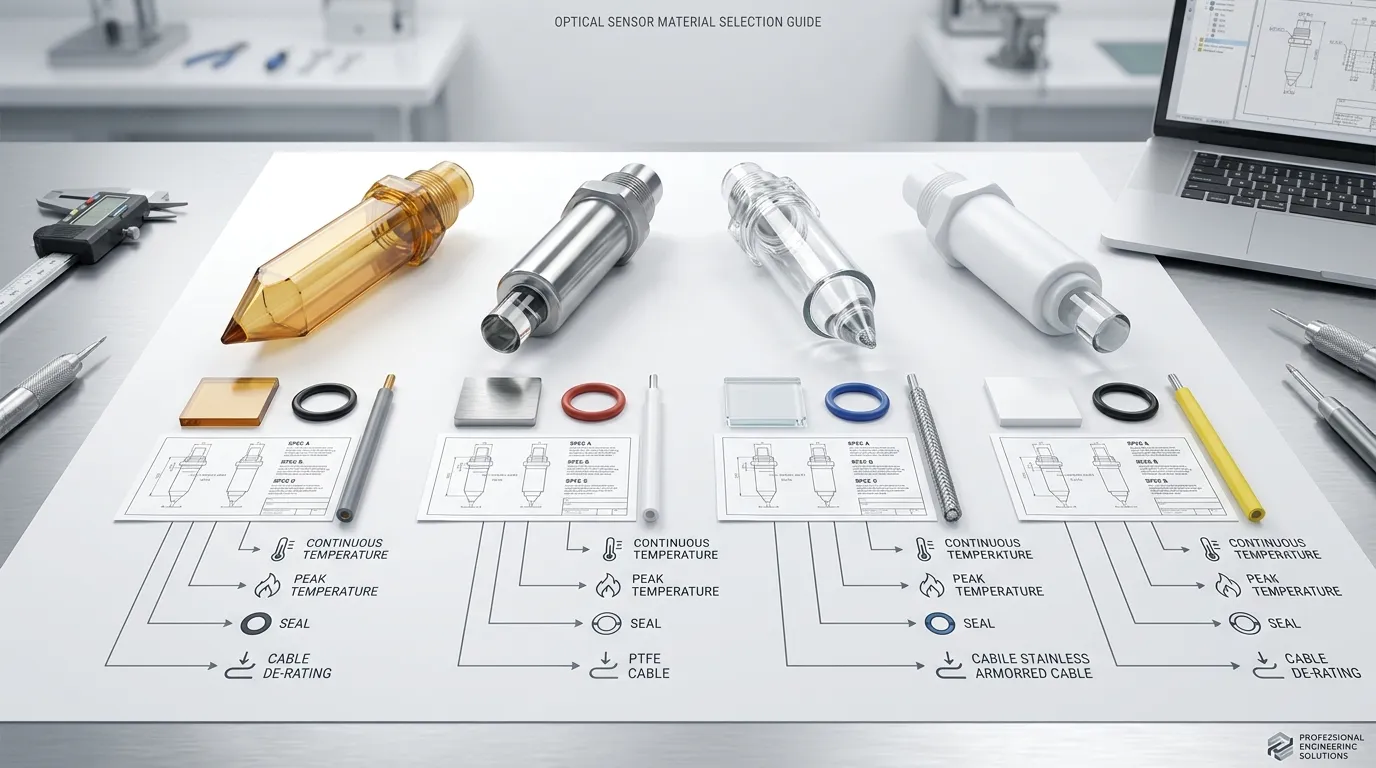
Für Hochtemperatur-Projekte mit optischen Flüssigkeitsniveausensoren, Die "echte Decke" muss anhand der kompletten Sensorkonstruktion bestätigt werden, nicht aus einem Rohmaterial angenommen. Die folgende Tabelle ist zur Auswahl der Käufer gedacht, Nicht als veröffentlichte Temperaturbehauptung.
| Sensormaterial / Konstruktion | Beste Passform | Temperaturbewertungsrichtlinien | Hauptrisiko, das überprüft werden sollte |
|---|---|---|---|
| PSU-Kunststoffoptikprisma oder -gehäuse | Kompakte OEM-Panzer, Wasserbasierte Flüssigkeiten, Kostengünstigere Projekte | Nur geeignet, wenn die bestätigte kontinuierliche und maximale Wertung des exakten Bauteils mit der Anwendung übereinstimmen. Gehen Sie nicht davon aus, dass "Ingenieurplastik" für alle heißen Tanks sicher ist. | Prismenweichung, Knacken, Schwellung, Dichtungsspannung, Langzeitdeformation |
| 316 Edelstahlgehäuse mit optischer Spitze | Heißkühlmittel, Öl, Industriepanzer, Stärkerer mechanischer Schutz | Die Karosseriehaltbarkeit ist stärker als die von Kunststoff, Aber die tatsächliche Decke hängt von der optischen Spitze ab, Siegel, Kabel, und interne Montage. | Dichtungsreifung, Kabelabstufung, Wärmeübertragung auf Elektronik |
| Glas-Optische Sensorspitze | Heißes Wasser, öle, Chemikalien, sowie Anwendungen, bei denen die Kompatibilität mit Kunststoffprismen ein Problem ist | Oft ausgewählt, wenn Käufer eine stabilere optische Schnittstelle als Kunststoff benötigen. Die tatsächliche Decke muss noch durch die vollständige Baugruppe bestätigt werden. | Glas-zu-Metall-Abdichtung, Schock, Installationsspannung, Kabelbelichtung |
| PTFE-benetzte Teile mit Glassensorbereich | Chemische Medien, korrosive Flüssigkeiten, Anwendungen mit geringer Oberflächenhaftung | PTFE kann die chemische Kompatibilität verbessern, Aber chemische Beständigkeit und Temperaturwert müssen getrennt geprüft werden. | Dichtungskompatibilität, Mechanische Steifigkeit, Mediendurchdringung, Kabelbegrenzung |
| Gemischte benutzerdefinierte Montage | OEM-Tanks mit begrenztem Raum, Verdrahtung, und Medienanforderungen | Am besten als RFQ-basiertes Design zu handhaben, bei dem Material, Siegel, Kabel, Ausgabe, und die Montage sind gemeinsam angegeben. | Eine Komponente in der Baugruppe wird zum Grenzpunkt |
Für Käufer, die ein nicht-plastisches Sensorgesicht benötigen, unsere Glasoptischer Sensor Page ist eine nützliche Referenz. Für härtere Industriebauten, Überprüfen Sie die 316 Edelstahl-Optiksensor Option.
Kontinuierliche Temperatur vs. Spitzentemperatur
Die kontinuierliche Temperatur ist die Temperatur, die der Sensor während des normalen Betriebs über längere Zeiträume überleben muss. Die Spitzentemperatur ist ein kurzes Ereignis, wie zum Beispiel Startwärme, Reinigung, Spülung, oder vorübergehend überhitzt.
Diese Unterscheidung ist wichtig, weil viele Ausfälle nicht sofort auftreten. Ein Kunststoffprisma besteht vielleicht einen kurzen Labortest, entwickelt sich aber nach Wochen im heißen Kühlmittel langsam. Eine Dichtung kann die Lecktests bei Raumtemperatur bestehen, aber nach wiederholtem Heizen und Abkühlen an Elastizität verlieren. Die Kabeldämmung kann anfangs flexibel bleiben, dann härten und rissen sie nach langer Exposition in der Nähe einer Tankwand.
Beim Absenden einer RFQ, Schreiben Sie nicht nur "hohe Temperatur". Senden Sie die kontinuierliche Betriebstemperatur, Maximale Spitzentemperatur, Spitzenzeit, und ob der Sensor kontinuierlich eingetaucht oder nur während des Befüllens exponiert ist. Wenn die Anwendung eine CIP-Reinigung beinhaltet, Dampf, Heißes Waschmittel, Ölzusätze, oder Glykol-Kühlmittel, Fügen Sie diese Informationen vor der Stichprobenauswahl hinzu.
Kabelfreigabe, Steckverbinder-De-Rating, und Installation Heat
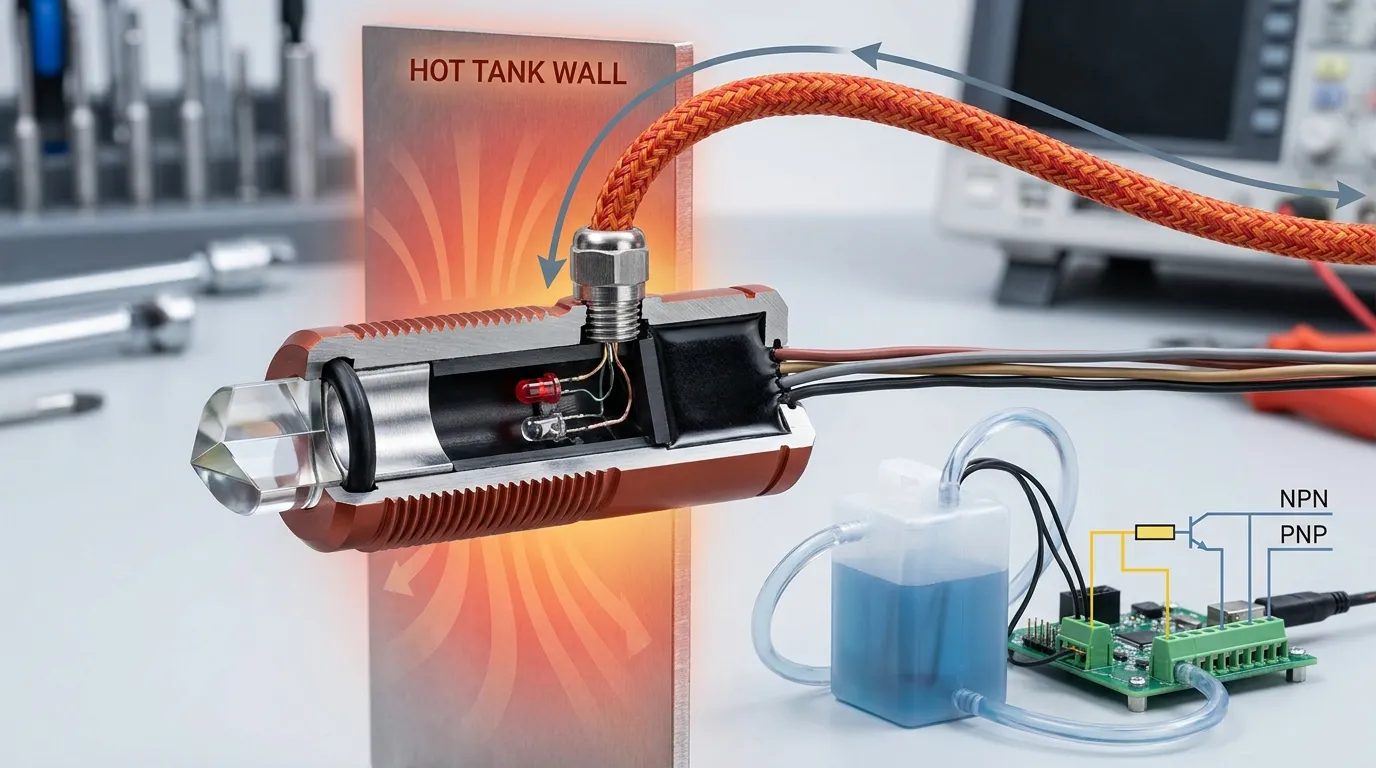
In heißen Tanks, Die Sensorspitze ist nicht der einzige freiliegende Teil. Die Kabelführung kann darüber entscheiden, ob das Projekt erfolgreich ist.
Ein Kabel, das für normale Umgebungsbedingungen ausgelegt ist, kann ausfallen, wenn es einen heißen Metalltank berührt, läuft neben einem Heizgerät, oder durch ein heißes Gehäuse austritt. Das Kabel benötigt möglicherweise eine Dämmung mit höheren Temperaturen, Zusätzliche Dehnungsentlastung, Ein kühlerer Routingpfad, oder ein Metallgehäuse, das den direkten Wärmetransport zum Kabeleingang reduziert.
Auch die Steckverbinderwahl spielt eine Rolle. M8, M12, Steckverbinder, Flying Leads, und individuelle Geschirre haben unterschiedliche Heizgrenzen. Wenn der Stecker außerhalb der Phasenzone sitzt, Das Design könnte einfacher sein. Wenn der Stecker nahe an der Tankwand ist, Das Verbindungsmaterial und die Abdichtung müssen gemeinsam überprüft werden.
Für Hochtemperaturanwendungen, Käufer sollten das bestätigen:
- Kabelmantelmaterial und Hitzeexpositionsfläche
- Abstand von der Hottank-Wand zum Steckverbinder
- Ob das Kabel fest ist, Flexen, oder Vibrationen ausgesetzt
- Ob Öl, Kühlmittel, oder Reinigungschemikalie Kontakt mit dem Kabel
- Ob die Ausgangsverdrahtung NPN verwendet, PNP, oder eine andere Steuerungsschnittstelle
- Ob die Steuerplatine normalerweise geöffnet werden muss, normalerweise geschlossen, Hoch in Flüssigkeit, oder Logik mit niedriger Flüssigkeit
Hot-Media-Anwendungscheckliste
Verwenden Sie diese Checkliste, bevor Sie ein Angebot oder ein Muster anfordern:
| RFQ-Punkt | Was bereitgestellt werden sollte |
|---|---|
| Flüssiger Typ | Wasser, Kühlmittel, Öl, Reinigungsmittelmittel, Chemische Lösung, oder Mixed Media |
| Kontinuierliche Temperatur | Normale Langzeitbetriebstemperatur der Flüssigkeit |
| Spitzentemperatur | Höchste erwartete Temperatur und Belichtungsdauer |
| Montageposition | Seitenhalterung, Untere Montage, Top-Eintrag, oder ein individuelles Panzerwanddesign |
| Präferenz für benetztes Material | Netzteil, 316 Edelstahl, Glas, PTFE, oder Werksempfehlung |
| Dichtungsanforderungen | Medienkompatibilität, Druckbedingungen, und Reinigungszyklus |
| Kabelbelichtung | Hot-Zone-Länge, Steckerabstand, und Routing-Umgebung |
| Ausgangstyp | NPN, PNP, Schalterausgang, oder Diskussion über den Sender |
| Stromversorgung | Steuerplatinenspannung bestätigt in RFQ-Stufe |
| Anwendungsziel | Hochstufe-Alarm, Niedrig-Pegel-Alarm, Trockenlaufschutz, Leckage-Erkennung, oder OEM-Tanksteuerung |
| Stichprobenvalidierung | Bench-Test, Heiß-Flüssigkeits-Einweichtest, und Installationstests vor der Produktion |
Für Projekte mit Warmkühlmittel und Reservoirs, das Kühltanksensor Die Seite liefert Anwendungskontext für die Überwachung kompakter Tanks.
5-Schritt-OEM/ODM-Lieferprozess
1. Untersuchung
Schick die Flüssigkeit, Temperaturprofil, Montageposition, Ausgangsanforderungen, Zeichnung, Foto, oder bestehende Bauteilprobe. Unser Team prüft, ob ein standardmäßiger optischer Schalter, Edelstahlversion, Glasversion, oder eine angepasste Struktur ist geeigneter.
2. Spezifikation und Anpassung
Wir bestätigen die praktische Sensorkonfiguration: Benetztes Material, Faden, Kabel, Ausgangslogik, Steckverbinder, Siegel, und ob die Temperaturobergrenze durch Probentests validiert werden muss.
3. Beispiel
Die Proben werden für elektrische Tests vorbereitet, Immersionstests, und Installationskontrollen. Für Hot-Media-Projekte, Wir empfehlen, unter realen Flüssigkeitstemperaturen und Duty-Cycle-Bedingungen zu testen..
4. Produktion und Qualitätskontrolle
Nach der Probengenehmigung, Die Produktion folgt der bestätigten Zeichnung und Spezifikation. Die Qualitätskontrolle kann auch eine Erscheinungsinspektion umfassen, Verdrahtungsprüfung, Ausgabefunktionsprüfung, Dichtungsprüfung, und anwendungsspezifische Tests, die vor der Produktion vereinbart wurden.
5. Schifffahrt
HojellyTek exportiert Sensorprodukte in die USA, HATTE, Indien, und andere Märkte. Schifffahrt, Verpackung, Kennzeichnung, und die Dokumentation kann je nach Bestellung und Zielort des Käufers diskutiert werden.
Anforderungen und Spezifikationen, die vor der Bestellung bestätigt werden müssen
Eine zuverlässige Reihenfolge der optischen Hochtemperatursensoren sollte mehr bestätigen als der Sensorkörper. Mindestens, Definieren Sie:
- Sensortyp: Punktniveau-Optikschalter oder kontinuierliches Level-Projekt
- Benetztes Material: Netzteil, 316 Edelstahl, Glas, PTFE, oder Gewohnheit
- Ausgabe: NPN, PNP, Digitaler Schalterausgang, oder 4–20 mA Diskussion
- Ausgangslogik: aktiv in Flüssigkeit oder aktiv in Luft
- Montage: Faden, Flansch, Seitenwand, Untere Montage, oder kompakte OEM-Struktur
- Kabel: Länge, Mantelmaterial, Steckverbinder, und Hitzeexposition
- Siegel: Kompatibilität mit Flüssigkeit und Temperaturzyklus
- Elektrische Integration: Versorgungsspannung, Last, Controller, SPS, oder PCB-Eingang
- Medienverhalten: Schaum, Blasen, Beschichtung, Ölfilm, Residu, Farbe, oder Viskosität
- Validierungsplan: Probentestbedingungen vor der Serienproduktion
Material- und Anwendungsvergleich
| Anwendungssituation | Bessere Startoption | Warum |
|---|---|---|
| Kompakter Kunststofftank mit warmer Flüssigkeit | Netzteil optischer Sensor, falls geeignet bestätigt | Kosteneffizient und kompakt, Muss aber innerhalb des echten Materials und der Dichtungsqualität bleiben |
| Warmkühlmittelreservoir | 316 Edelstahl- oder Glasspitzendesign | Bessere Wahl bei der Heizung, Zusatzstoffe, und Schwingungen sind Sorgen |
| Heißöltank | Edelstahlgehäuse mit geeigneter optischer Spitze und Kabel | Ölkompatibilität, Kabelmantel, und das Dichtungsmaterial muss sorgfältig überprüft werden |
| Korrosiv-heißer Chemikalie | Glas/PTFE-Diskussion | Chemische Beständigkeit und Temperatur müssen beide validiert werden |
| Der Käufer kennt nur "heiße Flüssigkeit". | RFQ-basierte Materialauswahl | Die Fabrik braucht Medien, Kontinuierliche Temperatur, Spitzentemperatur, und Montagedetails vor sicherem Angebotsabschluss |
Warum sich für HojellyTek entscheiden
HojellyTek ist ein Hersteller und Exporteur aus Shenzhen, der sich auf photoelektrische optische Flüssigkeitspegelmessung spezialisiert hat. Wir unterstützen Inhouse-R&D, OEM/ODM-Anpassung, Kompakte Sensorstrukturen, Industrielle Materialauswahl, und anwendungsbasierte Stichprobenvalidierung.
Käufer arbeiten mit uns zusammen, wenn sie einen praktischen, werksdirekten Sensorpartner benötigen, statt eines reinen Lieferanten aus Katalogen. Wir können beim Vergleich von Netzteilen helfen, 316 Edelstahl, Glas, und PTFE-Optionen, Kabel- und Ausgangsdetails anpassen, und die OEM-Integration für Panzer zu unterstützen, Vorrichtungen, Industrieausrüstung, Kühlsysteme, sowie intelligente Flüssigkeitsüberwachungsprodukte. Die Integration von Tuya und Smart Life kann auch diskutiert werden, wenn das Projekt eine verbundene Flüssigkeitsüberwachung anstelle eines einfachen kabelgebundenen Schalters erfordert..
FAQ
Was ist die tatsächliche Maximaltemperatur eines optischen Flüssigkeitspegelsensors mit hoher Temperatur.?
Die tatsächliche Maximaltemperatur hängt von der vollständigen Baugruppe ab: Prisma, Wohnen, Siegel, Kabel, Steckverbinder, Umtopfen, und flüssige Kompatibilität. Wir empfehlen nicht, nach einer einzigen Schlagzeilenzahl zu wählen. Senden Sie Ihre Anforderungen an Dauer- und Spitzentemperatur, damit die korrekte Decke bestätigt werden kann.
Ist die kontinuierliche Temperatur anders als die Spitzentemperatur?
Ja. Kontinuierliche Temperatur ist eine langfristige normale Exposition. Die Spitzentemperatur ist ein kurzes Ereignis. Ein Sensor kann einen kurzen Peak überstehen, aber in der kontinuierlichen Immersion versagen, wenn das Prisma, Siegel, oder das Kabel ist nicht für diesen Arbeitszyklus ausgelegt.
Welches Material eignet sich am besten für heiße Flüssigkeit: Netzteil, 316 Edelstahl, Glas, oder PTFE?
Das Netzteil eignet sich für kompakte OEM-Anwendungen, wenn es innerhalb der Wertung bestätigt ist. 316 Edelstahl verbessert die mechanische Haltbarkeit. Glas wird oft bevorzugt, wenn die Kunststoffkompatibilität eine Rolle spielt. PTFE ist nützlich für die chemische Kompatibilität, Aber Temperatur und Abdichtung müssen noch bestätigt werden.
Können optische Pegelsensoren in heißen Kühlmitteltanks funktionieren?
Ja, Optische Sensoren können zur Kühlmittelpegeldetektion verwendet werden, wenn das Material, Siegel, Kabel, und die Ausgabe korrekt ausgewählt werden. Kühlmittelzusätze, Temperaturzyklus, Schwingung, und die Montageposition sollte vor der Probenauswahl geteilt werden.
Sind optische Sensoren kontinuierliche Pegelsensoren.?
Die meisten optischen Prismensensoren sind Punktpegelschalter. Sie erkennen, ob die Spitze trocken oder benetzt ist. Wenn Ihr Projekt kontinuierliche Messung oder eine 4–20 mA-Ausgabe benötigt, Diskutieren Sie eine separate kontinuierliche Pegel- oder Senderlösung.
Was sollte ich schicken, bevor ich ein Angebot anfordere??
Flüssig-Typ senden, Kontinuierliche Temperatur, Spitzentemperatur, Montagemethode, Panzermaterial, Gewindeanforderungen, Kabellänge, Steckverbindertyp, Ausgabetyp, und Zielbestellmenge. Fotos, Zeichnungen, oder eine vorhandene Sensorprobe ist ebenfalls hilfreich.
Fordern Sie ein Angebot an
Für einen hochtemperaturoptischen Flüssigkeitspegelsensor, Der sicherste erste Schritt ist, vor der Bestellung die tatsächliche Decke der gesamten Sensoreinheit zu überprüfen. Schick deine Hot-Media-Checkliste, Panzerzeichnung, und die Verkabelungspflicht an HojellyTek per WhatsApp oder E-Mail, und unser Team wird ein geeignetes Material empfehlen, Ausgabe, Kabel, und Musterplan.


