
Optischer Pegelsensor für Kühlmitteltanks
Eine Lösung für einen optischen Pegelsensor für den Kühlmittelbehälter hilft, eine Überhitzung bei niedrigem Kühlmittel zu verhindern, Pumpen-Trockenlauf, Kavitation, und eine unerwartete Abschaltung der Maschine, bevor das Reservoir ein gefährliches Niveau erreicht. Für Werkzeugmaschinen, Motoren, Kühler, Kühlrutschen, und Industriestauseen, HojellyTek liefert kompakte photoelektrische Pegelsensoren zur Alarmerkennung bei niedriger Stufe, Bestätigung des Kühlmittelanwesens, und die Integration des OEM-Kühlmitteltanks.
Das Ziel ist einfach: Erkennen Sie, ob Kühlmittel am sicheren Mindestwert vorhanden ist, dann senden Sie ein zuverlässiges Signal an eine SPS, Steuerpult, Staffel, Summer, Warnlampe, oder Abschaltkreis.
Fähigkeiten zur Wahrnehmung des Kühlmittelbehälters
HojellyTek optische Sensoren sind für die Punktdetektion in kompakten Tanks und industriellen Reservoirs konzipiert, wo Schwimmerschalter zu sperrig sein könnten, mechanisch unzuverlässig, oder empfindlich gegenüber Vibrationen.
Für Anwendungen in Kühlmittelbehältern, Wir können unterstützen:
- Nachweis von niedrigen Kühlmittelalarmen in Kühlmittelreservoirs von CNC-Maschinenwerkzeugen
- Pumpeneinlassschutz für Kühlmittel-Zirkulationspumpen
- Überwachung des Kühlmittelreservoirs für Industrieanlagen
- Kühltank-Tiefpegel-Alarmerkennung
- Überwachung des Kühlschmierstoffniveaus in Metallverarbeitungssystemen
- OEM/ODM-Sensoranpassung für Panzerbauer und Ausrüstungshersteller
- Photoelektrische Sensormodule mit individuellem Kabel, Steckverbinder, Ausgabe, und Wohnmöglichkeiten
- Sensorauswahl basierend auf Kühlmitteltyp, Panzermaterial, Montageposition, und Steuerlogik
Wenn Ihre Anwendung eine allgemeine punktebene Sensorplattform benötigt, Siehe unsere Optischer Pegelsensor Optionen für Standard-Flüssigkeitsdetektionsprojekte.
Verhinderung von Überhitzung mit niedrigem Kühlmittel und Schäden an der Pumpe
In Kühlmittelsystemen, Der Pegelsensor ist nicht nur ein Überwachungszubehör. Es ist ein Schutzgerät. Wenn das Kühlmittel unter den sicheren Wert fällt, Das System kann an Kühlkapazität verlieren, Die Pumpe kann Luft anziehen, und die Maschine kann ohne genügend Flüssigkeit weiterlaufen, um Wärme zu entfernen.
Häufige Ausfälle, die ein niedrigstufiger optischer Sensor zu verhindern hilft, sind unter anderem:
- Pumpe trockenlaufen, wenn der Kühlmitteltank unter den Saugpunkt fällt
- Überhitzung in Werkzeugmaschinen, Motoren, oder Kühler
- Schlechte Kühlmittelzirkulation verursacht durch Lufteinsaugung oder Kavitation
- Werkzeugverschleiß oder Prozessinstabilität durch unzureichenden Kühlfluss
- Kühler-Schwachstellen und Notabschaltungen
- Ungeplante Ausfallzeiten verursacht durch verzögerte manuelle Inspektion
- Schäden an der Pumpendichtung durch wiederholten Betrieb ohne ausreichende Flüssigkeit
Für pumpenorientierte Anwendungen, Unsere verwandten Pumpen-Trockenlaufschutz Page erklärt, wie Punkt-Level-Messung als Sperre eingesetzt werden kann, bevor die Pumpe unter unsicheren Bedingungen läuft.
Wie der optische Sensor den Kühlmittelstand erkennt
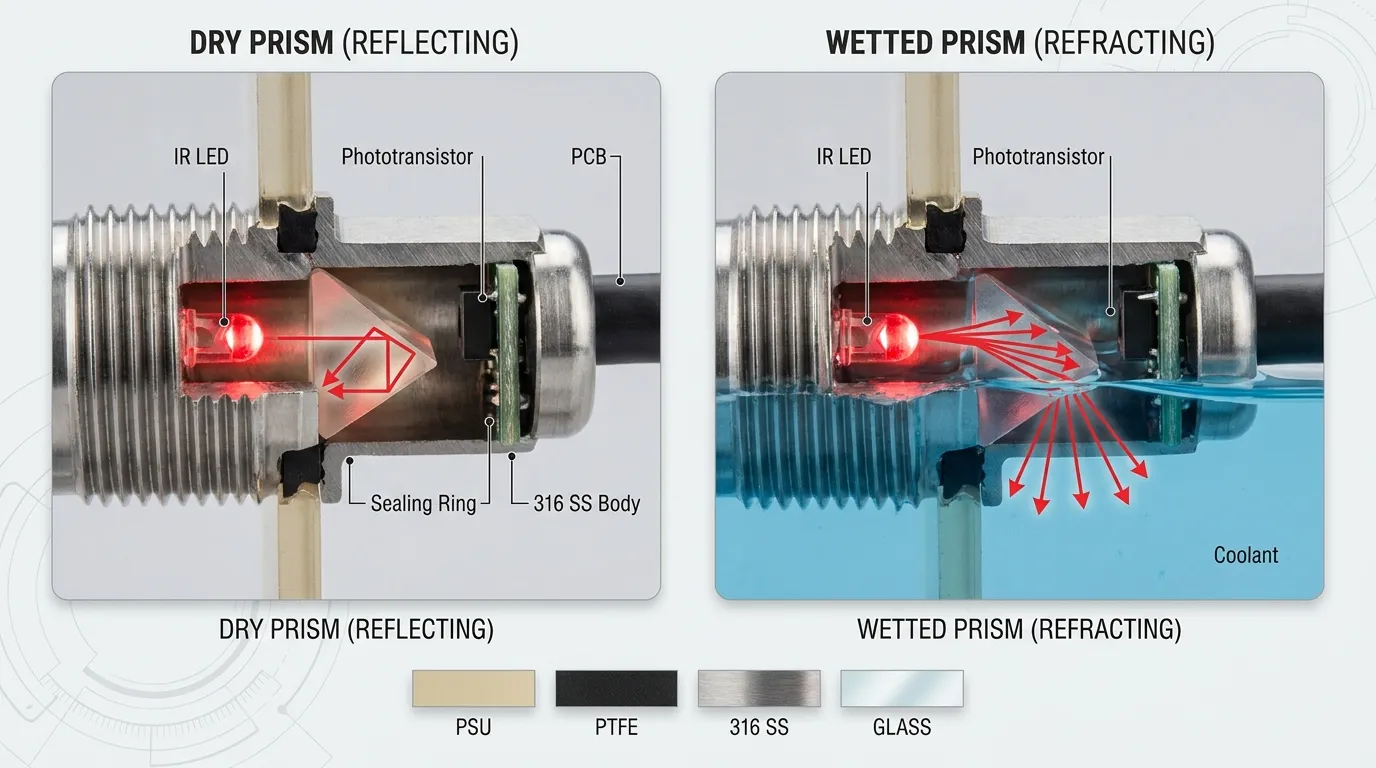
Ein photoelektrischer Kühlmittelpegelsensor verwendet typischerweise eine Infrarot-LED, ein Fototransistor, und eine prismaförmige Messspitze. Die Sensorspitze wird auf dem Zielalarmpegel im Inneren oder durch die Wand des Kühlmittelbehälters installiert.
Wenn die Prismaspitze in der Luft ist, Infrarotlicht reflektiert intern im Prisma und kehrt zum Empfänger zurück. Wenn das Kühlmittel das Prisma bedeckt, Das Licht bricht sich in die Flüssigkeit, anstatt zurückzureflektieren. Die Sensorelektronik erkennt diese Änderung und schaltet den Ausgangszustand um.
Diese trocken-gegen-benetzte Erkennungsmethode bietet mehrere Vorteile in Kühlmitteltanks:
- Kein beweglicher Schwimmerarm zum Blockieren, Stock, oder tragen
- Kompakter Sensortipp für kleine Reservoirs
- Schnelles Punktniveau-Entgegensetzen auf der Set-Montagehöhe
- Stabile Detektion für viele wasserbasierte Systeme, glykolbasiert, und ölbasierte Flüssigkeiten
- Einfache Integration von Niederstufenalarmen mit elektronischen Steuerungssystemen
- Geeignet für horizontale Seitenmontage oder individuelle Tankintegration
Der Sensor analysiert weder die Kühlmittelqualität noch die chemische Formel. Seine Aufgabe ist die Pegeldetektion: ob die Messspitze am Alarmpunkt trocken oder benetzt ist.
Kühlmittelkompatibilität und Temperaturauswahl
Die Kühlmittelkompatibilität hängt vom Flüssigkeitstyp ab, Konzentration, Zusatzstoffe, Temperatur, Druck, Reinigungsprozess, und benetztes Material. Aus diesem Grund, Sensorkörper und Prismamaterial sollten entsprechend dem tatsächlich verwendeten Kühlmittel im Tank ausgewählt werden, nicht nur der Name der Anwendung.
Gängige Optionen für benetzte Materialien sind Netzteilplastik, PTFE, 316 Edelstahl, und Glas. Für Hochtemperaturreservoirs, Beheizte Kühlmittelschleifen, oder harte Industrieflüssigkeiten, Das Modell und das Kabelmaterial sollten vor der Probenahme überprüft werden. Für Anwendungen bei erhöhten Temperaturen, Siehe unsere Hochtemperatur-optischer Sensor Auswahlseite.
| Kühlmittel / Flüssiger Typ | Typischer Anwendungsfall | Vorgeschlagene Sensormaterialrichtung | Temperaturüberlegungen | Käufer vor der Bestellung prüfen |
|---|---|---|---|---|
| Wasserbasiertes Kühlmittel | CNC-Werkzeugmaschinen, Bearbeitungszentren, Allgemeine Kühltanks | Netzteil oder Edelstahl/Glas, je nach Zusatzstoffen und Tankdesign | Bestätigen Sie die normale Betriebs- und Reinigungstemperatur | Schaumstoff prüfen, Chips, Additive Konzentration, und Alarmhöhe |
| Glykolbasiertes Kühlmittel | Kühler, Kühlrutschen, Motorenbezogene Industriereservoirs | Netzteil, PTFE, oder Edelstahl/Glas nach der Kompatibilitätsprüfung | Bestätigen Sie den Betriebsbereich bei niedrigen und hohen Temperaturen | Gemeinsamer Glykolkonzentration und Reservoirtemperaturbereich |
| Ölbasiertes Kühlmittel / Ölschneiden | Metallverarbeitung, Schmier- und Kühlsysteme | PTFE oder 316 Edelstahl/Glas wird oft für härtere Flüssigkeiten bevorzugt | Viskositätsänderung bei Betriebstemperatur bestätigen | Testen Sie mit einer echten Öl-/Kühlmittelprobe vor der Großbestellung |
| Kühlschmierstoffemulsion | Maschinenkühlmitteltanks | Die Materialwahl hängt von der Emulsionschemie und dem Kontaminationsniveau ab | Überprüfen Sie, ob der Tank während des kontinuierlichen Betriebs warm läuft | Prüfe Schlamm, Schaum, Chips, und Reinigungsmethode |
| Kühlwasser / Prozesskühlmittel | Industriekühler und Prozesskühlbehälter | Netzteil oder Edelstahl/Glas, je nach Flüssigkeit und Installation | Kühltemperaturzyklus und Alarmreaktion bestätigen | Überprüfen Sie die Logik des Niedrigstufe-Alarms und die Pumpen-Interlock-Verkabelung |
| Hartes oder unbekanntes Kühlmittel | OEM-Maschinen, Spezielle Prozessausrüstung | PTFE, 316 Edelstahl, oder Glas sollte zuerst überprüft werden | Der Temperaturbereich muss in der RFQ-Phase bestätigt werden | Senden Sie Kühlmitteldetails oder fordern Sie eine Probenvalidierung an |
Für korrosiv, Hochtemperatur, oder Metalltankanwendungen, a 316 Edelstahlsensor kann geeigneter sein als ein Sensor mit Kunststoffkörper.
Niedrig-Level-Alarmverkabelung für Kühlmittelreservoirs
Die meisten Kühlmitteltankprojekte verwenden den optischen Sensor als Tiefstufenschalter. Der Ausgang kann so konfiguriert werden, dass er zum Maschinensteuerungssystem passt, Alarmtafel, SPS, oder Relais-Schnittstelle.
Gängige Ausgabeoptionen sind:
- NPN-Ausgabe für das Sinken von Eingangsschaltungen
- PNP-Ausgabe zur Beschaffung von Eingangsschaltungen
- NO- oder NC-Logik Je nachdem, ob der Alarm ausgelöst werden sollte, wenn die Spitze trocken oder befeuchtet ist
- Relais-Schnittstelle wenn die Maschine isoliert geschaltet werden muss
- Warnlampe oder Summerausgang durch eine Steuerschaltung
- Pumpenstopp-Interlock um Trockenlaufen zu verhindern
- 4–20 mA Ausgang wenn ein kontinuierlicher Pegelsensor anstelle eines Punktpegelschalters ausgewählt wird
Für Schutz bei niedrigem Kühlmittel, Viele Käufer bevorzugen eine Fail-Safe-Logik: wenn der Sensor getrennt ist, beschädigt, oder erkennt eine trockene Spitze, Die Maschine sollte in den Alarm- oder Stoppmodus wechseln, anstatt lautlos weiterzufahren. Diese Logik sollte vor der Produktion mit Ihrem Steuerungsingenieur bestätigt werden.
Montage des Sensors in einem Kühlmitteltank
Die Montageposition bestimmt, wie nützlich der Alarm ist.. Ein zu niedrig installierter Sensor erkennt das Problem erst, nachdem die Pumpe bereits Luft gezogen hat. Ein zu hoch installierter Sensor kann häufige Störalarme verursachen, selbst wenn das System noch genug brauchbares Kühlmittel hat.
Für die meisten Kühlmittelreservoirs, Der Sensor sollte auf dem minimalen sicheren Niveau oberhalb des Pumpeneinlasss oder Saugpunktes montiert sein.. Die genaue Höhe hängt von der Geometrie des Panzers ab, Pumpenstandort, Flüssige Bewegung, und wie viel Reservevolumen vor der Abschaltung benötigt wird..
Wichtige Befestigungspunkte sind:
- Installieren Sie die Messspitze auf der echten niedrigen Alarmhöhe
- Halten Sie die Spitze von starken Chip-Ansammlungen und Schlammzonen fern.
- Vermeiden Sie die Befestigung an Orten, an denen Schaum oder starke Turbulenzen ständig das Prisma treffen
- Verwenden Sie eine Abdichtungsmethode, die für die Tankwand und den Kühlmitteltyp geeignet ist
- Gewindegröße bestätigen, Kabelrichtung, und Installationsfreiraum
- Schütze das Kabel vor heißen Oberflächen, bewegliche Teile, Schneidechips schneiden, und Kühlmittelspray
- Für Metalltanks, Bestätigen Sie die Erdung, elektrisches Rauschen, und Steckverbinderschutz
- Für Kunststofftanks, Überprüfen Sie Wanddicke und Gewindefestigkeit
Typische Befestigungsoptionen umfassen eine Seitengewindemontage, Individuelle Tankboss-Installation, Kompakte Innenmontage, oder OEM-Reservoirintegration. Faden, Kabellänge, Steckertyp, und das Gehäusematerial kann während der RFQ-Phase angepasst werden.
Checkliste für niedrigstufige Alarme vor der Bestellung
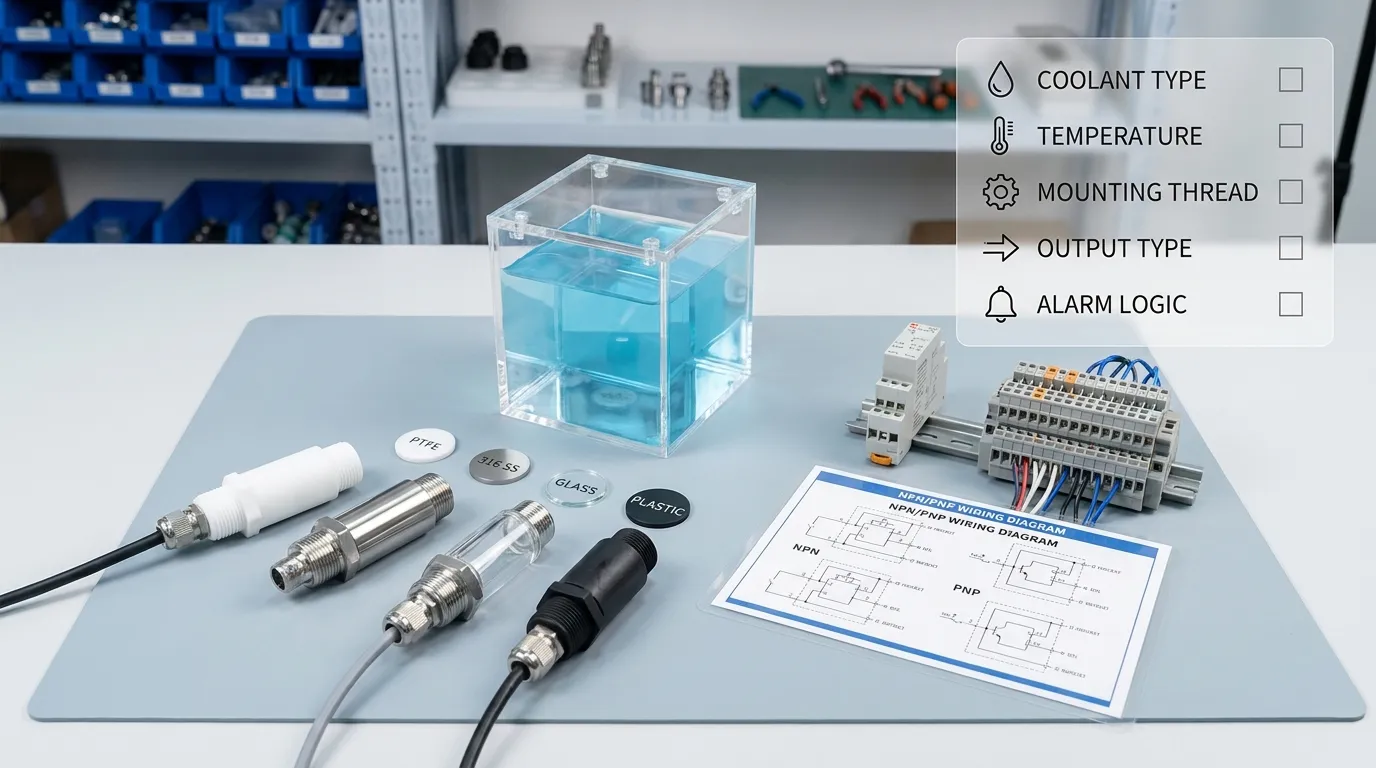
Vor der Auswahl eines optischen Sensors zur Überwachung des Kühlmittelbehälters, Bereiten Sie folgende Informationen vor:
- Kühlmitteltyp: Wasserbasiert, glykolbasiert, Ölbasierte, Emulsion, Kühlwasser, oder andere
- Tatsächliche Kühlmittelmarke oder Muster, falls die Kompatibilität unsicher ist
- Normale Betriebstemperatur und maximale Reinigungs- oder Prozesstemperatur
- Tankmaterial und Wanddicke
- Montagestil: Seitenwand, Gewinde-Boss, Flansch, oder Zollinhaber
- Erforderlicher Alarmpegel, gemessen vom Tankboden oder vom Pumpeneinlass
- Ausgangstyp: NPN, PNP, Staffel, oder analoges kontinuierliches Signal
- Alarmlogik: normalerweise offen oder normal geschlossen
- Versorgungsspannung, die von der Maschinensteuerungsplatine benötigt wird
- Verbindungsziel: SPS, Staffel, Summer, Warnlampe, oder Pumpenverriegelung
- Kabellänge, Steckverbindertyp, und Kabelmantelanforderung
- Auswirkung auf Vibrationen, Schneidechips schneiden, Schaum, Ölnebel, oder Kühlmittelspray
- Erforderliches Sensorkörpermaterial: Netzteil, PTFE, 316 Edelstahl, oder Glas
- Probenmenge und Testplan vor Produktionsauftrag
5-Schritt-Service-Prozess
1. Untersuchung
Senden Sie uns Ihren Kühltankantrag, Flüssigtyp, Panzerzeichnung oder Foto, Alarmstufe, und die Verkabelungspflicht per WhatsApp oder E-Mail.
2. Spezifikation und Anpassung
Unser Ingenieurteam überprüft das benetzte Material, Montagegewinde, Ausgabetyp, Kabel, Steckverbinder, und Alarmlogik. Für OEM/ODM-Projekte, Wir können individuelle Sensorstrukturen und Verkabelung unterstützen.
3. Probentests
Proben können mit Ihrem echten Kühlmittel zur Validierung vorbereitet werden, Stausee, Steuerpult, und Alarmschaltung. Dieser Schritt ist wichtig bei glykolbasierten Produkten, Ölbasierte, Hochtemperatur, oder additivreiche Kühlmittel.
4. Produktion und Qualitätskontrolle
Nach der Probenbestätigung, Die Fabrik produziert nach vereinbarter Konfiguration. QC konzentriert sich auf die Sensorfunktion, Ausgangszustand, Versiegelung, Kabelqualität, und Erscheinung.
5. Versand und Unterstützung
Wir exportieren Sensoren für Kunden in den USA, WIR, Indien, und andere Märkte. Die Unterstützung kann die Verdrahtungsbestätigung umfassen, Installationsvorschläge, und Modellauswahl für zukünftige Projekte.
Anforderungen und Spezifikationspunkte zu bestätigen
| Anforderung | Warum ist es wichtig |
|---|---|
| Kühlmitteltyp | Bestimmt den Bedarfsbedarf an benetztem Material und Probentests |
| Temperaturbereich | Beeinflusst den Sensorkörper, Prisma, Versiegelung, und Kabelwahl |
| Montagegewinde oder -struktur | Stellt sicher, dass der Sensor das Reservoir ohne Leckage anpasst |
| Alarmpunkthöhe | Verhindert Überhitzung und Pumpenbetrieb vor Schäden |
| Ausgangstyp | Muss SPS passen, Staffel, Alarmtafel, oder Controller-Eingang |
| NO/NC-Logik | Bestimmt, wann der Tiefpegelalarm ausgelöst wird |
| Kabel und Stecker | Muss zum Maschinenlayout und zur Serviceumgebung passen |
| Beckenumgebung | Chips, Schaum, Schwingung, Schlamm, und Sprühen können das Installationsdesign beeinflussen |
Optischer Sensor vs. Schwimmerschalter für Kühlmitteltanks
| Gegenstand | Optischer Niveausensor | Schwimmerschalter |
|---|---|---|
| Sensormethode | IR-photoelektrisches Prisma erkennt einen trockenen oder benetzten Zustand | Mechanischer Schwimmer bewegt sich mit dem Flüssigkeitsstand |
| Bewegliche Teile | Kein beweglicher Sensormechanismus | Beweglicher Schwimmer kann kleben bleiben oder sich abnutzen |
| Größe | Kompakt, geeignet für kleine Tanks und OEM-Reservoirs | Braucht oft mehr Innenraum. |
| Kühlmittelkontamination | Benötigt eine korrekte Montage fernab von Schlamm oder schweren Chips | Float kann mit Chips klemmen, Schmutz, oder klebrigen Rückstand |
| Verdrahtung | NPN, PNP, Relais-Schnittstelle, oder Controller-Eingang | In der Regel ein einfacher Schaltausgang |
| Bester Einsatz | Elektronischer Niederstromalarm, Kompakte Stauseen, OEM-Entwürfe | Einfache Panzer, bei denen mechanische Bewegung akzeptabel ist |
Warum sich für HojellyTek entscheiden
HojellyTek ist ein Hersteller von optischen und flüssigen Levelsensoren in Shenzhen mit eigenem R&D- und photoelektrische Sensorerfahrung. Wir unterstützen OEM/ODM-Anpassungen für die Überwachung des Kühlmitteltanks, Kompakte Ausrüstungsreservoirs, Industrielle Steuerungssysteme, sowie bei Integrierungen von Smart-Geräten, wo relevant,.
Käufer arbeiten mit uns zusammen für:
- Werksdirekter Sensorentwicklung und Exportunterstützung
- Design eines optischen Pegelschalters für kompakte Tanks
- Individuelles Kabel, Steckverbinder, Faden, und Ausgangskonfiguration
- Materialoptionen, einschließlich Netzteil, PTFE, 316 Edelstahl, und Glas
- Anwendungsunterstützung für Werkzeugmaschinen, Motoren, Kühler, und Pumpenschutz
- Exporterfahrung mit Kunden in den USA, WIR, Indien, und andere Märkte
FAQ
Kann eine Lösung eines optischen Pegelsensors für den Kühlmitteltank einen niedrigen Kühlmittelverbrauch erkennen, bevor die Pumpe beschädigt ist??
Ja. Der Sensor ist auf dem minimalen sicheren Kühlmittelniveau montiert. Wenn die Prismenspitze trocken wird, Der Ausgang ändert den Zustand und kann einen Alarm auslösen, SPS-Eingang, Staffel, Summer, Warnlampe, oder Pumpenstopp-Verriegelung.
Funktioniert ein optischer Pegelsensor mit glykolbasiertem Kühlmittel??
Es kann für viele glykolbasierte Kühlmittelanwendungen verwendet werden, aber die Kompatibilität sollte durch die Kühlmittelkonzentration bestätigt werden, Temperatur, Zusatzstoffe, und benetztes Material. Für OEM-Projekte, Es wird empfohlen, mit dem eigentlichen Kühlmittel zu testen.
Kann der Sensor ölbasiertes Kühlmittel oder Schneidöl erkennen??
Ja, Optische Pegelmessung kann mit ölbasiertem Kühlmittel oder Schneidöl verwendet werden, wenn das richtige Sensormaterial und die richtige Befestigungsposition gewählt sind. PTFE, Edelstahl, Oder Glasoptionen können für härtere Flüssigkeiten in Betracht gezogen werden.
Wo sollte der Sensor in einem Kühlmittelbehälter montiert werden??
Installieren Sie ihn auf der erforderlichen niedrigen Alarmstufe, meist oberhalb des Pumpeneinlasss oder Saugpunktes. Schlammzonen vermeiden, Chip-Akkumulationsbereiche, starke Turbulenzen, und Positionen, an denen Schaum Störalarme verursachen kann,.
Sollte ich für einen Kühlmitteltanksensor NPN oder PNP-Ausgang wählen??
Wählen Sie die Ausgabe, die zu Ihrer SPS passt, Steuerpult, oder Alarmschaltung. NPN und PNP sind beide häufig. NO/NC-Logik sollte ebenfalls überprüft werden, damit die Maschine korrekt reagiert, wenn der Kühlmittelstand niedrig ist.
Sind 4–20 mA für die Überwachung des Kühlmittelbehälters erforderlich.?
Nicht immer. Für einen einfachen Niedrigstufe-Alarm, ein optischer Punktpegelschalter mit NPN, PNP, oder eine Relais-Schnittstelle ist in der Regel ausreichend. Verwenden Sie 4–20 mA nur, wenn Ihr System eine kontinuierliche Pegelmessung benötigt, anstatt nur einen Alarmpunkt.
Fordern Sie ein Angebot für den Kühlmitteltanksensor an
Schick deinen Kühlmitteltyp, Panzerfoto oder -zeichnung, Alarmstufe, Montagegewinde, Ausgabetyp, Spannungsanforderung, sowie die Kabel-/Stecker-Präferenz zu HojellyTek per WhatsApp oder E-Mail. Unser Team hilft dabei, einen optischen Kühlmittelpegelsensor für Werkzeugmaschinen auszuwählen oder anzupassen, Motoren, Kühler, und OEM-Reservoirsysteme.


