
Lebensmitteltauglicher optischer Flüssigkeitsniveausensor
Als Hersteller und Exporteur in Shenzhen mit internem R&D, wir unterstützen OEM/ODM-Sensorkonfiguration für Netzteile, PTFE und 316 Benetzte Konstruktionen aus Edelstahl, wobei die Dokumentation des Lebensmittelkontakts bereits in der RFQ-Phase bestätigt wurde.
Sensorfähigkeiten auf Lebensmittel- und Getränkeniveau
Unsere optischen Flüssigkeitspegelsensoren werden zur Punktpegeldetektion in Tanks eingesetzt, Kleine Stauseen, Dosiersysteme und Prozessgeräte. Je nach Installation, Der Sensor kann Überlaufverhinderung unterstützen, Niedrig-Pegel-Alarm, Pumpenschutz, Befüllungsbestätigung oder Überwachung des Dosierungstanks.
Typische Fähigkeiten umfassen:
- Photoelektrische optische Messung mit einem IR-Emitter, Empfänger- und Prismasensor-Spitze
- Kompakte Sensorgehäuse für OEM-Geräteintegration
- Netzteil, PTFE, 316 Edelstahl- oder Glasoberflächenoptionen je nach Flüssigkeits- und Reinigungsbedingungen
- NPN, PNP, digitale Schalter oder 4–20 mA Ausgangsoptionen, abhängig von den Anforderungen des Steuerungssystems
- Gewinde, Panzermontierte oder maßgeschneiderte mechanische Strukturen
- Kabel, Steckverbinder- und Gehäuseanpassung für die OEM-Produktion
- Unterstützung für Lebensmittel, Getränk, Molkereiprodukte, Wasser, Kaffee, Sirup- und Dosierungsanwendungen nach der Probenvalidierung
Für Käufer, die das allgemeine Sensorprinzip vergleichen, Siehe unsere Optischer Pegelsensor Seite.
Die Einhaltung beginnt mit der benetzten Oberfläche
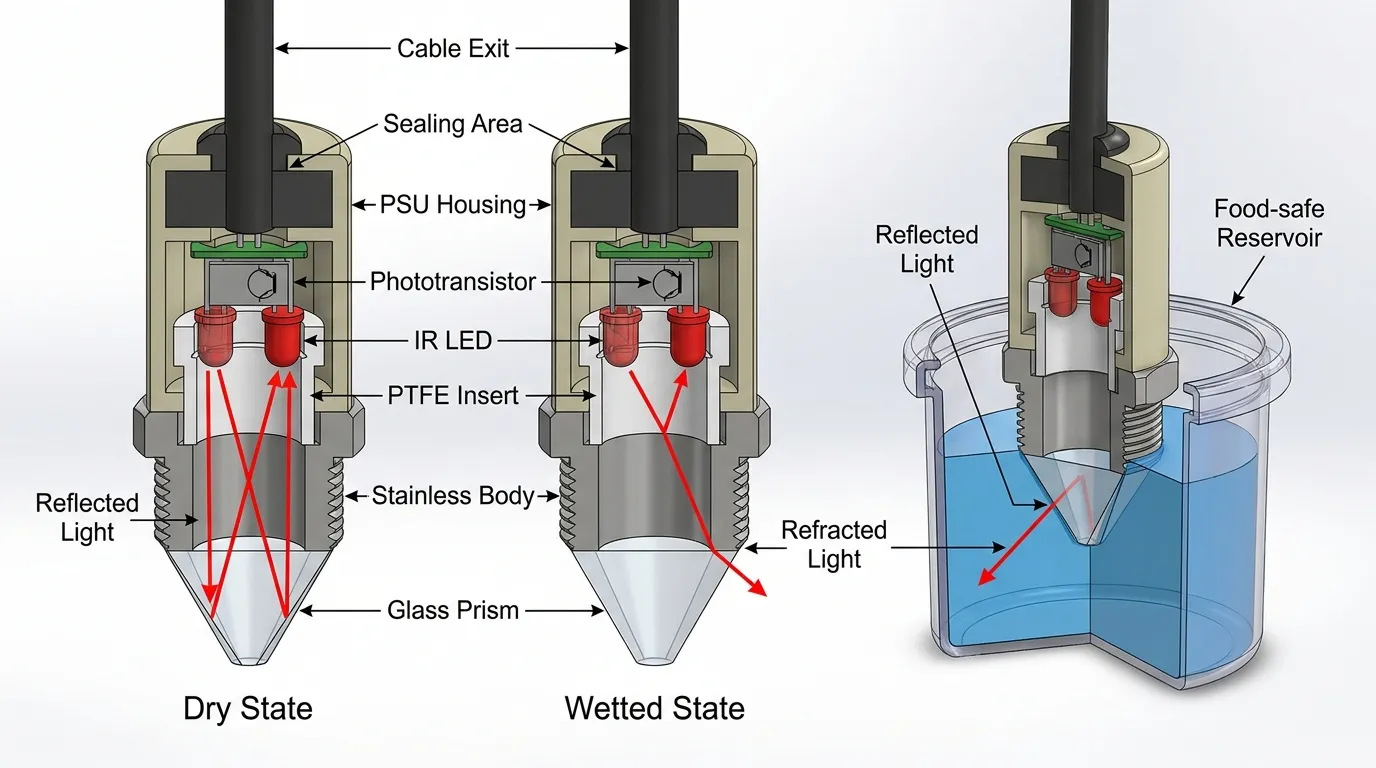
In Lebensmittel- und Getränkeprojekten, Die entscheidende Frage ist nicht einfach: "Erkennt der Sensor Flüssigkeit?"Die erste Frage ist, ob jeder benetzte Teil für den Prozess geeignet ist. Der Sensorkörper, Prisma, Siegel, Dichtung, Faden, Klebstoffbelästigung und Kabeleintritt müssen überprüft werden, bevor das Teil für Lebensmittelkontaktgeräte zugelassen wird.
Optische Pegelsensoren funktionieren, indem sie Infrarotlicht durch eine Prismenspitze senden. Im trockenen Zustand, Licht reflektiert intern im Prisma und kehrt zum Empfänger zurück. Wenn Flüssigkeit die Spitze bedeckt, der brechungsbedingte Zustand ändert sich, daher kehrt weniger Licht zum Empfänger zurück. Die Elektronik wandelt diese Änderung in ein Pegelsignal um.
Diese Methode ist nützlich, weil es keine beweglichen Schwimmer gibt, Keine magnetischen Zungen und keine mechanischen Scharnierpunkte im Messbereich. Für Lebensmittel- und Getränkeausrüstung, Das kann den Verschleiß an beweglichen Teilen reduzieren und die kompakte Montage vereinfachen. Allerdings, Die hygienische Leistung hängt weiterhin vom tatsächlich benetzten Material ab, Sensorgeometrie und Reinigungsprozess.
Nachweise zur Einhaltung von Lebensmittelkontakten wie FDA, EC 1935/2004, LFGB, 3-A oder EHEDG sollten vor der Verwendung in regulierten Lebensmittelkontaktgeräten bei HojellyTek bestätigt werden. Wir empfehlen nicht, Zertifizierungsansprüche zu veröffentlichen, bevor die relevanten Materialdeklarationen oder Testdokumente auf das genaue Sensormodell und die Konfiguration überprüft wurden.
Optionen für lebensmittelnahe Materialien
Verschiedene Lebensmittel- und Getränkeanwendungen benötigen unterschiedliche benetzte Materialien. Ein Kaffeemaschinen-Reservoir, Milchbecken, Das Sirupdosierungssystem und der Reinigungsflüssigkeitstank benötigen möglicherweise unterschiedliche Sensorkörper.
| Benetztes Material | Typische Lebensmittel- und Getränkenutzung | Stärken | Bestätigen Sie vor der Bestellung |
|---|---|---|---|
| Netzteil / PPSU-ähnlicher Ingenieurkunststoff | Kaffeemaschinen, Trinkwassertanks, Getränkespender, kleine OEM-Reservoirs | Leichtgewicht, kompakt, Geeignet für geformte Sensorstrukturen, Gut für die Integration von Geräten | Lebensmittelkontakterklärung, Heißwasser-Exposition, Waschmittelkompatibilität, Montagefestigkeit |
| PTFE | Dosiertanks, Reinigungsflüssigkeiten, Saure/alkalische Flüssigkeiten, Klebrige Zutaten, Chemische Kontaktzonen | Starke chemische Beständigkeit, Geringe Oberflächenadhäsion, Nützlich, wenn aggressive Flüssigkeiten den Sensor berühren könnten | Mechanische Montage, Dichtungsverfahren, Beweise für Lebensmittelkontakt, Reinigungstemperatur |
| 316 Edelstahl | Prozesstanks, Getränkelinien, Molkereiausrüstung, Spülbereiche | Langlebiges Gehäuse, Starker mechanischer Schutz, Geeignet für die Entwicklung industrieller Lebensmittelgeräte | Oberflächenfinish, Dichtungsmaterial, Schweiß- oder Gewindehygiene, Tatsächliche Notendokumentation |
| Glasprisma / Optische Schnittstelle | Optische Messspitze oder transparente Erkennungsschnittstelle | Stabile optische Oberfläche, Clean Sensing Point, Gute optische Transmission | Bruchrisiko, Restverhalten, Reinigungsprozess, Installationsschutz |
| Siegel / Dichtungsmaterial | Prozessverbindung, Leckverhinderung, Nahrungs-Kontakt-Grenze | Kritisch für die Hygiene, Reinigung, Überlebens- und Druckdichtung | EPDM/FKM/PTFE-Eignung, Temperaturexposition, Waschmittel- und Dampfkompatibilität |
Für aggressive Zutaten, Reinigungsflüssigkeiten oder feuchte Oberflächen mit geringer Haftung, a PTFE-optischer Sensor könnte besser geeignet sein als eine Kunststoffkarosserie-Option. Für Industrietanks, Spülzonen oder stärkeren mechanischen Schutz, a 316 Edelstahlsensor könnte der bessere Ausgangspunkt sein.
CIP, SIP, Hot-Fill- und Wash-Down-Überleben
Lebensmittel- und Getränkesensoren versagen oft, weil die Bestellspezifikation nur die Flüssigkeit beschreibt, nicht der Reinigungszyklus. Ein Sensor, der in Wasser bei Raumtemperatur funktioniert, übersteht möglicherweise eine wiederholte Warmfüllung nicht, Ätzende Spülung, Säurespülung, Dampfexposition oder Hochdruckreinigung.
Vor der Wahl eines lebensmitteltauglichen optischen Flüssigkeitspegelsensors, Bestätigen:
- Normale Produkttemperatur während des Betriebs
- Maximale Hotfill- oder Pasteurisationsexposition in der Nähe des Sensors
- Temperatur und Dauer der CIP- oder SIP-Reinigung
- Ob Dampf die Messspitze berührt oder nur die Tankwand
- Reinigungschemikalien, Konzentration und Spülsequenz
- Spüldruck in der Nähe des Kabelausgangs und des Steckers
- Ob der Sensor kontinuierlich untergetaucht ist oder nur während des Befüllens
- Ob der Rückstand nach dem Ablassen auf dem Prisma trocknet
Optische Sensorik basiert auf einer sauberen optischen Schnittstelle. Wenn Milchfeststoffe, Sirup, Ölfilm, Fruchtfleisch, Kristallisierter Zucker oder Reinigungsrückstände beschichten das Prisma, Der Sensor kann falsch lesen. Das bedeutet jedoch nicht, dass optische Sensoren ungeeignet sind, aber es bedeutet, dass die Flüssigkeit unter echten Reinigungs- und Trocknungsbedingungen getestet werden muss.
Hygienische Montage- und Installationsgestaltung
Eine hygienische Sensorinstallation sollte eingeschlossene Flüssigkeit vermeiden, Tote Ecken und schwer zu reinigende Kanten. In kleinen Haushaltsgeräten, Die Priorität könnte eine kompakte Seitenwandmontage sein. In-Process-Tanks, Die Priorität könnte die Entwässerbarkeit sein., Dichtungskompression und Oberflächenfinish um die Prozessverbindung.
Gängige Montageoptionen sind die Installation von Gewindetanks, kompakte Seitenmontage, Flansch-Montage oder individuell angepasstes OEM-Gehäuse. Das beste Design hängt von der Wanddicke des Beckens ab, Zugang zur internen Reinigung, Sensorausrichtung und ob die Kabelseite einen Ausspülschutz benötigt.
Für Kaffeemaschinen, Wasserspender und Heißgetränke-Ausrüstung, Der Sensor muss kompakte Reservoirs aufnehmen und dabei warmes Wasser tolerieren, dampfnahe Bereiche und wiederholtes Auffüllen. Siehe unsere Kaffeemaschinensensor Seite für ein stärker auf Geräte fokussiertes Beispiel.
Molkereiprodukte, Getränke- und Dosierungsanwendungen
Lebensmittel- und Getränkehersteller verwenden optische Punkt-Level-Sensoren, wo ein kompakter, Ein schnelles Flüssigkeits-/Nicht-Flüssig-Signal ist nützlicher als die kontinuierliche Pegelmessung.
Typische Anwendungen sind:
- Niedrigstufiger Alarm in Milch, Wasser- oder Getränkereservoirs
- Überlaufschutz in Füllanlagen
- Anzeige des leeren Tanks vor dem Pumpenbetrieb
- Dosierungstank-Bestätigung für den Geschmack, Sirup- oder Additivsysteme
- Wasserstandserkennung für Kaffeemaschine und Spender
- Überwachung von Reinigungsflüssigkeitstanks in Lebensmittelgeräten
- Kleine OEM-Tanks, bei denen die Schwimmer zu groß oder unzuverlässig sind
Für Milchprodukte und Getränkeflüssigkeiten, Probentests sind wichtig, weil Schaum, Fett, Protein, Pulp, Zucker und Reinigungsrückstände können die optische Detektion beeinträchtigen. Für Dosierungssysteme, Die chemische Verträglichkeit ist in der Regel die oberste Priorität. Für Kaffee- und Warmwassergeräte, Temperatur, Maßstab und kompakte Montage sind in der Regel wichtiger.
Hygiene-Checkliste vor der Ausschreibung
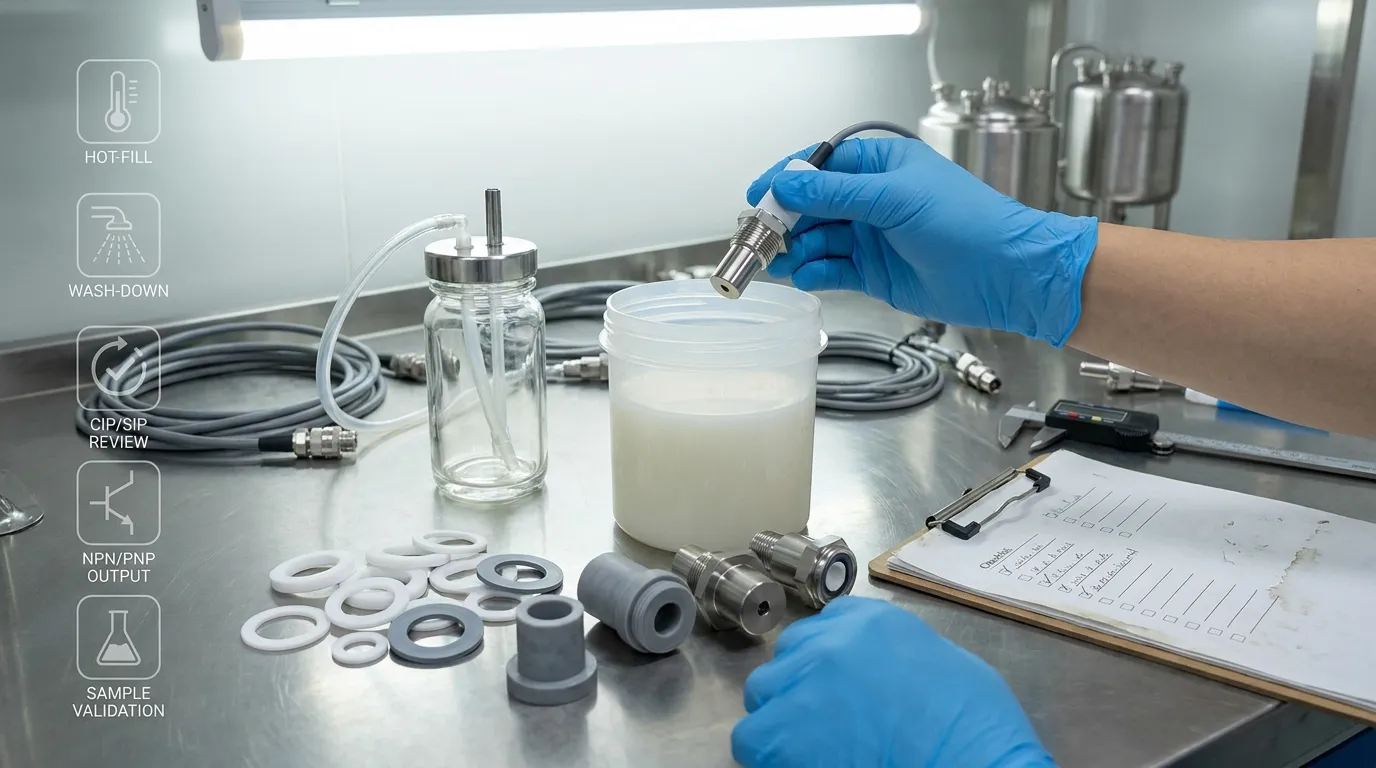
Verwenden Sie diese Checkliste, bevor Sie ein Beispiel anfordern:
- Listen Sie jede Flüssigkeit auf, die den Sensor berührt, einschließlich Reinigungschemikalien.
- Bestätigen Sie alle benetzten Teile: Karosserie, Prisma, Siegel, Dichtung und Gewinde.
- Geben Sie an, ob eine Lebensmittel-Kontaktdokumentation für das Endprodukt erforderlich ist.
- Details zum Reinigungszyklus teilen: Warmwasser, Reinigungsmittelmittel, Säure, Alkali, Dämpfen oder spülen.
- Bestätigen Sie, ob der Sensor das CIP überstehen muss, SIP oder externe Spülung.
- Überprüfe, ob Flüssigkeit schaumen kann, Mantel, Kristallisieren, Fermentieren oder Feststoffe hinterlassen.
- Definiere die Montageposition: Seitenwand, Unteres, Nach oben, Pfeife, Reservoir oder Tank.
- Bestätigen Sie, ob der Sensorbereich nach der Reinigung entleerbar sein muss.
- Wählen Sie den Ausgabetyp: NPN, PNP, digitaler Schalter oder 4–20 mA.
- Probenvalidierung mit der realen Flüssigkeit und Reinigungsverfahren anfordern.
5-Schrittbewerbungsunterstützungsprozess
- Untersuchung
Senden Sie den flüssigen Typ, Panzerzeichnung, Reinigungsmethode, Temperaturexposition, Montageposition und erforderlicher Ausgang. - Spezifikations- und Anpassungsbewertung
Unser Ingenieurteam prüft das benetzte Material, Wohnen, Siegel, Kabel, Faden, Ausgabe- und Steuerplatinen-Kompatibilität. - Probenbestätigung
Proben können mit dem echten Essen zur Validierung vorbereitet werden, Getränk, Dosierflüssigkeit oder Reinigungszyklus. - Produktion und Qualitätskontrolle
Nach der Konfirmation, Die Fabrik folgt dem vereinbarten Modell, Verdrahtung, Material- und Inspektionsanforderungen für die OEM/ODM-Produktion. - Versand- und Exportunterstützung
Wir unterstützen Exportprojekte für Kunden in den USA, WIR, Indien und andere Märkte, mit Verpackung und Dokumentation, die an die Bestellanforderungen abgestimmt sind.
Voraussetzungen zum Bestätigen vor der Bestellung
| Anforderung | Warum es wichtig ist |
|---|---|
| Benetztes Material | Bestimmt die Eignung für den Kontakt mit Lebensmitteln, Chemische Beständigkeit und langfristige Hygiene |
| Reinigungsprozess | CIP/SIP, Warmwasser, Waschmittel oder Dampf können die Materialwahl verändern |
| Flüssigverhalten | Schaum, Film, Pulp, Fett oder Kristalle können die optische Wahrnehmung beeinflussen |
| Montagedesign | Eine schlechte Installation kann Spalten schaffen, Leck- oder Rückstandsfallen |
| Ausgangssignal | NPN, PNP, digital oder 4–20 mA müssen mit dem Controller übereinstimmen |
| Kabel und Stecker | Wash-down und OEM-Montagebedingungen beeinflussen das Design des Kabelaustritts |
| Dokumentation | Behauptungen über Lebensmittelkontakt müssen mit modellspezifischen Belegen bestätigt werden |
Optische vs. Schwimmschwamm- vs. leitende Pegeldetektion
| Sensortyp | Beste Passform | Hauptvorteil | Lebensmittel-/Getränkeproblematik |
|---|---|---|---|
| Optischer Punktpegelsensor | Kompaktpanzer, Vorrichtungen, Dosierung, Überlauf-/Leernachweis | Kein beweglicher Schwimmer, Schnelles Punktpegelsignal, Kompaktes Design | Das Prisma muss sauber bleiben und das Material muss validiert werden |
| Schwimmerschalter | Einfache Tanks mit genug Platz | Kostengünstiges mechanisches Schalten | Bewegliche Teile, Sticking, Reinigungsschwierigkeit |
| Leitende Sonde | Leitfähige Flüssigkeiten | Einfache Pegeldetektion | Nicht geeignet für nichtleitende Flüssigkeiten und möglicherweise freiliegende Elektroden erforderlich |
| Kapazitiver Sensor | Einige Flüssigkeits-durch-Wand- oder Sondendesigns | Kann ohne bewegliche Teile erkennen | Erfordert Abstimmung und kann von Ablagerungen beeinflusst werden |
Warum mit HojellyTek zusammenarbeiten
HojellyTek kombiniert photoelektrische optische Messung, Inhouse-R&D- und OEM/ODM-Fertigung für Projekte mit Flüssigkeitsniveausensoren. Anstatt für jede Lebensmittelanwendung ein festes Modell zu verkaufen, Wir helfen Käufern, benetzte Materialien zu überprüfen, Montage, Ausgabe, Anforderungen an die Kabelkonstruktion und Probentests vor der Massenproduktion.
Für Smart-Appliance-Projekte, Die Integration von Tuya oder Smart Life kann diskutiert werden, wenn der Sensor Teil eines angeschlossenen Wassertanks ist, Spender oder Überwachungsgerät.
FAQ
Was macht einen lebensmitteltauglichen optischen Flüssigkeitspegelsensor für Getränkegeräte geeignet??
Es sollte geeignete benetzte Materialien verwenden, eine reinigungsfähige Sensorstruktur und ein Montagedesign, das zum Reinigungsprozess passt. Lebensmittel-Kontakt-Dokumentation muss für das genaue Material und Modell überprüft werden, bevor Zertifizierungsansprüche verwendet werden.
Können optische Sensoren in Milch- oder Milchtanks verwendet werden??
Ja, Sie können für die Erkennung von Milchpunkten in Betracht gezogen werden, aber Milchfett, Proteinfilm, Schaum- und Reinigungsrückstände sollten getestet werden. Das Prisma muss sauber genug bleiben, um eine stabile Trocken-/Nasserkennung zu gewährleisten.
Ist PTFE besser als 316 Edelstahl für Lebensmittelanwendungen?
Nicht immer. PTFE ist nützlich für chemische Beständigkeit und geringe Haftung, während 316 Edelstahl ist stärker für industrielle Tanks und Reinigungsumgebungen. Die richtige Wahl hängt von der Flüssigkeit ab, Reinigungsmethode und Montagedesign.
Kann der Sensor die CIP- oder SIP-Reinigung überstehen??
Es hängt vom ausgewählten Material ab, Siegel, Kabelaustritt und Reinigungszyklus. CIP/SIP-Temperatur, Dampfexposition, Chemikalien und Dauer sollten während der RFQ geteilt werden, damit die korrekte Konfiguration überprüft werden kann.
Will-Sirup, Schaum oder kristallisierte Flüssigkeit verursachen falsche Messwerte?
Es kann. Optische Sensoren hängen von der Prismaoberfläche ab. Klebriger Sirup, Schwerer Schaum, Getrockneter Zucker oder kristallisierte Rückstände können den Nachweis beeinflussen, daher wird vor der Produktionsgenehmigung eine reale Flüssigkeitsprüfung empfohlen.
Was sollte ich schicken, um ein Angebot anzufordern??
Senden Sie den Namen der Flüssigkeit, Panzerzeichnung, Montageposition, Präferenz für benetztes Material, Reinigungsprozess, Temperaturexposition, Ausgabetyp, Kabel-/Steckerbedarf, Bestellmenge und etwaige Anforderungen an Lebensmittelkontaktdokumente.
Fordern Sie ein Angebot für Lebensmittel- und Getränkesensoren an
Zur Spezifizierung einer lebensmitteltauglichen optischen Pegelmesslösung, Senden Sie Ihre Antragsdaten per WhatsApp oder E-Mail. Teile die Flüssigkeit, Tankstruktur, Reinigungsmethode, Materialpräferenz, Montagezeichnung und erforderliche Ausgabe, und unser Team wird eine geeignete Sensorkonfiguration für Probentests und OEM-Produktion empfehlen.


