
Glasfaser-Flüssigkeitspegelsensoren (Langzeitgitter) Erklärt
A Faseroptischer Flüssigkeitsniveausensor mit einem Langzeit-Gitter Erkennt der Flüssigkeitsspiegel, indem gemessen wird, wie sich die Lichtdurchlässigkeit innerhalb einer Glasfaser verändert, wenn ein Teil des Gitters von Flüssigkeit umgeben ist.. Im Gegensatz zu HojellyTeks photoelektrischen optischen Pegelsensoren, diese Technologie verwendet keine Prismaspitze mit IR-Emitter und -empfänger. Es hängt vom optischen Verlust ab, Wechselwirkung des Brechungsindex, und die Länge der Faser, die der Flüssigkeit ausgesetzt ist.
Dieser Artikel erklärt, wie langperiodische Gitterfasersensoren funktionieren, wo sie nützlich sind, wo sie zu komplex sein könnten, und wenn ein einfacher Optischer Pegelsensor ist die bessere Wahl für OEM-Ausrüstung, tankt, Alarme, und industrielle Bedientafeln.
Wie die Langzeit-Gitter-Faseroptik-Pegelmessung funktioniert
Ein langanhaltendes Gitter, oft als LPG bezeichnet, ist ein Abschnitt der Glasfaser, in dem die Faserstruktur in wiederholten Abständen verändert wird. Dieses Gitter lenkt das Licht vom Faserkern in Verkleidungsmoden. Einfach ausgedrückt, Ein Teil des Lichts, das durch die Faser fließt, wird absichtlich empfindlich gegenüber der Umgebung gemacht.
Wenn das Gitter in Luft ist, Der umgebende Brechungsindex unterscheidet sich von dem beim Eintauchen in Flüssigkeit. Da Flüssigkeit mehr vom Gitter bedeckt, Die Höhe des Lichtverlusts ändert sich. Durch Messung des Transmissionsspektrums oder des Dämpfungsmusters, Das System kann den Flüssigkeitsstand entlang der Gitterlänge schätzen.
Das Messprinzip unterscheidet sich von einem typischen elektrischen Schwimmerschalter, Kapazitive Sonde, Ultraschallsender, oder photoelektrischer Punktpegelschalter. Ein Langzeit-Gitterfasersensor kann erforderlich sein:
- Eine Glasfaser mit LPG-Sensorsektion
- Eine Lichtquelle
- Optische Detektions- oder Abfrageausrüstung
- Signalverarbeitung zur Umwandlung von Lichtverlust in Pegelinformationen
- Kalibrierung der Zielflüssigkeit und der Installationsgeometrie
Für die Forschung, Spezialüberwachung, Gefährliche Umgebungen, und Fernmessung, Dieser Ansatz kann sehr wirkungsvoll sein. Für einfache Hoch-/Tiefpegelerkennung, aber, Es könnte mehr sein, als die Anwendung benötigt.
Warum der Brechungsindex wichtig ist
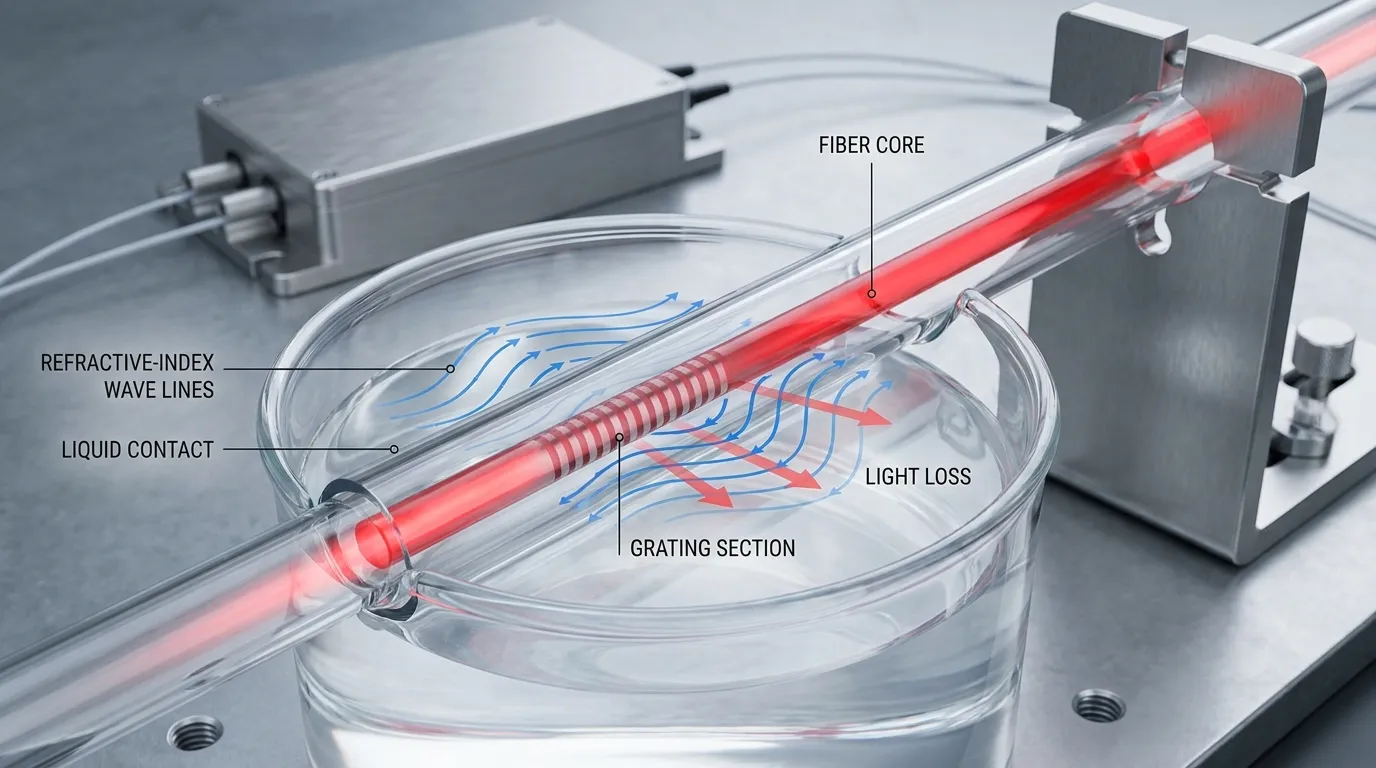
Die zentrale Idee hinter der Langzeit-Gitterpegelmessung ist, dass Flüssigkeit die optischen Bedingungen rund um die Faser verändert. Jedes Medium hat einen Brechungsindex. Luft, Wasser, Öl, Brennstoff, lösemittel, Und kryogene Flüssigkeiten interagieren nicht exakt auf dieselbe Weise mit Licht.
Wenn die Flüssigkeit den Gitterbereich berührt, Die Verkleidungsmoden werden vom umgebenden Medium beeinflusst. Das Ergebnis ist eine messbare Veränderung der Lichtdurchlässigkeit. Wenn nur ein kleiner Teil des Gitters untergetaucht ist, Die Signaländerung ist kleiner. Wenn mehr vom Gitter untergetaucht ist, Die Signaländerung wird größer.
Deshalb werden LPG-Fasersensoren oft als kontinuierliche oder quasi-kontinuierliche Pegelmessgeräte betrachtet, nicht nur Punktschalter. Die Sensorantwort steht in Zusammenhang mit der untergetauchten Länge des Gitters und den optischen Eigenschaften der Flüssigkeit.
Das erklärt auch eine wichtige Einschränkung: Das gleiche Faserdesign reagiert möglicherweise nicht in jeder Flüssigkeit identisch. Eine Wasseranwendung, Ölanwendung, Chemikalientank, oder eine gemischte Schnittstellenanwendung kann eine andere Kalibrierung und Prüfung erfordern.
Glasfaserpegelsensoren sind nicht dasselbe wie photoelektrische optische Sensoren
Das Wort "optisch" kann verwirrend sein, da es für mehrere verschiedene Sensorfamilien verwendet wird. Ein faseroptischer Langzeit-Gittersensor und ein photoelektrischer optischer Pegelsensor nutzen beide Licht, Aber die Arbeitsprinzipien, Kostenstruktur, und Anwendungsfälle sind unterschiedlich.
Ein gängiger photoelektrischer optischer Pegelschalter verwendet eine Infrarot-LED, ein Fototransistor, und eine transparente Prismenspitze. Im trockenen Zustand, IR-Licht reflektiert intern im Prisma und kehrt zum Empfänger zurück. Wenn Flüssigkeit das Prisma bedeckt, der brechungsbedingte Zustand ändert sich, Weniger Lichtrückgewinne, und der Sensor schaltet die Ausgabe um.
Diese Art von Photoelektrischer Punktsensor ist kompakt, fast, und praktisch, um festzustellen, ob auf einer festen Ebene Flüssigkeit vorhanden ist.. Es wird häufig zum Überlaufschutz eingesetzt, Niedrig-Pegel-Erkennung, Pumpen-Trockenlaufprävention, Kleinbeckenüberwachung, Kühlsysteme, Wasserspender, Medizinische Geräte, und OEM-Flüssigkeitsbehälter.
Ein faseroptischer LPG-Sensor, dagegen, wird üblicherweise ausgewählt, wenn die Faser selbst als Sensorelement dienen muss, wenn die optische Fernübertragung wertvoll ist, oder wenn die Umgebung elektrisch zu laut oder gefährlich für konventionelle Elektronik in der Nähe des Tanks ist..
Wo faseroptische Langzeit-Gittersensoren gewinnen
Glasfaserpegelsensoren sind nicht die günstigste Methode, um Flüssigkeit zu erkennen. Sie gewinnen, wenn die Umgebung die zusätzliche Komplexität rechtfertigt.
Hohe EMI und elektrisch laute Standorte
Weil der Messweg optisch ist, Glasfasersensoren können in der Nähe von Motoren attraktiv sein, Hochspannungsanlagen, Transformatoren, RF-Systeme, Schweißgeräte, und an anderen Orten, an denen elektromagnetische Störungen elektrische Sensorsignale stören können.
Ein photoelektrischer optischer Pegelschalter benötigt weiterhin Strom und elektrische Ausgangsverdrahtung am Sensor. Ein Glasfasersystem kann empfindliche Elektronik weiter entfernt bewegen, je nach Ausführung.
Fernüberwachung
Glasfaser kann Signale über große Entfernungen mit geringem Signalverlust übertragen. Dadurch ist die Fasermessung am Tank nützlich, Schiff, oder überwachter Punkt weit vom Kontrollraum entfernt ist.
In einigen Projekten, Dies kann den Bedarf an elektrischer Signalaufbereitung in der Nähe des Messpunktes verringern. Jedoch, Das Gesamtsystem benötigt weiterhin einen richtigen optischen Interrogator, Routingplan, Schutzrohr, und Installationsmethode.
Intrinsisches Sicherheitspotenzial
Die Glasfaser selbst führt am Messpunkt keinen elektrischen Strom, die in gefährlichen oder explosiven Umgebungen nützlich sein können. Deshalb wird glasfaseroptische Sensorik oft zusammen mit intrinsisch sicherer Instrumentierung diskutiert.
Jedoch, "Intrinsisch sicher" ist nichts, was man allein aus dem Wort Faser schließen sollte. Das vollständige System, einschließlich Lichtquelle, Vernehmer, Installation, Gehege, und Zonenklassifikation, muss bewertet werden. Für Käufer, die praktische Optionen vergleichen, Unsere Seite auf intrinsisch sichere Wahrnehmung erklärt, wie Anforderungen an gefährliche Bereiche die Auswahl des optischen Pegelsensors beeinflussen.
Extreme Temperaturen oder spezielle flüssige Umgebungen
Glasfasersensorik kann in speziellen Umgebungen nützlich sein, in denen elektrische Komponenten in der Nähe der Flüssigkeit unerwünscht sind. Je nach Fasermaterial, Beschichtung, Verpackung, und Installation, Es könnte für kryogene Tanks in Betracht gezogen werden., Chemische Prozesse, und Fernüberwachungspunkte.
Für punktbezogene Anwendungen in Flüssigkeiten bei niedriger Temperatur, Ein einfacheres photoelektrisches Design könnte auch möglich sein, wenn der Sensorkörper, Versiegelung, und die optische Spitze sind für das Medium konzipiert. Siehe unseren Leitfaden zu Kryogene Pegelmessung für einen verwandten optischen Punktlevel-Anwendungsfall.
Kompromisse: Warum Glasfaser nicht immer die beste Wahl ist
Der Hauptnachteil eines Langzeit-Gitter-Faserpegelsensors ist nicht das Sensorprinzip. Es ist die Gesamtkomplexität des Systems.
Ein praktischer LPG-Sensor benötigt möglicherweise eine optische Abfrageausrüstung, Kalibrierung, Geschützte Glasfaserleitung, Trainierte Einrichtung, und sorgfältige Interpretation von Signaländerungen. Für einen OEM-Käufer, der nur die Erkennung von "Tank full" oder "tank empty" benötigt, Das kann teuer und unnötig sein.
Häufige Abwägungen sind:
- Höhere Systemkosten als einfache Punktschalter
- Optischer Interrogator oder Messgerät benötigt
- Kalibrierung, beeinflusst vom flüssigen Brechungsindex
- Mögliche Empfindlichkeit gegenüber der Beschichtung, Kontamination, Blasen, und Lagerstätten
- Empfindlichere Faserhandhabung im Vergleich zu geformten Sensorgehäusen
- Komplexere Installation und Fehlersuche
- Weniger geeignet für kostengünstige Geräte oder kompakte OEM-Bauten
Glasfasersensoren benötigen außerdem realistischen mechanischen Schutz. Eine nackte Faser ist keine robuste industrielle Sonde für sich genommen. Die Verpackung, Röhre, Montagekopf, Dichtungsdesign, und der Kabelschutz ist ebenso wichtig wie das optische Prinzip.
Wenn ein einfacher photoelektrischer optischer Sensor ausreicht
Für viele echte Produkte, Der Käufer benötigt kein faseroptisches Langzeit-Gittersystem. Ein kompakter photoelektrischer optischer Sensor reicht aus, wenn die Anforderung eine Festpunkt-Flüssigkeitspräsenzdetektion ist.
Ein photoelektrischer Prismensensor ist oft die praktische Wahl, wenn Sie es brauchen:
- Hochstufenüberlauferkennung
- Niedrig-Level-Leerdetektion
- Pumpen-Trockenlaufschutz
- Flüssigkeitsdetektion für kleine Tanks
- Wasser, Öl, Kühlmittel, oder Kraftstoffanwesenheitserkennung
- Schnelle Reaktion in einem kompakten Raum
- Einfache NPN, PNP, oder digitaler Ausgang an eine Steuerplatine
- OEM-freundliche Größe, Verdrahtung, und Montage
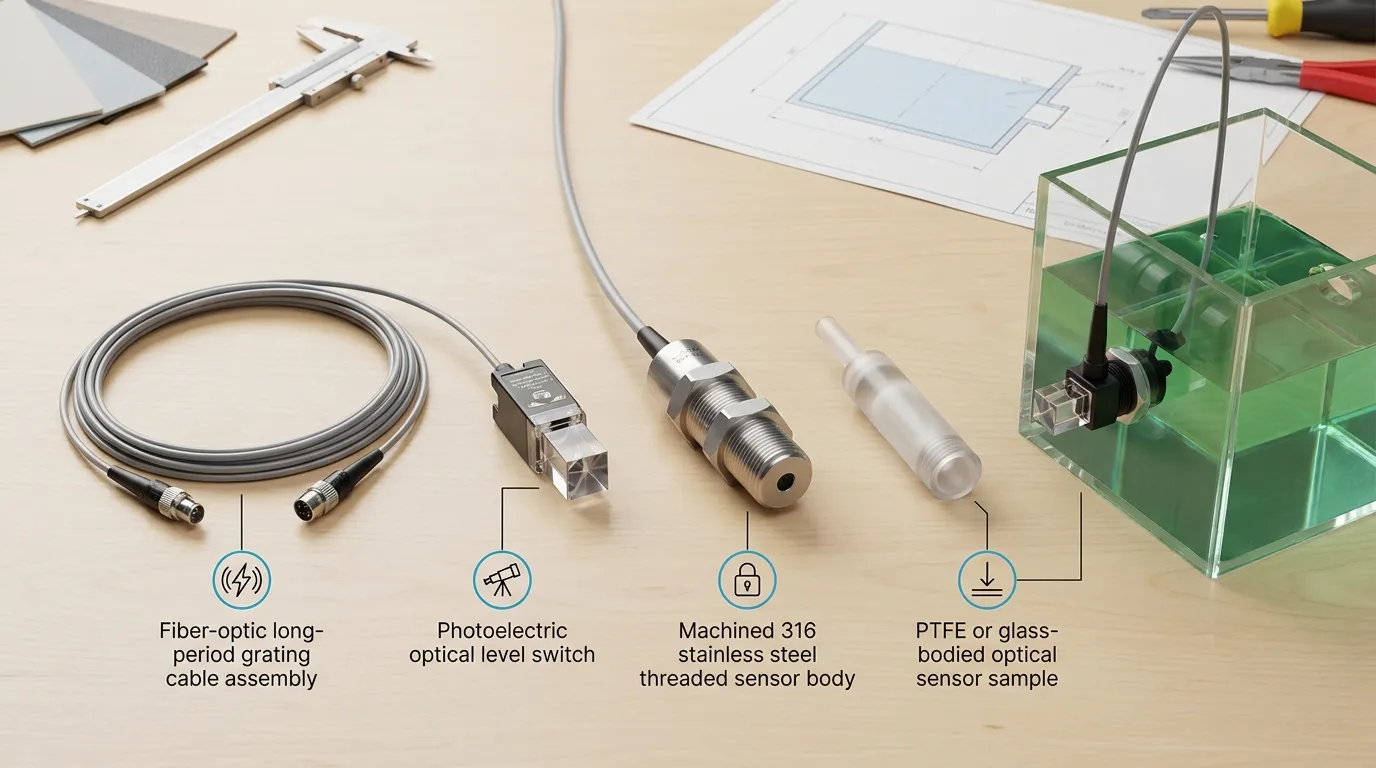
HojellyTek konzentriert sich auf photoelektrische optische Flüssigkeitsniveau-Messung für OEM/ODM- und industrielle Anwendungen. Diese Sensoren verwenden typischerweise eine IR-LED und einen Phototransistor in einem abgedichteten Gehäuse, mit einer Prismaspitze, die der Flüssigkeit ausgesetzt ist. Wenn die Spitze von trocken zu feucht wechselt, Die interne Reflexion ändert sich und die Ausgangsschalter schalten.
Je nach Projekt, Käufer müssen möglicherweise benetzte Materialien wie Netzteil bestätigen, PTFE, 316 Edelstahl, oder Glas. Sie sollten auch den Gewindetyp überprüfen, Dichtungsverfahren, Ausgangslogik, Versorgungsspannung, Kabellänge, Steckverbinder, Betriebsflüssigkeit, Reinigungsbedingungen, und ob der Sensor seitlich montiert ist, Nach oben, oder Beckenboden.
Glasfaser- vs. photoelektrische optische Pegelsensoren
| Vergleichspunkt | Glasfaser-Langzeit-Gittersensor | Photoelektrischer optischer Pegelsensor |
|---|---|---|
| Kernprinzip | Misst Lichtdurchlässigkeitsverlust oder spektrale Veränderungen, die durch den Flüssigkeitsbrechungsindex um das Fasergitter verursacht werden | Verwendet IR-LED, Fototransistor, und der Prismareflexionswechsel zwischen trockenen und feuchten Zuständen |
| Leveltyp | Kann kontinuierliche oder verteilte Messungen unterstützen, abhängig vom Design. | Üblicherweise Punktdetektion auf einer festen Höhe |
| Bester Anwendungsfall | Stellen mit hoher EMI-Belastung, Fernmessung, Spezialforschung, Gefahren- oder Fernüberwachung | OEM-Tanks, Überlaufalarme, Pumpenschutz, Kompakte Ausrüstung, Wasser-/Öl-/Kühlmittelerkennung |
| Elektronik in der Nähe von Flüssigkeit | Kann je nach Systemarchitektur minimiert werden | Der Sensor hat elektrische Verkabelung und Ausgang am installierten Punkt |
| Kostenniveau | Meistens höher wegen der Ballaststoffzubereitung, Vernehmer, und Kalibrierung | In der Regel niedriger und einfacher für die Massenproduktion |
| Installation | Erfordert sorgfältige Faserleitung, Schutz, und optischer Aufbau | Gewinde, Flanged, oder eine paneelmontierte Installation ist einfacher |
| Ausgabe | Optisches Signal interpretiert von externer Ausrüstung | NPN, PNP, Transistorausgang, Relais-Schnittstelle, oder analoge Option, je nach Modell |
| Ausfallrisiken | Faserbruch, Biegeverlust, Fouling, Kalibrierungsdrift, Variation des Flüssigkeitsbrechungsindex | Prisma-Verschmutzung, Blasen, Beschichtung, Falsche Materialauswahl, Falsche Verkabelung, Montagefehler |
| Käuferpassung | Fortschrittliche Messgeräte- oder Hard-Site-Engineering-Teams | OEM-Ingenieure, Panzerhersteller, Ausrüstungsbauer, und industrielle Käufer, die eine einfache Umstellung benötigen |
Praktische Kaufprüfungen vor der Wahl einer der Technologien
Vor der Wahl der Glasfaser- oder photoelektrischen Pegelmessung, Definieren Sie die eigentliche Aufgabe klar.
Erste, Entscheiden Sie, ob Sie eine kontinuierliche Pegelmessung oder Punktdetektion benötigen. Wenn du nur wissen musst, ob die Flüssigkeit eine feste Höhe erreicht hat, Ein photoelektrischer Punktsensor ist in der Regel einfacher. Wenn Sie entlang einer Faserlänge messen müssen, LPG-Sensorik könnte relevanter sein.
Sekunde, Überprüfen Sie die Flüssigkeit. Wasser, Öl, Brennstoff, Chemikalien, Schaum, Klebrige Flüssigkeiten, und kryogene Flüssigkeiten verhalten sich anders. Für photoelektrische Sensoren, Das Prisma muss sauber genug bleiben, um eine verlässliche Reflexionsänderung zu gewährleisten. Für Glasfasersensoren, Der Brechungsindex und der Beschichtungszustand können die Kalibrierung beeinflussen.
Dritte, Überprüfung der Installation. Ein photoelektrischer Sensor kann eine Gewindehalterung verwenden, Flanschhalterung, oder eine benutzerdefinierte OEM-Struktur. Die Wanddicke des Tanks, Dichtungsdichtung, Orientierung, und die Austrittsrichtung des Kabels sind von großer Bedeutung. Ein Fasersensor benötigt einen geschützten Weg und eine stabile Positionierung, daher Biegung, Schwingung, oder versehentliches Ziehen erzeugt keine falschen Signale.
Vierter, Bestätigen Sie die Signalschnittstelle. Fotoelektrische Sensoren können mit NPN ausgewählt werden, PNP, Normalerweise offen, normalerweise geschlossen, oder andere Ausgangskonfigurationen, die zur SPS oder Steuerplatine passen. Einige Projekte benötigen 4–20 mA für die pegelbezogene Überwachung, dies sollte jedoch bei der RFQ bestätigt werden, da nicht jeder Sensortyp denselben Ausgang unterstützt.
Endlich, Denken Sie an die Wartung. Jede optische Sensoroberfläche kann von schweren Ablagerungen betroffen sein, Kristallisation, Luftblasen, Schaum, oder klebrigen Rückstand. Der beste Sensor ist nicht nur der, der am ersten Tag funktioniert, sondern der, der nach Monaten echten Betriebs stabil bleibt.
Wo HojellyTek hineinpasst
HojellyTek ist ein Hersteller und Exporteur aus Shenzhen, der sich auf photoelektrische optische Sensoren spezialisiert hat, Flüssigkeitsstandsdetektion, und OEM/ODM-Sensoranpassung. Unser internes R&Das D-Team arbeitet mit Käufern, die praktische optische Pegelschalter für Geräte benötigen, tankt, Automatisierungssysteme, und spezialisierte Flüssigkeitsanwendungen.
Wir bieten Langzeitraum-Gitterfasersensoren nicht als dasselbe Produkt wie unsere prismenbasierten optischen Pegelschalter an. Es handelt sich um unterschiedliche Technologien. Wenn Ihr Projekt wirklich glasfaserbasierte Pegelmessung benötigt, Du solltest die optische Befragung evaluieren, Faserverpackung, Kalibrierung, und Anforderungen an gefährliche Bereiche sorgfältig.
Wenn Ihr Projekt kompakte Punkt-Level-Erkennung benötigt, Unser Team kann bei der Überprüfung des benetzten Materials helfen, Montagegewinde, Verdrahtung, Ausgabetyp, Tankstruktur, und den Bedarf an Probentests. Wir unterstützen Exportprojekte für Märkte wie die USA, WIR, und Indien, OEM/ODM-Diskussionen sind per WhatsApp oder E-Mail verfügbar.
FAQ
Was ist ein faseroptischer Flüssigkeitsstandsensor, der ein Langzeitgitter verwendet??
Ein faseroptischer Flüssigkeitsstandsensor mit einem langanhaltenden Gitter misst den Flüssigkeitsspiegel, indem er Veränderungen in der Lichtdurchlässigkeit erkennt, wenn Flüssigkeit einen Teil des Gitterabschnitts umgibt. Der Brechindex der Flüssigkeit verändert, wie Licht in der Faser gekoppelt oder verloren geht, wodurch das System den Pegel schätzen kann.
Worin unterscheidet sich ein Langzeitraumgittersensor von einem photoelektrischen optischen Pegelsensor??
Ein Langzeit-Gittersensor verwendet eine Glasfaser als Sensorelement und misst Transmission oder spektrale Veränderungen. Ein photoelektrischer optischer Pegelsensor verwendet eine IR-LED, Fototransistor, und Prismaspitze, um zu erkennen, ob die Spitze an einer Stelle trocken oder benetzt ist.
Sind faseroptische Flüssigkeitspegelsensoren von Natur aus sicher??
Sie können ein intrinsisch sicheres Systemdesign unterstützen, da die Messfaser am Messpunkt keinen elektrischen Strom benötigt. Jedoch, Die intrinsische Sicherheit hängt vom vollständigen Systemdesign ab, Installation, Elektronik, Gehege, und geltende Anforderungen an gefährliche Gebiete.
Wann sollte ich die Glasfaserpegelmessung wählen??
Betrachten Sie Glasfasermessung, wenn die Stelle eine starke EMI aufweist, Lange Übertragungsstrecken, Gefahrenbereichsbeschränkungen, oder spezielle Messbedürfnisse, die optische Abfrageausrüstung und Kalibrierung rechtfertigen. Er wird üblicherweise für fortschrittliche Instrumentierung und nicht für kostengünstige Punkterkennung gewählt.
Was sind die Hauptausfallarten optischer Flüssigkeitspegelsensoren??
Glasfasersysteme können unter Glasfaserbrüchen leiden, Biegeverlust, Fouling, Kalibrierungsdrift, und Brechungsindexvariation. Fotoelektrische Prismensensoren können durch Beschichtung beeinflusst werden, Blasen, klebrige Flüssigkeit, Falsche Montage, inkompatible benetzte Materialien, oder falsche NPN/PNP-Verkabelung.
Wann reicht ein einfacher photoelektrischer optischer Pegelsensor aus??
Ein einfacher photoelektrischer Sensor reicht aus, wenn man eine zuverlässige Punkterkennung wie einen vollen Tank benötigt, Tank leer, Überlaufschutz, oder Pumpen-Trockenlauf-Prävention. Es ist in der Regel einfacher zu installieren, Leichter zu verkabeln, und kostengünstiger für OEM-Ausrüstung und kompakte Panzer.
Brauche Hilfe bei der Auswahl des richtigen optischen Pegelsensors?
Wenn Sie Glasfasermessung mit einem praktischen photoelektrischen Pegelschalter vergleichen, Schick deinen flüssigen Typ, Panzerzeichnung, Montageposition, Ausgangsanforderungen, und Zielanwendung bei HojellyTek. Unser Team kann Ihnen helfen zu entscheiden, ob ein einfacher optischer Punktsensor ausreicht oder ob Ihr Projekt einen spezialisierteren Sensoransatz benötigt. Fordern Sie ein Angebot oder eine technische Diskussion über WhatsApp oder E-Mail an.


