
Glasoptischer Flüssigkeitsstandsensor
Für Käufer, die Glas vergleichen, Plastik, PTFE, und Edelstahloptik-Sensordesigns, Diese Seite erklärt die Materialauswahl, Benetzte Teile, Versiegelung, Temperaturüberlegungen, Thermisch-Schock-Grenzen, Reinigung, Ausgabeoptionen, und RFQ-Details werden vor der Bestellung benötigt.
Glas-Optische Sensorfähigkeiten
Unsere Glas-Prisma-Optische Pegelsensoren nutzen photoelektrische Sensoren, um zu erkennen, ob die Prismenspitze in der Luft oder in Flüssigkeit untergetaucht ist. Im Inneren des Sensors, eine Infrarot-LED sendet Licht in das Prisma. Im trockenen Zustand, Das Licht reflektiert intern und kehrt zum Fototransistor zurück. Wenn Flüssigkeit das Prisma bedeckt, der brechungsbedingte Zustand ändert sich, daher kehrt weniger Licht zum Empfänger zurück. Die Schaltung schaltet dann den Ausgang um.
Je nach Projekt, Der Sensor kann konfiguriert werden für:
- Punktniveau-Detektion für hohe oder niedrige Flüssigkeitswerte
- Logik des Trocken-zu-Nass- oder Nass-zu-Trocken-Schaltens
- Glasspitzen- oder Glasprisma-Sensorstrukturen
- Edelstahl, PTFE, Netzteil, oder andere Wohnmaterialoptionen
- NPN, PNP, oder andere Steuerbord-Ausgangsanforderungen
- Diskussion über digitalen Schalterausgang oder analogen Ausgang für kontinuierliche Projekte.
- Gewinde, Panzermontiert, Seitlich montiert, oder eine individuelle OEM-Installation
- Kabel, Steckverbinder, oder verformte Lead-Wire-Terminierung
- OEM/ODM-Anpassung für Gerätehersteller
Wenn du eine allgemeine Referenz brauchst, bevor du die Glasversion auswählst., Siehe unsere Optischer Pegelsensor Überblick.
Warum Glas für harte und hochtemperaturbeständige Medien verwendet wird
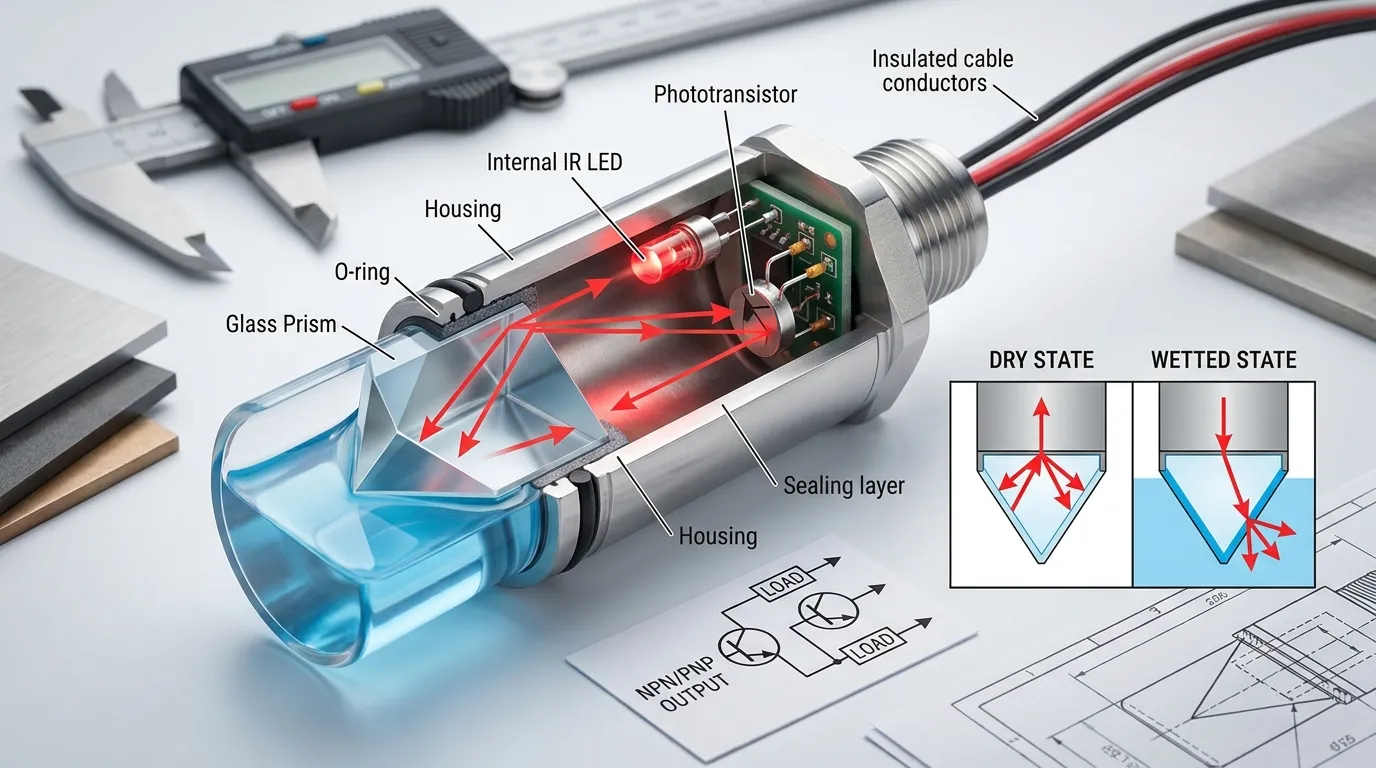
Glas wird ausgewählt, wenn die Messspitze in einer zu aggressiven Flüssigkeit optisch stabil bleiben muss, zu heiß, oder zu abrasiv für ein Standard-Kunststoffprisma. Der Wert liegt nicht nur in der chemischen Beständigkeit. Der eigentliche Vorteil ist die Kombination aus optischer Klarheit, Oberflächenhärte, Dimensionsstabilität, und Reinigungsfähigkeit.
Chemische Beständigkeit in aggressiven Flüssigkeiten
In Chemikalientanks, Reinigungssysteme, Lösungsmittelhandhabung, Plattenausrüstung, und industrielle Prozessbehälter, Die Sensorspitze ist direkt der Flüssigkeit ausgesetzt. Kunststoffprismen können absorbieren, Swell, weicher werden, Verfärbt, oder sie werden verrückt, wenn sie bestimmten Lösungsmitteln oder aggressiven Chemikalien ausgesetzt sind. Eine Glas-Sensorspitze bietet eine stabilere optische Oberfläche für viele aggressive Flüssigkeiten.
Jedoch, Glas ist nicht universell. Der Käufer muss dennoch die genaue Flüssigkeit bestätigen, Konzentration, Temperatur, Reinigungsmittel, und Belichtungszeit. Bestimmte Chemikalien können Glas befallen, und das Dichtungssystem um das Glas kann zur eigentlichen Schwachstelle werden, wenn es nicht mit der Flüssigkeit übereinstimmt.
Abriebfestigkeit und Oberflächenstabilität
Ein Glas-Prisma-Sensor ist nützlich, wenn die Flüssigkeit Partikel enthält, Pulver, Schlammspuren, Reinigungsrückstände, oder bewegte Flüssigkeit, die weichere Kunststoffe zerkratzen kann. Ein zerkratztes Prisma kann Licht streuen und instabiles Schalten verursachen, Vor allem in kleinen Tanks, bei denen das Wasser wiederholt den Messpunkt überschreitet.
Glas hat eine bessere Oberflächenhärte als herkömmliche Kunststoffoptikspitzen, so kann er in abrasiven oder häufig gereinigten Umgebungen länger einen saubereren optischen Weg aufrechterhalten. Trotzdem, Glas kann abplatzen oder reißen, wenn es von harten Werkzeugen getroffen wird, Metallteile, oder starker mechanischer Aufprall während der Installation.
Optische Klarheit, die Beschichtungsproblemen widersteht
Optische Pegelsensoren basieren auf einer klaren Prismaoberfläche. Öle, sticky additives, Kristallisierte Chemikalien, Biologischer Film, Maßstab, Oder getrockneter Rückstand kann dazu führen, dass jeder optische Sensor falsch schaltet.. Glas hilft, weil es glatt ist, Harte Oberflächen lassen sich leichter abwischen und inspizieren als viele Kunststoffmaterialien.
Für Flüssigkeiten, die einen schweren Film hinterlassen, Der Sensor sollte so montiert sein, dass der Durchfluss die Spitze natürlich reinigen kann, nicht in einer toten Ecke. Wenn das Aquarium eine dicke Beschichtung hat, Schaum, oder Kristallisation, die RFQ sollte Reinigungshäufigkeit und Rückstandsverhalten enthalten, damit die Fabrik eine geeignete Spitzenform und Befestigungsposition empfehlen kann.
Hochtemperaturtoleranz vs. Kunststoffprismen
Glas wird oft für Flüssigkeiten mit höheren Temperaturen gewählt, da es seine Form und optische Stabilität besser bewahrt als viele andere Kunststoffe. In beheizten Wassersystemen, Heißölgeräte, Prozesstanks, und industrielle Reinigungsmaschinen, Kunststoffprismen können weicher werden, Verformung, Verfärbt, oder Driften in der Leistung.
Für anspruchsvollere Temperaturprojekte, Vergleichen Sie mit unserem Hochtemperatur-optischer Sensor Optionen. Die Temperaturgenehmigung sollte immer den gesamten Sensor berücksichtigen, nicht nur das Glas. Die Wohnhäuser, Kabel, Siegel, Umtopfen, Steckverbinder, und die Elektronik muss auch mit der realen Betriebsumgebung übereinstimmen.
Ignorieren Sie die thermischen Schockgrenzen nicht
Glas kann Hitze besser vertragen als viele Kunststoffprismen, aber plötzliche Temperaturänderungen können es trotzdem beschädigen. Thermischer Schock kann auftreten, wenn eine heiße Sensorspitze mit kaltem Wasser abgespült wird, wenn ein Kältesensor plötzlich mit heißer Flüssigkeit gefüllt wird, oder wenn Reinigungszyklen die Flüssigkeitstemperatur schnell ändern.
Das unterscheidet sich von der normalen Betriebstemperatur. Ein Sensor kann für eine gleichmäßige Hochtemperaturflüssigkeit geeignet sein, ist aber dennoch gefährdet, wenn die Spitze einem plötzlichen Heiß-zu-Kälte- oder Kälte-zu-Hitze-Schock ausgesetzt ist. Für glasoptische Pegelsensoren, Käufer sollten Heizzyklen beschreiben, Reinigungszyklen, Tankfüllungstemperatur, und Waschbedingungen vor der Genehmigung.
Typ von benetztem Glas, Versiegelung, und Körpermaterial
Ein zuverlässiger optischer Glassensor ist nicht einfach nur "Glas". Die vollständig benetzte Struktur muss überprüft werden.
Glassensorspitze oder Glasprisma
Der Glasteil könnte eine kleine optische Spitze sein, ein geformtes oder bearbeitetes Prisma, oder ein Glaselement, das in ein Edelstahlgehäuse integriert ist. Die wichtigste Voraussetzung ist, dass der optische Pfad am Detektionspunkt klar und stabil bleibt. Käufer sollten überprüfen, ob das Glas direkt der Flüssigkeit ausgesetzt ist und ob die Flüssigkeit nur die Spitze oder zusätzliche Teile der Baugruppe berührt.
Wahl von Wohnmaterialien
Gängige Wohnmöglichkeiten sind:
- 316 Edelstahl Für Stärke, Gewindehalterung, öle, Kraftstoffe, Industrieflüssigkeiten, und viele chemische Umgebungen
- PTFE für hochkorrosive Anwendungen, bei denen Fluorpolymerkompatibilität bevorzugt wird.
- Netzteil oder konstruierter Kunststoff für kostengünstigere industrielle und Haushaltsgeräteanwendungen
- Glasspitze mit Metallkörper wobei sowohl optische Klarheit als auch mechanische Festigkeit erforderlich sind
Für Metallkörperprojekte, Überprüfen Sie unsere 316 Edelstahl-Optiksensor Optionen. Für korrosive Medien, bei denen die gesamte benetzte Struktur Fluorpolymerschutz benötigt, Vergleichen Sie mit unserem PTFE-optischer Sensor.
Versiegelung und Vertopfung
Das Siegel ist oft der wichtigste Auswahlpunkt. Selbst wenn die Glasspitze kompatibel ist, der O-Ring, Klebstoff, Umtopfmasse, Kabelmantel, oder der Stecker kann ausfallen, wenn er der falschen Flüssigkeit oder Temperatur ausgesetzt ist. Eine gute RFQ sollte das bestätigen:
- Egal, ob der Sensor von innen oder außen im Tank installiert wird
- Egal, ob die Dichtung kontinuierlich eingetaucht oder nur spritzfrei ist
- Ob Druck oder Vakuum vorhanden ist
- Ob Reinigungsmittel das Kabel berühren oder nur die Spitze
- Ob sich das Tankmaterial während der Erhitzung ausdehnt
- Ob Schwingung oder mechanische Belastung vorhanden ist
Montage, Ausgabe, und Integrationsoptionen
Glas-Optische Pegelsensoren werden üblicherweise als kompakte Punktpegelschalter verwendet. Sie können durch eine Panzerwand montiert werden, Gewinde-Port, Flansch, Turnier, oder OEM-Funktion des geformten Tanks. Die Montageposition muss es dem Prisma ermöglichen, die Flüssigkeit sauber zu berühren, ohne Luftblasen einzufangen.
Für die Steuerausgabe, Käufer fordern häufig NPN- oder PNP-Schalter für SPS an, Steuerungstafeln, Pumps, Alarme, und Füllsysteme. Die Ausgangslogik kann oft danach ausgewählt werden, ob das System ein Signal benötigt, wenn die Spitze nass oder trocken ist. Für kontinuierliche Projekte, analoger Ausgang wie 4–20 mA sollte separat diskutiert werden, da er eine andere Messstruktur erfordert als ein einfacher optischer Schalter auf Punktniveau.
Vor der Bestellung, Versorgungsspannung bestätigen, Ausgabetyp, Kabellänge, Steckverbinder, Faden, Montagerichtung, Wanddicke des Tanks, und ob der Sensor bei Hoch- oder Niedrigflugbedingungen ausfallsicher sein muss.
Glas-vs. Kunststoff- vs. PTFE-Optische Sensoren
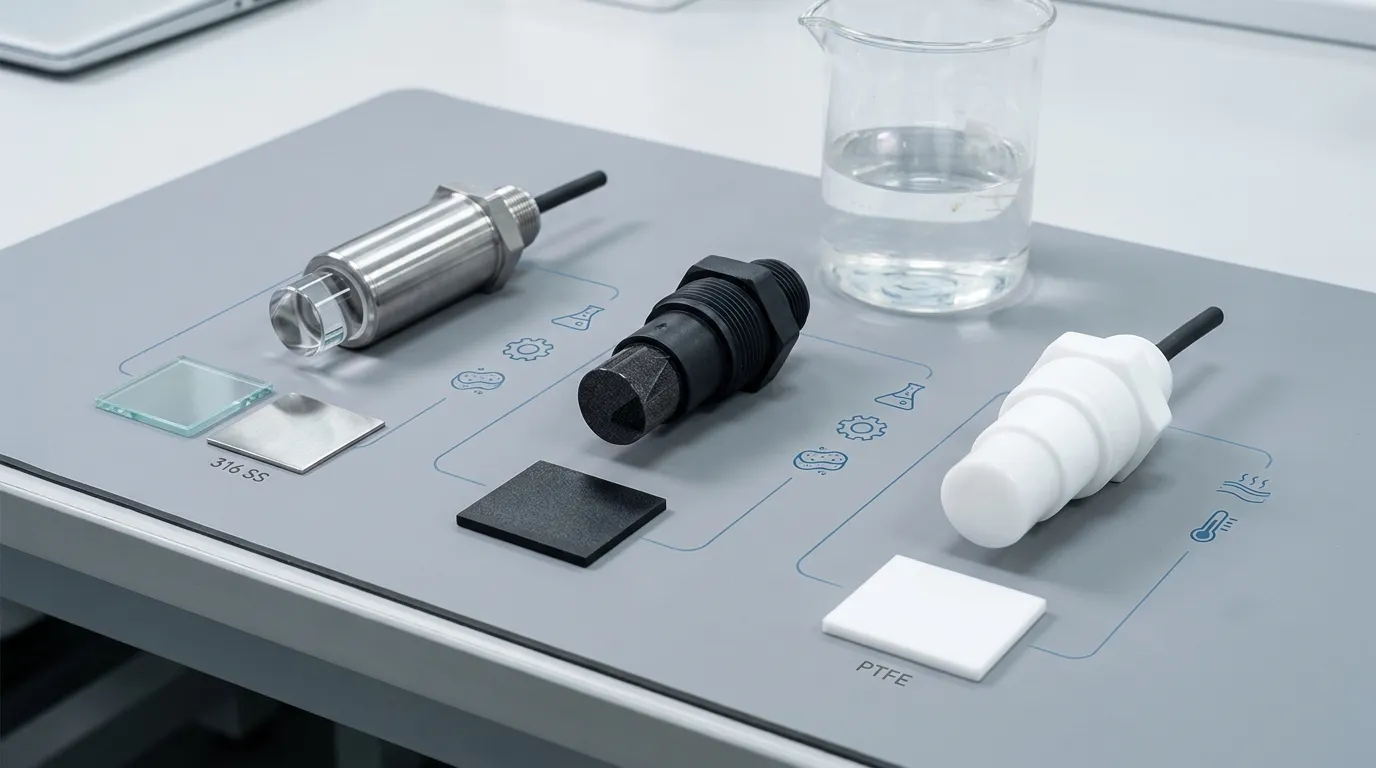
| Materialoption | Beste Passform | Stärken | Grenzen zu überprüfen |
|---|---|---|---|
| Glasoptikspitze / Prisma | Hart, heiß, abrasiv, oder häufig gereinigte Flüssigkeiten | Gute optische Klarheit, Harte Oberfläche, Einfachere Reinigung, bessere Hochtemperaturstabilität als viele Kunststoffe | Thermischer Schock, Aufprallschäden, Glaschemische Kompatibilität, Dichtungskompatibilität |
| Plastisches optisches Prisma | Allgemeines Wasser, Vorrichtungen, Kompaktpanzer, kostengünstigere OEM-Designs | Niedrige Kosten, leicht, Leicht anzupassen, geeignet für viele Standardflüssigkeiten | Geringere chemische und Abriebfestigkeit, geringere Wärmeverträglichkeit, mögliche Verfärbungen oder Schwellungen |
| PTFE-optischer Sensor | Starke korrosive Chemikalien und anspruchsvolle Anforderungen an benetzte Materialien | Ausgezeichnete chemische Beständigkeit für viele aggressive Medien, Niedrige Oberflächenenergie, Gutes Anti-Stick-Verhalten | Höhere Kosten, Mechanische Konstruktionsgrenzen, Optische Struktur und Abdichtung müssen überprüft werden |
| Glas + 316 Edelstahlkarosserie | Öle, Kraftstoffe, Industrieausrüstung, Hochfeste Gewindeinstallation | Starker Körper, saubere optische Spitze, Robuste industrielle Montage | Metallkompatibilität, Galvanische/Korrosionsrisiko, Dichtungsmaterial, Drehmomentinstallation |
Passform-Checkliste, bevor Sie Glas festlegen
Ein Glas-Prisma-optischer Sensor ist ein starker Kandidat, wenn die meisten dieser Punkte zu Ihrer Anwendung passen:
- Die Flüssigkeit ist chemisch aggressiv gegenüber gewöhnlichen Kunststoffspitzen
- Der Sensor muss in erhitzter Flüssigkeit oder in der Nähe eines Hochtemperaturprozesses arbeiten
- Das Medium enthält Partikel, Residu, oder Reinigungszyklen, die Plastik zerkratzen könnten
- Die optische Spitze muss regelmäßig abgewischt oder chemisch gereinigt werden
- Der Tank verwendet eine Gewinde- oder Edelstahl-Industrieinstallation
- Die Flüssigkeit ist klar, durchsichtig, oder vorhersehbar genug für optisches Schalten
- Schaum, Blasen, und die klebrige Beschichtung kann durch die Montageposition gesteuert werden
- Thermischer Schock kann kontrolliert oder entsprechend gestaltet werden
- Das Siegel, Kabel, und das Körpermaterial kann mit der Flüssigkeit abgestimmt werden
- Eine Probe kann vor der Massenproduktion in der echten Flüssigkeit getestet werden
Glas ist möglicherweise nicht die beste Option, wenn die Anwendung eine starke mechanische Belastung hat., Schnelle extreme Temperaturzyklen, Starke Kristallisation, oder eine Chemikalie, die dafür bekannt ist, Glas zu befallen. In diesen Fällen, PTFE, Edelstahl, Ultraschall, schweben, oder eine andere Level-Sensor-Methode könnte sicherer sein.
5-Schrittenlieferprozess
- Untersuchung: Senden Sie den Namen der Flüssigkeit, Panzerzeichnung, Montageposition, Temperaturbedingungen, Ausgangsanforderungen, und Mengenplan per WhatsApp oder E-Mail. Fotos oder Zeichnungen helfen unserem Team, die tatsächliche Installation zu verstehen.
- Spezifikation und Anpassung: Unsere Ingenieure überprüfen das benetzte Material, Glasspitze, Siegel, Wohnen, Faden, Ausgangslogik, Kabel, und Steckverbinder. Für OEM/ODM-Projekte, Wir können über die Größe sprechen, Verdrahtung, Bedürfnisse von Private-Label, und die Integration der Steuerplatine.
- Beispiel: Eine Probe wird für harte Flüssigkeiten empfohlen, Hochtemperaturmedien, Beschichtungsflüssigkeiten, oder Reinigungszyklusanwendungen. Der beste Test findet immer in der echten Flüssigkeit unter realen Temperatur- und Reinigungsbedingungen statt.
- Produktion und Qualitätskontrolle: HojellyTek produziert in Shenzhen mit hausinternem R&D- und photoelektrische optische Sensorerfahrung. Die Produktion kann Funktionsprüfungen enthalten, Verdrahtungsprüfungen, Siegelbewertung, und Sichtprüfung gemäß der vereinbarten Spezifikation.
- Schifffahrt: Wir exportieren optische Flüssigkeitspegelsensoren in die USA, HATTE, Indien, und andere Märkte. Versandart und Verpackung werden entsprechend der Bestellmenge bestätigt, Stichproben-Dringlichkeit, und Anforderungen des Käufers.
Anforderungen zur Bestätigung in der RFQ-Phase
- Flüssiger Name, Konzentration, Viskosität, und Restverhalten
- Normale und maximale Betriebstemperatur
- Ob plötzliche Erwärmung, Kühlung, oder Washdown erzeugt einen thermischen Schock
- Tankmaterial, Wanddicke, und Montagerichtung
- Faden, Flansch, oder individuelle Montageanforderung
- Benetzte Materialien: Glas, Edelstahl, PTFE, Netzteil, Siegel, Kabel
- Ausgangstyp: NPN, PNP, Nass-/Trockenlogik, oder analoge Anforderung
- Versorgungsspannung und Steuerungstyp
- Kabellänge, Steckverbinder, sowie IP-/Umweltbedürfnisse
- Reinigungsmethode: Wipe, Spülen, Chemische Wäsche, CIP, oder manuelle Wartung
- Probentestplan vor der Chargenbestellung
Warum mit HojellyTek zusammenarbeiten
HojellyTek ist ein Hersteller und Exporteur aus Shenzhen, der sich auf optische und flüssige Level-Sensing-Produkte spezialisiert hat. Wir unterstützen die Standard-Sensorauswahl sowie die OEM/ODM-Entwicklung für Tankhersteller, Gerätemarken, Hersteller industrieller Ausrüstung, und Systemintegratoren.
Unser Team kann beim Vergleich von Glas helfen, PTFE, Edelstahl, und plastische optische Sensorstrukturen, anstatt für jeden Fall ein Material zu erpressen.. Für verbundene Tanküberwachungsprojekte, Die Integration von Tuya/Smart Life kann auch diskutiert werden, wo sie zum Systemdesign passt.
FAQ
Wofür wird ein Glas-optischer Flüssigkeitspegelsensor verwendet??
Ein Glas-optischer Flüssigkeitspegelsensor wird für die Punktpegeldetektion bei harten Flüssigkeiten verwendet, heiß, abrasiv, oder chemisch anspruchsvolle Flüssigkeiten, bei denen ein plastisches optisches Prisma möglicherweise nicht genügend Materialstabilität bietet.
Wie erkennt ein Glas-Prisma-optischer Pegelsensor Flüssigkeit??
Es verwendet eine Infrarot-LED, Fototransistor, und optisches Prisma. In der Luft, Licht reflektiert im Inneren des Prisma. Wenn Flüssigkeit die Glasspitze bedeckt, Das brechungsartige Verhalten ändert sich, und der Sensor schaltet seinen Ausgang um.
Ist Glas besser als Kunststoff für die optische Flüssigkeitspegelmessung??
Glas eignet sich oft besser für hohe Temperaturen, Abschleißfestigkeit, Optische Klarheit, und Reinigung. Plastik ist immer noch nützlich, um günstiger zu sein., Allgemeine Flüssigkeitsdetektion, bei der der chemische und temperaturbezogene Belastung geringer sind.
Können Glasoptiksensoren mit Chemikalien verwendet werden??
Ja, Glas kann mit vielen chemischen Medien funktionieren, aber die Kompatibilität muss bestätigt werden. Der Käufer sollte die Flüssigkeit überprüfen, Konzentration, Temperatur, Reinigungsmittel, und Belichtungszeit, sowie das Dichtungs- und Gehäusematerial.
Kann ein thermischer Schock einen Glasoptiksensor beschädigen.?
Ja. Glas verträgt zwar stetig hohe Temperaturen, kann aber bei plötzlichen Temperaturwechseln reißen. Heiß-zu-kaltes Abspülen, Schnelles Auffüllen, Oder harte Reinigungszyklen sollten vor der Sensorgenehmigung überprüft werden.
Wie sollte die Glas-Sensorspitze gereinigt werden??
Verwenden Sie eine Reinigungsmethode, die mit der Flüssigkeit kompatibel ist, Glas, Siegel, und Wohnraum. Vermeiden Sie harte Werkzeuge, die die Spitze abplatzen können. Für klebrige Rückstände, Planen Sie regelmäßige Inspektionen und prüfen Sie, ob das Abwischen oder Spülen das stabile Schalten wiederherstellt.
Fordern Sie ein Angebot an
Zur Spezifizierung eines Glasspitzen- oder Glasprismen-optischen Pegelsensors, Schick deine Liquid-Daten, Temperaturbereich, Panzerzeichnung, Montageanforderungen, Ausgabetyp, und Reinigungsprozess. Kontaktieren Sie HojellyTek per WhatsApp oder per E-Mail, um ein Angebot anzufordern, Beispiel, oder OEM/ODM-Sensorempfehlung.


