
Revolutionizing Urban Cleanliness: The Ultimate Guide to IoT-Based Smart Waste Management
As urban centers expand at an unprecedented rate, they face a silent but critical challenge: waste. Every day, millions of tons of municipal solid waste are generated, and the systems designed to manage it are struggling to keep up. Traditional waste collection, based on fixed schedules and manual checks, is no longer viable. It leads to overflowing bins, missed pickups, wasted resources, and a significant environmental toll.
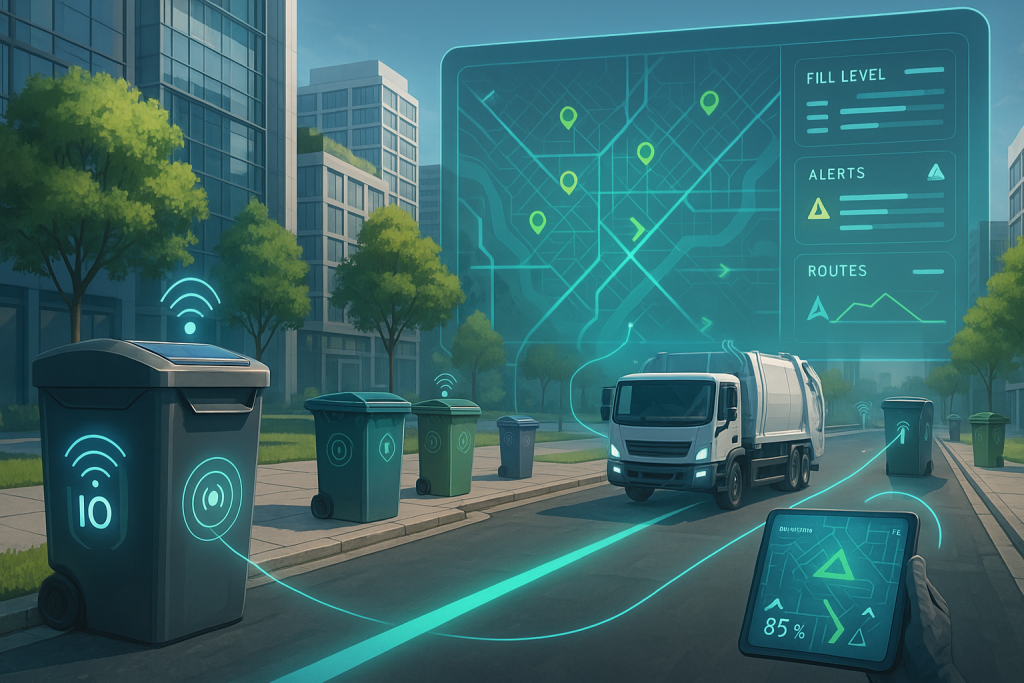
This inefficiency is not just a logistical problem; it's a direct threat to public health, environmental sustainability, and the quality of urban life. The solution lies not in more trucks or more frequent pickups, but in a smarter, data-driven approach.
The most effective solution for modern urban waste challenges is an IoT-based smart waste management system. This technology leverages intelligent sensors and data analytics to create a highly efficient, responsive, and sustainable waste collection network, forming the backbone of a truly smart city.
This guide explores every facet of this transformative technology, from its core components and operational benefits to its implementation challenges and future potential.
Why Traditional Waste Management Can't Keep Up with Modern Cities
Before diving into the solution, it's essential to understand the fundamental flaws of the conventional model. For decades, waste collection has operated on a "one-size-fits-all" principle, leading to a host of systemic problems.
- Massive Inefficiency and Wasted Resources: Collection trucks follow rigid, predetermined routes, emptying every single bin regardless of whether it's full, half-empty, or nearly untouched. This results in countless unnecessary trips, wasting fuel, increasing labor costs, and contributing to traffic congestion and carbon emissions.
- Overflowing Bins and Public Health Hazards: On the flip side, bins in high-traffic areas often overflow long before their scheduled pickup. These overflowing containers are not only an eyesore but also become breeding grounds for pests and bacteria, posing significant risks to public health and sanitation.
- Sky-High Operational Costs: The traditional model is incredibly expensive. A significant portion of a municipal budget is allocated to waste management, with the majority of costs tied to fuel, vehicle maintenance, and manual labor—much of which is spent on servicing empty or near-empty bins.
- Lack of Actionable Data: Without real-time data, city planners and waste management operators are flying blind. They cannot identify trends, predict waste generation patterns, or make informed decisions to optimize their operations. This leads to a reactive, rather than proactive, approach.
- Negative Environmental Impact: The combination of excessive fuel consumption from inefficient routes and poor management of overflowing waste contributes directly to air pollution, greenhouse gas emissions, and environmental contamination.
Defining the Revolution: What Exactly is Smart Waste Management?
An IoT-based smart waste management system is an integrated solution that uses technology to monitor, manage, and collect waste with unprecedented efficiency and intelligence. It transforms standard bins into smart, connected assets that communicate their status in real-time.
At its core, the system's goal is to collect waste only when and where it's needed. It replaces fixed schedules with dynamic, data-driven operations, ensuring that resources are allocated precisely, collection routes are optimized, and the entire waste lifecycle is managed with maximum efficiency. This is achieved through a network of smart devices, cloud-based software, and advanced analytics.
The Anatomy of a Smart System: How the Technology Works Step-by-Step
The magic of a smart waste management system lies in the seamless integration of several key technological components. Each part plays a crucial role in transforming a simple bin into a data-generating node in a city-wide network.
Component 1: The Smart Sensors
The foundation of the entire system is the sensor. These small, rugged, battery-powered devices are installed inside waste containers. The most common type is the ultrasonic fill-level sensor.
- How it Works: The sensor periodically emits an ultrasonic pulse to measure the distance to the surface of the waste inside the bin. By calculating this distance, it can determine the exact fill level (e.g., 25%, 75%, 95% full).
- Additional Data: Modern sensors can also detect bin temperature (to alert for potential fires), tilt or shock (to report vandalism or if a bin has been knocked over), and GPS location.
Component 2: The IoT Gateway and Network
Once a sensor collects data, it needs to transmit it to a central platform. This is where IoT connectivity comes in. Sensors use low-power, wide-area networks (LPWAN) to send small packets of data efficiently.
- Common Networks: Technologies like LoRaWAN (Long Range Wide Area Network) or NB-IoT (Narrowband IoT) are ideal because they offer long-range coverage, penetrate obstacles well, and require very little power, allowing sensor batteries to last for years. In areas with strong cellular coverage, 4G or 5G can also be used.
- The Gateway's Role: The data from the sensors is sent to a nearby IoT gateway, which acts as a bridge, securely relaying the information from hundreds or thousands of bins to the internet and onto the central cloud platform.
Component 3: The Centralized Cloud Platform
This is the brain of the operation. The cloud platform is a powerful software suite that receives, processes, stores, and visualizes all the data from the entire network of smart bins.
- Key Functions:
- Data Aggregation: Collects and organizes incoming data from every sensor.
- Real-Time Dashboard: Provides operators with a bird's-eye view of the entire city, showing the status of every bin on a map with color-coded indicators (e.g., green for empty, yellow for half-full, red for full).
- Alerts and Notifications: Automatically sends alerts to managers when a bin reaches a pre-defined threshold (e.g., 85% full) or if a fire or vandalism is detected.
Component 4: The Analytics and Route Optimization Engine
This is where the system's intelligence truly shines. The platform uses advanced algorithms and machine learning to analyze the collected data and turn it into actionable insights. Harnessing the combined power of AI and IoT, this engine provides the system's most significant value.
- Dynamic Route Planning: Instead of generating a fixed daily route, the engine analyzes which bins are full right now and calculates the most efficient collection route to service only those bins. It considers factors like traffic patterns, vehicle capacity, and priority locations to create a unique, optimized route for each collection cycle.
- Predictive Analytics: Over time, the system learns from historical data. It can predict when a particular bin is likely to become full based on location, day of the week, and even local events. This allows for even more proactive resource planning.
Component 5: Mobile Applications for Collection Crews
The final piece of the puzzle is putting the optimized data into the hands of the collection crews. Drivers are equipped with a mobile app or an in-cab tablet.
- Turn-by-Turn Navigation: The app provides drivers with the optimized route for their shift, guiding them from one full bin to the next.
- Real-Time Updates: If a bin fills up unexpectedly, the route can be updated in real-time.
- Reporting: Drivers can use the app to report issues like blocked access to a bin or container damage, providing a closed feedback loop for maintenance and operations.
Beyond the Bin: The Tangible Benefits for Smart Cities
Adopting an IoT-based waste management system delivers profound and measurable benefits that extend far beyond simply having cleaner streets.
1. Drastically Reduced Operational Costs
By eliminating unnecessary pickups and optimizing routes, cities can achieve a massive reduction in operational expenses. Industry case studies consistently show cost savings of up to 50%, driven by:
- Reduced fuel consumption.
- Lower vehicle wear and tear.
- Optimized allocation of labor.
2. Enhanced Environmental Sustainability
Fewer collection trips directly translate to a smaller carbon footprint. Optimized routes mean less fuel burned, fewer greenhouse gas emissions, and reduced noise pollution. This makes smart waste management a cornerstone of any city's environmental sustainability goals.
3. Improved Public Health and Sanitation
The system virtually eliminates the problem of overflowing bins. By collecting containers before they become a nuisance, it prevents the spread of pests and pathogens, reduces foul odors, and creates a cleaner, healthier, and more aesthetically pleasing urban environment for residents and visitors.
4. Data-Driven Urban Planning
The wealth of data collected by the system is invaluable for city planners. It provides deep insights into waste generation patterns across different districts, times of day, and seasons. This data can be used to:
- Optimize bin placement and sizing.
- Plan for waste management needs during major public events.
- Develop more effective recycling and waste reduction policies.
5. Increased Efficiency and Productivity
Waste collection crews are transformed from following a monotonous schedule to executing a dynamic, mission-oriented task list. They service more of the bins that actually need attention, boosting overall productivity and job satisfaction. Automation of routing and reporting frees up managers to focus on strategic improvements rather than daily fire-fighting.
Navigating the Challenges: What to Consider Before Implementation
While the benefits are compelling, deploying a smart waste management system is a significant undertaking that comes with its own set of challenges. A successful implementation requires careful planning and consideration of these factors.
- High Initial Investment: The upfront cost of purchasing and installing thousands of sensors, gateways, and the software platform can be substantial. However, this should be viewed as a long-term investment, with most cities achieving a full return on investment (ROI) within 2-3 years through operational savings.
- Network Connectivity: Ensuring reliable, city-wide network coverage for the sensors is crucial. A thorough site survey must be conducted to identify any potential dead zones and plan the placement of gateways accordingly.
- Data Security and Privacy: Like any IoT system, a smart waste network must be secured against cyber threats. Data must be encrypted during transmission and storage, and the platform must have robust access controls to protect sensitive operational information.
- Integration with Existing Systems: The new smart platform may need to integrate with existing municipal systems, such as fleet management software, billing systems, or citizen reporting apps. Ensuring smooth API integration is key to creating a unified workflow.
- Durability and Maintenance: The sensors installed in bins must be extremely durable to withstand harsh conditions, including extreme temperatures, moisture, impacts, and chemical exposure. A plan for battery replacement and hardware maintenance is also essential.
The Road Ahead: AI, Robotics, and the Future of Urban Waste
The current generation of IoT waste management systems is already revolutionary, but the technology continues to evolve. The future promises even greater levels of automation and intelligence.
- AI-Powered Waste Sorting: Future smart bins may be equipped with cameras and AI-powered image recognition to automatically identify and sort recyclables from general waste at the point of disposal, dramatically increasing recycling rates.
- Autonomous Collection Vehicles: The optimized routes generated by the smart platform are a perfect match for autonomous trucks. In the future, robotic vehicles could handle waste collection 24/7 with even greater efficiency.
- Pay-As-You-Throw (PAYT) Programs: With sensors accurately measuring waste volume, cities can implement fair and effective PAYT models, where households and businesses are billed based on the amount of waste they actually produce, incentivizing waste reduction.
- Full Smart City Integration: Waste management data will be fully integrated with other smart city systems. For example, the platform could automatically adjust collection schedules based on data from public event calendars or real-time traffic flow information to avoid congestion.
Conclusion: Building the Cleaner, Smarter Cities of Tomorrow
Waste management is no longer a hidden, mundane municipal service. It is a critical component of a city's intelligence, sustainability, and livability. The transition from outdated, schedule-based operations to a dynamic, data-driven smart system is not just an upgrade—it is a necessary evolution.
By embracing IoT technology, cities can conquer the challenges of urban waste, turning a costly problem into a model of efficiency. An IoT-based smart waste management system reduces costs, protects the environment, improves public health, and provides the actionable data needed to build the cleaner, greener, and truly smarter cities of the future.
Frequently Asked Questions (FAQ)
1. How long do the batteries in smart bin sensors last?
Most high-quality sensors are designed for extreme energy efficiency. Using low-power network technologies like LoRaWAN, their batteries can typically last between 5 to 10 years before needing replacement, minimizing maintenance requirements.
2. Can smart waste systems be deployed in any type of bin?
Yes, the sensors are designed to be retrofitted into almost any existing waste container, whether it's a public street bin, a large commercial dumpster, or an underground container. This flexibility allows cities to upgrade their infrastructure without replacing their entire stock of bins.
3. What happens if a sensor is damaged or stops working?
The central platform continuously monitors the health of all devices in the network. If a sensor fails to report data or sends an error code, the system automatically flags it for maintenance, and an alert is sent to the operations team to investigate and replace the unit.
4. How does the system handle special events like festivals or concerts?
This is a key strength of a smart system. Planners can use the platform to monitor bins in the event area with higher frequency. The system can issue real-time alerts for rapid fill-ups, allowing for on-demand collection to keep the venue clean, and the historical data helps in planning for future events more effectively.


