
電気光学ポイントレベルセンサー
もしあなたの買い手が, 技師, あるいは購買チームが別の用語を使っている, このページでは、見積もりを依頼する前に適切なセンサータイプを確認するのに役立ちます.
電気光学, 光電式, および光ポイントレベルスイッチ: 同じセンサーカテゴリ
流動性レベルの購買において, 用語はしばしば混ざり合っています. ある顧客は電気光学ポイントレベルセンサーを要求するかもしれません, 別の者は 光電液位スイッチ, 設計エンジニアはこれを光学ポイントレベルスイッチと呼ぶことがあります. ほとんどの実用的な購入状況で, 彼らが言及しているのは、液体が一つの固定点に達したかどうかを検出するコンパクトなセンサーのことです.
これは連続レベル送信機とは異なります. ポイントセンサーは、ある位置でオン/オフのスイッチング信号を出します, ただし 光学連続レベルセンサー システムは単一のアラームポイントではなくレベルレンジ測定が必要な場合に選択されます.
商品を比較する購入者へ, 重要な問いはラベルではありません. 重要なのは、センサーが液体と一致しているかどうかです, タンク素材, 取り付けスペース, 出力ロジック, 電圧, 配線, および警報機能.
HojellyTekが提供できるもの
HojellyTekは、OEM機器製造者向けに電気光学ポイントレベルセンシングソリューションを提供しています, 戦車メーカー, 自動化インテグレーター, および液体取り扱いシステムの供給業者. 当社の対応には標準的な光学スイッチモデルが含まれます, カスタマイズされたボディマテリアル, 配線構成, コネクタスタイル, ねじまたは取り付け設計, 制御基板やPLCシステム向けの出力論理マッチング.
典型的なサービス範囲には以下が含まれます:
- 高レベルまたは低レベル検出のための光学ポイントレベルスイッチ選択
- コンパクトな水タンクや小型機器用の光電センサーモジュール
- 自動化システム向けのNPNまたはPNP出力構成
- 顧客制御ボードに基づく電圧オプション確認
- 水の材料選択, 油, 冷却液, 化学薬品, およびクリーンリキッドの応用
- OEM/ODMセンサーボディ, ケーブル, コネクター, 糸, 住宅カスタマイズ
- 米国の買い手への輸出支援, 私たちは, インド, その他の工業市場
まだ広いセンサーカテゴリーを比較している購入者へ, 私たちの 光学レベルセンサー ページはより広範な製品概要を示しています.
電気光学ポイントレベルセンサーの仕組み
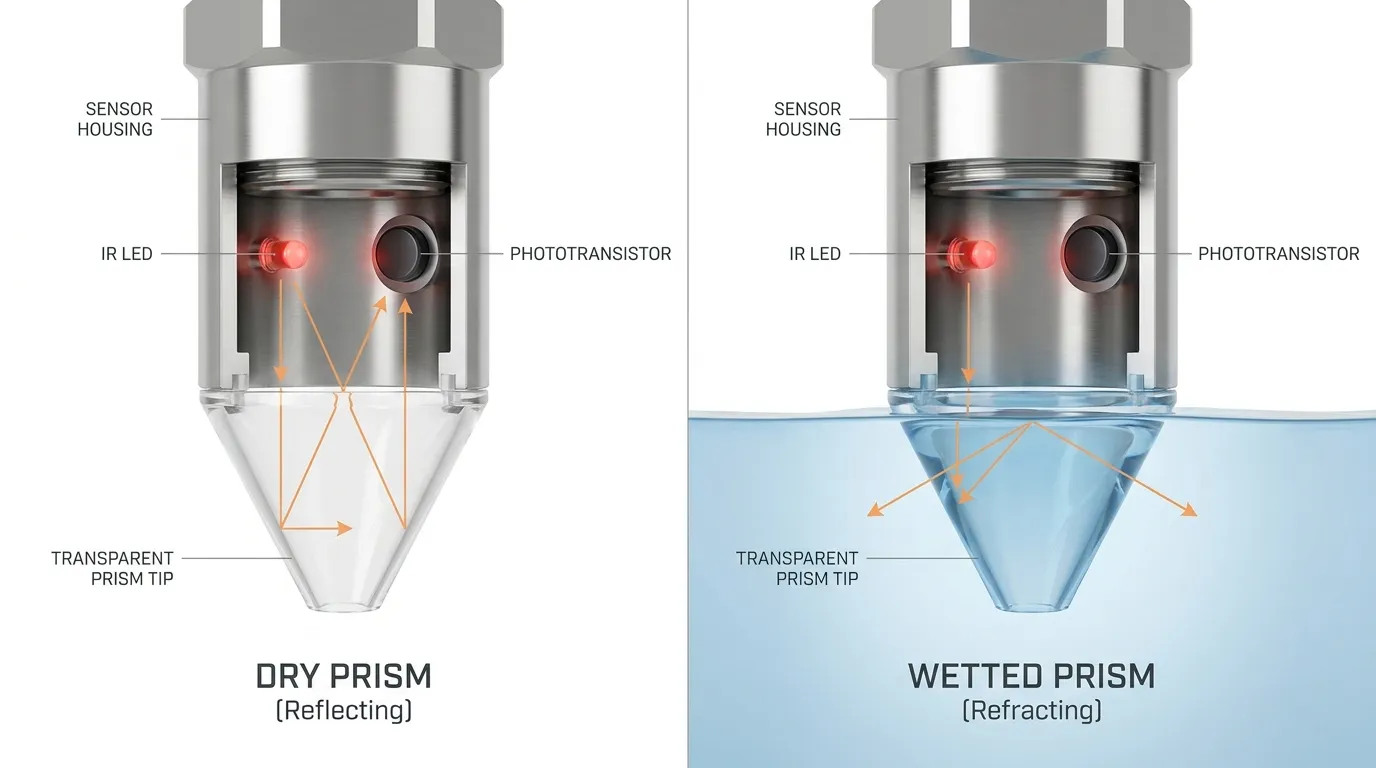
動作原理はシンプルです: 内部LEDがプリズムの先端に光を送ります, フォトトランジスタは反射光を受け取ります, そしてプリズムが乾燥した空気から湿潤した液体状態に移動すると出力が変化します.
フロートはありません, 磁石, リードスイッチ, または機械式アーム. プリズムが乾いているとき, 光は先端内部で反射します. 液体がプリズムを覆うとき, 光経路が変化します, 受信信号が変化します, そしてセンサースイッチの出力. これにより、可動部品のないコンパクトな形状で高速なポイント検出を求める購入者にとって有用な設計となっています.
サービスページ用, 学術的な光学理論よりも実践的な意味の方が重要です: センサーは設置地点に液体が存在するかどうかを検出します. タンクの上部近くで高レベル警報として使用できます, あるいはタンクの底近くにある低レベルの警報として.
高・低アラームのポイントレベル検出
制御システムが1つの条件を知りたい場合に、電気光学ポイントレベルセンサーが選択されます: リキッドはここまで到達した, または液体がこの点より下回った場合.
高レベル検出のために, センサーはアラーム位置に設置されます. 液体がプリズムに触れるとき, 出力が変わり、コントローラーが充填を停止することもあります, 警告を発動する, バルブを閉じる, あるいは安全対策を始めるのもいいです.
低レベル検出のために, センサーは最低許容レベル付近に設置されています. 液体がプリズムを濡らさなくなったとき, 出力が変わり、ポンプを停止させることができます, ヒーターを守りましょう, ドライランニングの防止, またはオペレーターに警告する.
この単点挙動のため、製品は小型タンクでよく使われます, 貯水池, ディスペンサー, プロセス機器, 冷却材システム, 水道器具, オイル容器, 医療機器貯水池, および産業用オートメーションモジュール.
出力, 電圧, および配線オプション
アウトプット選択は最も重要な購買情報の一つです. 多くの購入者の問題は、センサーが液体を検出できないことが原因ではありません, しかし、出力タイプがコントローラーと一致しないためです.
一般的なスイッチング出力の選択肢には、NPNとPNPがあります. NPNは、コントローラが沈み込み出力を予想する場合によく使われます, 一方、PNPはコントローラーがソース出力を期待する場合に使用されます. 最適な選択はPLC入力カードによって異なります, 制御盤の設計, 配線規格, および地域機械設計実務.
通常開き論理と通常閉じ論理も確認すべきです. 一部のシステムは液体が存在するときに信号を有効にしたいのです. 液体がない場合のフェイルセーフアラームを求める人もいます. 私たちのチームが、あなたのアラーム条件に合った論理を調整するお手伝いをします.
RFQ段階で電圧オプションが確認され、顧客の基板やオートメーションキャビネットに合わせられます. 詳細な配線ガイドのために, 当ページをご覧ください NPN/PNP出力.
4〜20 mAについてのプロジェクト, 申請書は慎重に確認する必要があります. ポイントレベルセンサーは通常、スイッチ出力装置です. もし本当にアナログレベルの信号が必要なら, より良い選択肢は、単一ポイントスイッチではなく連続レベル解の場合もあります.
料, マウンティング, およびタンク統合
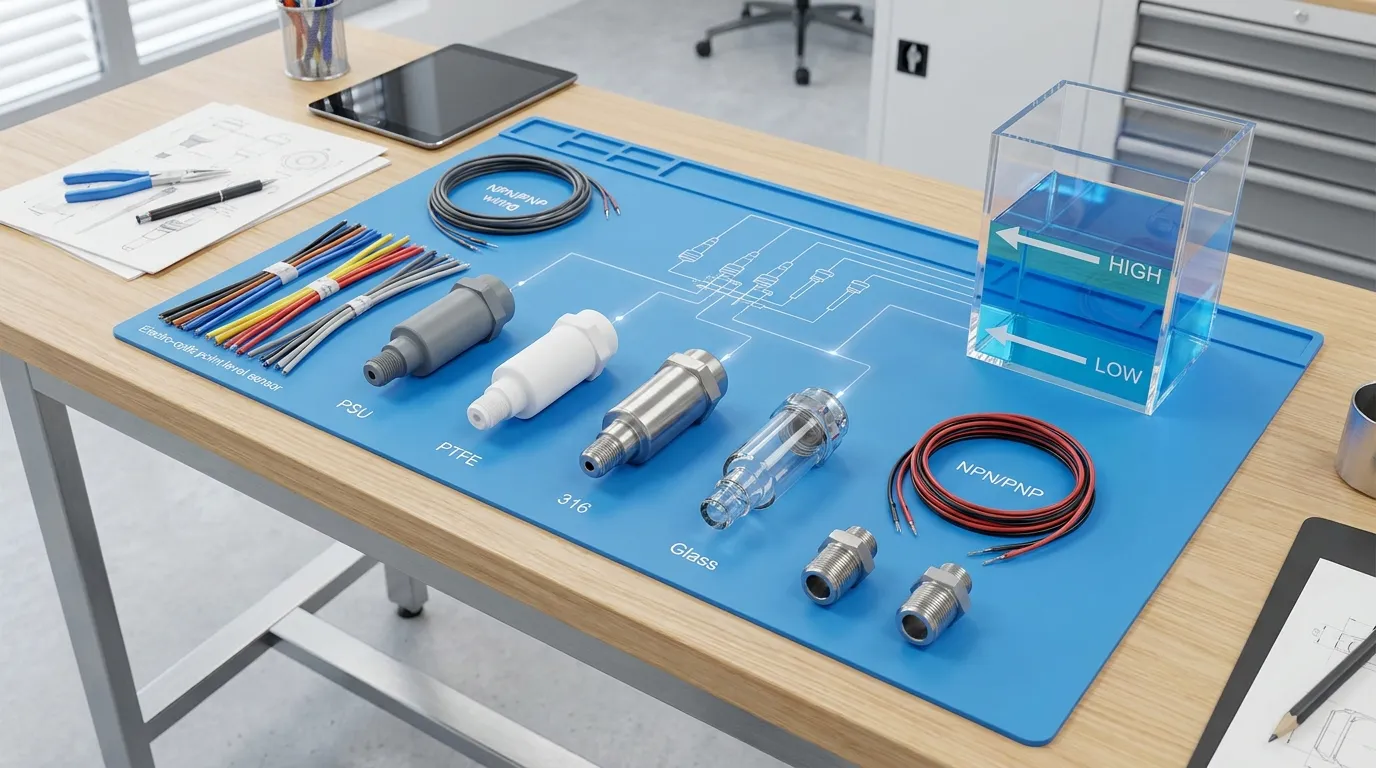
濡れた素材は液体や洗浄環境に合致していなければなりません. 一般的な材料の方向には、コンパクトな汎用センサーボディ用の電源ユニット(PSU)があります, 攻撃的な化学耐性のためのPTFE, 316 堅牢な工業設備用のステンレス鋼, そして選ばれたクリーンや化学用途向けのガラス.
ネジ山や取り付け設計はタンク壁によって異なります, シーリング方法, およびサービスアクセス. 購入者はセンサーが側面装着式かどうかを必ず確認してください, チャンバーに上部に取り付ける, ねじ付きポートを通じて取り付けられています, 成形プラスチックタンクに固定されています, またはOEMハウジングに統合されている. ねじ付きオプション, フランジスタイルの概念, ケーブル出口方向, コネクターの要件はカスタマイズ時に確認可能です.
先端の位置も重要です. プリズムは真の警報点に置くべきです, タンクの壁から十分なクリアランスを確保して, バブル, フォームゾーン, 激しい乱流, および残渣収集エリア. 光学ポイントセンサーは多くのクリーンリキッド用途に優れています, でもベタベタ, 結晶化, コーティング, または、重度に汚染された液体は選別前に追加の審査が必要です.
電気光学ポイントレベルセンサー仕様表
| 仕様地域 | オプション / 選択ノート |
|---|---|
| 検出タイプ | 単点液体存在検出 |
| センシング法 | LED, フォトトランジスタ, そして光学プリズムの先端 |
| スイッチング状態 | 乾プリズムと濡れたプリズム状態間の出力変化 |
| 警報の使用 | 高レベル警報, 低レベル警報, オーバーフロー防止, ドライラン保護 |
| 出力オプション | NPN, PNP, 通常は開いています, 通常は閉じています; アナログは別途レビューが必要だ |
| 電圧オプション | RFQ段階で顧客制御基板またはPLCシステムと一致することが確認されました |
| 反応行動 | ポイントアラーム用途のための高速電子スイッチング; 正確な応答はモデルと制御回路によって確認されています |
| 濡れた材料 | PSU, PTFE製, 316 ステンレススチール, グラス, またはプロジェクト固有の材料選択 |
| 取り付けスタイル | ねじ込み式, 戦車搭載, コンパクトOEM設置, またはカスタマイズされた機械的インターフェース |
| 液体の適合性 | 水, 油, 冷却液, クリーンリキッド, および材料審査後の選択的な化学的応用 |
| カスタマイズ | ケーブルの長さ, コネクター, ボディマテリアル, 糸, 出力ロジック, 住宅, およびOEM表示 |
| 典型的な買い手 | 機器メーカー, タンク供給者, オートメーションインテグレーター, 配給会社, またはOEMプロジェクトチーム |
このセンサーの使い方
プロジェクトが必要な場合は電気光学ポイントレベルセンサーを使用してください:
- コンパクトタンク内の固定式高レベル警報
- ポンプやヒーターを保護するための低レベル信号
- ミニチュアフロートスイッチの可動部品なしの代替品
- 水中での高速検知, 油, 冷却液, またはクリーンなプロセス液体
- OEMデバイスまたは密閉型リザーバー用のコンパクトセンサー
- PLCまたは制御基板入力(NPNまたはPNP出力使用)
- プリズムが液体に直接接触する側面取り付けセンサー
- カスタムボディ, 糸, ケーブル, またはリピート生産用のコネクター
- 機械式フロートが詰まる可能性のあるクリーンな設置, 着る, またはより多くのスペースが必要になる
液体が粘着性がある場合は、塗布をよりよく確認しました, 葉のスケール, 粒子を含む, 重いフォームを形成します, 乾燥後に結晶化します, あるいはプリズムを被覆しているかもしれません. これらは光スイッチング性能に影響を与える実際の故障モードです.
5段階のサービスプロセス
1. 調査
液体タイプを送ってください, 戦車図面, 警報ポイント, 取り付け方向, 電圧, コントローラータイプ, および必要な出力. 写真やスケッチは早期復習に役立ちます.
2. 仕様とカスタマイズ
当社のエンジニアリングチームが材料をチェックします, 出力ロジック, 配線, 糸, ケーブル, コネクター, シーリングアプローチ, および設置位置. OEM/ODMプロジェクト用, 車体の構造やケーブル出口は調整可能です.
3. サンプル
適合用にサンプルを準備することができます, 配線, および液体検査. これにより、生産計画前に乾燥状態と湿潤状態を確認するのに役立ちます.
4. 生産と品質管理
工場は確定した仕様に従って生産しています, 検査は応答のセンシングに重点を置いています, 配線, 外見, 集会, および顧客固有の構成.
5. 船舶
完成したセンサーは輸出用に梱包され、顧客の注文条件に従って出荷されます. HojellyTekは、国際的な購入者がWhatsAppやメールで見積もりを依頼することをサポートしています.
ポイントセンサーと連続レベルセンサーの比較
| 要件 | 電気光学ポイントレベルセンサーを選択してください | 連続レベルセンサーを選択してください |
|---|---|---|
| アラームポイントを1つ必要 | 最適フィット | たいていは不要です |
| 正確なレベル範囲が必要です | 不適切です | よりフィットします |
| ハイ/ローアラーム | 強いフィット感 | 可能性はありますが、より複雑です |
| コンパクトタンク統合 | 強いフィット感 | 水槽の高さによります |
| 単純なPLCオン/オフ入力 | 強いフィット感 | アナログまたはデジタル処理が必要になる場合があります |
| 在庫コスト管理 | たいていはもっとシンプルです | 通常は高度なモニタリングのために選ばれます |
なぜ購入者がHojellyTekと取引するのか
HojellyTekは、深センの光電光学センシングおよび液体レベル検出製品に注力する製造・輸出企業です. 買い手は工場からの直接コミュニケーションが必要な際に私たちと協力します, 社内R&Dサポート, カタログ選択だけでなくセンサーのカスタマイズも可能です.
私たちのチームは産業用のOEM/ODMプロジェクトを支援します, 家電, オートメーション, およびスマートモニタリングアプリケーション. 該当する場合, また、スマートデバイスエコシステムのセンサー統合に関する議論も支援できます, TuyaやSmart Life関連の製品コンセプトを含む.
目標は実用的です: 液体に合うセンサーを買い手にお手伝いしましょう, 戦車, 出力, 電圧, 量産前の設置方法.
RFQチェックリスト
見積もりを依頼する前に, 準備:
- 液体の種類と濃度
- タンクの材料と壁厚
- 高レベルまたは低レベル警報機能
- 取り付け方向とねじ山の要件
- 必要な濡潤材料
- 電圧供給
- NPNまたはPNPの出力要件
- 通常開論理または通常閉じ論理
- ケーブルの長さとコネクタタイプ
- 数量予測とOEMカスタマイズのニーズ
- 写真, ドローイング, または利用可能な場合は電流センサー参照
よくある質問
電気光学ポイントレベルセンサーは光学ポイントレベルスイッチと同じですか??
はい. ほとんどの購入の文脈で, 電気光学ポイントレベルセンサー, 電気光学レベルスイッチ, 光電液位スイッチ, そして光学ポイントレベルスイッチは、同じ単一ポイントの光学液体検出カテゴリを指します.
高レベルと低レベルの両方を検出できますか?
はい. 同じセンシング原理は高レベル検出または低レベル検出にも使用できます. 違いは、制御システムに必要な設置位置と出力ロジックです.
どの出力を選べばいいでしょうか, NPNまたはPNP?
PLC入力カードや制御基板に応じてNPNかPNPを選びます. もし迷っているなら, 配線図やコントローラーモデルを送っていただければ、適切な出力タイプを当社チームが確認いたします.
センサーは4〜20mAの信号を出しますか??
ポイントレベルセンサーは通常、スイッチング出力を提供します. プロジェクトがレベルレンジ測定に4〜20mAを必要とする場合, 連続レベルセンサーの方が適している場合があります.
どの液体が適しているか?
水など多くの清潔な液体でも使えます, 油, 冷却液, および選定された化学物質. 発注前に材料の適合性と残留リスクを必ず確認してください, 特に粘着性には, 結晶化, または液体のコーティング.
カスタマイズに必要な詳細は何でしょうか?
液体を送れ, 戦車図面, 取り付けスタイル, 電圧, 出力タイプ, ケーブルの長さ, コネクター, 素材の好み, およびアラームロジック. これらの詳細は、工場がセンサーをあなたの機器にマッチングさせるのに役立ちます.
見積もりを依頼する
タンク用の電気光学ポイントレベルセンサーが必要です, 機械, 家電, またはOEMデバイス? 液体タイプを送ってください, インスタレーション図面, 電圧, 出力要件, 目標数はWhatsAppまたはメールでHojellyTekに送られます. 当社のチームが、お客様のアプリケーションに最適な光ポイントレベルスイッチ構成を確認するお手伝いします.


