
PTFE光学液位センサー
HojellyTekはPTFE/テフロン製ボディオプションの光電光学レベルセンサーを製造しています, PTFEまたはサファイアプリズムの選択肢があります, 化学タンクビルダー向けのOEM/ODMカスタマイズ, 投与装置メーカー, 実験室システム, および産業オートメーションサプライヤー.
PTFE光学センサーの機能
PTFE製光学センサーは、タンク内の液体が一定のレベルに達しているかどうかを検出するためのコンパクトなポイントレベルスイッチです, パイプ, チャンバー, または小規模貯水池. 一般的な濡れた材料が激しい液体接触に適さない場合に選ばれることが多いです.
典型的な機能には以下が含まれます:
- フロートなしの光電光学レベル検出, 磁石, または動く機械部品
- PTFE/テフロン湿潤ボディによる強い化学耐性
- メディアによってはPTFEかサファイアプリズムの選択肢があります, 純粋さ, 光学性能, および機械的要件
- 小型タンク用のコンパクトねじ山マウント, 化学貯留層, および機器パネル
- PLC用のNPNやPNPなどのデジタルスイッチング出力, コント ローラー, および警報回路
- 必要に応じて選ばれたレベル監視設計に向けた4–20 mAなどのアナログ出力オプション
- カスタムケーブル長, コネクター, 配線ロジック, 出力状態, および取り付け配置
- センサーブランド向けのOEM/ODM開発, 機器メーカー, および産業システムインテグレーター
標準的な光学レベルセンシングの原理と製品フォーマットについて, 私たちの 光学レベルセンサー ページ.
なぜ化学攻撃が主な設計上の問題なのか
多くの化学タンクで, 制御システムが故障する前にレベルセンサーが故障します. 理由は単純です: 液体は毎日センサーに接触します. もし濡れた遺体なら, プリズム, 印章, ケーブルジャケット, または培養材が適さない, センサーは化学的に膨張する可能性があります, 応力割れ, 変色, 漏洩, 信号ドリフト, または突然の出力障害.
この問題は特に重要です。:
- 酸およびアルカリ貯蔵タンク
- 溶媒供給貯留槽
- 化学添加装置
- エッチングおよびクリーニングシステム
- 実験室用流体取扱機器
- 電池, 装甲, および表面処理装置
- 高純度化学供給システム
- メンテナンスアクセスが限られたコンパクトOEMマシン
PTFEボディは多くの強力な化学物質に対して優れた耐性を持ち、金属やエンジニアリングプラスチックが攻撃される可能性のある場所で広く使われているため、その効果が強まります. 光学レベルセンサーにおいて, 本体はセンシングチップを囲み、ねじ込み式の取り付け構造を提供します. プリズムがPTFEやサファイアの場合, 液体接触面積は、通常のプラスチック製設計よりも過激な媒体に適しています.
サファイアプリズムは、硬い場所で選択できます, 安定した光学ウィンドウが望ましいです. 化学抵抗性と表面相互作用の低さのために、濡れた物体材料の適合がより重要な場合にはPTFEプリズムが選ばれます. 正しい選択は、正確なメディアや動作条件によって異なります.
光学検出の仕組み
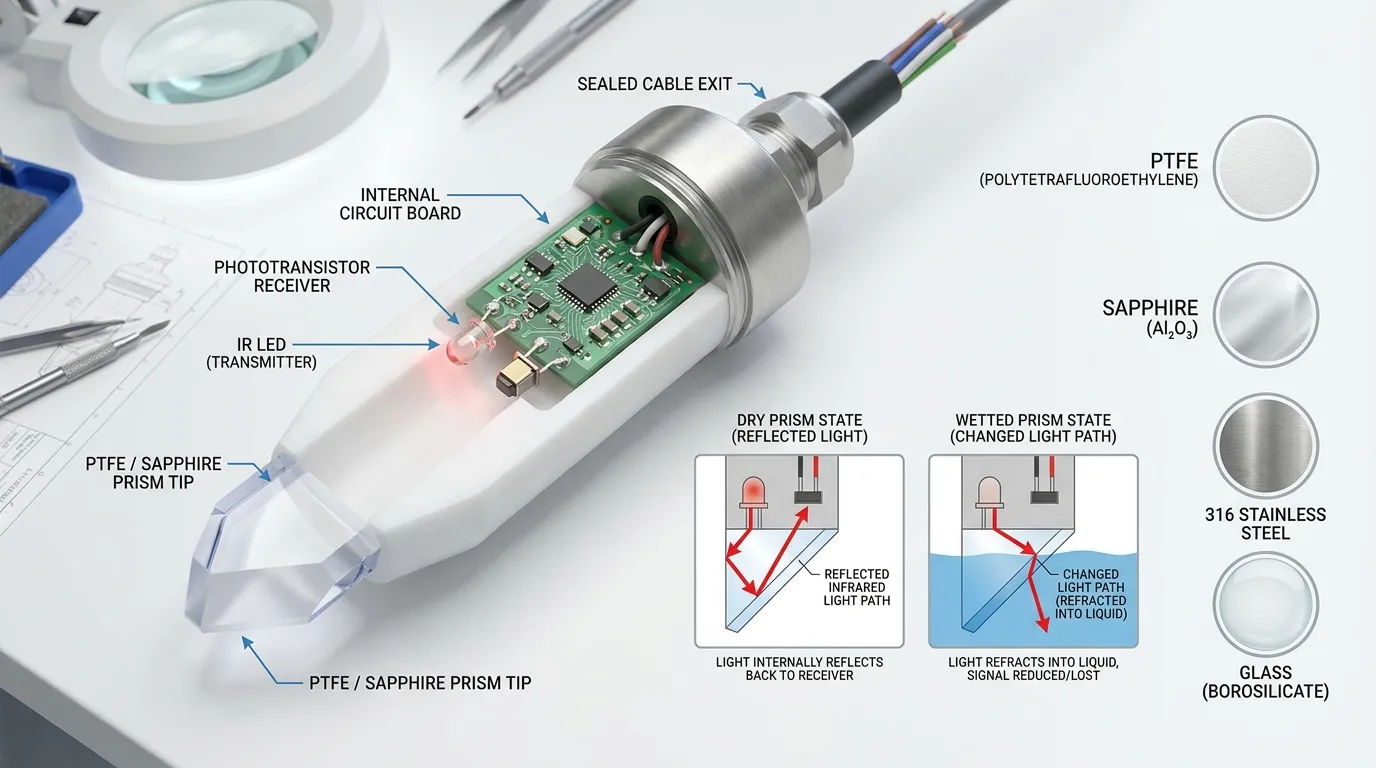
センサー内部, 赤外線LEDがプリズムの先端に光を送ります. フォトトランジスタは反射光を受け取ります. 乾燥状態で, プリズムは内部でより多くの光を反射します, そのため受信側はより強い信号を受信します. 液体がプリズムを覆うとき, 屈折挙動が変わり、受信側に返る光が減ります. 回路はその変化をレベル出力に変換します.
これにより、このセンサーはポイントレベルの検出に有用です。例えば:
- 低レベル警報
- 高レベル警報
- 空タンク保護
- あふれ防止
- 化学物質の補充検出
- ポンプのドライラン保護
- 小貯留層の水位確認
なぜなら浮き輪が存在しないからです, このセンサーはフロートのスティックに関する問題を回避します, 磁石故障, ヒンジの摩耗, または可動部品の汚染. しかし, 光学センサーはまだ適切なメディアレビューが必要です. 重塗り, 結晶化, 粘着性の残留物, バブル, 泡, また、プリズム上の不透明な蓄積が検出安定性に影響を与えることもあります.
PTFE/テフロン光学センサーの化学的適合性ガイド
PTFEは多くの攻撃的な液体に強い選択肢です, しかし、どのセンサーも普遍的に互換性があると売り出すべきではありません. 適合性は化学名によって異なります, 集中, 温度, プレッシャー, 露光時間, 洗浄プロセス, およびすべての湿潤物質, 遺体も含めて, プリズム, シール, ケーブルジャケット, そしてポッティング.
| メディアグループ | 典型的な例 | PTFEのボディ適合性 | プリズムオプション | 重要な注意点 |
|---|---|---|---|---|
| 強酸 | 硫酸, 塩酸, 硝酸の応用 | 堅信後の方が適していることが多いです | PTFEまたはサファイア | 濃度と温度の確認が必要です |
| アルカリ / コースティクス | 水酸化ナトリウム, 水酸化カリウム溶液 | 堅信後の方が適していることが多いです | PTFEまたはサファイア | 長時間の露光と高温の見直しが必要です |
| 溶媒 | アルコール, ケトン体, 洗浄用溶剤, 有機液体 | 多くの溶媒系に適していることが多いです | PTFEまたはサファイア | ケーブルジャケットとシールの互換性は非常に重要です |
| 酸化化学物質 | 酸化性酸, 過酸化物系化学物質 | ケースバイケース | 一部のデザインではサファイアが好まれることもあります | 強い酸化剤は慎重な材料確認が必要です |
| 高純度媒体 | 半導体化学, DI水システム, クリーンな化学ライン | 適切な設計であれば可能です | PTFEまたはサファイア | 浸出および汚染リスクが低い場合は見直しが必要です |
| オイルと燃料 | 燃料, 油, 作動油 | 通常は可能です, しかし、PTFEが必ずしも必要とは限りません | PTFE製, グラス, またはステンレスオプション | 粘度を確認する, 残留物, および動作温度 |
| 洗浄薬品 | CIP液体, 洗剤, すすぎ薬品 | ケースバイケース | PTFEまたはサファイア | 繰り返しの清掃サイクルはシールやケーブルに影響を与えることがあります |
| 未知の混合メディア | カスタムブレンドやプロセス廃棄物 | 必ず見直しが必要です | 確認後 | 化学名だけで選ばないでください |
メディア確認ノート: 最終選考前に, 我々のチームは正確な液体を確認するはずです, 集中, 温度, プレッシャー, 洗浄方法, 浸水時間, タンク素材, および必要な出力. PTFEは広範な化学耐性を持っています, しかし、HojellyTekはすべての化学物質に対する普遍的適合性を主張していません, 集中, またはプロセス状態.
純粋さ, 浸出, および高純度流体の使用
高純度媒体の場合, 化学的耐性は決定の一部に過ぎません. 購入者は汚染も考慮する必要があります, 抽出可能なもの, 浸出, 表面の清潔度, また、センサー本体やケーブル材料が不要な粒子や残留物を導入する可能性があるかどうかも検討しています.
PTFE光学センサーは、湿潤構造が慎重に設計されている場合、高純度の化学物質処理に適しています. ボディマテリアル, プリズム素材, シーリング方法, ケーブル入力, 清掃プロセスも一緒に見直すべきです. 超クリーン用途, 購入者はセンサーがDI水に接触するかどうかを教えてください, 酸, 溶媒, 洗浄液, または半導体級の化学物質, また、特別な包装や取り扱い要件が適用されるかどうかも重要です.
化学攻撃よりも食物接触や衛生要件が重要な場合, 私たちの 食品グレード光学センサー ページの方がより良い参考になるかもしれません.
マウンティング, 出力, および統合オプション
PTFE光学レベルセンサーは、タンク壁やねじ込み式ポートに取り付けられることが一般的です. 側面取り付けは高レベルまたは低レベルの警報によく使われます. 空の検出にはボトムマウントが使われることがあります, 排水確認, または小規模貯留層モニタリング, タンクの設計によります.
購入者は確認すべきです:
- スレッドの種類とポートサイズ
- サイド, 底, またはカスタム取り付け方向
- タンク壁厚と密閉方法
- 必要なウェット長
- ケーブル出口方向
- 検出点付近の液体の乱流
- 先端が気泡を溜めるかどうか, 残留物, あるいは結晶
- PLC/コントローラ入力タイプ
- NPN, PNP, 通常は開いています, 通常は閉じています, またはカスタムスイッチングロジック
- 特定の連続設計または送信機スタイル設計で4〜20 mAの出力が必要かどうか
化学抵抗性はそれほど厳しくないが、機械的強度や工業的な外観が優先される用途, と比較 316 ステンレス光学センサー. 透明または実験室スタイルの濡潤部品用, と比較 ガラス光学センサー.
5-ステップ供給プロセス
- 調査 — 液体の名前を送信してください, 集中, 温度, タンク素材, 取り付け方法, 出力タイプ, また、WhatsAppやメールで注文量見積もりを行えます.
- スペックとカスタマイズのレビュー — 当社のエンジニアリングチームが濡れた材料をレビューします, プリズムオプション, 糸, ケーブル, 出力ロジック, および電気インターフェース.
- サンプル確認 — 設置試験のためにサンプルを準備することができます, メディアコンタクトレビュー, 実際のタンクや装備内での確認信号.
- 生産と品質管理 — 工場は確認された図面に基づいて生産しています, 配線, 材料, および検査要件. 発送前に光学応答と電気出力がチェックされます.
- 輸送および輸出支援 — HojellyTekは深圳から米国の顧客向けに光学液位センサーを輸出しています, 私たちは, インド, その他の市場.
注文前に確認すべき要件
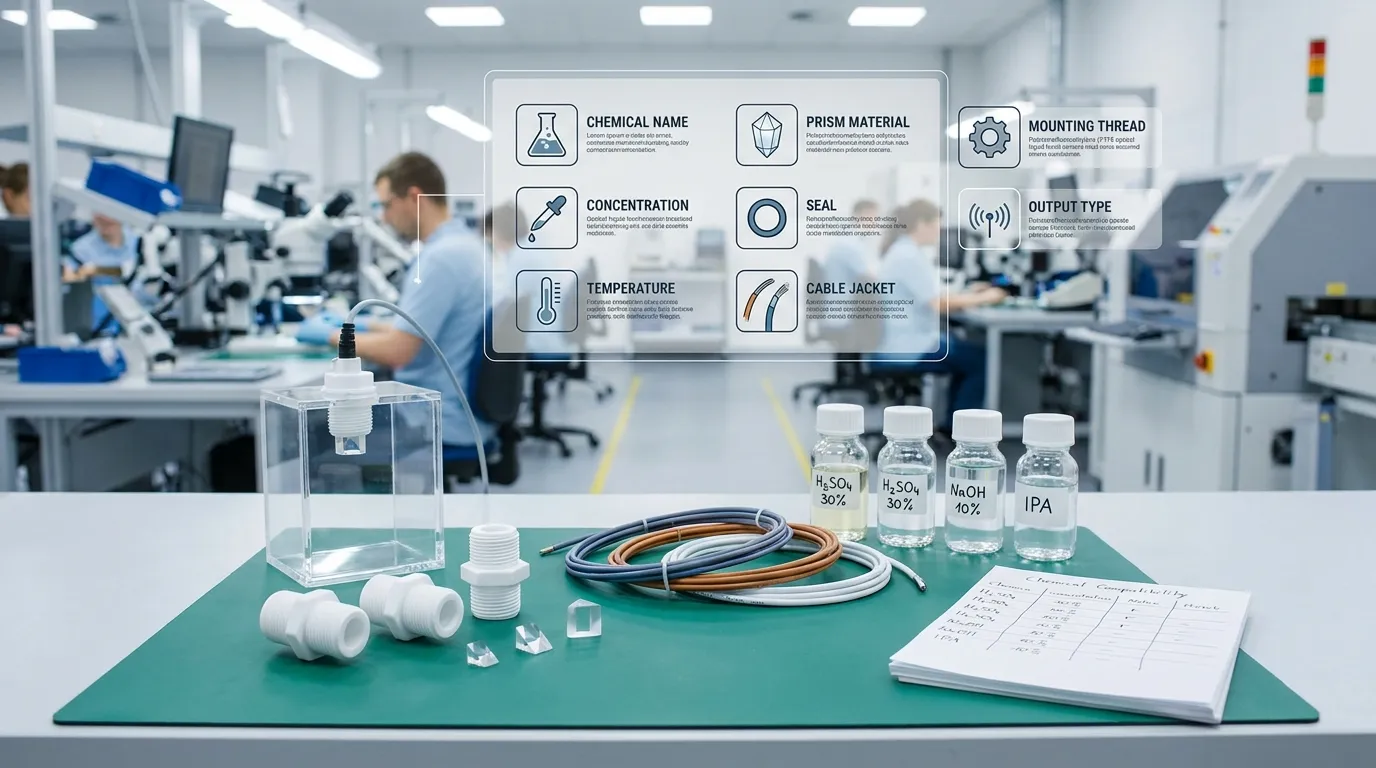
| 要件 | なぜ重要なのか |
|---|---|
| 正確な化学名 | 一般的なカテゴリだけでは適合性の審査には不十分です |
| 集中 | 濃度が高まると材料の挙動が変わるかもしれません |
| 温度 | 化学抵抗性とシール性能は熱に依存します |
| 圧力またはタンクの状態 | ねじとシールの設計は設置に合致しなければなりません |
| 取り付け位置 | サイド, 底, および斜め設置の影響検出 |
| プリズム条件 | コーティング, バブル, または結晶化が光学センサーに影響を与えることがあります |
| 出力タイプ | PLCや基板にはNPNが必要になる場合があります, PNP, またはアナログ信号 |
| ケーブルとコネクター | 外部環境では異なるジャケットやコネクターが必要になることがあります |
| 純度要件 | 高純度システムには汚染および浸出の審査が必要です |
PTFEと他のウェット素材の比較
| マテリアルオプション | 最適適合の利用 | 強度 | 制限 |
|---|---|---|---|
| PSU / エンジニアリングプラスチック | 一般的な水や軽い液体検出 | コスト効率が高くコンパクト | 攻撃的な化学物質には理想的ではありません |
| PTFE製 / テフロン | 酸, 溶剤, 高純度化学物質, 腐食性メディア | 広範な化学抵抗性と低い表面相互作用 | 正確な媒体と機械設計を確認する必要があります |
| 316 ステンレススチール | 油彩, 燃料, 産業用タンク, より高い機械的強度 | 強靭な金属ボディと堅牢な取り付け | すべての酸や腐食性化学物質に適しているわけではありません |
| グラス | 研究所, クリーンメディア, 選択された化学的応用 | 安定で透明な湿潤表面 | 金属やPTFE設計よりも壊れやすい |
なぜHojellyTekを選ぶのか
HojellyTekは深圳の光学および液体レベルセンサーメーカーで、社内Rを搭載しています&D, 光電感知設計の経験, およびOEM/ODM生産能力. カスタムウェットテッド素材もサポートしています, コンパクトなセンサー構造, 配線ロジック, 出力フォーマット, および機器メーカーの取り付け要件.
私たちのチームは工業用バイヤーと連携しています, センサーディストリビューター, 化学機器製造者, また、部品のカタログだけでなく工場からのカスタマイズが必要な自動化企業. TuyaとSmart Lifeの統合も議論できます。これは、レベルセンサーが単純な有線制御回路ではなくスマートモニタリングデバイスの一部である場合です.
よくある質問
PTFE光学液体レベルセンサーは硫酸や塩酸と組み合わせて使用できますか??
よく, PTFEは酸の用途に強い候補です, でも、まさにその酸が, 集中, 温度, 露光時間, プリズム素材, 印章, そして、選考前にケーブルジャケットの確認が必要です. サンプル作成前にメディア確認を推奨します.
PTFEはより良いのでしょうか? 316 腐食性化学薬品用のステンレス鋼?
多くの攻撃的な酸や化学溶液に対して, PTFEの方が適している場合もあります 316 ステンレススチール. 油絵に関しては, 燃料, 機械設備, または腐食性の低い媒体, それでもステンレススチールの方が良い選択かもしれません. その判断は媒体や設置条件によって異なります.
このセンサーは高純度の化学系で動作しますか?
はい, 高純度媒体にはPTFEやサファイアウェット設計が検討されます, しかし、純度要件は慎重に見直す必要があります. 買い手は汚染限度を共有しるべきです, 洗浄プロセス, パッケージングの必要性, そしてセンサーがDI水に接触しているかどうか, 溶媒, または化学物質の処理.
光学化学レベルセンサーが故障する原因?
一般的な故障モードには化学的膨張があります, シール漏れ, ケーブルジャケット攻撃, プリズムコーティング, 結晶化, バブル, 誤った取り付け, 出力配線の互換性がありません, そして実際の化学濃度や温度に適さない体材を使用していること.
プリズムの素材は重要でしょうか??
はい. プリズムは液体と接触する能動的な感知面です. PTFEとサファイアは化学耐性において異なる利点を提供します, 硬度, 光学的挙動, 純度適合性. 液体や操作環境に基づいて正しい選択を決めるべきです.
カスタムPTFE光学液位センサーをリクエストするにはどうすればいいですか??
化学名を送ってください, 集中, 温度, 戦車図面, スレッド要件, 取り付け方向, 出力タイプ, ケーブルの長さ, および目標量. HojellyTekは仕様を確認し、WhatsAppやメールで見積もりを提供できます.
PTFE光学センサー見積もりを依頼
酸用にPTFE/テフロン製の光学レベルセンサーが必要です, 溶剤, 高純度化学物質, または攻撃的なプロセス媒体? メディア情報を送ってください, インスタレーション図面, 出力要件はWhatsAppやメールでチームに提供します. 濡れた物質の確認を手伝います, プリズムオプション, 配線, 見積もり前の取り付け構造.


