
ガラス光学液体レベルセンサー
ガラスを比較する購入者へ, プラスチック, PTFE製, およびステンレス鋼光学センサー設計, このページでは素材の選択について説明しています, 濡れた部分, 密封, 温度の考慮事項, 熱衝撃限界, 清掃, 出力オプション, 注文前に必要とされるRFQの詳細.
ガラス光学センサーの機能
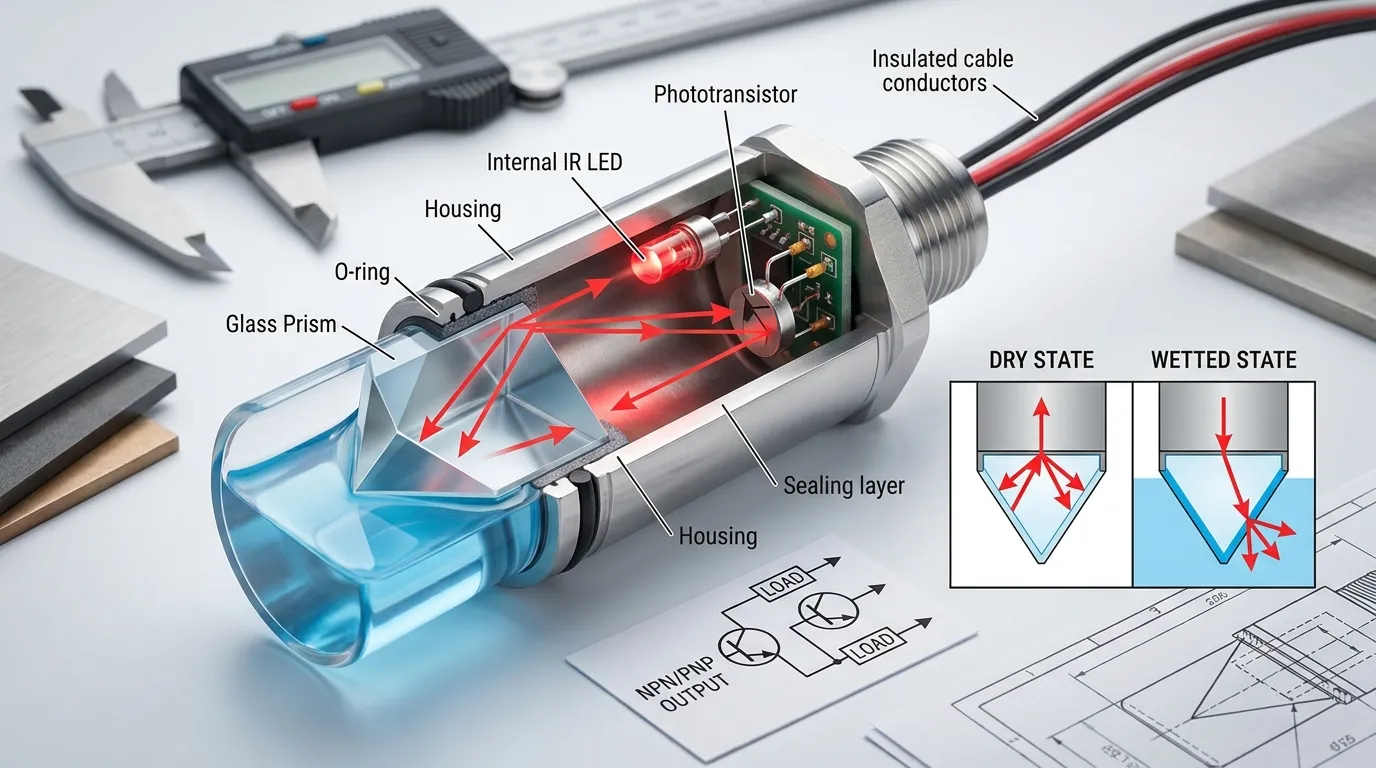
当社のガラスプリズム光学レベルセンサーは、光電感知を用いてプリズムの先端が空気中か液体に浸かっているかを検出します. センサー内部, 赤外線LEDがプリズムに光を送ります. 乾燥状態, 光は内部で反射し、フォトトランジスタに戻ってきます. 液体がプリズムを覆うとき, 屈折条件が変化します, そのため受信側に戻る光は少なくなります. 回路はその後、出力を切り替えます.
プロジェクトによります, センサーは次のように設定可能です。:
- 高液位または低液位の点準検知
- 乾燥から湿式または濡れ方から乾燥式への切り替え論理
- ガラスチップまたはガラスプリズムセンシング構造
- ステンレススチール, PTFE製, PSU, またはその他の住宅素材の選択肢もあります
- NPN, PNP, またはその他の制御基板出力要件
- 連続レベルプロジェクト向けのデジタルスイッチ出力またはアナログ出力の議論
- ねじ込み式, 戦車搭載, 側面搭載, またはカスタムOEMの設置
- ケーブル, コネクター, またはポッテッドリード線終端
- 機器メーカー向けのOEM/ODMカスタマイズ
グラス版を選ぶ前に一般的な参考資料が必要なら, 私たちの 光学レベルセンサー 概要.
なぜガラスが過激で高温の媒体に使われるのか
ガラスは、検出先端が過剰に攻撃的な液体の中で光学的に安定し続ける必要がある場合に選ばれます, 暑すぎる, あるいは標準的なプラスチックプリズムには研磨性が高すぎる. 価値は化学的耐性だけではありません. 本当の利点は、光学的鮮明さの組み合わせです, 表面硬度, 次元安定性, そして清掃性.
攻撃的な液体における化学耐性
化学タンクにおいて, 清掃システム, 溶媒の取り扱い, メッキ装置, および産業用プロセス容器, センサーの先端は流体に直接さらされています. プラスチックプリズムは吸収可能です, うねり, 柔らかく, 変色, または特定の溶剤や攻撃的な化学物質にさらされるとクレイズが発生します. ガラスセンシングチップは、多くの強い液体に対してより安定した光学表面を提供します.
しかし, ガラスは普遍的ではありません. 買い手は正確な液体を確認する必要があります, 集中, 温度, 洗浄剤, および露光時間. 特定の化学物質はガラスを攻撃することがあります, また、ガラス周囲の密封システムが液体と合わないと、真の弱点となることもあります.
耐摩耗性と表面安定性
ガラスプリズムセンサーは、液体に粒子が含まれている場合に有用です, 粉末, スラリートレース, クリーニング・インディッシュ, または、柔らかいプラスチックを傷つける動く流体. 傷ついたプリズムは光を散乱させ、不安定なスイッチングを引き起こすことがあります, 特に、レベルが繰り返し感知点を越える小型タンクでは顕著です.
ガラスは一般的なプラスチック製光学チップよりも表面硬度が優れています, そのため、研磨性のある環境や頻繁に清掃される環境でも、より長くクリーンな光路を維持できます. それでもなお, ガラスは硬い工具で叩かれると欠けたりひび割れたりします, 金属部品, または設置時の強い機械的衝撃.
コーティングの問題に耐える光学的クリアさ
光学レベルセンサーはクリアなプリズム面に依存しています. 油彩, 粘着性添加物, 結晶化化学物質, バイオリンフィルム, スケール, または乾燥した残留物が、光学センサーのスイッチを誤らせることがあります. ガラスは滑らかなので助かります, 硬い表面は多くのプラスチック材料よりも拭き取りや検査が容易です.
厚いフィルムを残す液体の場合, センサーはフローが自然に先端を洗える場所に取り付けるべきです, 死角にいない. タンクに厚いコーティングがある場合, 泡, または結晶化, RFQには清掃頻度と残留物の挙動が含まれ、工場が適切な先端形状と取り付け位置を推奨できるはずです.
高温耐性とプラスチックプリズムの違い
ガラスは、多くのプラスチックよりも形状や光学的安定性を保つため、高温の液体に選ばれることが多いです. 加熱水システムにおいて, ホットオイル装置, プロセスタンク, および産業用清掃機械, プラスチックプリズムは柔らかくなることがあります, 変形, 変色, またはパフォーマンスのドリフト.
より要求の高い温度プロジェクトには, 私たちの比較 高温光学センサー オプション. 温度承認はセンサー全体を常に考慮すべきです, ガラスだけじゃない. 住宅, ケーブル, 印章, ポッティング, コネクター, 電子機器も実際の運転環境に合わせていなければなりません.
熱衝撃限界を無視しないでください
ガラスは多くのプラスチックプリズムよりも熱に耐えられます, しかし、急激な温度変化でも損傷は起こり得ます. 熱いセンサーの先端を冷たい水ですすぎたときに熱衝撃が起こることがあります, 冷たいセンサーが突然熱い液体で満たされるとき, または洗浄サイクルで液体温度が急激に変化する場合も含まれます.
これは通常の運転温度とは異なります. センサーは安定した高温液体には適しているかもしれませんが、先端が突然の熱から冷たさや冷から熱への衝撃を受けるとリスクがあります. ガラス光学レベルセンサー用, 購入者は暖房サイクルについて説明すべきです, 清掃サイクル, タンク充填温度, および承認前の洗浄条件.
ウェッテッドグラスタイプ, 封印, そしてボディマテリアル
信頼できるガラスの光学センサーは単なる「ガラス」ではありません。完全な湿潤構造の確認が必要です.
ガラスセンシングチップまたはガラスプリズム
ガラス部分は小さな光学チップの場合もあります, 成形または機械加工されたプリズム, またはステンレスボディに統合されたガラス要素. 重要な要件は、検出点で光経路が明確かつ安定していることです. 購入者は、ガラスが直接液体にさらされているのか、また液体が先端だけに触れているのか、それともアセンブリの他の部分に触れているのかを確認してください.
住宅の材料選択
一般的な住宅の選択肢には以下が含まれます:
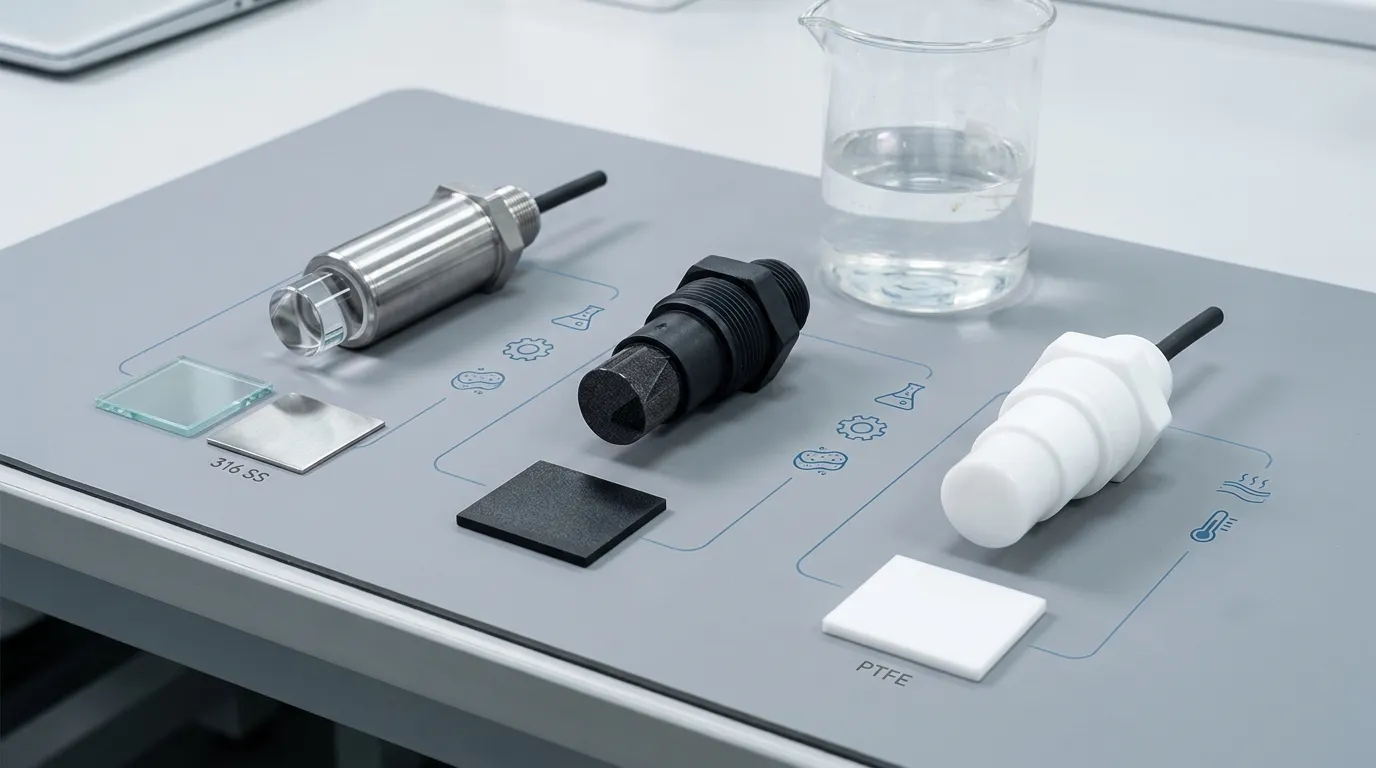
- 316 ステンレススチール 強さのために, ねじ込み取り付け, オイル, 燃料, 工業用液体, そして多くの化学環境
- PTFE製 フルオロポリマー適合性が好まれる高腐食性用途
- 電源ユニットかエンジニアードプラスチック製か 低コストの産業用および家電製品用途
- 金属ボディのガラス先端 光学的明瞭さと機械的強度の両方が求められる場合
金属ボディプロジェクト用, 私たちのレビュー 316 ステンレス光学センサー オプション. 濡れた構造全体にフッ素ポリマー保護が必要な腐食性媒体の場合, 私たちの比較 PTFE光学センサー.
封印とポッティング
シールはしばしば最も重要な選択ポイントです. ガラス先端が互換性を持っていても, Oリング, 接着剤, 培養剤, ケーブルジャケット, または、誤った液体や温度にさらされるとコネクタが故障することがあります. 良いRFQがあれば確認できるはずです:
- センサーがタンクの内部から設置されるか外部から設置されるかに関わらず
- シールが連続的に浸かっているのか、それとも水しぶきだけ露出しているのか
- 圧力や真空が存在するかどうかに関わらず
- 洗浄薬品がケーブルに触れるのか、先端だけに触れるのか
- 加熱中にタンクの素材が膨張するかどうか
- 振動や機械的応力が存在するかどうか
マウンティング, 出力, および統合オプション
ガラス製の光学レベルセンサーは通常、コンパクトなポイントレベルスイッチとして使用されます. タンクの壁を通して取り付けることができます, スレッド付きポート, フランジ, ブラケット, または純正の成形タンク機能. 取り付け位置は、プリズムが液体にきれいに接触し、気泡を閉じ込めないようにしなければなりません.
制御出力用, 購入者はPLC用のNPNまたはPNPスイッチングを依頼することが多いです, 制御盤, パンプス, アラーム, および充填システム. 出力ロジックは、チップが湿っているか乾いているかのどちらでシステムが必要かに応じて選択されることが多いです. 連続レベルプロジェクトの場合, 4–20 mAのようなアナログ出力は、単純なポイントレベル光スイッチとは異なるセンシング構造を必要とするため、別途議論すべきです.
注文前に, 電源電圧を確認する, 出力タイプ, ケーブルの長さ, コネクター, 糸, 取り付け方向, タンク壁の厚さ, また、センサーが高レベルまたは低レベル条件下でフェイルセーフであるかどうかも重要です.
ガラス vs プラスチック vs PTFE 光学センサー
| マテリアルオプション | 最適フィット | 強み | 確認すべき制限 |
|---|---|---|---|
| ガラス製光学チップ / プリズム | 辛い, 熱い, 研磨性, または頻繁に洗浄される液体 | 光学的クリアさは良好です, 硬い表面, 掃除が楽です, 多くのプラスチックよりも高温安定性が優れています | 熱衝撃, 衝撃損傷, ガラス化学的適合性, シール互換性 |
| プラスチック光学プリズム | 一般的な水, 機器, コンパクトタンク, 低コストのOEM設計 | 低コスト, 軽量, カスタマイズが簡単, 多くの標準的な液体に適しています | 化学的および摩耗性の低下, 耐熱性の低下, 変色や腫れの可能性 |
| PTFE光学センサー | 強力な腐食性化学物質と厳しい湿潤材料の要求 | 多くの攻撃的な媒体に対して優れた化学耐性を持っています, 低い表面エネルギー, 良好なアンチスティック挙動 | コストの高さ, 機械的設計の限界, 光学構造と密封性の確認が必要です |
| グラス + 316 ステンレスボディ | 油彩, 燃料, 工業機器, 高強度ねじ込み取り付け | 強い体, クリーンな光学チップ, 堅牢な産業用取り付け | 金属の適合性, ガルバニック/腐食リスク, シーリング材料, トルク取り付け |
ガラスを指定する前にフィットチェックリストを必ず確認してください
これらのポイントの多くがあなたの用途に合致している場合、ガラスプリズム光学センサーは有力な候補です:
- 液体は一般的なプラスチックチップに対して化学的に攻撃的です
- センサーは加熱された液体中または高温プロセスの近くで動作しなければなりません
- この媒体には粒子が含まれています, 残留物, またはプラスチックに傷をつける可能性のある清掃サイクル
- 光学チップは定期的に拭くか、薬品で洗浄する必要があります
- このタンクはねじ込みまたはステンレス鋼の工業用設置を使用しています
- 液体は透明です, 半透明, または光スイッチングに十分な予測可能性がある
- 泡, バブル, 粘着性コーティングは取り付け位置で管理可能です
- 熱衝撃は制御したり設計したりすることができます
- 印章, ケーブル, そして、体材は液体に照合できます
- 大量生産前に実際の液体で試料を試験することができます
ガラスは、強い機械的衝撃がある場合は最適な選択肢とは言えないかもしれません, 急速な極端温度サイクル, 重結晶化, ガラスを攻撃することが知られている化学物質. そういう場合, PTFE製, ステンレス, 超音波, 浮き上がる, または、他のレベルセンシング方式の方が安全かもしれません.
5-ステップ供給プロセス
- 調査: 液体の名前を送ってください, 戦車図面, 取り付け位置, 温度条件, 出力要件, 数量プランはWhatsAppやメールで取得します. 写真や図面を参考にすれば、実際の設置状況をチームが理解できます.
- 仕様とカスタマイズ: 当社のエンジニアは濡れた材料を点検します, ガラスの先端, 印章, ハウジング, 糸, 出力ロジック, ケーブル, およびコネクター. OEM/ODMプロジェクト用, サイズについて話しましょう, 配線, プライベートラベルのニーズ, および制御盤統合.
- サンプル: 刺激の強い液体にはサンプルを推奨します, 高温媒体, 液体のコーティング, または清掃サイクル用途. 最良のテストは、実際の液体、実際の温度、洗浄条件で行うことです.
- 生産と品質管理: HojellyTekは深圳で自社製Rを製造しています&Dと光電光学センシングの経験. 本番環境では機能チェックを含めることができます, 配線チェック, シールレビュー, および合意された仕様に従った目視検査.
- 船舶: 私たちは光学液体レベルセンサーを米国に輸出しています, 私たちは, インド, その他の市場. 発送方法と梱包は注文数に応じて確認されます, サンプル緊急性, および買い手の要件.
RFQ段階での確認要件
- リキッド名称, 集中, 粘度, および残基挙動
- 正常および最高運転温度
- 突然の加熱であっても, 冷却, またはウォッシュダウンが熱ショックを引き起こす
- タンク素材, 壁の厚さ, および乗車方向
- 糸, フランジ, またはカスタム取り付けの要件
- 濡れた材料: ガラス, ステンレススチール, PTFE製, PSU, 印章, ケーブル
- 出力タイプ: NPN, PNP, ウェット/ドライロジック, またはアナログの要件
- 電源電圧とコントローラの種類
- ケーブルの長さ, コネクター, および知的財産・環境のニーズ
- 洗浄方法: ワイプ, すすぎ, 化学洗浄, CIP, または手動でのサービス
- バッチ注文前のサンプル試験計画
なぜHojellyTekと働くのか
HojellyTekは、深センの光学および液体レベルセンシング製品に注力する製造・輸出業者です. 標準センサーの選定および戦車メーカー向けのOEM/ODM開発もサポートしています, 家電ブランド, 産業用機器製造者, およびシステムインテグレーター.
私たちのチームがガラスの比較をお手伝いします, PTFE製, ステンレススチール, そして、すべてのケースに同じ材料を強制する代わりにプラスチック製の光学センサー構造を用いる. 接続タンク監視プロジェクトのために, TuyaとSmart Lifeの統合も、システム設計に適合する部分で議論できます.
よくある質問
ガラス製の光学液位センサーは何に使われますか??
ガラス製の光学液位センサーは、過酷な環境での点レベルの検出に使用されます, 熱い, 研磨性, また、プラスチック光学プリズムが十分な材料安定性を提供できない化学的負荷の高い液体.
ガラスプリズム光学レベルセンサーはどのように液体を検出するのですか?
赤外線LEDを使用しています, フォトトランジスタ, そして光学プリズム. 空中で, 光はプリズム内で反射します. 液体がガラスの先端を覆うとき, 屈折挙動が変化します, そしてセンサーは出力を切り替えます.
光学液位検出においてガラスはプラスチックより優れているのでしょうか??
高温にはガラスの方が良いことが多いです, 耐摩耗性, 光学的鮮明さ, そして清掃. プラスチックは依然として低コストで有用です, 化学的および温度ストレスが低い汎用液体検出.
ガラス光学センサーは化学薬品に使えますか?
はい, ガラスは多くの化学媒体と共に動作します, しかし、相性を確認しなければなりません. 購入者は液体を確認するべきです, 集中, 温度, 洗浄剤, および露光時間, さらにシールとハウジング素材も含まれます.
熱衝撃でガラスの光学センサーが損傷することはありますか?
はい. ガラスは一定の高温に耐えられますが、急激な温度変化でひび割れることがあります. 熱水から冷水へのすすぎ, 急速充填, または、センサー承認前に厳しい清掃サイクルを見直すべきです.
ガラスセンサーチップはどのように掃除すべきでしょうか?
液体に合った洗浄方法を使いましょう, ガラス, 印章, 住宅. 先端が欠けやすい硬い工具は避けてください. 粘着性の残留物用, 定期的な点検を計画し、拭くかすすぎで安定したスイッチングが回復するかをテストしましょう.
見積もりを依頼する
ガラスチップまたはガラスプリズム光学レベルセンサーを指定するために, 液体の詳細を送信してください, 温度範囲, 戦車図面, 取り付け要件, 出力タイプ, および洗浄プロセス. 見積もりをご依頼の方は、WhatsAppまたはメールでHojellyTekにご連絡ください, サンプル, またはOEM/ODMセンサー推奨.


