
高温光学液体レベルセンサー
HojellyTekは、深センでOEM/ODMおよび製品バイヤー向けに、サンプルや生産バッチの発注前に材料指導が必要な光電液位センシングソリューションを製造しています.
高温光学準位検出能力
当社の高温光学レベルセンサーサービスは、フロートスイッチが詰まるホットメディア用途のポイントレベル検出をカバーしています, 残留物を吸収する, 機械的な摩耗も. センサーは赤外線LEDを使用しています, フォトトランジスタ, そして光学プリズムの先端で、プリズムが乾いているか液体で覆われているかを検出します.
乾燥状態で, 赤外線はプリズム内部で反射し、受信機に戻ってきます. 液体がプリズムを覆うとき, 屈折条件が変化します, 光は液体に再誘導されます, そして出力は状態を変えます. これにより、光学センサーは高レベルの警報に有用です, 低レベル警報, ドライラン保護, 冷却タンクの水位検出, 油貯留層監視, およびコンパクトなOEMタンク統合.
プロジェクトによります, 私たちは支持します:
- 熱い液体検出のための光電点準検出
- PSU, 316 ステンレススチール, グラス, PTFE製, 混合材料構造
- NPN, PNP, およびデジタルスイッチ出力オプション
- 4–20 mA 連続レベルまたは送信機ベースのプロジェクトに関する議論
- ねじ込み式, コンパクト, サイドマウント, ボトムマウント, およびカスタマイズされた取り付け構造
- 純正ケーブル長, コネクター, 出力ロジック, 住宅設計
- ホットメディア用途の量産前のサンプル試験
一般的な光学点準位選択のために, 私たちの 光学レベルセンサー 範囲.
本当の失敗リスク: 定格以上のプラスチックプリズムとシール
高温の購入者は通常、まず最大温度を尋ねます. それは理解できます, しかし、単一の「最大温度」という数値がセンサーの一部だけを説明していると誤解を招くことがあります.
プラスチックのプリズムは短時間の高温の水しぶきには耐えますが、連続浸水中に変形します. シールは硬化することがあります, うねり, または金属ハウジングが破損する前に圧縮を失う. センサーの先端がまだ機能していても、ホットタンクの壁付近でケーブルジャケットが割れることがあります. ポッティングコンパウンド, 接着剤, コネクタープラスチック製, そして内部電子回路も実際の限界となることがあります.
このため、, HojellyTekは、熱い液体センサーをボディ素材だけで選ぶことを推奨していません. ステンレス製のボディが必ずしもケーブルを意味するわけではありません, 印章, 光学ウィンドウ, 電子機器も同じ天井を共有しています. ガラス先端は多くのプラスチックよりも強い媒体にも耐えられます, ただし、その組立はシールとケーブル設計の確認が必要です.
ホットメディア光学センサーを安全に指定する方法は、確認することです:
- 通常の連続液体温度
- 最高ピーク温度
- ピーク温度がどれくらい続くか
- センサーの先端が, 糸, ケーブル, またはコネクタが熱にさらされている
- 液体が水かどうか, 冷却液, 油, 化学溶液, またはミックスメディア
- 圧力は, 振動, 泡, バブル, または清掃サイクルが存在する場合もあります
材料別の温度上限: 電源ユニット vs 316SS vs ガラス/PTFE
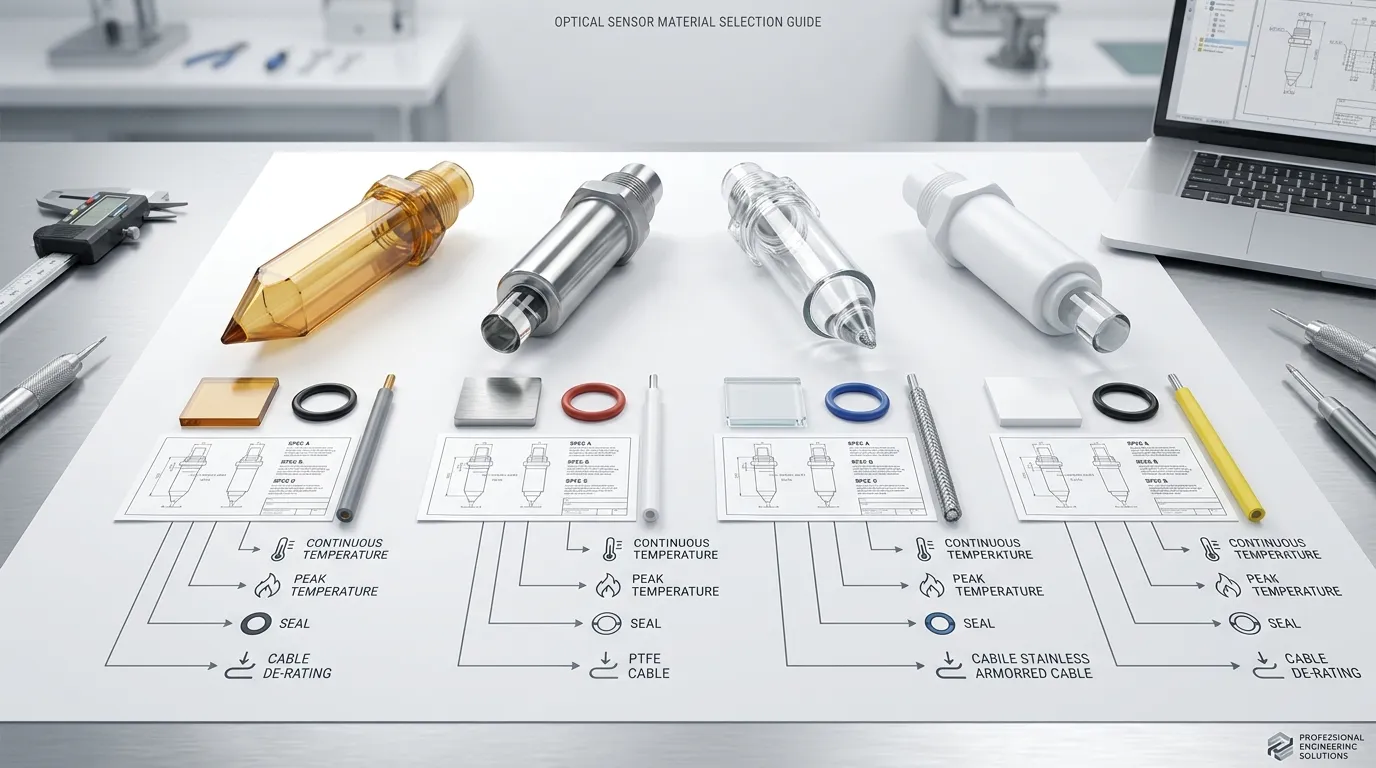
高温光学液位センサープロジェクト向け, 「実際の天井」はセンサー全体のビルドから確認する必要があります, 一つの原材料から仮定するものではありません. 以下の表は買い手の選択用に作成されています, 温度の公表としては存在しません.
| センサー素材 / 建設 | ベストフィット | 温度評価ガイド | 主なリスクは確認すべきです |
|---|---|---|---|
| PSUプラスチックの光学プリズムまたはボディ | コンパクトOEMタンク, 水性液体, 低コストプロジェクト | 正確な部品の連続およびピーク定格が申請と一致している場合にのみ適用されます. 「エンジニアリングプラスチック」がすべての熱水槽に安全だと決めつけないでください. | プリズム軟化, ひび割れ, 腫れ, シール応力, 長期変形 |
| 316 光学チップ付きステンレス製ハウジング | 熱い冷却材, 油, 産業用タンク, より強力な機械的保護 | ボディの耐久性はプラスチックよりも強いです, しかし実際の天井は光学チップによって異なります, 印章, ケーブル, および内部アセンブリ. | シールのエイジング, ケーブルの降格, 電子機器への熱伝達 |
| ガラス光学センサーチップ | お湯, オイル, 化学薬品, およびプラスチックプリズムの互換性が懸念される用途 | プラスチックよりも安定した光インターフェースを求める購入者に選ばれることが多いです. 実際の天井は完全な組立設計で確認されなければなりません. | ガラスと金属のシーリング, ショック, 設置の応力, ケーブル露出 |
| ガラス感知領域を持つPTFE湿潤部品 | 化学媒体, 腐食性液体, 表面接着力が低い用途 | PTFEは化学的適合性を向上させる可能性があります, しかし、化学抵抗性と温度評価は別途確認する必要があります. | シール互換性, 機械的剛性, メディアの浸透, ケーブル制限 |
| 混合カスタム組立 | 厳密なスペースを持つ純正タンク, 配線, およびメディア要件 | 材料が適用される場合はRFQベースの設計として扱うのが最適です, 印章, ケーブル, 出力, および取り付けは一緒に指定されています. | アセンブリ内の一つの部品が制限点となる |
プラスチック感知をしない顔を求める購入者へ, 私たちの ガラス光学センサー ページは参考になる役目です. より過酷な工業用住宅のために, レビュー 316 ステンレス光学センサー オプション.
連続温度とピーク温度の比較
連続温度とは、センサーが通常動作中に長期間耐えなければならない温度のことです. ピーク気温は短いイベントです, 例えば、起動熱, 清掃, フラッシュ, または一時的な過熱.
この区別は重要です。なぜなら、多くの故障は一瞬で起こるわけではないからです. プラスチックのプリズムは短いベンチテストに合格しても、熱い冷却液で数週間浸すと徐々に変わってしまいます. シールは室温漏れ試験に合格しても、繰り返しの加熱・冷却で弾性を失うことがあります. ケーブル絶縁は最初は柔軟に保たれていることがあります, その後、タンクの壁の近くで長時間曝露した後に硬化し、ひび割れます.
RFQを送信する際, 「高温」だけと書かないでください。連続運転温度を送信します, 最高ピーク温度, ピーク持続時間, また、センサーが浸水状態が連続しているのか、それとも充填中のみ露出しているのか. 申請にCIPクリーニングが含まれている場合, 蒸気, 熱い洗剤, オイル添加剤, またはグリコール冷却液, サンプル選択前にその情報を含めてください.
ケーブルレーティング, コネクターの定格低下, および設置熱
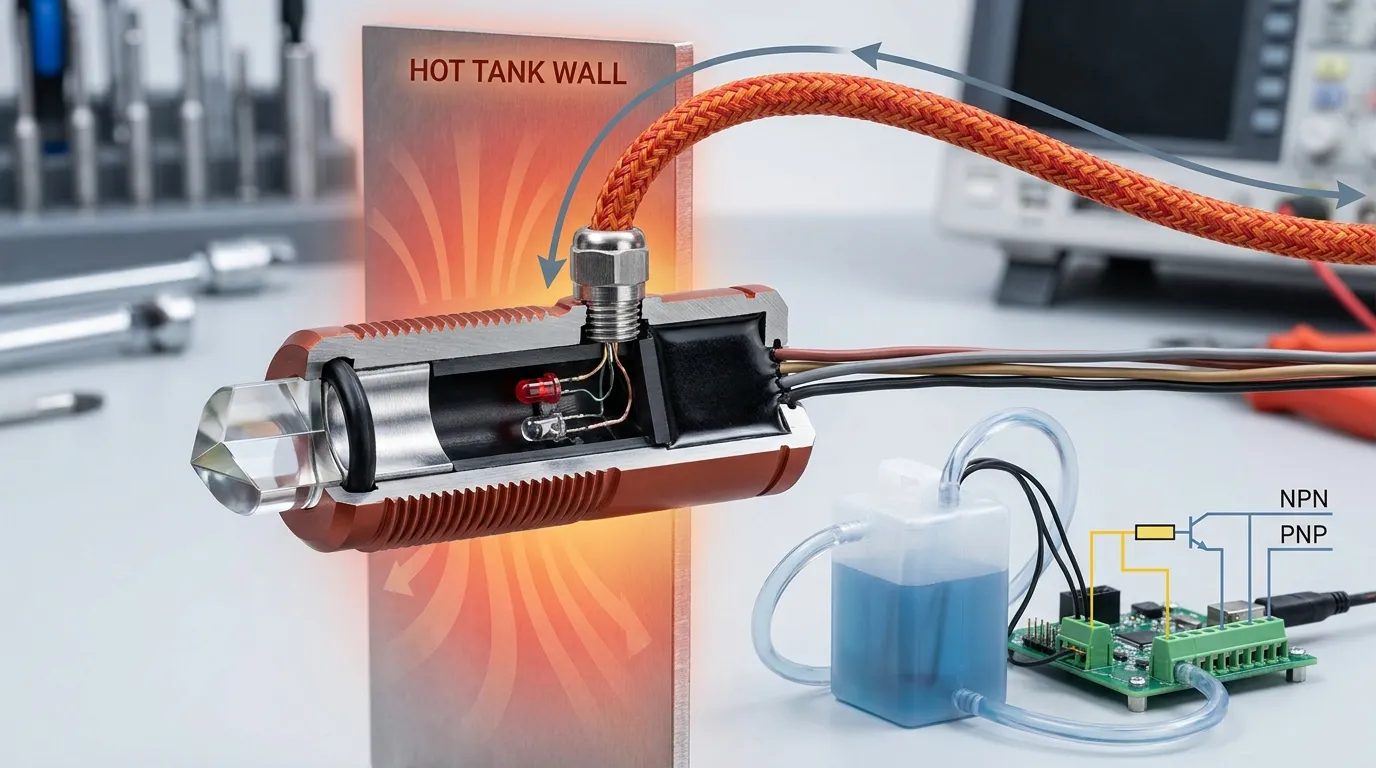
熱水槽で, センサーの先端だけが露出しているわけではありません. ケーブルルーティングはプロジェクトの成功を左右します.
通常の環境条件に対応できるケーブルは、熱い金属タンクに触れると故障することがあります, ヒーターのそばに走る, または高温の囲いから出る. ケーブルには高温絶縁材が必要になる場合があります, 追加のストレスリリーフ, より冷たいルーティング経路, または、ケーブル入口への直接的な熱伝達を減らす金属製ボディ設計.
コネクタの選択も重要です. M8, M12, プラグインコネクター, 飛ぶリード, また、カスタムハーネスには異なる熱制限があります. コネクターがホットゾーンの外にある場合, 設計はもっと簡単かもしれません. コネクターがタンクの壁に近い場合, コネクタの材料とシールは同時にチェックする必要があります.
高温用途, 購入者は確認すべきです:
- ケーブルジャケットの材料と熱被曝面積
- 温水タンクの壁からコネクターまでの距離
- ケーブルが固定されているかどうか, 屈曲, 振動にさらされることもありません
- 石油は, 冷却液, またはケーブルの化学接点の洗浄
- 出力配線がNPNを使うかどうか, PNP, または他の制御インターフェース
- コントロールボードが通常開いている必要があるかどうか, 通常は閉じています, 高液, または低液態論理
ホットメディアアプリケーションチェックリスト
見積もりやサンプルを依頼する前に、このチェックリストを活用してください:
| RFQ項目 | 提供すべき内容 |
|---|---|
| 液体タイプ | 水, 冷却液, 油, 洗剤, 化学溶液, またはミックスメディア |
| 連続温度 | 液体の通常の長期運転温度 |
| ピーク温度 | 最高予想温度と被曝時間 |
| 取り付け位置 | サイドマウント, ボトムマウント, トップエントリー, またはカスタムタンク壁設計 |
| ウェット素材の好み | PSU, 316 ステンレススチール, グラス, PTFE製, 工場での推奨も含まれます |
| シール要件 | メディア互換性, 圧力条件, および洗浄サイクル |
| ケーブル露出 | ホットゾーン長, コネクター距離, およびルーティング環境 |
| 出力タイプ | NPN, PNP, スイッチ出力, 送信機に関する議論 |
| 電源 | 制御基板電圧はRFQ段階で確認されました |
| 応用目的 | 高レベル警報, 低レベル警報, ドライラン保護, リーク検出, またはOEMタンク制御 |
| サンプル検証 | ベンチテスト, 熱い液体浸漬試験, および生産前の設置試験 |
熱冷却材および貯留層プロジェクト用, ザ 冷却タンクセンサー コンパクトタンク監視の適用文脈を示すページ.
5-ステップOEM/ODM供給プロセス
1. 調査
液体を送れ, 温度プロファイル, 取り付け位置, 出力要件, 図面, 写真, または既存の部品サンプル. 私たちのチームは標準的な光スイッチかどうかをレビューします, ステンレス版, ガラス版, またはカスタマイズされた構造の方が適している.
2. 仕様とカスタマイズ
実用的なセンサー構成を確認します: 濡れた物質, 糸, ケーブル, 出力ロジック, コネクター, 印章, また、温度上限をサンプル試験で検証する必要があるかどうか.
3. サンプル
試料は電気試験のために準備されます, 浸水試験, および設置チェック. ホットメディアプロジェクトのために, 実際の液体温度およびデューティサイクル条件下での試験を推奨します.
4. 生産と品質管理
サンプル承認後, 生産は確定した図面と仕様に従って行われます. QCには外観検査も含まれることがあります, 配線チェック, 出力関数のチェック, シーリングチェック, そして、生産前に合意されたアプリケーション固有のテスト.
5. 船舶
HojellyTekはセンサー製品を米国に輸出しています, 私たちは, インド, その他の市場. 船舶, 包装, ラベリング, また、買い手の注文や目的地に基づいて書類について話し合うことも可能です.
注文前に確認すべき要件と仕様
信頼性の高い高温光学センサーの命令は、センサー本体以上のものを確認できるはずです. 最低でも, 定義:
- センサーの種類: ポイントレベルの光学スイッチまたは連続レベルプロジェクト
- 濡れた物質: PSU, 316 ステンレススチール, グラス, PTFE製, あるいは慣習
- 出力: NPN, PNP, デジタルスイッチ出力, または4〜20 mAの議論
- 出力ロジック: 液体中でも空気中でも活性か
- マウンティング: 糸, フランジ, 側壁, ボトムマウント, またはコンパクトなOEM構造
- ケーブル: 長さ, ジャケット素材, コネクター, そして熱曝露
- 印章: 液体との適合性および温度サイクル
- 電気的積分: 電源電圧, 負荷, コントローラ, plc, またはPCB入力
- メディアでの行動: 泡, バブル, コーティング, 油絵フィルム, 残留物, カラー, または粘度
- 検証計画: バッチ生産前のサンプル試験条件
材料と応用の比較
| 適用状況 | より良いスタートオプション | なぜでしょうか |
|---|---|---|
| 温かい液体を入れたコンパクトプラスチックタンク | PSU光学センサーが適切であれば | コスト効率が高くコンパクト, ただし、実際の素材とシール等級内に収まらなければなりません |
| 熱冷却貯水槽 | 316 ステンレスまたはガラス先端のデザイン | 暖房の場所の方が良い選択です, 添加物, 振動も問題です |
| ホットオイルタンク | 適切な光学チップとケーブルを備えたステンレスハウジング | オイル適合性, ケーブルジャケット, シールの材料は慎重にチェックしなければなりません |
| 腐食性高温化学物質 | ガラス/PTFEについての議論 | 化学抵抗性と温度の両方を検証する必要があります |
| 買い手は「熱い液体」しか知らない | RFQに基づく材料選択 | 工場にはメディアが必要です, 連続温度, ピーク温度, 安全に見積もる前に詳細を取り付けることも重要です |
なぜHojellyTekを選ぶのか
HojellyTekは、深圳を拠点とする光電光学液位検出の製造・輸出業者です. 私たちは社内Rをサポートしています&D, OEM/ODMのカスタマイズ, コンパクトなセンサー構造, 産業用材料選定, およびアプリケーションベースのサンプル検証.
買い手は、カタログのみのサプライヤーではなく、実用的な工場直送センサーパートナーが必要なときに私たちと協力します. PSUの比較をお手伝いできます, 316 ステンレススチール, グラス, およびPTFEオプション, ケーブルと出力の詳細を調整してください, 戦車のOEM統合サポート, 機器, 工業機器, 冷却材システム, およびスマート液体モニタリング製品. TuyaとSmart Lifeの統合も、単純な有線スイッチではなく接続された液体モニタリングを必要とするプロジェクトでは議論できます.
よくある質問
高温の光学液位センサーの実際の最高温度はどれくらいですか??
実際の最大温度は全体の組み立てによって異なります: プリズム, 住宅, 印章, ケーブル, コネクター, ポッティング, および液体の適合性. 一つの見出し数字で選ぶことはお勧めしません. 連続温度とピーク温度の要件を送って、正しい天井を確認してください.
連続温度はピーク温度と異なるのでしょうか??
はい. 連続的な温度は長期的な正常曝露のことです. ピーク気温は短いイベントです. センサーは短いピークは生き残っても、プリズムが連続浸水した場合は故障することがあります。, 印章, またはケーブルがそのデューサイクルに対応していない場合もあります.
熱い液体に最適な素材はどれですか: PSU, 316 ステンレススチール, グラス, またはPTFE?
PSUは定格内で確認されれば、コンパクトなOEM用途に適しています. 316 ステンレス鋼は機械的耐久性を向上させます. プラスチックの互換性が懸念される場合、ガラスが好まれることが多いです. PTFEは化学的適合性に有用です, ただし、温度や密閉性はまだ確認が必要です.
光学レベルセンサーは高温冷却タンクで動作しますか??
はい, 光学センサーは冷却材レベル検出に使用可能です, 印章, ケーブル, 出力が正しく選択されている. 冷却材添加剤, 温度サイクル, 振動, また、サンプル選択前に取り付け位置を共有しておくべきです.
光学センサーは連続レベルセンサーですか??
ほとんどの光学プリズムセンサーはポイントレベルスイッチです. 先端が乾いているか濡れているかを検出します. プロジェクトが連続測定や4〜20 mAの出力を必要とする場合, 別の連続レベルまたは送信機ベースの解について議論してください.
見積もりを依頼する前に何を送ればいいですか?
液体タイプを送信, 連続温度, ピーク温度, 取り付け方法, タンク素材, スレッド要件, ケーブルの長さ, コネクタタイプ, 出力タイプ, および目標注文量. 写真, ドローイング, 既存のセンサーサンプルも役立ちます.
見積もりを依頼する
高温光学液体レベルセンサーの場合, 最も安全な第一歩は、注文前にセンサー全体の実際の上限を確認することです. ホットメディアチェックリストを送ってください, 戦車図面, また、WhatsAppまたはメールでHojellyTekへの配線要件も必要です, そして、私たちのチームが適切な素材を推薦します, 出力, ケーブル, およびサンプルプラン.


