
冷却材タンク用の光学レベルセンサー
光学レベルセンサー冷却タンクのソリューションは、低冷却水による過熱を防ぐのに役立ちます, ポンプのドライランニング, キャビテーション, そして貯留池が危険なレベルに達する前に予期せぬ機械停止. 工作機械用, エンジン, チラー, 冷却スキッド, および産業用貯水池, HojellyTekは、低レベルの警報検出用のコンパクトな光電レベルセンサーを提供しています, 冷却材の存在確認, およびOEM冷却タンク統合.
目的はシンプルです: 安全な最低レベルに冷却液が存在するかどうかを検出します, その後、PLCに信頼できる信号を送信します, 制御盤, リレー, ブザー, 警告灯, またはシャットダウン回路.
冷却材タンクのレベル検出能力
HojellyTek光学センサーは、フロートスイッチがかさばりにくいコンパクトタンクや産業用貯水槽での点レベル検出のために設計されています, 機械的に信頼性が低い, 振動に敏感または.
冷却タンク用途, 私たちは支援できます:
- CNC工作機械冷却材貯蔵庫における低冷却水警報検出
- 冷却材循環ポンプのポンプ入口保護
- 産業用機器用のエンジン冷却水貯水槽の水位監視
- チラータンク低レベル警報検知
- 金属加工システムにおける冷却潤滑剤レベル監視
- 戦車製造者および機器メーカー向けのOEM/ODMセンサーカスタマイズ
- カスタムケーブルを用いた光電センシングモジュール, コネクター, 出力, 住宅オプション
- 冷却材の種類に基づくセンサー選択, タンク素材, 取り付け位置, および制御ロジック
アプリケーションが一般的なポイントレベルのセンサープラットフォームを必要とする場合, 私たちの 光学レベルセンサー 標準的な液体検出プロジェクトの選択肢.
低冷却水による過熱やポンプ損傷の防止
冷却材システムにおいて, レベルセンサーは単なる監視アクセサリーではありません. これは防護装置です. 冷却液が安全レベルを下回ったとき, システムの冷却能力は失われることがあります, ポンプが空気を吸い込むことがあります, また、熱を除去する十分な液体がなくても機械は稼働を続ける可能性があります.
低レベルの光学センサーが防ぐ一般的な故障には以下が含まれます:
- 冷却タンクの水位が吸引点を下回ったときにポンプをドライ稼働させてください
- 工作機械での過熱, エンジン, またはチラー
- 空気の取り込みやキャビテーションによる冷却液の循環不良
- 冷却流量不足による工具の摩耗やプロセス不安定性
- チラーの低レベル故障と緊急停止
- 手動検査の遅延による予期せぬダウンタイム
- 十分な液体がない状態で繰り返し運転したことでポンプシールの損傷
ポンプに焦点を当てた用途, 私たちの関連 ポンプのドライラン保護 ページは、ポンプが安全でない環境で稼働する前にポイントレベルセンシングをインターロックとして使える方法を説明しています.
光学センサーが冷却水位を検出する方法
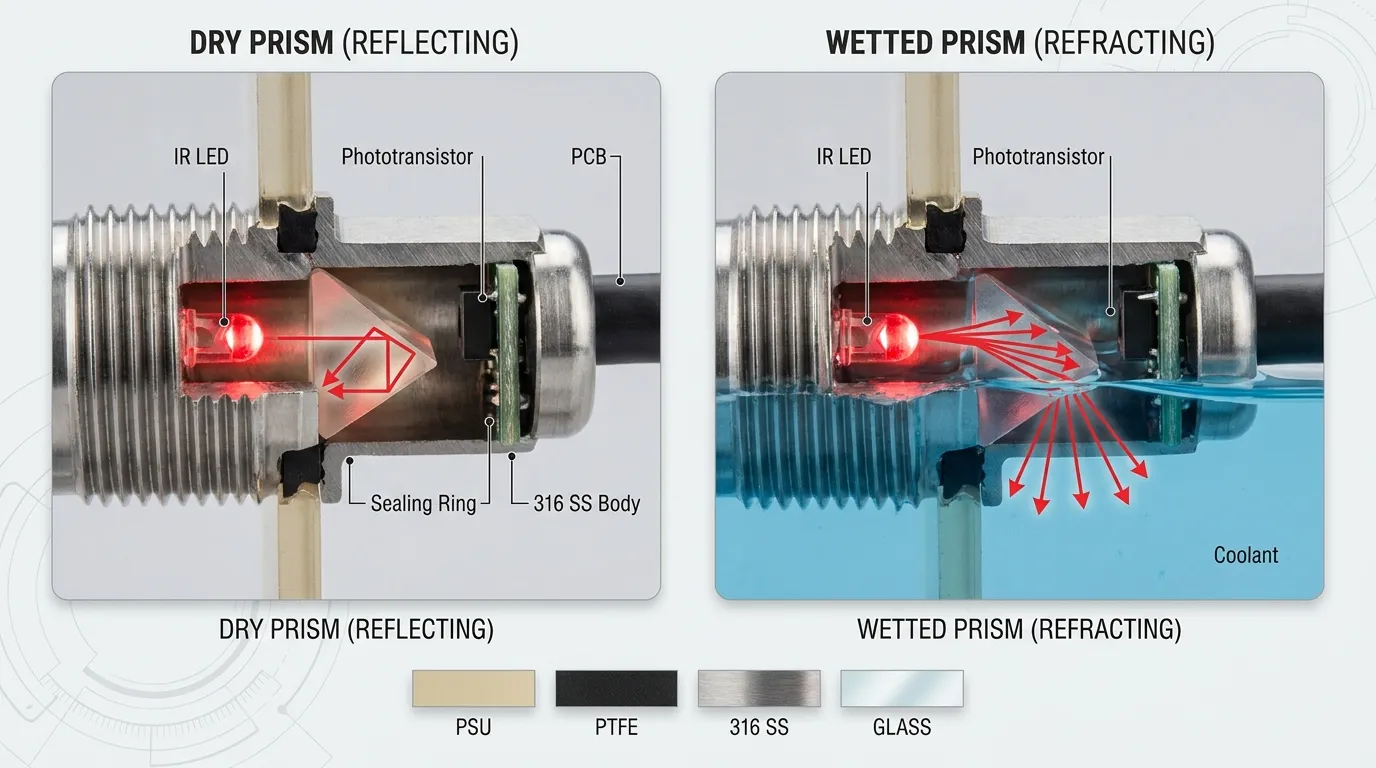
光電式冷却液レベルセンサーは通常、赤外線LEDを使用します, フォトトランジスタ, そしてプリズム型のセンシングチップ. センシングチップは、冷却材リザーバーの内部または壁を通して目標アラームレベルに設置されます.
プリズムの先端が空気中にあるとき, 赤外線はプリズム内部で反射し、受信機に戻ってきます. 冷却液がプリズムを覆うとき, 光は反射するのではなく液体に屈折します. センサー電子回路はこの変化を検知し、出力状態を切り替えます.
この乾燥検出と湿潤検出の方法は、冷却タンクにおいていくつかの利点をもたらします:
- 動くフロートアームが詰まってしまいません, 棒, または着用
- 小型貯留層用のコンパクトセンシングチップ
- 設定された取り付け高さでの高速点レベル応答
- 多くの水性植物に対する安定した検出, グリコール系, および油性液体
- 電子制御システムとの低レベルのアラーム統合が容易
- 水平側面取り付けやカスタムタンク統合に適しています
このセンサーは冷却材の品質や化学式を分析しません. その役割はレベル検出です: 警報点でセンサーチップが乾いているか濡れているかを判断します.
冷却材適合性と温度選択
冷却材の適合性は液体の種類によって異なります, 集中, 添加物, 温度, プレッシャー, 洗浄プロセス, および濡れた物質. このため、, センサー本体とプリズム素材は、タンク内で使用されている実際の冷却材に基づいて選択すべきです, 単なるアプリケーション名だけでなく.
一般的なウェットテッド素材の選択肢には、PSUプラスチックがあります, PTFE製, 316 ステンレススチール, とガラス. 高温貯留層の場合, 加熱冷却ループ, または過酷な工業流体, モデルとケーブルの素材はサンプリング前に必ず確認してください. 高温用途, 私たちの 高温光学センサー 選考ページ.
| 冷却材 / 液体タイプ | 典型的なユースケース | 推奨されるセンサー素材の方向 | 温度の考慮 | 注文前に購入者確認を行ってください |
|---|---|---|---|---|
| 水性冷却材 | CNC工作機械, 機械加工センター, 一般的な冷却タンク | 添加剤やタンクの設計によりますが、電源ユニットかステンレス/ガラスか | 正常な動作温度と洗浄温度を確認してください | フォームをチェックしてください, チップス, 加法濃度, および警報高度 |
| グリコール系冷却材 | チラー, 冷却スキッド, エンジン関連の工業貯水池 | PSU, PTFE製, または互換性審査後にステンレス/ガラスを選んだり | 低温および高温の動作範囲を確認する | グリコール濃度と貯留層の温度範囲を共有してください |
| 油性冷却材 / 切削油 | 金属加工, 潤滑冷却システム | PTFEまたは 316 ステンレスやガラスは、より強い流体には好まれることが多いです | 運転温度での粘度変化を確認する | バルク注文前に実際のオイルや冷却液のサンプルでテストします |
| 冷却潤滑剤乳剤 | 工作機械冷却タンク | 材料の選択は乳剤の化学成分と汚染レベルに依存します | タンクが連続運転中に温かくなるか確認してください | スラッジのチェック, 泡, チップス, および洗浄方法 |
| チラーウォーター / プロセス冷却材 | 産業用チラーおよびプロセス冷却貯留槽 | 電源ユニットかステンレス/ガラス製か、流体や設置によります | チラー温度サイクルとアラーム応答要件を確認してください | 低レベルの警報ロジックとポンプのインターロック配線を確認してください |
| 刺激性または不明な冷却剤 | 純正機械, 特殊プロセス装置 | PTFE製, 316 ステンレス, または、まずガラスをレビューすべきです | 温度範囲はRFQ段階で確認されなければなりません | 冷却液の詳細を送信するか、サンプルの検証を依頼してください |
腐食性のために, 高温, または金属タンクの用途, a 316 ステンレスセンサー プラスチック製のセンサーよりも適している場合もあります.
冷却材貯蔵庫の低レベル警報配線
ほとんどの冷却タンクプロジェクトでは、光学センサーを低レベルスイッチとして使用しています. 出力は機械制御システムに合わせて設定可能です, 警報ボード, plc, またはリレーインターフェース.
一般的な出力選択肢には以下があります:
- NPN出力 入力回路のシンク用
- PNP出力 入力回路のソーシング用
- NOまたはNC論理 先端が乾いた時か濡れた時に警報が鳴るかによります
- リレーインターフェース 機械が絶縁スイッチングを必要とする場合
- 警告ランプまたはブザー出力 制御回路を通じて
- ポンプストップインターロック ドライランを防ぐために
- 4–20 mA 出力 ポイントレベルスイッチの代わりに連続レベルセンサーを選択する場合
低冷却水保護のために, 多くの購入者はフェイルセーフロジックを好みます: センサーが切断されたとき, 損傷, または乾燥した先端を検出する, 機械は静かに続けるのではなく、アラームまたは停止モードに入るべきです. このロジックは生産前に制御エンジニアと確認すべきです.
冷却タンクにセンサーを取り付ける方法
取り付け位置によって警報の有用性が決まります. センサーが設置されすぎていると、ポンプがすでに空気を吸い始めてから問題が検出されることがあります. センサーが設置されすぎると、システムに十分な冷却液が残っていても頻繁に迷惑な警報が鳴る可能性があります.
ほとんどの冷却水貯蔵庫について, センサーはポンプの入口または吸引点の上方の最低安全レベルに取り付けるべきです. 正確な高さはタンクの形状によって異なります, ポンプの位置, 流動的な動き, そしてシャットダウンまでに必要な予備容量の量.
重要な取り付けポイントには以下があります:
- 実際の低レベルの警報高度にセンサーチップを取り付けてください
- チップは重度のチップの蓄積やスラッジゾーンから遠ざけてください
- フォームや強い乱流が常にプリズムに当たる場所の取り付けは避けてください
- タンク壁と冷却材に適したシーリング方法を用いてください
- スレッドサイズを確認してください, ケーブルの方向, および設置クリアランス
- ケーブルを熱い表面から保護する, 可動部品, 切削チップ, および冷却スプレー
- 金属製タンク用, 着陸確認, 電気ノイズ, およびコネクタ保護
- プラスチックタンク用, 壁の厚さと糸の強度を確認してください
一般的な取り付け方法にはねじ込み式側面取り付けがあります, カスタムタンクボスの取り付け, コンパクトな内部取り付け, またはOEM貯留層統合. 糸, ケーブルの長さ, コネクタスタイル, また、RFQ段階でハウジング素材をカスタマイズすることも可能です.
注文前の低レベルのアラームチェックリスト
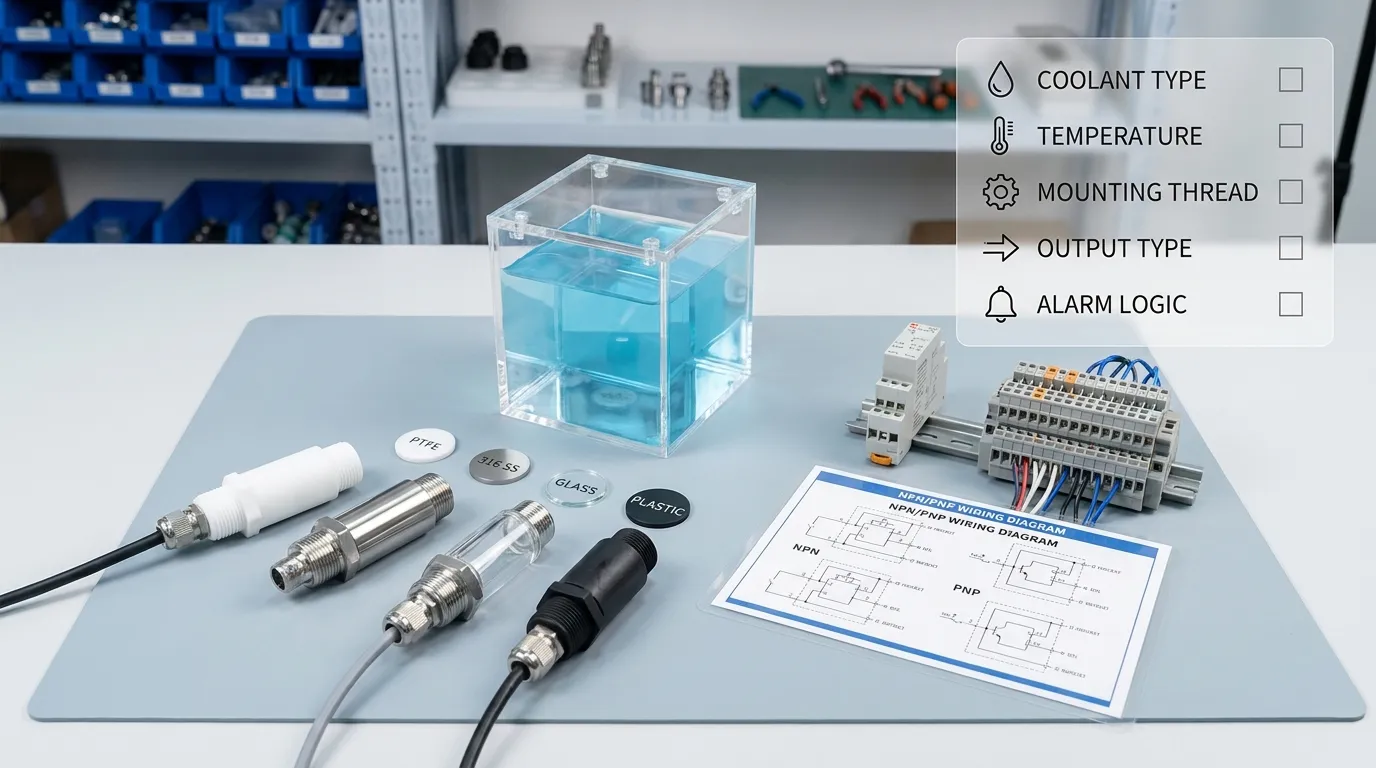
冷却タンク監視用の光学センサーを選ぶ前に, 以下の情報を準備してください:
- 冷却材の種類: 水性, グリコール系, 油性, 乳剤, チラーウォーター, またはその他
- 実際のクーラントブランドか、互換性が不確かなサンプルは
- 通常運転温度と最大洗浄またはプロセス温度
- タンクの材料と壁厚
- 取り付けスタイル: 側壁, ねじ付きボス, フランジ, またはカスタムホルダー
- タンク底またはポンプ入口から測定される必要な警報レベル
- 出力タイプ: NPN, PNP, リレー, またはアナログ連続信号
- アラームロジック: 通常は開いているか、通常閉じているか
- 機械制御基板に必要な供給電圧
- 接続目標: plc, リレー, ブザー, 警告灯, またはポンプインターロック
- ケーブルの長さ, コネクタタイプ, およびケーブルジャケットの要件
- 振動への曝露, 切削チップ, 泡, オイルミスト, または冷却スプレー
- 必要なセンサー本体材料: PSU, PTFE製, 316 ステンレススチール, あるいはガラス
- 生産注文前のサンプル数と試験計画
5-ステップサービスプロセス
1. 調査
クーラントタンクの申請書を送ってください, 液体タイプ, 戦車図面または写真, 警報高度, WhatsAppやメールでの配線要件.
2. 仕様とカスタマイズ
当社のエンジニアリングチームは濡れた材料をレビューします, 取り付けねじ, 出力タイプ, ケーブル, コネクター, およびアラームロジック. OEM/ODMプロジェクト用, カスタムセンサー構造や配線のサポートも可能です.
3. サンプル検査
サンプルは本物の冷却液で検証するために準備できます, 貯水池, 制御盤, および警報回路. このステップはグリコール系にとって重要です, 油性, 高温, または添加物豊富なクーラント.
4. 生産と品質管理
サンプル確認後, 工場は合意された構成に従って生産しています. QCはセンサー機能に焦点を当てています, 出力状態, 密封, ケーブル品質, そして外見.
5. 輸送とサポート
米国の顧客向けにセンサーを輸出しています, 私たちは, インド, その他の市場. 配線確認もサポート可能です, 設置の提案, 将来のプロジェクトのためのモデル選定.
要件と仕様確認ポイント
| 要件 | なぜそれが重要なのか |
|---|---|
| 冷却材の種類 | 湿潤材料および試料試験の必要性を判断 |
| 温度範囲 | センサー本体への影響, プリズム, 密封, ケーブル選択 |
| 取り付けねじ山または構造 | センサーがリザーバーに漏れなくフィットすることを保証します |
| アラームポイントの高さ | 過熱を防ぎ、ダメージを受ける前にポンプで空運転を続けられます |
| 出力タイプ | PLCは必ず一致します, リレー, 警報ボード, またはコントローラー入力 |
| NO/NCロジック | 低レベル警報が作動するタイミングを判定します |
| ケーブルとコネクター | 機械のレイアウトやサービス環境に適合していること |
| タンク環境 | チップス, 泡, 振動, ヘドロ, また、スプレーは設置設計に影響を与えることがあります |
冷却タンクの光学センサーとフロートスイッチの違い
| アイテム | 光レベルセンサー | フロートスイッチ |
|---|---|---|
| センシング法 | 赤外線光電プリズムは乾燥状態または湿潤状態を検出します | 機械式フロートは液体のレベルに合わせて動きます |
| 可動部品 | 動く検知機構はありません | 動くフロートは固着したり摩耗したりします |
| サイズ | コンパクト, 小型タンクおよびOEM貯留層に適しています | 内部のスペースがもっと必要になることが多いです |
| 冷却材の汚染 | スラッジや重い欠片から正しく取り付ける必要があります | フロートはチップで詰まることがあります, 垢, または粘着性の残留物 |
| 配線 | NPN, PNP, リレーインターフェース, またはコントローラー入力 | 通常は単純なスイッチ出力です |
| 最適な用途 | 電子低レベル警報, コンパクト貯留層, OEM設計 | 機械的な動きが許容される単純なタンク |
なぜHojellyTekを選ぶのか
HojellyTekは深圳の光学および液体レベルセンサーメーカーで、社内Rを搭載しています&Dと光電検出の経験. 冷却タンク監視のためのOEM/ODMカスタマイズもサポートしています, コンパクト機器貯水池, 産業制御システム, および関連するスマートデバイス統合.
買い手は私たちと協力して働いています。:
- 工場直属センサー開発と輸出支援
- コンパクトタンク用の光学レベルスイッチ設計
- カスタムケーブル, コネクター, 糸, および出力構成
- 電源ユニットを含む材料オプション, PTFE製, 316 ステンレススチール, とガラス
- 工作機械のアプリケーションサポート, エンジン, チラー, およびポンプ保護
- 米国の顧客との輸出経験, 私たちは, インド, その他の市場
よくある質問
光学レベルセンサー冷却材タンクのソリューションは、ポンプの損傷前に冷却液不足を検出できますか??
はい. センサーは最低安全冷却液レベルに取り付けられています. プリズムの先端が乾くと, 出力は状態を変え、アラームを発生させることがあります, PLC入力, リレー, ブザー, 警告灯, またはポンプストップインターロック.
光学レベルセンサーはグリコール系冷却材で動作しますか??
多くのグリコール系冷却材用途に使用できます, しかし、適合性は冷却材濃度によって確認されるべきです。, 温度, 添加物, および濡れた物質. OEMプロジェクト用, 実際の冷却液でテストすることを推奨します.
センサーは油ベースの冷却液や切削油を検出できますか?
はい, 光学レベルセンシングは、適切なセンサー材料と取り付け位置が選択されれば、油性冷却材や切削油で使用できます. PTFE製, ステンレススチール, または、より強い流体にはガラス製の選択肢が検討されることもあります.
冷却材リザーバーのどこにセンサーを取り付けるべきか?
必要な低レベルの警報高度に取り付けてください, 通常はポンプの入口や吸引点の上にあります. スラッジゾーンは避けてください, チップ蓄積領域, 強い乱流, また、フォームが迷惑警報を引き起こす可能性のある位置.
冷却タンクセンサーはNPN出力とPNPどちらを選びるべきか?
PLCに合った出力を選んでください, 制御盤, または警報回路. NPNとPNPはどちらも一般的です. また、NO/NCロジックも確認し、冷却水レベルが低い時に機械が正しく反応するようにする必要があります.
冷却材タンクの水位監視には4〜20 mAが必要ですか??
常にとは限りません. 単純な低レベルの警報用に, NPNを備えた光学ポイントレベルスイッチ, PNP, またはリレーインターフェースで十分です. システムが連続的なレベル測定を必要とする場合にのみ4〜20 mAを使用してください。1つのアラームポイントではなく.
冷却タンクセンサー見積もりを依頼する
冷却材の種類を送ってください, 戦車の写真または図面, 警報高度, 取り付けねじ, 出力タイプ, 電圧要件, そして、ケーブル/コネクターはWhatsAppやメールでHojellyTekに割り当てられます. 私たちのチームは、工作機械用の光学冷却液レベルセンサーの選択やカスタマイズをお手伝いします, エンジン, チラー, およびOEM貯留層システム.


