
316 ステンレス製光学レベルセンサー
PSUを比較する購入者へ, PTFE製, 316/316L型ステンレス鋼, ガラスセンサーボディ, このページでは316SSがどこで有用かに焦点を当てています, 検証すべきこと, また、他の濡れた材料の方が安全な場合.
316/316L ステンレス製光学レベルセンサーの機能
当社のステンレス製光学センサーは、タンク内のポイントレベル検出のために設計されています, 貯水池, プロセス容器, 小さな部屋, 液体接触のOEM機器, 清掃サイクル, または機械的な強度物質. このセンサーは光電光学センサーを使用しています: 赤外線LEDとフォトトランジスタは光学プリズムの後ろに配置されています. 空中で, 光はプリズムを通して内部に反射します. 液体がプリズムを覆うとき, 反射信号は変化します, センサー電子回路がその変化をスイッチング出力に変換します.
典型的なプロジェクトオプションには以下が含まれます:
- 316 または316Lステンレス製ウェットボディ構造
- 媒質と温度要件に合わせた光学プリズムチップ
- 液体に応じて選ばれるシール材料, 温度, および洗浄露出
- NPN, PNP, または他の制御基板出力構成
- 通常開論理または通常閉じ論理
- ねじ込みまたはカスタマイズされた取り付け設計
- ケーブル, コネクター, またはOEM組立用のハーネスオプション
- ハイのポイントレベル検出, 低い, オーバーフロー, 予行走行, または漏水監視
より広いセンサーボディの選択肢について, メインの方をご覧ください 光学レベルセンサー 範囲.
なぜ購入者が光学レベルセンサーでプラスチックよりも316SSを選ぶのか
プラスチック製の光学レベルセンサーは多くの水にとってコスト効率が良いです, 低温, および軽作業用途. しかし, 買い手はしばしば 316 これらのリスクのいずれかが含まれる場合、ステンレス鋼: 高温, 機械的応力, 糸の摩耗, 圧力被曝, 燃料接触, 洗浄剤, またはウォッシュダウン.
316/316Lステンレス鋼は、多くの工業用液体における一般的なプラスチック製ハウジングよりも強度と耐食性が優れています. ディーゼル車としてよく考慮されます, 燃料油, 潤滑油, 油圧油, 水性プロセス液体, マイルドな化学物質, および繰り返しの清掃が必要な機器. また、金属製タンク用のネジ構造も強化されています, 機械, およびコンパクトな工業アセンブリ.
重要なのは、ステンレススチールがセンサー全体を化学物質に強いわけではないということです. 実際のウェットシステムはステンレスボディを含みます, 光学プリズム, シール, そして露出した結合や界面領域. 購入者は承認前に濡れた材料のスタック全体を確認する必要があります.
ウェッテッドパーツ構造: 本文, プリズム, 印章, そしてケーブル出口
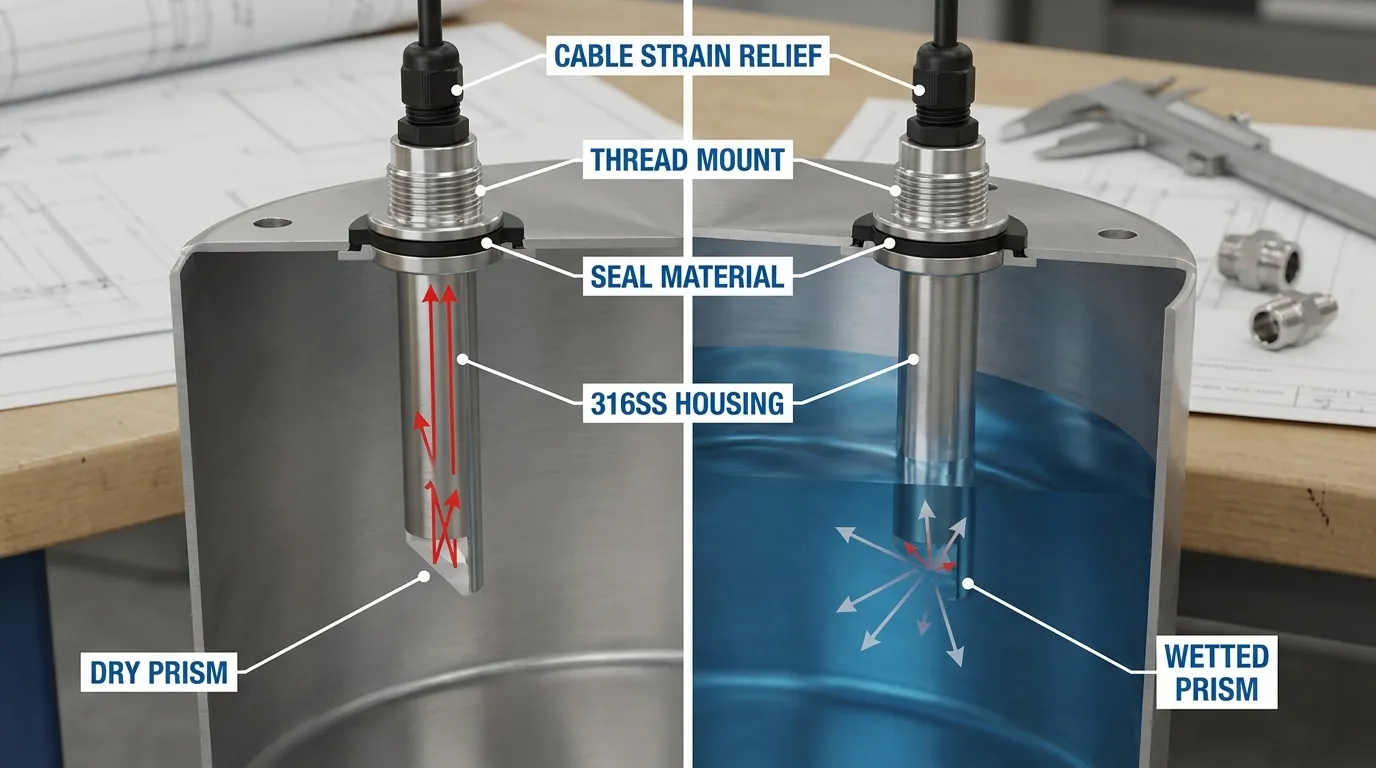
ステンレス光学液体レベルセンサーの場合, 「316SS」は通常、液体に接触し取り付けねじを供給する金属製のボディまたはハウジングを指します. いくつかのプロジェクトでは, 316溶接や衛生環境での腐食性能向上のためにLが求められることがあります. 最終評価はRFQで戦車設計に基づいて確認されるべきです, 洗浄方法, および体液曝露.
光学プリズムは感知面です. その材料は流体と適合していなければなりません, 温度, および洗浄サイクル. 多くのステンレス鋼光学センサーで, 赤外線信号が乾燥状態と湿潤状態の間で正しく反射できるように、ガラスまたは光学グレードのプリズムが使用されます. プリズムは光を透過できるほどきれいに保たなければなりません; 重塗層, 結晶化, ヘドロ, 粘着性のある液体は応答信頼性を低下させる可能性があります.
シールも同様に重要です. たとえステンレスボディが適していても, 間違ったOリングやシールは膨張することがあります, パキッ, ハーデン, または漏れ. 燃料, 溶媒, 湯, 洗剤, また、アルカリ性洗浄液は異なるシール選択が必要になることがあります. HojellyTekは、すべての液体に一つのシールが合うと仮定するのではなく、RFQ段階でシールの選択肢を確認しています.
ケーブルの出口やコネクタ部分も確認してください. 洗浄機器用, 買い手はケーブルの方向性について話し合うべきです, ひずみ緩和, 囲い保護, そしてセンサーが水を落とすかどうかも, 水中, 蒸気への曝露, または圧力スプレーで洗浄する.
316SS光学レベルセンサーの材料互換性ガイド
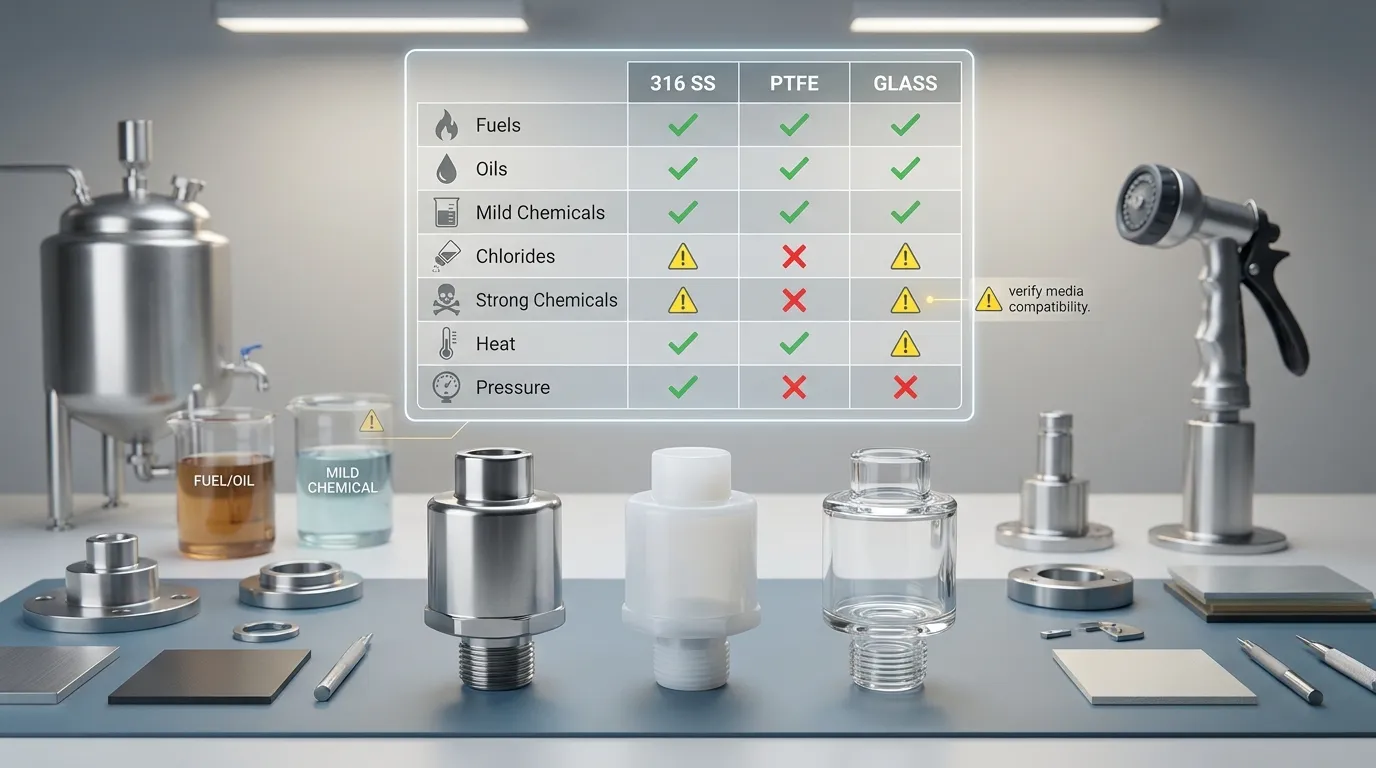
以下の表は選択案内です, 最終的な互換性保証ではありません. メディア名は必ず確認してください, 集中, 温度, プレッシャー, 注文前の清掃プロセス.
| メディアまたは状態 | 316/316Lステンレス鋼の適合性 | 注文前に確認すべきこと | 検討すべき代替案 |
|---|---|---|---|
| ディーゼル, 燃料油, 潤滑油 | しばしば、プラスチックよりもステンレスを選ぶ強い理由の一つです | シールの素材, プリズムの汚れ, 温度, タンク振動 | 認証済みシール付きのステンレス製 |
| 油圧油および機械油 | 多くの機器レベルの監視プロジェクトに適しています | オイル添加剤, 圧力パルス, スレッドタイプ, ケーブル保護 | 温度に応じてステンレスかガラスか |
| 水および穏やかな水性液体 | 通常は適している, 特に強さや洗浄力が重要な場合 | 塩化物レベル, 洗浄剤, 温度 | 低コストの水使用のためのプラスチック |
| 軽度の化学物質 | 可能性はあります, しかし検証が必要です | 化学名, 集中, 露光時間, シールの腫れ | 攻撃的な場合はPTFEかガラスを使った |
| CIP洗浄または洗浄サイクル | より強いボディ構造と糸構造に有用です | 洗浄剤, 温度, 圧力スプレー, シール材料 | より強い洗浄液にはPTFE/ガラス |
| 高温または加圧媒体 | プラスチック製のハウジングよりも優れていることが多いです | 必要な温度および圧力の制限, 熱循環 | 高温版 |
| 塩化物を豊富に含む液体や塩分曝露 | 注意が必要です | ピッティングや腐食のリスク, 集中, 温度 | PTFEまたはガラス |
| 強酸, 強アルカリ, 攻撃性溶剤 | 互換性を前提にしないでください | 完全な化学的適合性レビュー | PTFE光学センサー |
| 高純度, 高温, または特殊化学サービス | ステンレスは濡れた面としてはあまり適さないかもしれません | 純粋さ, 熱ショック, 化学攻撃, 洗浄方法 | ガラス光学センサー |
温度と圧力: 確認すべきこと
316 ステンレス鋼は、多くのプラスチックセンサーボディよりも厳しい機械的・熱的条件に耐えられます。, しかし、完全なセンサー評価は金属のシェルだけにとどまりません. 温度と圧力の限界はプリズムによって影響を受けます, 内部電子機器, 密閉構造, ケーブル, 培養材, および取り付け設計.
熱い液体の場合, 購入者は連続的な温度を確認する必要があります, 短い洗浄温度, 蒸気または温水への曝露, 熱循環, また、電子機器がプロセス熱に近いかどうかも重要です. 圧力のために, 正常な作業圧力を確認してください, 圧力の急上昇, 真空状態, ねじシール法, および取り付けトルク.
主にプロセス温度上昇に関する用途の場合, 献身的な 高温光学センサー 標準的なステンレスモデルよりも適している場合があります.
ここで 316 ステンレススチールは依然として期待に応えられていません
316SSは強力な工業用素材です, しかし、すべての液体に対して最も安全な答えではありません. 塩化物が豊富な媒体でも腐食リスクが依然として存在します, いくつかの酸, いくつかのアルカリ, 酸化化学物質, 高温化学物質への曝露. 一部の用途において, ステンレス本体は残るかもしれませんが、シールやプリズムが先に破損することがあります.
実際の故障モードには以下が含まれます:
- 濡れたボディのピッティングや腐食
- シールの腫れ, ひび割れ, または圧縮損失
- オイルスラッジからのプリズムコーティング, 泡, スケール, または粘着性のあるメディア
- バブルからの誤スイッチング, 堆積物, または取り付け角度の誤り
- ねじ切りシール不良やガスケット材料の不一致による漏れ
- 洗浄や振動時のケーブル損傷
- PLCとの出力ミスマッチ, リレー, または制御盤
攻撃的な化学物質に対して, PTFEはウェットボディの方が良い選択であることが多いです. 高温の場合, 純粋さ, または特別な光学要件, ガラスの方が良いかもしれません. 最も安全な方法は、センサー本体を選択する前に実際の流体詳細を送信することです.
5-ステッププロジェクトプロセス
- 調査
液体を分け合おう, 戦車図面, 取り付け位置, 期待出力, 量, ターゲット市場. - スペックとカスタマイズのレビュー
当社のエンジニアリングチームは濡れた材料を点検します, プリズム設計, シールの選択, 配線, 糸, ケーブル, コネクター, および制御ロジック. - サンプル確認
サンプルは適合のために準備できます, スイッチングロジック, 取り付け, および制作前のメディアテスト. - 生産と品質管理
工場が組立を点検します, 電気出力, 外見, および確定命令仕様に基づく機能応答. - 船舶支援
HojellyTekは米国の顧客向けにセンサーを輸出しています, 私たちは, インド, その他の市場, 注文調整にはWhatsAppやメールのサポートも得られます.
RFQの要件と仕様書の作成
見積もりを依頼する前に, 以下の情報を準備してください:
- リキッド名称, 集中, 添加物, および洗浄薬品
- 正常液温と最高液温
- 正規圧力と最大圧力条件
- タンクの材料と壁厚
- 取り付け位置: サイド, ページのトップへ, 底, 水平な, または垂直
- ねじ山サイズまたはカスタム取り付け図面
- 必要な出力: NPN, PNP, リレーインターフェース, アナログ信号, または制御盤信号
- 供給電圧要求
- 通常開論理または通常閉じ論理
- ケーブルの長さ, コネクター, またはハーネスリクエスト
- プリズム露光: クリーンリキッド, 泡, コーティング, バブル, ヘドロ, または粘着性のあるメディア
- サンプル量と期待生産量
- Tuya/Smart Lifeやスマートモニタリングの統合要件は何でもありません, 接続されたタンクレベル装置で使用される場合
材料選択比較
| センサー本体材料 | 最適適合アプリケーション | 強み | 制限 |
|---|---|---|---|
| PSU / プラスチック | 水タンク, 低コスト家電, 軽量OEM機器 | 徳用, コンパクト, 統合が容易 | 熱に限られた, プレッシャー, 燃料, そしていくつかの化学物質 |
| 316/316L型ステンレス鋼 | 燃料, オイル, マイルドな化学物質, 高温または加圧メディア, 洗浄機器 | 強い体, 耐久性のある糸, プラスチックよりも工業的な抵抗性が良い | 普遍的な化学耐性ではありません; シールとプリズムは検証が必要です |
| PTFE製 | 攻撃的な化学液体と腐食環境 | 多くの過酷な流体に対して優れた化学耐性を持っています | 機械設計や温度制限はまだプロジェクトの見直しが必要です |
| グラス | 高温, 高純度, または特殊な化学的用途 | 特定の条件下での強力な光学的および化学的性能 | 金属よりも脆い; マウント保護の重要事項 |
なぜHojellyTekと働くのか
HojellyTekは、液体レベル検出のための光電光学センサーに注力する深圳の製造・輸出業者です. 私たちは、買い手がカタログ部品以上のものを必要とするOEM/ODMプロジェクトをサポートしています: 資料レビュー, 改変の進行, 配線構成, およびサンプルテストのサポート.
社内のR&Dチームがステンレススチールの比較を手伝ってくれます, PTFE製, プラスチック, そして実際の流体や設置方法に基づくガラスオプション. 316SSを万能の解決策として過剰に売り込む代わりに, 私たちは、製造前に濡れた材料の確認をお手伝いします.
よくある質問
とは 316 ステンレス鋼の光学レベルセンサーは?
A 316 ステンレス鋼の光学レベルセンサーは、プラスチックが適さないタンクや設備での点レベル検出に使用されます, 例えば燃料タンク, 油蔵層, マイルド・ケミカル・コンテナ, 熱液システム, 加圧容器, または洗浄機器.
316Lより優れているのでしょうか? 316 光学液体レベルセンサー用?
316Lは炭素含有量が少なく、特定の溶接には好まれることがあります, 衛生的, または腐食に敏感な構造. 最適な選択は液体によって異なります, 洗浄方法, 温度, および戦車設計. RFQで材料等級を確認してください.
316SS光学センサーは燃料やオイルと組み合わせて使用できますか?
はい, ステンレス光学センサーは燃料やオイルに一般的に選ばれます, しかし、封印は, プリズム, ケーブル出口, 温度, 添加剤もまだ検証が必要です. オイルスラッジやコーティングも、液体が堆積物を残すとプリズムに影響を与えることがあります.
これは 316 強い化学薬品に適したステンレス鋼?
常にとは限りません. 316SSは多くの穏やかな環境で良好な耐性を持っています, しかし、強酸, アルカリ, 塩化物, また、攻撃的な溶媒にはPTFEやガラスが必要になることもあります. 注文前に必ず正確な化学名と濃度を伝えてください.
利用可能な出力タイプ?
プロジェクトによります, このセンサーはNPNなどの一般的な産業用またはOEM制御システム向けに構成可能です, PNP, スイッチングロジック, またはその他のインターフェース要件. 出力はPLCと一致させるべきです, リレー, PCB, またはコントローラー.
適切なステンレス光学センサーをどう申請すればいいですか??
液体の詳細を送信してください, 温度, プレッシャー, 取り付けねじ, 戦車図面, 出力タイプ, 電圧, ケーブルまたはコネクタのリクエスト, およびサンプル量. 私たちのチームはウェット施工をレビューし、適切な構成を提案します.
見積もりを依頼する
燃料用に316/316Lのステンレス光学レベルセンサーが必要です, 油, 軽度の化学物質, 熱い液体, または洗浄機器? 見積もりを依頼するには、WhatsAppまたはメールで申請情報を送ってください, データシートに関する議論, またはサンプルレビュー.


