
食品グレード光学液体レベルセンサー
深センの製造・輸出業者として、社内Rを有しています&D, PSU用のOEM/ODMセンサー構成をサポートしています, PTFEおよび 316 ステンレススチールのウェット設計, RFQ段階で食品接触の書類が確認された.
食品・飲料レベル感知機能
当社の光学液体レベルセンサーは、タンク内のポイントレベル検出に使用されます, 小さな貯水池, ディスペンシングシステムおよびプロセス機器. 設置によります, このセンサーは溢れ防止にも対応可能です, 低レベル警報, ポンプ保護, 充填確認または投与タンクのモニタリング.
典型的な機能には以下が含まれます:
- 赤外線発光器を用いた光電光学検出, 受信機とプリズム検出チップ
- OEM機器統合用のコンパクトセンサーボディ
- PSU, PTFE製, 316 液体や洗浄条件に応じてステンレス製かガラス製のインターフェースか
- NPN, PNP, 制御システムの要件に応じて、デジタルスイッチまたは4〜20 mAの出力オプション
- ねじ込み式, 戦車搭載またはカスタマイズされた機械構造物
- ケーブル, OEM生産向けのコネクターおよびハウジングのカスタマイズ
- 食料支援, 飲料, 酪農, 水, コーヒー, サンプル検証後のシロップおよび投与応用
一般的なセンシング原理を比較する購入者へ, 私たちの 光学レベルセンサー ページ.
コンプライアンスは濡れた表面から始まります
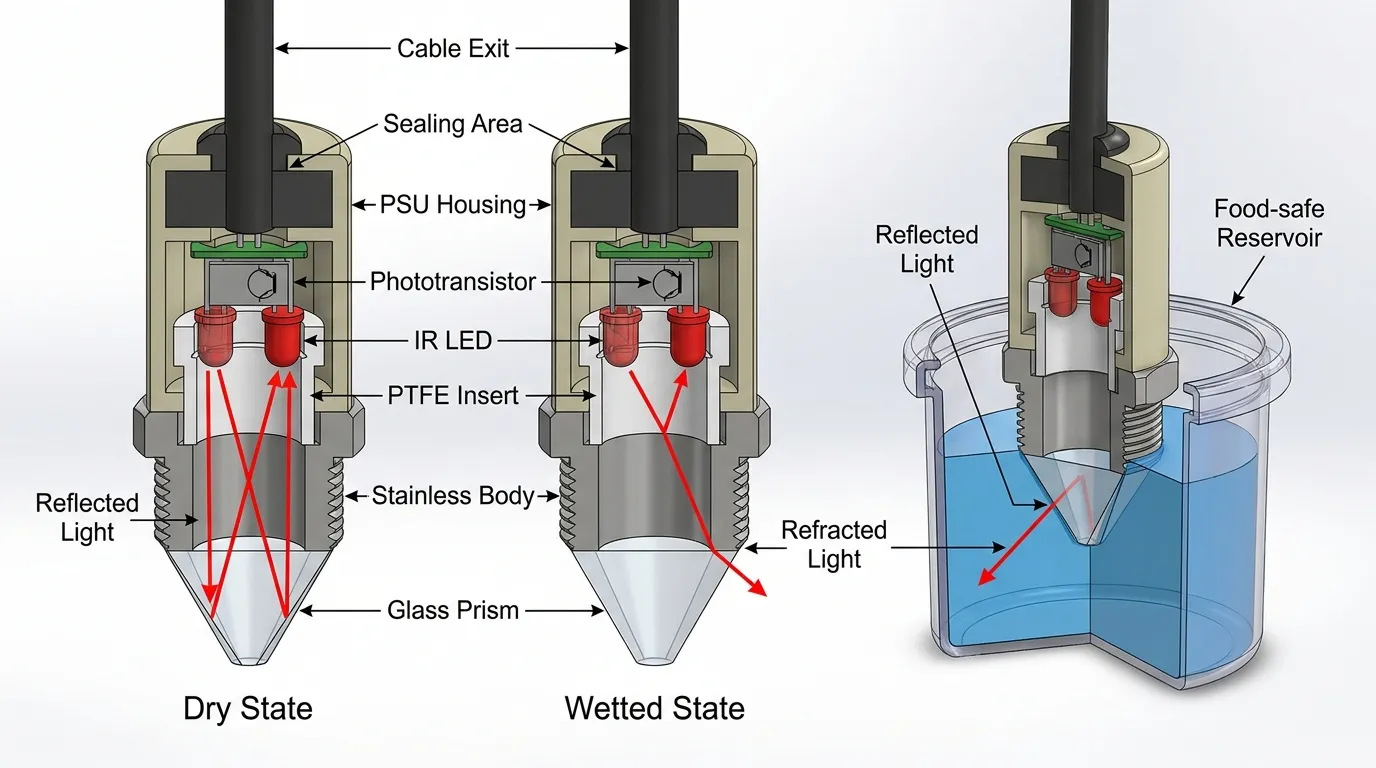
食品・飲料プロジェクトにおいて, 重要な問いは単に「センサーが液体を検出するかどうか」ではありません?「最初の質問は、湿らせたすべての部分がこの工程に適したかどうかです. センサー本体, プリズム, 印章, ガスケット, 糸, 接着剤の露出とケーブルの侵入は、食品接触装置として部品が承認される前に確認する必要があります.
光学レベルセンサーは、プリズムの先端に赤外線光を送ることで動作します. 乾燥状態で, 光はプリズム内部で反射し、受信機に戻ってきます. 液体が先端を覆うとき, 屈折条件が変化します, そのため受信側に戻る光は少なくなります. 電子回路はこの変化をレベル信号に変換します.
この方法は動く浮き輪が存在しないため有用です, 磁気リードや機械式ヒンジポイントは検出エリアにありません. 飲食用具, これにより可動部品の摩耗を減らし、コンパクトな取り付けを簡素化できます. しかし, 衛生的な性能は実際に濡れた材料に依存します, センサーの形状と洗浄プロセス.
FDAなどの食品接触コンプライアンス書類, ECプログラム 1935/2004, LFGB, 3-規制された食品接触機器で使用する前に、またはEHEDGはHojellyTekで確認してください. 関連する材料声明や試験文書が正確なセンサーモデルと構成を確認するまでは、認証請求の公表は推奨しません.
食品接触材料の選択肢
食品や飲料の用途によって、異なる湿潤材料が必要となります. コーヒーマシンの貯水池, 乳製品タンク, シロップ投与システムや洗浄液タンクはそれぞれ異なるセンサーボディを必要とする場合があります.
| 濡れた物質 | 典型的な飲食用途 | 強み | 注文する前に必ず確認してください |
|---|---|---|---|
| PSU / PPSUスタイルのエンジニアリングプラスチック | コーヒーマシン, 飲料水タンク, 飲料ディスペンサー, 小規模なOEM貯留層 | 軽量化, コンパクト, 成形センサー構造に適しています, アプライアンス統合に適しています | 食品接触申告, 温水曝露, 洗剤の互換性, 搭載強度 |
| PTFE製 | ドージングタンク, 洗浄液, 酸性/アルカリ性液体, 粘着性のある材料, 化学接触ゾーン | 強い化学耐性, 低表面接着, 攻撃的な液体がセンサーに接触する可能性がある場合に有用です | 機械的取り付け, シーリング方法, 食物接触の証拠, 洗浄温度 |
| 316 ステンレススチール | プロセスタンク, 飲料ライン, 乳製品設備, 洗浄エリア | 耐久住宅, 強力な機械的保護, 産業用食品機器設計に適しています | 表面仕上げ, シール材料, 溶接または糸の衛生, 実際の成績記録 |
| ガラスプリズム / 光インターフェース | 光学センサーチップまたは透明検出インターフェース | 安定な光学表面, クリーンセンシングポイント, 良好な光透過率 | 破損リスク, 残留物挙動, 洗浄プロセス, 設置保護 |
| 印章 / ガスケット素材 | プロセス接続, 漏れ防止, 食物接触境界 | 衛生面で極めて重要です, 洗浄の生存と圧力シール | EPDM/FKM/PTFEの適合性, 温度曝露, 洗剤と蒸気の互換性 |
攻撃的な材料には, 洗浄液や低接着性の濡れた表面, a PTFE光学センサー プラスチック製の車体よりも適しているかもしれません. 産業用タンク用, 洗浄ゾーンやより強力な機械的保護, a 316 ステンレスセンサー これがより良い出発点かもしれません.
CIP, SIP, ホットフィルとウォッシュダウンサバイバル
食品・飲料センサーは、注文仕様書が液体のみを記述しているため、しばしば故障します, 掃除のサイクルではありません. 室温の水で動作するセンサーは、繰り返しの熱い充填に耐えられない場合があります, 苛性ウォッシュ, 酸性リンス, 蒸気曝露または高圧洗浄.
食品グレードの光学液体レベルセンサーを選ぶ前に, 確認してください:
- 運転中の通常製品温度
- センサー付近での最大ホットフィルまたは加熱殺菌曝露
- CIPまたはSIPの洗浄温度と持続時間
- 蒸気がセンサーチップに触れるか、タンクの壁だけに触れるかにかかわらず
- 洗浄薬品, 濃縮と洗浄シーケンス
- ケーブル出口とコネクタ付近の洗浄圧力
- センサーが連続的に浸かるか、充填中のみか
- 排水後にプリズム上で残留物が乾くかどうか
光学センシングはクリーンな光インターフェースに依存します. 乳固形の場合, シロップ, 油絵フィルム, 果物の果肉, 結晶化した砂糖や洗浄残留物がプリズムを覆っています, センサーが誤って読み取りになる可能性があります. これは光学センサーが不適切だという意味ではありません, しかし、液体は実際の洗浄・乾燥条件下でテストされなければなりません.
衛生的な取り付けと設置設計
衛生的なセンサー設置は、閉じ込められた液体を避けるべきです, 死角と掃除が難しいエッジ. 小型家電において, 優先事項はコンパクトな側面壁取り付けかもしれません. プロセス中のタンク, 優先事項は排水性かもしれません, ガスケットの圧縮とプロセス接続部周辺の表面仕上げ.
一般的な取り付け方法にはねじ込みタンクの設置があります, コンパクトサイドマウント, フランジスタイルの取り付けやカスタマイズされたOEMハウジング. 最適な設計はタンクの壁の厚さによります, 内部清掃アクセス, センサーの向きとケーブル側のウォッシュダウン保護が必要かどうか.
コーヒーマシン用, 給水器と温かい飲み物機器, センサーは温かい水に耐えつつ、コンパクトな貯水槽に適合しなければなりません, 蒸気に隣接するエリアと繰り返し充填. 私たちの参照 コーヒーマシンセンサー より家電に焦点を当てた例のページ.
酪農, 飲料および投与用途
食品・飲料メーカーは、コンパクトな, 高速液体/非液体信号は連続レベル測定よりも有用です.
典型的な用途には以下が含まれます:
- 牛乳中の低レベル警報, 水や飲料の貯水池
- 充填設備における溢流保護
- ポンプ運転前の空タンク検出
- 味のため、タンクの投与確認, シロップまたは添加系
- コーヒーマシンとディスペンサーの水位検出
- 食品機器における洗浄液タンクの監視
- フロートが大きすぎたり信頼性が低い小型OEMタンク
乳製品および飲料液について, サンプル検査はフォームのために重要です, 太っている, タンパク質, パルプ, 砂糖や洗浄残留物は光学検出に影響を与えることがあります. 投与システム用, 化学的適合性は通常、最優先の関心事です. コーヒーおよび温水器具用, 温度, スケールやコンパクトな取り付けがより重要になることが多いです.
RFQ前の衛生チェックリスト
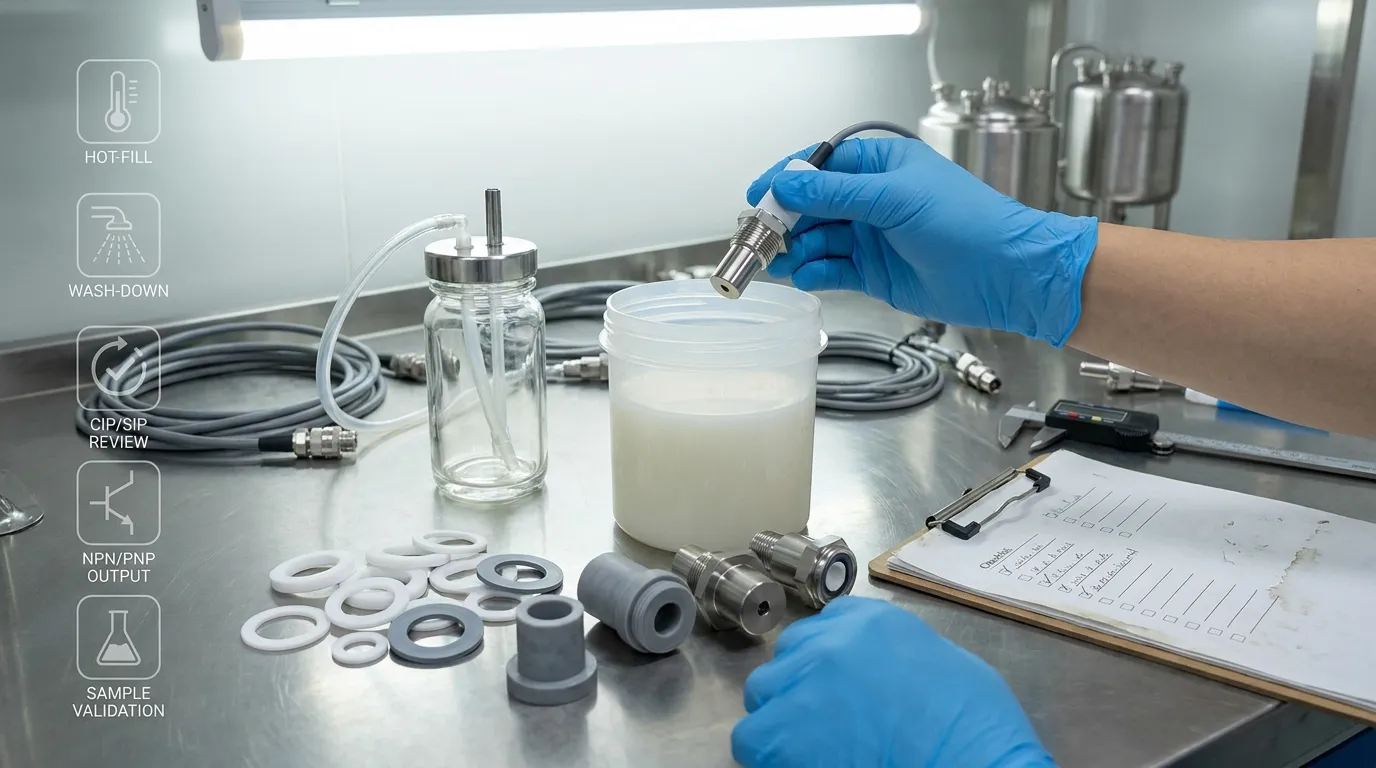
サンプルを依頼する前にこのチェックリストを活用してください:
- センサーに触れたすべての液体をリストアップしてください, 洗浄薬品も含まれます.
- 濡れた部分をすべて確認してください: ボディ, プリズム, 印章, ガスケットとねじ.
- 最終製品に食品接触書類が必要かどうかを明記してください.
- 清掃サイクルの詳細を共有してください: 湯, 洗剤, 酸, アルカリ, 蒸気またはすすぎ.
- センサーがCIPに耐えなければならないかどうか確認してください, SIPまたは外部洗浄.
- 液体が泡立つかどうか確認してください, 被毛, 結晶化, 発酵させるか、固形物を残すか.
- 取り付け位置を定義してください: 側壁, 底, ページのトップへ, パイプ, 貯水池またはタンク.
- 清掃後にセンサーエリアが排水可能かどうかを確認してください.
- 出力タイプを選択する: NPN, PNP, デジタルスイッチまたは4–20 mA.
- 実際の液体および洗浄プロセスを使ったサンプル検証を依頼します.
5-ステップ申請サポートプロセス
- 調査
液体タイプを送ってください, 戦車図面, 洗浄方法, 温度曝露, 取り付け位置と必要な出力. - スペックとカスタマイズのレビュー
当社のエンジニアリングチームは濡れた材料を点検します, 住宅, 印章, ケーブル, 糸, 出力および制御基板の互換性. - サンプル確認
サンプルは本物の食品と検証するために準備できます, 飲料, 液体の投与または洗浄サイクル. - 生産と品質管理
堅信後, 工場は合意されたモデルに従っています, 配線, OEM/ODM生産のための材料および検査要件. - 輸送および輸出支援
米国の顧客向けの輸出プロジェクトもサポートしています, 私たちは, インドおよびその他の市場, 梱包や書類は注文要件に合わせて行われます.
注文前に確認すべき要件
| 要件 | なぜ重要なのか |
|---|---|
| 濡れた物質 | 食物接触適性を判断します, 化学物質耐性と長期衛生 |
| 清掃工程 | CIP/SIP, 湯, 洗剤や蒸気は素材の選択を変えることがあります |
| 液体の挙動 | 泡, 映画, パルプ, 脂肪や結晶は光学センサーに影響を与えることがあります |
| 取り付け設計 | 不適切な設置は隙間を作ることがあります, 漏れまたは残留トラップ |
| 出力信号 | NPN, PNP, デジタルまたは4〜20 mAはコントローラと一致しなければなりません |
| ケーブルとコネクター | ウォッシュダウンやOEM組立条件はケーブル出口設計に影響を与えます |
| 文書 | 食品接触の主張は、モデル固有の証拠によって確認されなければなりません |
光学 vs フロート vs 導電式レベル検出
| センサーの種類 | 最適フィット | 主な利点 | 飲食に関する懸念 |
|---|---|---|---|
| 光学ポイントレベルセンサー | コンパクトタンク, 機器, 投与量, オーバーフロー/空検知 | 動くフロートはない, 高速ポイントレベル信号, コンパクトな設計 | プリズムはクリーンでなければならず、素材は検証されなければなりません |
| フロートスイッチ | 十分なスペースのあるシンプルなタンク | 低コストの機械的スイッチング | 可動部品, くっつく, 清掃の難しさ |
| 導電性プローブ | 導電性液体 | 単純なレベル検出 | 非導電性液体には適さず、露出電極が必要な場合があります |
| 静電容量センサー | 壁やプローブを通した液体の設計 | 可動部品なしで検出可能です | チューニングが必要で、蓄積の影響を受けることがあります |
なぜHojellyTekと働くのか
HojellyTekは光電光学センサーを組み合わせています, 社内R&液体レベルセンサープロジェクト向けのDおよびOEM/ODM製造. 食品用途ごとに固定モデルを一つだけ売る代わりに, 私たちは、濡れた材料の見直しをお手伝いします, 取り付け, 出力, ケーブル構造および量産前の試料試験要件.
スマートアプライアンスプロジェクト用, TuyaやSmart Lifeの統合は、センサーが接続された水タンクの一部として扱われる場合に議論できます, ディスペンサーまたは監視装置.
よくある質問
食品グレードの光学液体レベルセンサーが飲料機器に適した理由?
適切な湿潤素材を使うべきです, 洗浄可能なセンサー構造と洗浄プロセスに適合した取り付け設計. 認証請求が適用される前に、正確な材料とモデルに関する食品接触書類の確認が必要です.
光学センサーは牛乳や乳製品タンクで使用できますか?
はい, 乳製品ポイントレベルの検出にも検討可能です, でも乳脂肪は, タンパク質膜, フォームや洗浄残留物は検査してください. プリズムは安定した乾燥・湿式検出のために十分に清潔でなければなりません.
PTFEはより良いのでしょうか? 316 食品用途向けのステンレス鋼?
常にとは限りません. PTFEは化学耐性と低接着性に有用です, ただし 316 ステンレス鋼は工業用タンクや洗浄環境に強いです. 最適な選択は液体によります, 清掃方法と取り付け設計.
センサーはCIPやSIPクリーニングに耐えられますか??
選ばれた材料によります, 印章, ケーブルの出口と清掃サイクル. CIP/SIP温度, 蒸気曝露, 適切な構成を確認するために、RFQで化学物質と期間を共有してください.
ウィルシロップ, 泡や結晶化した液体は誤った読み取り値を引き起こします?
可能です. 光学センサーはプリズム面に依存します. スティッキーシロップ, 重いフォーム, 乾燥した砂糖や結晶化した残留物は検出に影響を与えることがあります, したがって、生産承認前に実液試験が推奨されます.
見積もりを依頼するには何を送ればいいですか??
液体の名前を送ってください, 戦車図面, 取り付け位置, 湿潤素材の好み, 洗浄プロセス, 温度曝露, 出力タイプ, ケーブル/コネクタの必要性, 注文数と食品接触に関する書類要件.
食品・飲料センサーの見積もりを依頼する
食品グレードの光学レベル検出ソリューションを指定するために, 応募情報はWhatsAppまたはメールでお送りください. 液体を分け合おう, タンク構造, 洗浄方法, 素材の好み, 取り付け図面と必要な出力, また、サンプル試験およびOEM生産に適したセンサー構成を推奨します.


