
キーエンス光学液位センサーの代替案
購入者を探している方へ キーエンス光学流体センサーレベル, HojellyTekは、高品質なブランド価格を支払わずに信頼できるポイントレベル検出を求めるOEM向けに、工場直送の光学液位センサーの代替手段を提供しています.
Keyenceはプレミアムな自動化センサーでよく知られています, 強力な文書, 迅速な技術サポート. しかし、液体があるか不在かを検出する明確なポイントレベルの用途であれば、深圳メーカーの低コスト光学センサーが予算に敏感なOEM量には賢明な選択肢となり得ます.
OEM機器向けの光学レベルセンサー機能
当社の光学センサーソリューションは、コンパクトタンク向けに設計されています, 水道システム, 家電用貯水池, 燃料およびオイルの監視, 医療機器や実験機器, 清掃機, 自動販売機システム, HVAC凝縮水検出, そして単純な湿式・乾式信号が必要な産業用プロセス機器.
典型的な 光学レベルセンサー 顧客の機械的および電気的設計に合わせて設定可能です, 含む:
- 光電液体存在検出
- コンパクトプリズムチップポイントレベルスイッチング
- ドライラン保護, オーバーフロー警報, 低レベル警報, およびタンク存在検知
- タンク壁の設計により、水平または垂直の取り付け
- プラスチック製, メタル, 液体によってはガラスが濡れた部分もあります
- NPN, PNP, 通常は開いています, 通常は閉じています, またはカスタマイズされた信号ロジック
- ケーブル, コネクター, 糸, ボディフォーム, OEM/ODMビルドの出力カスタマイズ
目標はすべてのKeyence製品カテゴリをコピーすることではありません. キーエンスは幅広いセンシング技術をカバーしています, 光ファイバーも含まれます, レーダー, 超音波, および連続準位システム. 当社の提供は、実用的なOEM代替手段としてコスト削減をしつつ実際の応用要件を満たすことができる光学・光電点準検出に焦点を当てています.
高級キーエンスセンサーよりもHojellyTekの代替品の方が理にかなっている場合
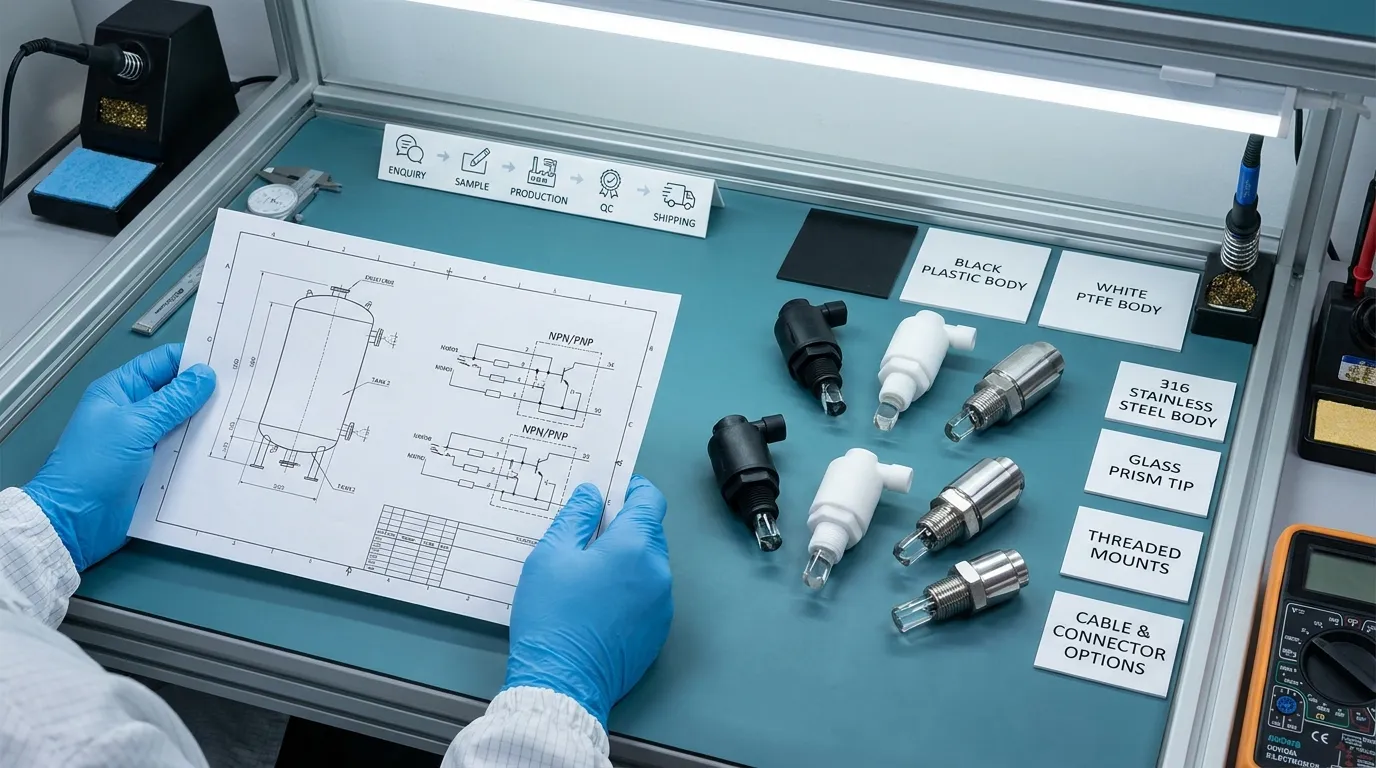
キーエンスは、植物が迅速な局所支援を必要とする場合に選ばれることが多いです, 広範な自動化エコシステム, または詳細なドキュメント付きの既製センシングパッケージ. それは高価値の自動化ラインには理にかなっています, 緊急トラブルシューティング, またはKeyenceコントローラーやアンプを中心に標準化された設備.
しかし、多くのOEM購入者は複雑な自動化問題を解決しようとしているわけではありません. 繰り返し可能な製品内に数千台のコンパクトな液位スイッチを設置する必要があります: 加湿器, タンク, パンプス, 水処理装置, ディスペンサー, 清掃機器, 小さな貯水池, および流体加群. これらのプロジェクトにおいて, 買い手の主な関心事は安定した検出です, 再現性のあるビルドクオリティ, カスタマイズされたフィット, および総単位コスト.
ここで工場出荷時の直接光学センサーが魅力的になります. 申請が「液体存在」または「液体不在」を一定レベルで確認するだけで十分の場合, 光電プリズムセンサーは、よりシンプルなコスト構造で必要な機能を提供できることが多いです. すべてのデバイスでプレミアムエコシステムにお金を払う代わりに, OEMは正確なボディ素材を指定できます, 糸, ケーブル, 信号の種類, そして必要な生産試験標準.
センシング原理は単純明快です. センサー内部, 赤外線LEDが透明なプリズムの先端に光を放ちます. 乾燥状態で, 光はプリズム内部で反射し、フォトトランジスタや受信機に戻ります. プリズムが液体で濡れたとき, 屈折条件が変化します, そのため受信側に戻る光は少なくなります. 電子回路はこの光学的変化を制御基板またはPLCのスイッチ信号に変換します.
この設計は、液体が光学検出に適合し、センサー先端が清潔なままであれば特に有効です. 澄んだ水, 多くのオイル, そして、適合する化学液体を効果的に検出することができます. しかし, 購入者は実際の液体を確認する必要があります, なぜなら、乳白色の液体, 重いフォーム, 結晶化流体, 粘着性残留物, または、懸浮固体は光学コントラストを低下させたり、プリズムをコーティングしたりすることもあります. 公正な比較には、これらの実際の条件も含めなければなりません, 単なるカタログのチェックボックスではありません.
素材の選択も重要です. PSUやその他のエンジニアリングプラスチックは、コストに敏感な水道や家電用途に適しています. 化学耐性が重要な場合にはPTFEが好まれます. 316 より強いハウジングや耐腐食性が必要な場合にステンレス鋼が使用されます. ガラスチップは特定の高明瞭な光学設計や化学環境に対応可能です, ただし、注文前に必ず液体の適合性を確認してください.
電気出力も重要な判断です. 多くのOEMシステムは、コントローラー入力への直接接続のためにNPNまたはPNPスイッチ出力を使用しています. 一部の設計では、アラームがドライ状態かウェット状態かで作動するかに応じて、通常開か通常閉の論理を要求します. 制御システムが4〜20mAを必要とする場合, 連続レベルセンサーが必要かアナログ出力設計か確認してください; 基本的な光学ポイントスイッチが連続測定を提供すると仮定すべきではありません.
取り付けはセンサー設計の一部として扱われなければなりません, 後付けではなかった. スレッドの種類, シーリング方法, 壁の厚さ, タンク曲率, ガスケット素材, トルクコントロール, ケーブルの方向, プリズムの位置もすべてフィールドの信頼性に影響します. テストベンチで動作するセンサーは、先端がバブルゾーンに置かれると生産中に故障する可能性があります, 充填入口に近すぎる設置, 堆積物の蓄積にさらされています, または、液体がプリズムからゆっくりと流れ出る場合に取り付ける.
OEMがKeyenceと比較する場合 光学センサーメーカー, 最も重要な問いは「どのブランドが有名か」ではありません?「必要な検出性能を提供するセンシングパッケージ」が重要です, カスタマイズ, およびこの製品の単位経済学?”
購入者が切り替え前に確認すべき一般的な故障モード
低コストの代替案がうまく機能することがあります, ただし、アプリケーションが正しく指定されている場合に限ります. 代替の光学液体レベルセンサーを置き換えたり設計する前に, これらのリスクポイントを確認してください:
- 液体はフィルムを離す, 油, スケール, またはプリズム先端の結晶
- 泡や泡が実際の液体レベルに達する前にプリズムに触れます
- 液体は不透明です, ミルキー, 色彩が濃い, または粒子で満たされている
- タンクの壁が薄すぎる, 厚すぎる, 曲線, または選択した糸に対して柔軟に
- ケーブルの出口方向が筐体やPCBレイアウトと矛盾します
- NPN/PNPまたはNO/NCのロジックはコントローラ入力と一致しません
- センサー本体の素材は液体や洗浄剤と互換性がありません
- 凝縮, ウォッシュダウン, またはケーブルの密閉不良が湿気の侵入を引き起こす
- センサーは乱気流付近に設置されています, 充填ジェット, またはポンプ振動
- 購入者は光学ポイントスイッチとKeyenceの連続レベル技術を比較し、誤った機能を期待します
適切な代替選択はセンシング作業に基づいて行うべきです, 競合ブランド名だけでなく.
OEM代替プロセスの仕組み
- 調査 — ターゲットに液体を送れ, 戦車図面, 期待関数, 配線要件, および利用可能な場合は現在のセンサー参照.
- スペックとカスタマイズのレビュー — 我々のエンジニアリングチームがボディの材料を点検します, プリズム設計, ケーブル, 糸, 出力ロジック, および設置位置.
- サンプル確認 — 適合試験のためにサンプルを準備することができます, 液体検査, コントローラ入力テスト, およびアセンブリーレビュー.
- 生産と品質管理 — 堅信後, 生産は合意された電気規格に従っています, メカニカル, およびOEM発注の検査要件.
- 輸送および輸出支援 — 深圳の製造・輸出業者として, 米国内のお客様の出荷をサポートしています, 私たちは, インド, その他の市場.
注文前に確認すべき要件
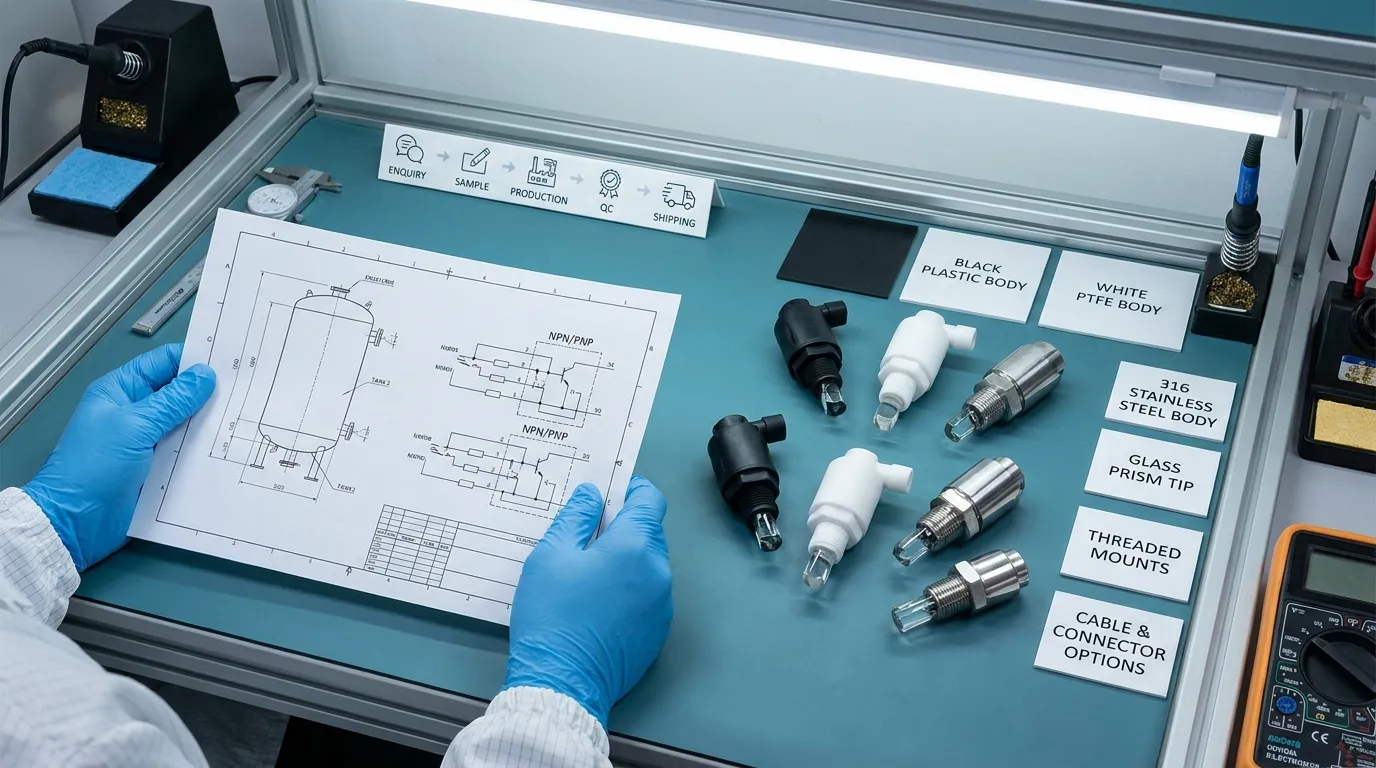
正しい選択をするために OEM光学レベルスイッチ, 見積もりを依頼する前に、これらの詳細を準備してください:
- 液体タイプ, 集中, カラー, 粘度, そして、泡か残留物が予想されるか
- タンク素材, 壁の厚さ, 取り付けの向き, および密封方法
- 必要な出力: NPN, PNP, いいえ, ノースカロライナ州, または他のコントローラ入力ロジック
- アプリケーションがポイント検出を必要とするか、連続レベル測定を必要とするかにかかわらず
- ケーブルの長さ, コネクタスタイル, ワイヤーの色, およびひずみ緩和要件
- ウェット素材の好み: PSU, PTFE製, 316 ステンレススチール, グラス, または他の選択肢もあります
- 運用環境: 振動, ウォッシュダウン, 結露, 温度曝露, および洗浄方法
- 年間予想量, サンプル量, パッケージングの必要性, および表示要件
スマートアプライアンスやIoT連携流体システム向けに, TuyaとSmart Lifeの連携はデバイスレベルで重要かもしれません, しかし、センサー仕様は物理的な液体検出要件から始まるべきです.
KeyenceとHojellyTekの光学液位センサーの代替案
| 比較地域 | キーエンス・オプティカル / 流体レベルセンサーのオプション | HojellyTek Factory-Direct Alternative |
|---|---|---|
| ポジショニング | 強力なサポートと幅広い製品エコシステムを持つプレミアム自動化ブランド | 深圳のOEM/ODMメーカーは光学液体センシングソリューションに注力 |
| 最適フィット | 迅速な支援が必要な植物, 記録, デモ, 既存のキーエンスシステムとの統合 | 低価格でカスタマイズされたポイントレベルセンサーを必要とするOEM |
| 技術範囲 | 選択した製品ファミリーに応じた複数のレベルセンシングカテゴリを含みます | 光電光学点位検出に焦点を当てています |
| 検出の役割 | 光学をカバーできます, 繊維, モデルに応じたその他のレベル技術 | 固定点での湿液/乾液検出に最適です |
| カスタマイズ | 強固な標準製品エコシステム; カスタマイズはプロジェクトやチャネルによって異なります | 本文, 糸, ケーブル, 出力, 材料, パッケージングについてはOEMビルドの議論も可能です |
| 価格構造 | プレミアムブランド価格設定は、高付加価値の自動化プロジェクトにおいてしばしば許容されます | 予算に配慮した大量購入により適しています |
| 勝つところ | 迅速な地域支援, 広範な文書, 設立された自動化トラスト | コスト管理, 工場通信, OEMの柔軟性, および用途特定センサー設計 |
| 重要な鉱床 | すべてのキーエンスレベル製品が光ポイントスイッチであるとは限らないでください | 連続的な測定が必要なポイントスイッチは使用しないでください |
なぜHojellyTekと働くのか
HojellyTekは深圳で自社Rを用いて光学および光電液位センサーを製造しています&DおよびOEM/ODMのサポート. 私たちのチームは、実用的な液体検出ソリューションを必要とする機器メーカーと協力しています, 単なるカタログ部品交換ではありません.
買い手は以下から始めることができます 光学レベルセンサー そして機械設計の変更を要求します, 電気出力, ケーブル, コネクター, 材料, またはパッケージング. これは既存のタンクにセンサーを収める必要がある場合に有用です, PCB, 囲い込み, または輸出製品ライン.
よくある質問
HojellyTekはKeyenceの直接的な代替品なのでしょうか?
適切なポイントレベル用途に適した光学液体レベルセンサーの代替品を提供しています, しかし、私たちはKeyensの承認を得ておらず、すべてのKeyenceレベルのセンシング技術を置き換えるとは主張していません. 正しい選択は液体によって異なります, 取り付け, 出力, そして、その作業が点検出か連続測定か.
Keyenceの光学流体センサーレベルプロジェクトで何を比較すればいいでしょうか?
センシング法を比較してください, 液体適合性, 取り付け位置, 湿潤物質, 出力タイプ, ケーブルまたはコネクタ, 制御ロジック, および必要な検出機能. ブランド名やセンサーの外観だけを比較しないでください.
いつまだキーエンスを選ぶべきか?
プラントが地域での高品質なサポートを必要とする場合、Keyenceを選びましょう, 迅速なトラブルシューティング, 高度な自動化統合, あるいは、すでにあなたのシステムで承認されている特定のキーエンス技術. また、単純な光点検出を超えた複雑なレベルの応用にも適している場合があります.
光学センサーは油や水を検出できますか?
はい, 光学点レベルセンサーは水用に一般的に使用されています, 油, および適合液体, しかし実際の液体は検査または確認が必要です. 泡, コーティング, 不透明度, 浮遊粒子, 化学的適合性は性能に影響を与えることがあります.
NPNをカスタマイズできますか, PNP, いいえ, またはNC出力?
はい. 出力ロジックは制御基板やPLC入力に基づいて確認できます. 買い手は、システムが沈没を想定しているかどうかを確認するべきです, 出典, 通常は開いています, 通常は閉じています, または他の信号の挙動.
見積もりをどう依頼すればいいですか?
液体タイプを送ってください, 戦車図面, 写真インスタレーション, 出力要件, 素材の好み, ケーブルの詳細, そしてWhatsAppやメールによる予想注文量. 当社のチームは申請を検討し、適切な光学液体レベルセンサーの代替案を推奨します.
Keyence代替光学レベルセンサーの見積もりを依頼する
もしKeyenceの光学流体センサーとOEM製品の液体レベルセンサーを比較する場合, 申請情報はHojellyTekまでお問い合わせください. 低コストの工場直通光学センサーが検出要件を満たせるかどうか、確認するお手伝いをいたします, 単位コストを削減します, そしてカスタムデザインで生産計画をサポートします, サンプリング, およびOEM供給.


