
オーバーフロー防止用の光学レベルセンサー
光学レベルセンサーのオーバーフロー保護は、タンクのオーバースピュープをポンプを損傷する前に防ぐのに役立ちます, キャビネット, 床, 生産設備, または電気パネル. HojellyTekはオーバーフロー警報回路用の光学式ハイレベルスイッチを提供しています, ポンプ遮断回路, バルブ遮断システム, そしてタンクトップ型の高レベル検出では、機械的なフロートが固まることがあるよりも高速な固体反応が優先されます, 傾き, ファウル, 自由に動けない.
OEM機器ビルダー向けに, タンクシステムインテグレーター, そして産業用買い手, 液体に合わせて光電光学レベルセンサーを配置します, 取り付け位置, 制御回路, およびアラームロジック.
オーバーフロー保護機能
当社の光学オーバーフロー保護サービスは、警報回路に焦点を当てています, 一般的なタンク監視ではありません. 目的はシンプルです: 高レベルポイントを素早く検出し、液体がこぼれる地点に到達する前に制御者に信頼できる信号を送ります.
典型的な構成には以下があります:
- タンクオーバーフロー警報用の光学的ハイレベルスイッチ
- 水漏れ防止用のタンクトップ搭載光学レベルスイッチ
- 液体が高点に達するとポンプ停止信号が出る
- 入口遮断のためのソレノイドバルブ閉鎖信号
- 高レベル警報ロジック用のPLC入力
- ローカルブザー, ビーコン, またはパネルインジケーター出力
- 安全バックアップ用の冗長な高負荷センサー
- OEM/ODMハウジング, 糸, ケーブル, コネクター, および出力カスタマイズ
標準的な点レベル検出の場合, 購入者は当社のレビューも可能です 光学レベルセンサー 範囲と私たちの ポイントレベルスイッチ オプション.
オーバーフロー被害が迅速な高水準検出を必要とする理由
タンクのオーバーフローは、ほとんどの場合、液体の損失だけの問題ではありません. 産業用およびOEMシステムにおいて, 溢れると近くのモーターが損傷することがあります, 配線端子, ポンプキャビネット, バッテリー区画, センサー, 包装機, 制御盤, および床上設置型の機器. 化学において, 油, 試薬, 冷却液, 燃料システム, また、溢れ出した清掃コストも生じます, スリップハザード, 汚染, およびプロセスのダウンタイム.
したがって、高レベル警報回路はオーバーフローラインに到達する前に反応しなければなりません. 機械式フロートは多くの基本的なタンクでよく使えます, しかし、それは自由な移動に依存します. フロートアームが引っかかる場合, ヒンジファウルズ, フロートがタンクの壁に擦れます, 粘性のある液体が残留物を残す場合もあります, スイッチの状態が正しいレベルで変化しない場合があります.
光学式ハイレベルスイッチには浮動アームがありません. 検知チップはアラームポイントに固定されています. 液体がプリズムの先端に触れたとき, センサーは出力状態を変え、アラームに信号を送ります, plc, ポンプスターター, またはバルブ回路. これにより、コンパクトなタンクに適しています, 狭い空間, 小さな貯水池, 純正カートリッジ, また、可動部品が故障のリスクを持つシステム.
光学高水準スイッチの仕組み
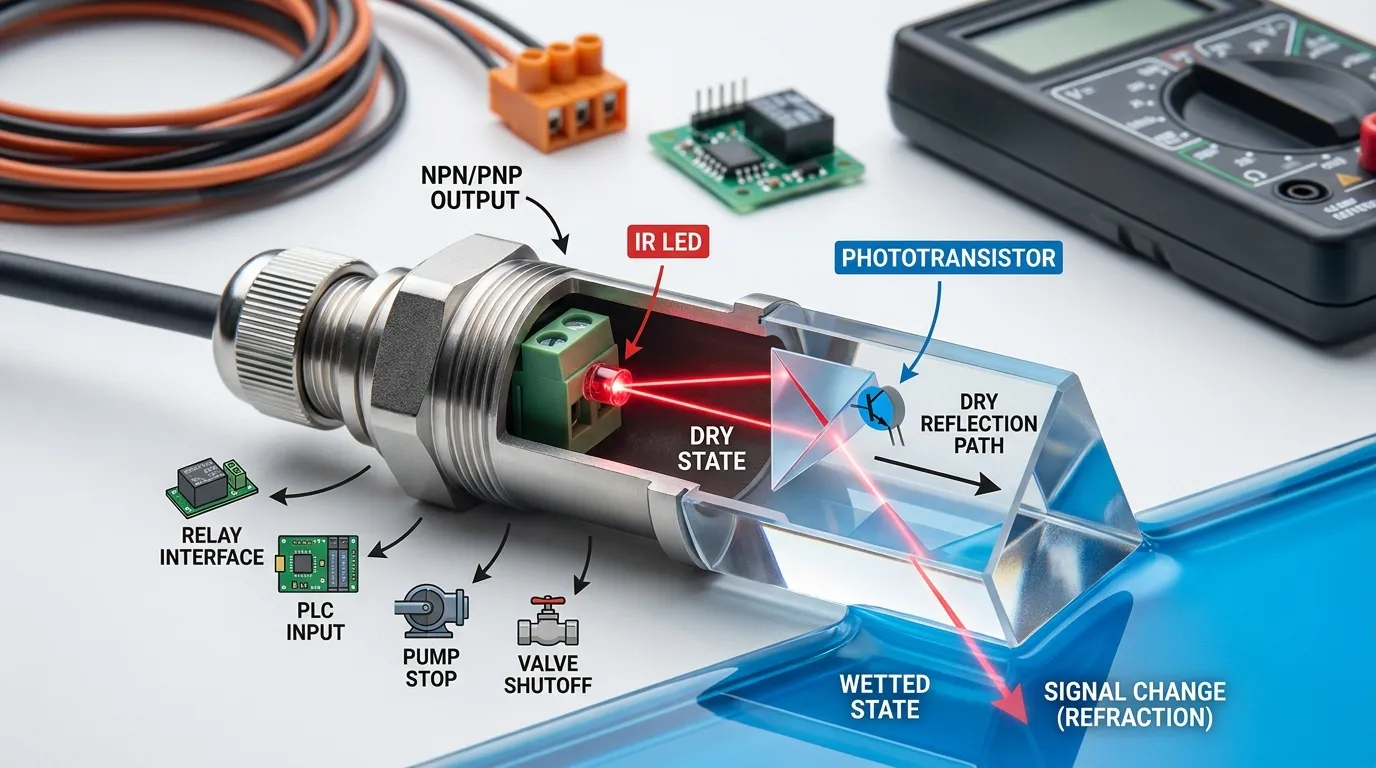
センサーの先端の内部, 赤外線LEDがプリズムに光を送ります. フォトトランジスタは反射光を受け取ります. 空中で, プリズムは赤外線ビームを受信機に向かって反射します. 液体がプリズムを覆うとき, 屈折条件が変化します, 受信機に戻る光が少なくなります, 電子回路スイッチの出力状態.
この乾燥検出と濡れた検出原理は、センサーが長距離移動を必要としないため、溢水保護に有用です. スイッチングポイントは物理的なセンサーの先端に近い位置にあります, そのため、高位置の位置はタンクの上部付近に配置できます, オーバーフローポートまたは安全マージンの下.
買い手の管理システムによります, 出力は直接PLC入力に設定可能です, 低電圧警報ボード, リレーインターフェース回路, またはカスタムOEM電子機器. NPNおよびPNP出力はデジタル制御システムで一般的です. 連続準位システムの場合, 4–20 mAが使用可能です, しかし、オーバーフロー保護は通常、回路が高レベルのアラームやカットオフ信号のみを必要とするため、ポイントレベルスイッチを使用します.
高レベルアラームと自動遮断の比較
オーバーフロー保護は、高レベル地点に達した際に起こるべきことを考慮して設計されるべきです.
ひとつの アラーム専用回路 ブザーでオペレーターに警告します, 灯台, 陳列, PLCアラーム, または遠隔信号. これは、プロセスを停止する前に人間の確認が必要な場合に適しています, または、タンクが手動給油所の一部である場合も.
ひとつの 自動遮断回路 オペレーターを待たずに流入を止める. センサー信号で給水ポンプを停止させることができます, 入口バルブを閉じる, ドージングポンプを無効化してください, またはコントローラーのインターロックをトリガーする. これは、オーバーフローが機器を急速に損傷させる恐れがある場合や、無人で充填が行われる場合に好まれます.
多くの産業システムが両方を用いています: 最初の高レベルセンサーが警報を鳴らし、充填を停止します, もう一つのハイハイセンサーは冗長バックアップとして機能します. バックアップセンサーは可能な限り独立したアラームや安全ロジックに接続されるべきです, 同じソフトウェアの状態に入っているだけでなく.
逆の故障モードも重要なシステムの場合, 例えば、液体なしでポンプが稼働しないようにすることなどです, 私たちの ポンプのドライラン保護 アプリケーション.
高レベルのカットオフ配線オプション
配線設計はセンサー信号がPLCに送られるかどうかに依存します, リレーモジュール, ポンプコントローラー, バルブドライバー, または警報ボード. RFQ段階で, 私たちのチームは供給電圧を確認しました, 出力タイプ, 正常状態, ケーブルの長さ, コネクター, また、信号が乾燥時に有効か、濡れた時に有効であるか.
| 高水準関数 | 典型的な信号経路 | 共通出力選択 | 回路行動 |
|---|---|---|---|
| 局所オーバーフロー警報 | センサー→警報ボード→ブザー/ビーコン | NPN, PNP, またはリレーインターフェース | 先端が濡れると視覚または音声アラームが作動します |
| PLC高レベル入力 | PLCデジタル入力→センサー | NPNまたはPNP | PLCは高レベル状態を認識し、アラームロジックを実行します |
| ポンプカットオフ | ポンプスターター→リレー/コントローラー→センサー | リレーインターフェース付きNPN/PNP | 液体が高くなるとポンプの充填を停止します |
| バルブ遮断 | センサー→コントローラー/ドライバー→ソレノイドバルブ | NPN/PNPまたはリレーインターフェース | さらなる給水を防ぐために入口弁を閉じます |
| 冗長なハイハイアラーム | 独立した入力またはアラーム→セカンドセンサー | 別デジタル出力 | 最初の制御段が故障した場合のバックアップ警告 |
| OEM制御基板 | カスタムPCB入力→センサー | カスタマイズされたトランジスタ出力またはコネクタ | 機器の電子機器に溢れ保護を統合します |
安全に関わるシステム向け, センサーは、完全な制御アーキテクチャがその目的のために設計・検証されていない限り、独立した安全装置として扱うべきではありません. 光スイッチの実用的な役割は高速な提供です, アラームやカットオフ回路への繰り返しの高レベル検出.
2つ目のハイハイセンサーによる冗長性
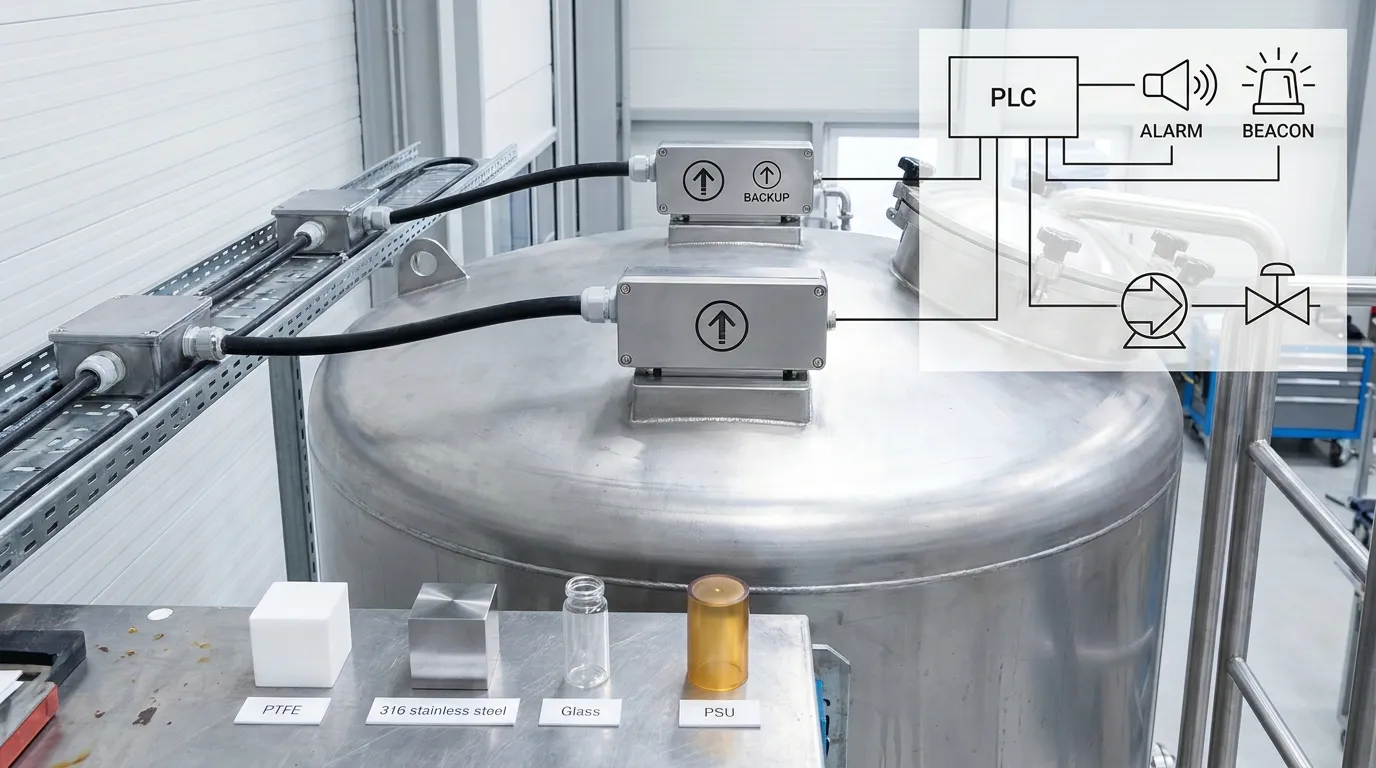
単一の高レベルの光学センサーで単純な機器保護には十分なことが多いです. しかし, オーバーフローが高価な機器を損傷させる恐れがある場合、2つ目のセンサーが推奨されます, 生産エリアを汚染する, 危険な流出を引き起こすこともあります.
最初のセンサーは通常の高レベル警報や充填停止点に設置できます. 2つ目のセンサーはやや高い位置に取り付けるべきです, 真の溢流点より下, ハイの緊急信号として. この2つ目の信号は別のビーコンを作動させることができます, コントローラーの故障を送信, フィルコマンドを無効にします, 手動リセットが必要になるか.
冗長性は配線の故障を防ぐのに役立ちます, コントローラのプログラミングエラー, 詰まった入り江, バルブの故障, 誤ったオペレーター設定, または一次センサーケーブルの損傷. また、メンテナンスチームにより明確な故障判断が提供されます: ハイハイセンサーが作動した場合, 通常の高水準停止では、期待されたように充填イベントを制御できませんでした.
溢れ防止のためのタンクトップマウント
オーバーフローセンサーは通常、タンクトップや側面上部から設置されます. タンクトップマウントはセンサーチップを高所に保ち、ケーブルは液体の上方に出ます. プラスチックタンクにもよく使われます, 冷却タンク, ドージングタンク, 水タンク, 試薬タンク, および純正液体容器.
主な取り付け方法にはねじ込み取り付けがあります, パネル取り付け, 圧縮スタイルの設置, またはカスタムOEMフィッティング. ねじの大きさやシーリング方法はタンクの壁厚に合わせるべきです, キャップ設計, およびサービス環境. 多くの用途で, フロートスイッチが動かすのに十分なクリアランスがない場所に、コンパクトな光学センサーを取り付けることも可能です.
センシングチップは、ポンプ停止遅延に十分な余裕を残して、スピルポイントより下に位置させるべきです, バルブ閉鎖時間, 液体乱流, 泡立つ, あるいは波の動き. タンクに強い水しぶきがある場合, 静止管, 遮蔽された場所, ソフトウェア遅延, または論理フィルタリングを検討することもあります, しかし、その遅延がオーバーフロー保護を無効にするほど長くあってはなりません.
インド市場でのタンク用途向け, 私たちはまた、支援もします タンク用オーバーフローセンサー OEMの設定およびエクスポートサポートを備えたプロジェクト.
確認する材料と仕様
センサー本体と濡れた部分は液体と一致しなければなりません. HojellyTekは電源ユニットなどの選択肢についても議論できます, PTFE製, 316 ステンレススチール, メディアの互換性に応じて、ガラスを使う場合もあります, 清掃条件, および機械的要件.
注文前に, 確認してください:
- 液体タイプ: 水, 冷却液, 油, 燃料, 化学薬品, 試薬, 洗剤, または混合液体
- 液体が透明かどうか, 有色人種, 泡立つ, 粘着性, コーティング, または乱流
- タンクの材料と壁厚
- 取り付けスタイル: タンクトップ, 側壁, ねじ込み, フランジ, またはカスタムフィッティング
- 必要な出力: NPN, PNP, リレーインターフェース, アナログ, またはOEMボード信号
- コントローラーまたは警報ボードに必要な供給電圧
- 正常状態: 濡れたら警報、乾いたときに警報
- ケーブルの長さ, コネクタタイプ, 配線の色の要件, および知的財産保護の必要性
- 2つ目の高高高センサーが必要かどうか
- 輸出先および書類要件
攻撃的なメディアに対して, 高温地域, または危険地域プロジェクト, サンプル承認前に材料と飼育ケースの選択を慎重に確認してください.
オーバーフロー警報回路における光学式とフロート式の違い
| 選考ポイント | 光高水準スイッチ | 機械式フロートスイッチ |
|---|---|---|
| 可動部品 | フロートアームやヒンジはありません | フロート移動が必要です |
| 応答点 | 液体がプリズムの先端に到達するとスイッチが入ります | フロートのストロークや角度によります |
| コンパクトタンクフィット | 狭いOEMスペースに適しています | 移動クリアランスが必要 |
| 粘着性のある液体リスク | 浮き輪がない, しかし、コーティングも考慮しなければなりません | フロートはくっつくことがある, ファウル, ジャムも |
| 取り付けの柔軟性 | タンクトップや側面取り付けに適しています | 向きと移動経路が重要です |
| アラーム回路の利用 | 高レベルデジタルアラームに強く適合しています | シンプルなタンクでよくある |
| メンテナンスの懸念 | プリズムの清潔さとケーブルの完全性を確認してください | フロートの動きをチェックしてください, ヒンジ, そして積み重ね |
オーバーフロー保護チェックリスト
光学レベルセンサーのオーバーフロー保護プロジェクトのためにRFQを送付する際は、このチェックリストを使用してください:
- タンク内の正確な高レベル警報点を定義してください.
- アラームポイントと真の溢れ口の距離を確認してください.
- センサーがアラームだけを作動させるのか、それとも充填を止めるべきかを決めてください.
- 出力がPLCに送られるかどうかを指定してください, リレー, ポンプコントローラー, バルブドライバー, または警報ボード.
- NPNを確認する, PNP, リレーインターフェース, またはカスタム出力要件.
- 2つ目の高高バックアップセンサーが必要かどうかを判断してください.
- 電源ユニットとの液体互換性を確認する, PTFE製, 316 ステンレススチール, グラス, または他の濡れた材料.
- 取り付け方向を教えてください: タンクトップ, 側壁, キャップマウント式, ねじ込み, またはOEMカスタム.
- 水しぶきが出ているかどうか確認してください, 泡, コーティング, または乱流が高所点に影響を与える可能性があります.
- ケーブルの長さを確認してください, コネクター, ワイヤー出口方向, および密封要件.
- サンプル数を確認する, 描画ニーズ, および生産バッチの期待値.
5-ステップサービスプロセス
1. 調査
戦車図面を送れ, 液体タイプ, 制御回路, 高位の役職, および目標出力. スペースが限られている場合、タンクトップエリアの写真は役立ちます.
2. 仕様とカスタマイズ
我々の技術チームがセンシング構造を確認しました, 濡れた物質, 出力タイプ, 取り付けねじ, ケーブル, コネクター, およびアラームロジック.
3. サンプル
適合試験のためにサンプルを準備することができます, ウェット/ドライスイッチング検証, およびコントローラ互換性チェック.
4. 生産と品質管理
サンプル確認後, 生産は承認された構成に従って行われます. キーチェックは外見に焦点を当てています, 配線, スイッチング機能, および顧客固有の要件.
5. 船舶
深圳の製造・輸出業者として, HojellyTekは米国の海外購入者をサポートしています, 私たちは, インド, および輸出可能な通信および文書調整を備えたその他の市場.
なぜHojellyTekと働くのか
HojellyTekは光電光学検出と液体レベル検出に注力しています, 社内Rと共に&センサー構造のDおよびOEM/ODMサポート, 材料, ケーブル, コネクター, および出力カスタマイズ. 生産前に実践的な技術的な議論が必要な購入者をサポートします, 単なるカタログの部品番号ではありません.
スマートタンクや接続機器プロジェクト用, また、TuyaやSmart Life関連の統合についても、デバイス設計全体に関係する点についても議論できます.
よくある質問
光学レベルセンサーのオーバーフロー保護はどのように機能します?
光学レベルセンサーのオーバーフロー保護には赤外線LEDが使用されます, フォトトランジスタ, そしてプリズムチップで液体が高レベルに到達した時を検出します. 先端が乾いた状態から濡れた状態に変わるとき, 出力が切り替わり、アラームを作動させることができます, ポンプストップ, バルブ閉鎖, またはPLCの高レベル信号.
オーバーフローアラームにおいて、光学スイッチはフロートスイッチより優れているのでしょうか??
コンパクトタンクや粘着フロートリスクのために, 光学スイッチは動くフロートアームがないため、しばしば優れています. 機械的なトラベルに頼らず、プリズム先端で切り替えます. 液体コーティング, 化学的適合性, 取り付け位置も確認が必要です.
センサーがポンプを自動的に停止させることができるか?
はい, 制御回路がそれに対応する設計であれば. 光学センサーの出力はPLCに送ることができます, リレーモジュール, ポンプコントローラー, または、高水位に達した際に給油ポンプを停止させるインターロック回路.
センサーは1つ使うべきか、それとも2つ使うべきか?
基本的なオーバーフローアラームや給油停止には高レベルセンサーを1つ使う. オーバーフローで高価な機器が損傷する可能性がある場合、2つ目のハイハイセンサーを追加してください, 安全上の問題を生み出します, またはバックアップアラームロジックが必要になる.
センサーはどこに取り付けるべきか?
ほとんどのオーバーフロー用途ではタンクトップまたは上部側壁取り付けが使われます. プリズムの先端は実際のオーバーフローポイントより下に位置し、ポンプの遅延に十分な余裕があるべきです, バルブ閉鎖時間, 水しぶきが響く, および液体の移動.
見積もりを取るためにどんな情報を送ればいいですか??
液体タイプを送ってください, 水槽図または写真, 取り付け位置, 電源電圧, 出力タイプ, 通常のアラーム状態, ケーブルやコネクタの必要性, そしてセンサーがアラームを制御するかどうか, ポンプ, バルブ, plc, またはバックアップのハイハイ回路.
見積もりを依頼する
溢れ保護図面を送ってください, 液体タイプ, 制御回路, 目標の取り付け方法はWhatsAppまたはメールでHojellyTekに提供します. 当社のチームは、アラーム専用の光学的ハイレベルスイッチ構成を推奨できます, 自動シャットオフ, または冗長な高高オーバーフロー保護.


