
堅牢な電気光学レベルセンサー
当社の堅牢な電気光学レベルセンサーサービスは、購入者が適切なセンシングチップを選ぶお手伝いをします, 住宅, シーリング方法, ケーブル設計, サンプルや生産ユニットを注文する前に、出力タイプと保護機能について.
堅牢な光学レベルセンサーの機能
HojellyTekは光電センサーに基づく光学液位センサーを設計・供給しています. センサー内部, 赤外線LEDがプリズムの先端に光を送ります, フォトトランジスタが反射信号を受信します. 空中で, 光はプリズム内部で反射します. 液体がプリズムを濡らすとき, 屈折が変わり、受信側は異なる信号を受信します. 電子機器は出力をドライまたはウェット状態の検出に切り替えます.
標準モデルのより広い概要については, 私たちの 光学レベルセンサー ページ.
堅牢な産業用サービス用, 私たちは設定を手伝います:
- 低レベルのポイントレベル検出, 高レベル, 溢れ声または乾式保護
- モバイルタンク用の頑丈なハウジングオプション, 産業用スキッドおよび機器貯水槽
- 電源ユニットなどの濡れた材料選択, PTFE製, 316 ステンレス鋼またはガラス
- NPN, PNPおよびアプリケーションマッチング出力構成
- ケーブル, 振動しやすい機器向けのコネクターおよびストレリフ設計
- 塵に対するIP指定シーリングコンセプト, バシャッ, 洗浄や屋外曝露
- 電気保護計画, 過電圧や逆極性の必要性も含まれます
- タンクジオメトリのOEM/ODMカスタマイズ, 取り付けスレッドと制御基板インターフェース
虐待事件のために作られた: 振動, ショック, 塵, 水と粗い扱い
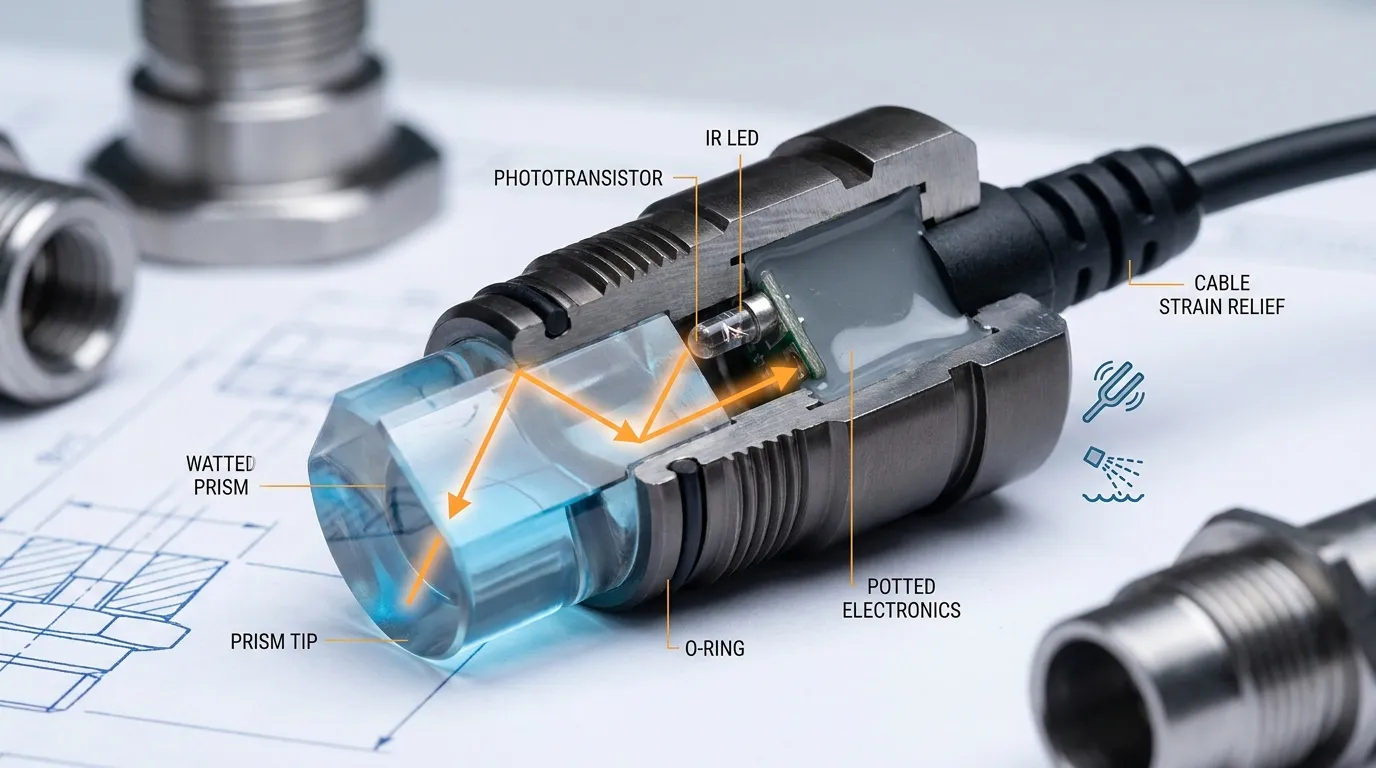
ハードデューティレベルのセンシングは単に液体を検出するだけではありません. センサーは機械の使い方に耐えなければなりません. 移動機器, 工業用貯水池, 清掃システム, 建設機械, 冷却タンクや屋外の液体容器は、それぞれ異なる機械的・環境的ストレスを引き起こします.
普通のセンサーはクリーンなテストベンチでは動作しますが、ケーブルを引っ張ると故障します, 振動, ウォッシュダウン, 熱循環または繰り返しのサービスハンドリング. 堅牢な電気光学レベルセンサー用, 機械的なパッケージはセンサー回路と同じくらい重要です.
振動と衝撃耐性
移動式および産業用機器について, 振動でネジ山マウントが緩むことがあります, 疲労ケーブル出口, 内部はんだ接合部を損傷させたり、断続的な電気接触を生じさせたりする. 堅牢な設計では、タンク壁からセンサーチップとケーブルまでの全負荷経路を考慮しるべきです.
重要な設計ポイントには安定したスレッドの接続が含まれます, 安全なボディ構造, 必要に応じて内部ポッティングやオーバーモールド, そして、すべての振動を内部電子回路に直接伝えないケーブル出口. また、機械式フロートの動くこともセンサーに避けるべきです, 動く部品が雑音を立てることがあるからです, 振動タンクでのスティックや摩耗.
ほこりと水の侵入防止
塵, 水しぶきや洗浄液への曝露がケーブル出口からセンサーを攻撃することがあります, ボディジョイント, コネクタエリアまたはスレッドインターフェース. このため、, IP評価は実際の勤務条件に基づいて選択されるべきです, パンフレットのターゲットだけではありません.
保護された設計には、密閉された住宅構造が含まれる場合があります, Oリングまたはガスケットプランニング, ポット付き電子機器, 成形ケーブルエントリーと正しい取り付け方向. 屋外タンクが対象の場合, 清掃サイクル, 道路のスプレーや埃っぽい工業地帯, RFQ段階でその詳細を共有し、シール手法を正確にマッチングできるようにします.
ハウジングとポッティングデザイン
ハウジングは衝撃に対する最初の防御です, 化学物質曝露, 粗雑な取り扱いと設置による損傷. プラスチック製のボディは、コンパクトでコストに敏感な機器に適しています. PTFEは化学的耐性が重視される場合に有効です. 316 より頑丈な金属ボディが必要な購入者にはステンレス鋼が好まれます, より強力な機械的保護や、要求の高い工業流体への適合性. 腐食性や衛生的な物質に関する議論のために, 私たちのレビュー 316 ステンレスボディ オプション.
ポッティングは電子機器を湿気から守るのに役立ちます, 振動と取り扱い応力. 頑丈な部隊において, ポッティングとシーリングは熱の放散とともに考慮すべきです, 修理可能性, ケーブルの柔軟性とセンサーサイズ.
ケーブルひずみ緩和およびコネクタの選択肢
ケーブルの故障は、移動式や過酷な作業環境で最も一般的な現実世界の問題の一つです. センサーは電気的試験に合格することもあります, しかし、ケーブルが急に曲がっているため、後で故障します, メンテナンス中に引き離されたり、移動中の機器付近に配線されたりします.
堅牢な光学センサーは、設置に適したケーブル出口とストレリフ構造を用いるべきです. 購入者はケーブルの長さを確認する必要があります, ジャケット素材, 曲げルート, コネクタタイプ, ワイヤーゲージ, シールドの必要性とケーブルが油に触れるかどうか, 水, 擦り傷や繰り返しの動き.
温度と出力の幅の変動
産業用機器は冷間始動を経験することがあります, 熱水貯水池, エンジンベイヒート, 屋外の季節変動や不安定な供給電圧. 運転温度範囲は実際の液体温度と照合して確認する必要があります, 周囲温度とタンク壁温度.
電気的保護も重要です. 過電圧, 逆極性, サージ曝露や誤った配線はセンサーの電子機器を損傷させる可能性があります. カスタマイズ中, エンジニアリングチームが制御基板の入力を確認できます, 電源電圧, 出力論理と保護要件を反映し、センサーを機械に適合させるため、一般的な部品として扱われるのではなく.
高温用途, 私たちの 高温センサー ページ.
ラギッドネス仕様表
| ラギッドネスアイテム | 確認すべきこと | なぜ厳しい義務で重要なのか |
|---|---|---|
| IPレーティング目標 | 塵, バシャッ, ウォッシュダウン, 屋外または浸水曝露 | ボディジョイントから水やほこりが侵入するのを防ぎます, ケーブル出口と取り付けポイント |
| ハウジング素材 | PSU, PTFE製, 316 ステンレススチール, ガラスまたはカスタムボディ | バランスは強度に影響を与える, 化学的適合性, 温度とコスト |
| ポッティング / オーバーモールディング | 電子機器が完全カジュアルか部分カジュアルか | 湿気を防ぐのに役立ちます, 振動および衝撃に関連する内部破損 |
| ケーブルひずみ緩和 | ケーブル出口スタイル, 曲げ方向, プルリスクとルーティング | 断線を減らす, 断続的な信号と現場サービスの故障 |
| 温度範囲 | 液体, 周囲温度およびタンク壁の温度条件 | ドリフトを回避する, 熱循環時のシール損傷や材料ミスマッチ |
| 電気的保護 | 過電圧, 逆極性, サージおよび配線エラーのリスク | 不安定な産業用電力システムにおけるセンサー電子回路を保護する |
| 出力タイプ | NPN, PNP, ドライ/ウェットロジックまたは制御ボードインターフェース | PLCとの直接的な互換性を確保する, コントローラーまたはOEM電子機器 |
| 取り付けねじ | 糸のサイズ, タンク壁の厚さ, 密封方法と向き | 漏れを防ぐ, 緩い取り付けと誤ったプリズム位置 |
| 濡れた物質 | 流体の種類, 添加物, 油, 冷却液, 水または化学メディア | 腫れを防ぐ, ひび割れ, 腐食または光学チップの汚染 |
| リスクの取り扱い | 組立ラインの取り扱い, フィールドの代替およびサービスアクセス | 設置およびメンテナンス中の破損を減らします |
見積もりを依頼する前に義務チェックリストを
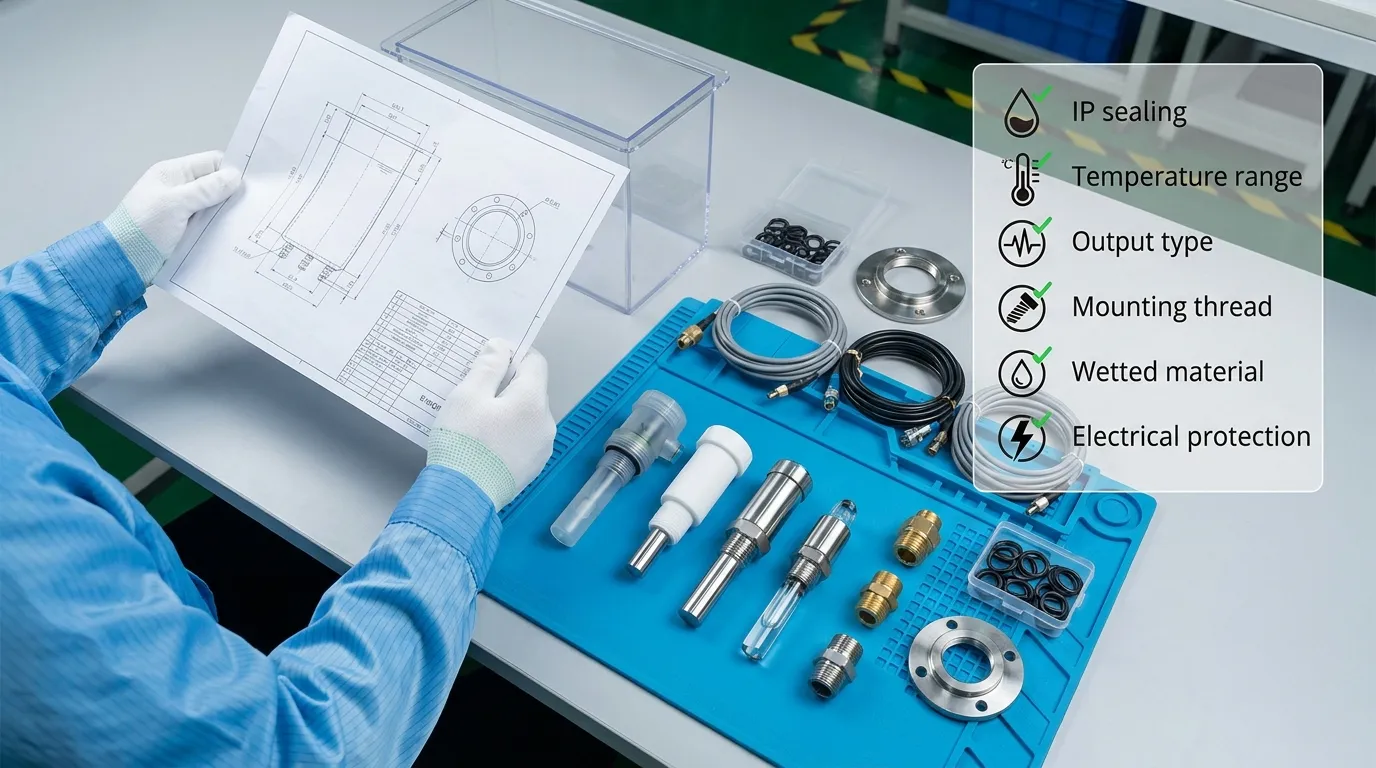
堅牢な光学レベルスイッチを注文する前に, 以下の詳細を準備してください:
- 装備の種類: 移動式機械, 工業用タンク, 発電機, 清掃システム, 冷却材リザーバーまたは純正製品.
- 液体タイプ: 水, 油, 冷却液, 燃料関連液体, 化学混合物または界面媒体.
- 故障リスク: 振動, ショック, ウォッシュダウン, 塵, ケーブルプル, 屋外での曝露や荒いサービス取り扱い.
- 取り付け位置: サイドマウント, ボトムマウント, トップエントリー, 垂直タンク壁またはコンパクト貯水槽.
- 必要なスイッチングポイント: 低レベル, ハイレベル, オーバーフロー, ドライラン保護または漏れ検知.
- ウェット素材の好み: プラスチック, PTFE製, 316 ステンレス鋼またはガラス.
- 出力要件: NPN, PNP, スイッチングロジック, 関連する連続監視プロジェクトにおける信号方向または4–20 mAの要件.
- 電源状態: 電源電圧, コントローラー入力, 過電圧リスクと配線保護の必要性.
- ケーブルの要件: ケーブルの長さ, コネクター, ジャケット素材, ひずみリリーフとルーティング方向.
- 環境要件: IPターゲット, 温度範囲, ほこり・水への曝露とサービス場所.
5-ステップサービスプロセス
1. 調査レビュー
液体タイプを送ってください, 戦車図面, 取り付け方向, 出力要件と作業環境はWhatsAppまたはメールで提供します. 私たちのチームは標準的な光学センサーかどうかを確認します。, 堅牢なカスタムバージョンや代替のレベルセンシング方式の方が適しています.
2. 仕様とカスタマイズ
資料を確認します, 糸, ケーブル, 出力ロジック, シーリング方法と電気的保護の必要性. OEM/ODMの変更にはハウジング形状も含まれる場合があります, ワイヤーの長さ, コネクター, 方向検知と制御基板インターフェース.
3. 試料の調製
サンプルは適合試験のために準備できます, 電気的試験および液体検出の検査. 購入者は可能な限り実際のタンクでセンサーをテストすべきです, 特に機器に振動がある場合はなおさらです, 泡, 水しぶきや狭い設置スペース.
4. 生産と品質管理
制作は社内のRで行われています&Dサポートと光電光学センシングの経験. QCは機能に重点を置いています, 配線, 密閉構造, 外見, ケーブルの状態と顧客合意の構成詳細.
5. 輸送および輸出支援
HojellyTekは深センの製造・輸出企業で、米国の顧客にサービスを提供しています, 私たちは, インドおよびその他の市場. 梱包および発送の詳細は注文数と発送先に基づいて確認されます.
要件と構成オプション
| 要件 | 一般的な選択肢 | 購入ノート |
|---|---|---|
| 検知モード | ポイントレベルのドライ/ウェットスイッチング | 低価格に最適, 高レベルおよびオーバーフローレベル検出 |
| 出力 | NPN, PNP, カスタマイズされた信号インターフェース | 注文前にPLCやコントローラーの入力を一致させてください |
| 連続信号 | 4関連する連続準位解については–20 mA | ポイント検出が必要か連続測定が必要か確認してください |
| ボディマテ | PSU, PTFE製, 316 ステンレススチール, グラス | 液体で選択, 温度と機械的荷重 |
| マウンティング | ねじ込み式, コンパクトボディまたはカスタムOEMフィッティング | タンク壁の厚さと密閉方法を確認してください |
| ケーブル | カスタムレングス, ジャケットとコネクター | 振動で選びましょう, 油, 水とルーティングリスク |
| 保護 | IP定格シールと過電圧計画 | 実際の露出を確認しろ, 屋内試験条件だけでなく |
堅牢な光学センサーと標準的なフロートスイッチの違い
| アイテム | 堅牢な電気光学レベルセンサー | 機械式フロートスイッチ |
|---|---|---|
| 可動部品 | 動くフロートはない; 光学プリズム検出 | 動くフロートまたはリード機構を使用します |
| 振動性能 | 適切に取り付ければ、コンパクトな振動機器により適しています | フロートの動きはカタガタしたり摩耗したりすることがあります |
| サイズ | 小型タンク用のコンパクトセンシングチップ | しばしばタンククリアランス(水槽のクリアランス)が高めになることが多いです |
| 乱暴な扱いのリスク | 住居次第です, ポッティングとケーブルレリーフ | フロートアームや可動部品が損傷する可能性があります |
| 液体検出 | 高速乾燥/湿潤光学スイッチング | 機械的な動きは浮力に依存します |
| メンテナンス | 低い機械的摩耗 | デポジットのせいで固まることもあります, 破片または粘度 |
危険地域の購入者への重要な注意事項
この堅牢なサービスページは、危険区域や爆発防止の承認を主張していません. もしあなたのプロジェクトに爆発ガスが関わっているなら, 蒸気, 燃料貯蔵ゾーンまたは規制されたEx環境, 専用のレビューをお願いします 防爆光学センサー 問い合わせ時に必要な承認基準を共有してください.
なぜHojellyTekを選ぶのか
HojellyTekは深圳製造を統合しています, 社内R&OEMおよび産業用購入者向けのDおよび光電光学センシングの経験. カスタムセンサーボディをサポートしています, ケーブルアセンブリ, 出力ロジックと、市販部品のみを供給するのではなく、アプリケーションに合わせたラグデライゼーション.
スマートタンク監視プロジェクト用, 私たちのチームはTuyaについても話し合うことができます / スマートライフ統合(関連時)は. 産業用OEM向けに, 主な価値は工場との直接コミュニケーションです, 試料試験からバッチ生産までの実用的なカスタマイズとサポート.
堅牢な電気光学レベルセンサーFAQ
堅牢な電気光学レベルセンサーはどのように動作するのですか?
赤外線LEDを使用しています, フォトトランジスタとプリズムチップ. 空中で, 光はプリズム内で反射します. 液体がプリズムに触れるとき, 光路が変化する, 電子回路は出力を切り替えて湿潤状態または乾状態を示します.
振動に適した光学レベルセンサーは?
はい, 動くフロートがないため適している場合があります. しかし, 住宅, 取り付けねじ, ポッティング, ケーブルのストリリーフや配線保護は、実際の振動や衝撃条件に応じて選択する必要があります.
どのハウジング素材を選ぶべきか?
電源ユニットはコンパクトな工業設計で一般的です, PTFEは化学耐性に有用です, 316 ステンレス鋼はより強い金属ボディの要求を支えています, また、光学的または材料の適合性が考慮される場合にガラスを使用できます. 液体とデューティサイクルが最適な選択を決めます.
このセンサーは屋外や洗浄場所でも使えますか?
ほこりや水の曝露に対応するように設定することも可能です, しかし、知的財産権(IP)の評価, ケーブル出口, コネクター, シーリング方法と取り付け方向は注文前に確認する必要があります. センサーが水しぶきに面しているかどうかを共有してください, ウォッシュダウン, 雨, ほこりや浸水のリスク.
利用可能な出力タイプ?
一般的な選択肢には、ポイントレベル検出のためのNPNおよびPNPスイッチング出力があります. 連続測定やアナログ伝送が必要なプロジェクト, 4–20 mAの要件は別途議論し、適切なセンサーアーキテクチャを選択する必要があります.
このページの堅牢なセンサーは耐爆エリアで使えますか?
それを決めつけないでください. 堅牢な構造と危険区域の承認は異なる要件です. EXや防爆用途, 専用の防爆光学センサー問い合わせルートを用い、必要な承認条件を提示してください.
堅牢なセンサー見積もりを依頼する
戦車の図面を送ってください, 液体タイプ, 取り付け位置, ケーブル要件, 出力タイプ, IPターゲット, 温度状態と振動・衝撃の詳細. HojellyTekは作業ケースをレビューし、サンプル試験やOEM生産用の堅牢な電気光学レベルセンサー構成を推奨します. 見積もりのご依頼はWhatsAppまたはメールでご連絡ください.
