
How to Choose the Right Smart Waste Management Company: A Buyer's Guide
Choosing a smart waste management company is a critical strategic decision. It has long-term impacts on operational efficiency, financial budgets, and sustainability goals. This choice goes far beyond selecting a simple vendor. It involves finding a technology partner to help modernize a core public service.
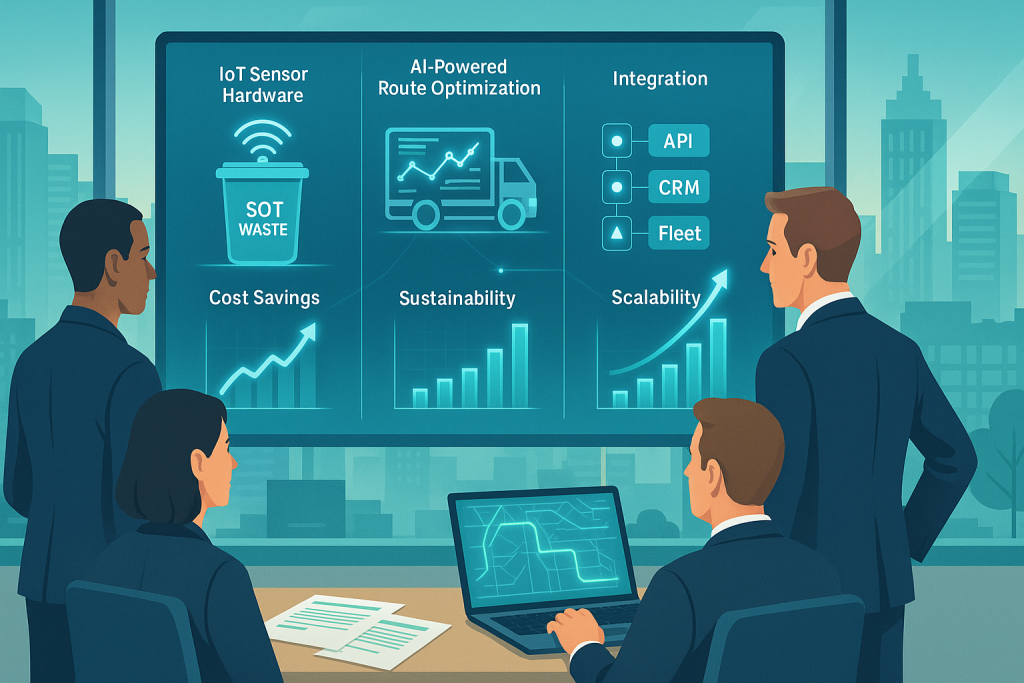
The right partner provides not just hardware and software, but also expertise and support. This guide offers a comprehensive framework for evaluating potential providers. It focuses on the key criteria that ensure a successful, scalable, and future-proof solution. We will explore the essential aspects of technology, software platforms, integration, and long-term partnership.
The New Landscape of Waste Management
The waste industry is undergoing a significant transformation. Traditional collection methods, based on fixed routes and schedules, are giving way to more dynamic, data-driven models. This shift is powered by technology companies that specialize in the Internet of Things (IoT), data analytics, and artificial intelligence. They are turning waste collection into a high-tech, logistics-driven operation.
As a result, the selection process has become more complex. Decision-makers are no longer just comparing the prices of hauling services. They are now evaluating sophisticated technology stacks and software platforms. Understanding this new landscape is the first step. The goal is to find a provider whose technology and vision align with your long-term objectives for creating a truly Smart Waste Management system. This system should not only solve today's problems but also adapt to tomorrow's challenges.
Step 1: Define Your Needs Before You Search
Before you can evaluate any company, you must first have a clear understanding of your own requirements. A thorough internal needs assessment will provide the foundation for your entire selection process. It will help you create a clear scorecard for judging how well each potential partner fits your specific situation.
Start by defining your primary objective. Is the main goal to reduce operational costs? Are you focused on achieving ambitious sustainability targets and increasing landfill diversion rates? Perhaps the key driver is improving citizen satisfaction by eliminating overflowing bins. While all these goals are related, having a primary objective helps to prioritize features.
Next, consider the scale and scope of your operation. Are you managing waste for a dense urban core, a sprawling suburban area, or a contained environment like an airport or university campus? The logistical challenges of each are very different. You must also detail the types of waste you handle. A solution may need to accommodate general waste, mixed recyclables, organic compost, and specialty materials like glass or electronic waste. A clear definition of your needs is the most important tool you will have in your search.
Step 2: Evaluate the Core Technology Stack
The foundation of any smart waste solution is its technology. This includes the hardware deployed in the field and the software that makes sense of the data. A deep dive into these components is essential.
The Hardware: Sensors and Bins
The physical hardware is the source of all data. Its quality and reliability are non-negotiable. The most critical component is the fill-level sensor. These devices are the eyes and ears of your operation. When evaluating a company's sensors, consider their accuracy. The sensor should provide precise measurements that you can trust. Ask about the technology they use, whether it is ultrasonic, infrared, or radar, and which is best suited for your specific waste streams.
Battery life is another crucial factor. The sensor's battery should last for many years without needing replacement to minimize maintenance costs. The device must also be incredibly durable. It will be exposed to extreme weather, rough handling, and corrosive materials. Look for a high IP rating, such as IP67, which indicates the device is fully protected against dust and water.
Some companies also offer fully integrated smart bins. These units may include features like solar-powered self-compaction. This technology can increase a bin's capacity by several times, drastically reducing collection frequency. When evaluating these, assess the build quality, the efficiency of the solar panel, and the reliability of the compaction mechanism. Several firms are well-regarded for their robust sensor hardware that performs well in a variety of climates.
The Software Platform: The Brain of the Operation
The software platform is where raw data is turned into actionable intelligence. This is the command center for your entire waste management operation. The platform must be powerful, intuitive, and secure.
An intuitive user interface is paramount. Your team should be able to log in and immediately understand the status of your entire container network. Look for a clean dashboard with a map-based view, color-coded status indicators, and easy-to-access reports. The platform should not require a data scientist to operate.
The platform's analytical capabilities are its true source of value. It should be able to analyze historical data to identify trends in waste generation. Its most important feature is often its ability to perform advanced route optimization. The software should use artificial intelligence to automatically generate the most efficient collection routes based on real-time fill-level data. Some providers focus heavily on this software component, offering sophisticated AI to maximize fuel and labor savings.
Predictive analytics represent the next level of intelligence. An advanced platform can use machine learning to forecast when a bin will be full. This allows for even more proactive scheduling. Finally, ensure the platform is secure. It will house sensitive operational data, so it must be protected by robust cybersecurity measures.
Step 3: Assess Integration and Scalability
A smart waste solution should not operate in a vacuum. It must be able to communicate with other business systems and be able to grow with your organization over time.
System Integration Capabilities
The ability to integrate the platform with your existing software is a sign of a mature and flexible solution. Look for a company that provides a well-documented Application Programming Interface (API). An API allows different software systems to talk to each other.
This is critical for streamlining workflows. For example, you may want to integrate the waste platform with your fleet management system for a holistic view of your vehicles. You might connect it to your billing software to automate invoicing based on service verification. Or you could link it to your public-facing city app to show residents the status of local bins. A lack of integration capabilities can create data silos and limit the overall value of the solution.
Scalability and Future-Proofing
Your needs will change over time. Your city may grow, or your business may expand. The solution you choose must be able to scale seamlessly. Ask potential partners how their system handles growth. Can it support tens of thousands of sensors as easily as it supports a few hundred?
You should also choose a partner that is committed to innovation. The world of IoT and smart cities is evolving rapidly. Your provider should have a clear product roadmap. They should be continuously improving their hardware and adding new features to their software. A partnership with a forward-thinking company ensures that your investment will not become obsolete in just a few years.
Step 4: Understand Different Company Models
Smart waste management companies often have different business models. Understanding these models can help you find the one that best aligns with your procurement and operational preferences.
The Hardware Specialist
Some companies focus almost exclusively on designing and manufacturing the best possible hardware. They are experts in sensor technology, battery life, and device durability. These companies typically sell their sensors and smart bins to be used with third-party software platforms. This can be a good option if you already have a preferred software provider.
The SaaS Provider
Other firms concentrate on the software side. They offer a powerful Software-as-a-Service (SaaS) platform for data analytics and route optimization. These platforms are often designed to be hardware-agnostic. This means they can work with sensors from a wide variety of manufacturers. This model offers flexibility if you want to source your hardware from multiple vendors.
The End-to-End Solution Provider
The third model is the end-to-end solution provider. These companies offer a fully integrated, proprietary system. They manufacture their own hardware and develop their own software platform. The key advantage of this model is seamless integration. Since the hardware and software are designed to work together from the ground up, there are no compatibility issues. This model also provides a single point of contact for all support and service needs, which can greatly simplify troubleshooting.
Step 5: Evaluate the Partnership Potential
Finally, remember that you are not just buying a product. You are entering a long-term partnership. The quality of the company's support and service is just as important as the quality of its technology.
Evaluate the implementation and training process. The company should have a clear, structured plan for deploying the hardware and configuring the software. They should also provide comprehensive training for your staff, from the managers in the office to the drivers in the trucks.
Consider the level of ongoing customer support. What happens when a sensor malfunctions or when you have a question about the software? The provider should offer responsive, expert support through multiple channels. Look for a company that provides a dedicated account manager who understands your specific needs. The best technology in the world is of little use without a strong team to support it. Ask for references and speak to their existing clients to learn about their experience with the company as a long-term partner.
Conclusion: Making an Informed Decision
Choosing the right smart waste management company is a decision that will shape the efficiency and sustainability of your operations for years to come. It requires a detailed evaluation process that goes far beyond a simple price comparison. By first defining your needs, you can create a clear framework for your search.
Focus your evaluation on the core elements of the solution. Scrutinize the quality and reliability of the hardware. Assess the power and usability of the software platform. Ensure the system can integrate with your existing tools and scale to meet your future needs. Finally, choose a company that you believe will be a true strategic partner, one that is committed to your success. A thorough and methodical approach will lead you to a solution that delivers lasting value.
Frequently Asked Questions (FAQ)
1. What is the main difference between a technology provider and a traditional waste hauler?
A traditional waste hauler's primary business is the physical collection and transportation of waste. A smart waste technology provider's primary business is providing the hardware, software, and data analytics that make the collection process more efficient. Some companies do both, but many are purely technology firms.
2. How important is it to run a pilot program before signing a long-term contract?
A pilot program is highly recommended. It allows you to test the company's technology in your own unique operational environment. It provides a low-risk way to verify the hardware's performance, evaluate the software's usability, and confirm the provider's support capabilities before making a large-scale investment.
3. Should I choose a company specializing in hardware or an end-to-end solution provider?
This depends on your specific needs. If you already have a software platform you like, a hardware specialist might be a good fit. However, an end-to-end provider offers the significant advantage of seamless integration and a single point of contact for support, which many organizations find simplifies management and improves reliability.
4. What security features are most important in a smart waste software platform?
Look for a platform that offers end-to-end data encryption. This protects your data both as it is transmitted from the sensor and while it is stored in the cloud. The platform should also have robust access controls, allowing you to define who in your organization can view or manage the data.


