
Braiteoirí Leibhéal Optúla le haghaidh Nítrigin Leachtach: Cad a Oibríonn
Má tá tú ag cuardach braiteoir leibhéil optúil le haghaidh nítrigine leachtach, Is é an chéad rud atá ar eolas ná seo: Brazzers físeán catagóir Inexperienced, Déagóirí, Seapáinis, Aziatochki, Téalainnis, Físeán HD ar a dtugtar Téalainnis Cailín Kim watch gan chlárú sa HD nach bhfuil oiriúnach do sheirbhís dhíreach LN2 ag -196C. Is sreabhán crióigineach é nítrigin leachtach, agus a theocht, iompar fiuchphointe, riosca oighreata, agus tá na ceanglais sábháilteachta i bhfad níos faide ná gnáthuisce, ola, cuisnithe, breosla, nó iarratais umar ceimiceach.
Míníonn an treoir seo cá dteipeann ar bhraiteoirí optúla traidisiúnta, cad iad na teicneolaíochtaí a úsáidtear i ndáiríre le haghaidh tomhais leibhéal LN2, agus áit a n-oireann HojellyTek i ndáiríre mar mhonaróir braiteoirí leibhéal leachtach optúla agus fótaileictreach.
An Freagra Macánta: Ní braiteoirí LN2 iad braiteoirí leibhéal optúla caighdeánacha
Tógtar an chuid is mó de na lasca leibhéal optúla dlúth fótaileictreach le haghaidh braite leibhéal pointe i ngnáthleachtanna tionsclaíocha. Úsáideann siad LED infridhearg, fóta-trasraitheoir nó glacadóir, agus leid shoiléir braite priosma. Nuair a bhíonn an priosma tirim, Léiríonn solas go hinmheánach taobh istigh den rinn. Nuair a chlúdaíonn leacht an priosma, Athraíonn an coinníoll athraonta agus filleann níos lú solais ar an nglacadóir. Déanann an leictreonaic an t-athrú optúil sin a thiontú ina chomhartha aschuir, NPN coitianta, PNP, nó comhartha lasc digiteach.
Oibríonn an prionsabal sin go maith do go leor leachtanna glana, lena n-áirítear uisce, cuisnithe, olaí íseal-slaodachta, agus ceimiceáin áirithe. Sin é an fáth go bhfuil braiteadh optúil coitianta le haghaidh umair dhlúth, Cosaint caidéil, Brath ró-shreabhadh, agus taiscumair trealaimh bheaga. Is féidir leat níos mó a fhoghlaim faoi ghnáth-theocht Braiteoir Leibhéal Optúil Iarratais ar ár bpríomhthreoir.
Tá nítrigin leachtach difriúil. Ag -196C, Ní hé an fhadhb amháin an féidir leis an gcosán solais leacht a bhrath. Is iad na ceisteanna is mó ná an bhfuil an tithíocht, Priosma, séala, cábla, greamaitheach, ábhar potála, leictreonaic, agus is féidir le comhéadan gléasta maireachtáil turraing chrióigineach agus rothaíocht theirmeach arís agus arís agus arís eile. Le haghaidh lasc optúil fótaileictreach caighdeánach, Is é an freagra de ghnáth nach bhfuil mura bhfuil an tionól iomlán deartha agus rátáilte go sonrach le haghaidh seirbhíse crióigineach.
Cén fáth go dteipeann ar bhraiteoirí optúla fótaileictreach i nítrigin leachtach
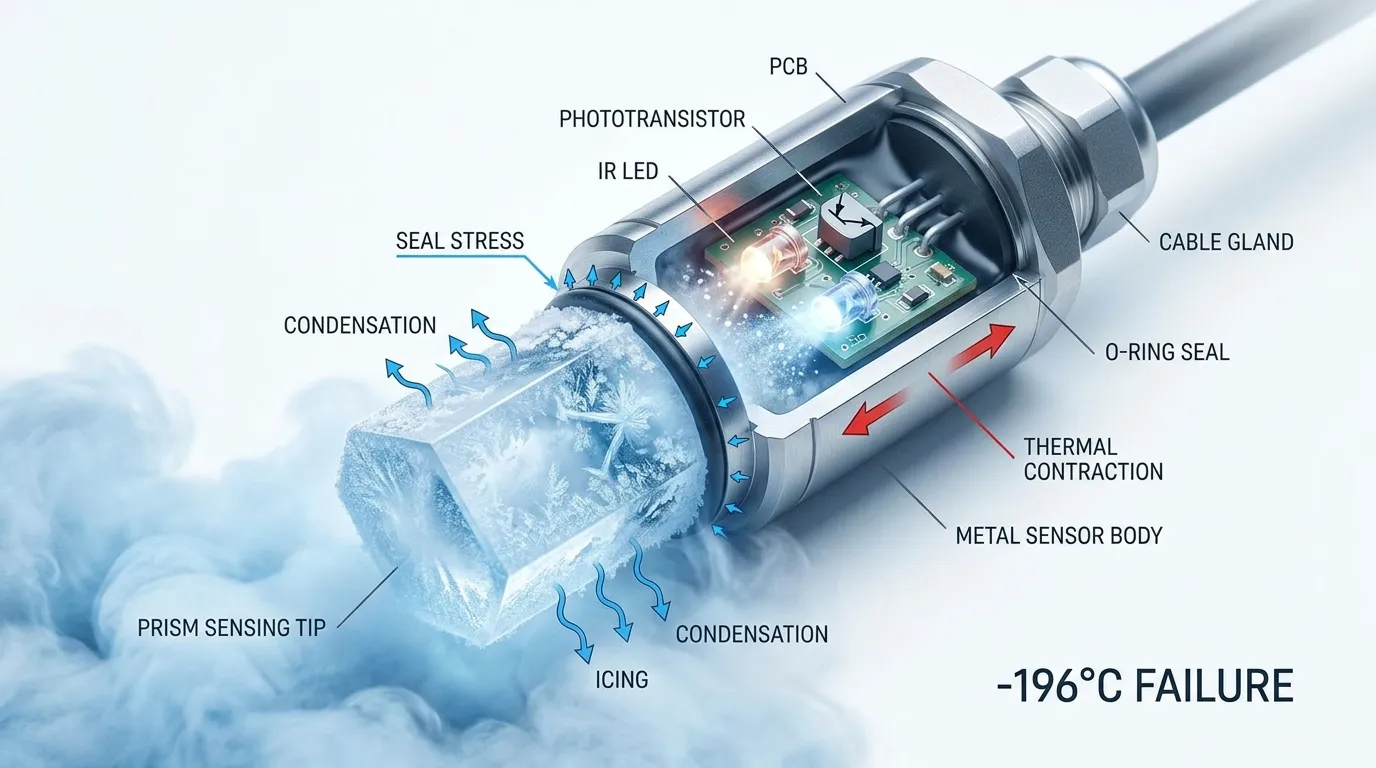
Is féidir le braiteoir leibhéal optúil caighdeánach breathnú simplí ón taobh amuigh, ach cuireann an tseirbhís chrióigineach béim ar gach cuid den fheiste.
Is féidir le turraing theirmeach an leid braite a scoilteadh nó a dhífhoirmiú
Is minic a dhéantar an priosma optúil as plaisteach, gloine, nó ábhar trédhearcach innealtóireachta. I ngnáthbhrath leachtach, ní gá don phriosma ach teocht mheasartha a láimhseáil, Comhoiriúnacht cheimiceach, agus coinníollacha brú. I nítrigin leachtach, Is féidir leis an titim teochta tobann a bheith ina chúis le crapadh tromchúiseach. Má tá an priosma, comhlacht miotail, séala, agus conradh faireog cábla ag rátaí éagsúla, Tógann strus ag na hailt.
Is féidir le gloine soiléireacht optúil mhaith agus friotaíocht ceimiceach a thairiscint, agus a Braiteoir optúil gloine Is féidir a bheith úsáideach do leachtanna neamh-chrióigineacha roghnaithe. Ach ní dhéanann gloine amháin braiteoir oiriúnach do LN2. An tógáil iomlán, Modh séalaithe, cábla, agus caithfidh leictreonaic go léir a bheith crióigineach-rátáil.
Is féidir le rónta agus ábhair potála a bheith sobhriste
Braitheann go leor braiteoirí optúla dlúth ar O-fáinní, eapocsa, Plaistigh mhúnlaithe, nó comhdhúile séalaithe inmheánacha. Ag teochtaí crióigineacha, Is féidir le gnáth-leaistiméirí cruaite, laghdaigh, crack, nó fórsa séalaithe a chailleadh. Nuair a theipeann ar rónta, Iontráil taise, sceitheadh gaile, nó is féidir le scaoileadh meicniúil damáiste a dhéanamh don braiteoir.
Níl leictreonaic deartha le haghaidh -196C
Tá astaitheoir IR i mbraiteoirí fótaileictreach, glacadóir, PCB, hailt solder, agus leictreonaic oiriúnaithe comhartha. Fiú má théann an barr braite i dteagmháil leis an leacht agus fanann an leictreonaic taobh amuigh den umar, Is féidir le seoladh fuar tríd an gcorp strus teirmeach a chruthú fós. Má tá an leictreonaic nochtaithe do fhuacht mhór, cobhsaíocht aschuir agus saolré a bheith neamhiontaofa.
Is féidir le seaicéid cábla agus sreangú stiffen nó crack
Is minic a dhíríonn ceannaitheoirí ar an leid braite agus déanann siad dearmad ar an gcábla. PVC Caighdeánach, rubar, nó d'fhéadfadh seaicéid cábla ginearálta a bheith righin i dtimpeallachtaí crióigineacha. Gluaiseacht, tonnchrith, nó is féidir le strus suiteála ansin a bheith ina chúis le scoilteadh nó damáiste seoltóra.
Is féidir le comhdhlúthú agus icing comharthaí bréagacha a chruthú
Fuaraíonn nítrigin leachtach an t-aer agus na dromchlaí máguaird. Is féidir le taise comhdhlúthú agus reo timpeall an chomhlachta braiteora, Priosma, iontráil cábla, agus calafort gléasta. Le haghaidh braiteoir optúil, Tá fadhbanna ar leith ag sioc ar an bpriosma toisc go mbraitheann an braiteoir ar chomhéadan optúil glan. Oighear, gal, boilgeoga, agus is féidir le sioc go léir cur isteach ar an gcosán solais agus léamha bréagacha fliuch / tirim a chur faoi deara.
Cad a úsáidtear i ndáiríre le haghaidh tomhas leibhéal nítrigine leachtach?
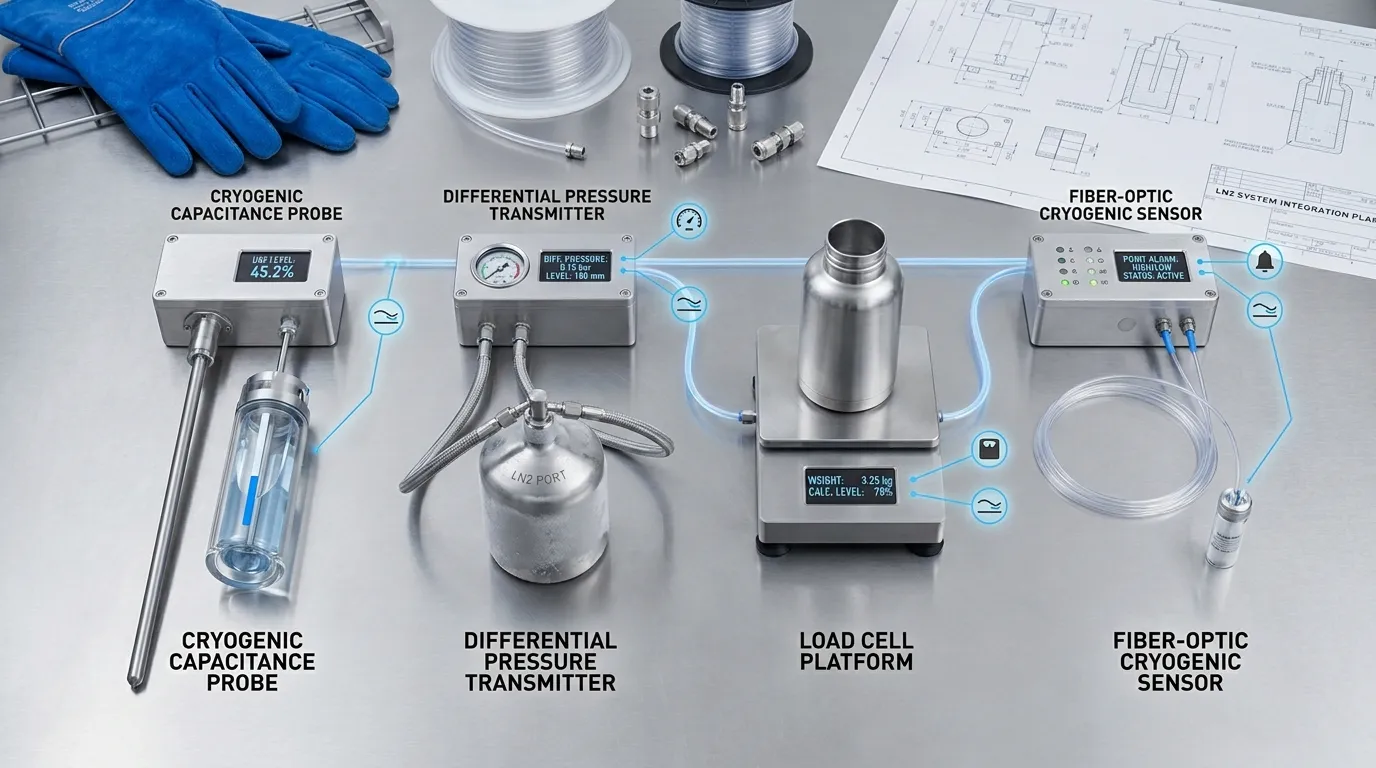
Le haghaidh umair LN2, Dewars, Cryostats saotharlainne, agus stóráil chrióigineach tionsclaíoch, Is gnách go roghnaíonn innealtóirí teicneolaíochtaí atá deartha le haghaidh seirbhíse crióigineach. Braitheann an rogha ceart ar mhéid an umair, cibé an bhfuil an t-árthach oscailte nó faoi bhrú, cruinneas riachtanach, pointí rochtana, Ceanglais sábháilteachta, agus cibé an bhfuil gá le tomhas leanúnach nó leibhéal pointe.
| Rogha Leibhéal Crióigineach | Oiriúnach is Fearr | Láidreachtaí | Teorainneacha | Oiriúnacht LN2 |
|---|---|---|---|---|
| Probe toilleas crióigineach | Leibhéal leanúnach LN2 i ndewars agus i soithí crióigineacha | Coitianta le haghaidh leachtanna crióigineacha, Gan aon chodanna ag gluaiseacht, Is féidir léitheoireacht leanúnach a sholáthar | Ní mór a bheith deartha le haghaidh iompar tréleictreach LN2, fad an tóireadóra, geoiméadracht soithigh, agus insliú crióigineach | Rogha láidir nuair a bhíonn sé crióigineach-rátáil |
| Tomhas brú difreálach | Umair faoi bhrú nó innealtóireacht le pointí cnagála cuí | Modh tionsclaíoch eolach, Is féidir ceangal le córais rialaithe | Éilíonn suiteáil chrióigineach cheart, bainistíocht líne impulse, cúiteamh dlúis, agus dearadh brú sábháilte | Oiriúnach ach amháin le comhpháirteanna crióigineach-rátáil |
| Cill ualaigh nó córas meáchain | Dewars iniompartha, sorcóirí soláthair, Faireachán neamh-ionrach | Tomhaiseann mais atá fágtha gan teagmháil inmheánach probe | Teastaíonn gléasadh cobhsaí agus socrú tara uaidh; ní leibhéal díreach taobh istigh den árthach | Rogha maith nuair a bhíonn fardal bunaithe ar mheáchan inghlactha |
| Athraigh leibhéal pointe crióigineach | Pointí aláraim ard/íseal | Feidhm aláraim simplí nuair a dheimhnítear don teocht agus don árthach | Gan leanúnach; ní mór a bheith rátáilte go sonrach do LN2 | Oiriúnach má tá sé go hiomlán crióigineach-rátáil |
| Braiteoir crióigineach snáthoptaice speisialtachta | Taighde, aeraspáis, nó córais chrióigineacha speisialaithe | Tomhas optúil iargúlta, Níl aon chomhartha leictreach ag barr braite i roinnt dearaí | Ní hionann é agus lasc fótaileictreach priosma caighdeánach; Éilíonn innealtóireacht speisialaithe | Is féidir le dearadh crióigineach tiomnaithe |
| Snámhán láimhe nó tomhas amhairc | Úsáid saotharlainne beag nó fíorú cúltaca | Simplí, spleáchas íseal leictreonaic | Lámhleabhar, níos lú uathoibrithe, ag brath ar shábháilteacht | Úsáideach mar mhodh cúltaca |
Braiteoirí Toilleas: Rogha Coiteann LN2
Úsáidtear tóireadóirí toilleas crióigineach go forleathan toisc go bhfuil airíonna tréleictreacha difriúla ag nítrigin leachtach agus gal. De réir mar a ardaíonn nó a thiteann an leibhéal leachtach feadh an tóireadóra, na hathruithe toilleas tomhaiste. Le calabrú ceart, is féidir leis an gcóras leibhéal leanúnach a thuairisciú.
Tá sé seo difriúil ó lasc pointe optúil dlúth. Is gnách go ndéantar probe toilleas a dhearadh mar eilimint braite fada a shíneann isteach san árthach. Ábhair, insliú, Feedthroughs, agus ní mór leictreonaic a roghnú le haghaidh úsáide crióigineacha. Ba chóir don cheannaitheoir fad an tóireadóra a dhearbhú, geoiméadracht umar, Calabrú tréleictreach, Rátáil brú, Stíl gléasta, agus an bhfuil an leictreonaic iargúlta ón gcrios fuar.
Brú difreálach: Úsáideach, Ach Suiteáil-íogair
Is féidir le brú difreálach leibhéal a thomhas trí bhrú a chur i gcomparáid ag dhá phointe agus an difríocht brú sin a bhaineann le ceann leachtach. Le haghaidh leachtanna crióigineacha, Ní feidhmchlár simplí é seo "suiteáil aon braiteoir brú". LN2 boil-off, athruithe dlúis, Grádáin theirmeacha, taise reoite, agus dearadh faoisimh brú gach ábhar.
Is féidir le DP oibriú in umair chrióigineacha innealtóireachta nuair a bhíonn na pointí cnagadh, línte impulse, rónta, Tarchuradóirí, agus tá an nós imeachta suiteála deartha le haghaidh seirbhíse crióigineach. Is féidir le drochshuiteáil léamha éagobhsaí a chruthú, línte blocáilte, nó coinníollacha neamhshábháilte.
Braite Snáthoptaice: Féideartha, Ach ní hionann é agus braiteoirí optúla caighdeánacha
Is féidir leis an abairt "braiteoir leibhéal optúil" a bheith mearbhall i bplé crióigineach. Is cineál amháin braiteoir optúil é lasc priosma fótaileictreach caighdeánach. Brazzers físeán catagóir Inexperienced, Déagóirí, Seapáinis, Aziatochki, Téalainnis, Físeán HD ar a dtugtar Téalainnis Cailín Kim watch gan chlárú sa HD.
A Braiteoir Leibhéal Snáthoptaice Is féidir snáithíní optúla a úsáid, tarchur solais, machnamh, nó athruithe ar airíonna optúla chun leibhéal a bhrath. Úsáideann roinnt córais chrióigineacha chun cinn braiteadh snáithín-bhunaithe toisc gur féidir le snáithíní optúla an comhartha tomhais a bhogadh ar shiúl ó chomhpháirteanna leictreacha ag an bpointe fuar. Cén dóigh faoin spéir a ...?, Éilíonn tomhas snáthoptaice crióigineach ábhair saintógtha, Feedthroughs, calabrú, agus dearadh meicniúil. Níor chóir caitheamh leis mar idirmhalartaithe le gnáthlasc leibhéil optúil plaisteach nó miotail-chorp.
Seiceálacha Ábhar agus Gléasta Roimh Aon Tionscadal LN2
Do ghnáth-bhraiteoirí leibhéal leachtach optúla, is féidir le ceannaitheoirí PSU a roghnú, PTFE, 316 cruach dhosmálta, nó gloine ag brath ar chomhoiriúnacht cheimiceach, teocht, brú, agus ceanglais sláinteachais. Do LN2, Ní leor comhoiriúnacht gnáth-ábhar. Caithfidh an ceannaitheoir iompar crióigineach a sheiceáil.
I measc na bpríomhsheiceálacha tá:
- Cibé an bhfuil an comhlacht braiteora rátáilte le haghaidh teagmhála díreach nó indíreach le LN2
- Cibé an bhfanann rónta solúbtha agus sceitheadh-daingean ag teocht crióigineach
- Cibé an maireann an priosma nó an fhuinneog optúil turraing theirmeach
- Cibé an bhfanann an seaicéad cábla inúsáidte i dtimpeallachtaí fuar
- Cibé an bhfuil an leictreonaic scoite amach ón gcrios crióigineach
- Cé acu an bhfuil an snáithe gléasta, Flange, nó tá beatha trí dheartha le haghaidh crapadh
- Cibé an bhfuil an t-árthach oscailte, folús-jacketed, inslithe, nó faoi bhrú
- Cibé an bhfuil an braiteoir le haghaidh aláraim pointe nó tomhais leanúnach
- Cé acu a chaithfidh an t-aschur a bheith NPN, PNP, sealaíocht, analógach, nó 4-20 mA
Tá tábhacht le snáithe agus stíl gléasta freisin. I lasca caighdeánacha leibhéal optúil, Is féidir le ceannaitheoirí gléasta snáithithe a shonrú, suiteáil taobhbhbhalla, suiteáil barr, séalaithe gasket, nó gléasta umar dlúth. Do LN2, Ní mór do dhearadh an chalafoirt gás fiuchphointe a chur san áireamh freisin, oighreata, aeráil shábháilte, agus aonrú teirmeach. Ná modhnaigh soitheach crióigineach riamh gan athbhreithniú innealtóireachta cáilithe.
Maidir le feidhmchláir a dteastaíonn monatóireacht leanúnach uathu i ngnáthleachtanna, nach LN2 é, ár Braiteadh leibhéal leanúnach D'fhéadfadh faisnéis a bheith níos ábhartha.
Comhdhlúthú, Sioc, agus ní mionsonraí iad sábháilteacht
Is féidir le nítrigin leachtach dromchlaí in aice láimhe a fhuarú go tapa agus taise a chomhdhlúthú ón aer. Is féidir le buildup sioc bac a chur ar infheictheacht, cur isteach ar chodanna meicniúla, agus cur isteach ar bhrath optúil. I limistéir oscailte nó droch-rialaithe, Is féidir le hocsaigin comhdhlúthú freisin ar dhromchlaí an-fhuar, guaiseacha breise a chruthú.
Is í an tsaincheist sábháilteachta is mó ná díláithriú ocsaigine. Tá gás nítrigine gan dath agus gan bholadh. De réir mar a fhiuchann LN2 amach, féadann sé ocsaigin a dhíláithriú i spásanna iata agus riosca asphyxiation a chruthú. Ba chóir go ndéanfadh aon tionscadal tomhais leibhéal LN2 aeráil a mheas, monatóireacht ocsaigine, faoiseamh brú, TCP, oiliúint, agus nósanna imeachta láimhseála sábháilte. Níl i roghnú braiteoir ach cuid amháin den dearadh sábháilteachta.
Cá n-oireann HojellyTek i ndáiríre
Is monaróir agus onnmhaireoir Shenzhen é HojellyTek atá dírithe ar bhrath optúil fótaileictreach, lasca leibhéal leachtach optúla, Struchtúir braiteoir saincheaptha, agus tacaíocht OEM / ODM d'iarratais leachtacha tionsclaíocha gnáth. Ár R inmheánach&Oibríonn foireann D ar bhrath optúil dlúth, Roghnú Ábhar Fliuch, Meaitseáil aschuir NPN / PNP, Saincheaptha Gléasta, agus comhtháthú braiteoir do mhonaróirí trealaimh. Onnmhairímid chuig margaí lena n-áirítear na Stáit Aontaithe, TÁIMID, agus an India.
Le haghaidh tomhais dhíreach nítrigine leachtach, déanaimid nach bhfuil braiteoir optúil fótaileictreach caighdeánach HojellyTek a mholadh a shuíomh mar probe rátáil LN2. Bheadh sé sin an feidhmchlár mícheart mura bhfuil braiteoir innealtóireachta agus bailíochtaithe go sonrach le haghaidh seirbhíse crióigineach.
Is é an áit ar féidir linn cabhrú in aice láimhe, Feidhmchláir réalaíocha: umair leachtacha gnáthteochta, taiscumair cuisnithe, Brath uisce agus ola, lasca leibhéal trealaimh dlúth, Feistí saotharlainne neamhchrióigineacha, agus dearaí OEM ina bhfuil braiteadh optúil oiriúnach i ndáiríre. Le haghaidh éiceachórais gléasanna cliste, D'fhéadfadh comhtháthú Tuya nó Smart Life a bheith ábhartha i dtionscadail monatóireachta neamh-chrióigineacha roghnaithe, ach ní mar aicearra do thomhas sábháilteachta-chriticiúil LN2.
Ceisteanna CCanna
An féidir liom braiteoir leibhéal optúil a úsáid le haghaidh nítrigine leachtach?
De ghnáth ní bhíonn braiteoir leibhéal optúil caighdeánach le haghaidh nítrigine leachtach oiriúnach mura bhfuil an tionól braiteora iomlán rátáilte go sonrach le haghaidh seirbhíse crióigineach -196C. Tá an chuid is mó de na braiteoirí priosma fótaileictreach dlúth deartha le haghaidh gnáth-leachtanna tionsclaíocha, ní teagmháil dhíreach LN2.
Cén fáth a dteipeann ar ghnáth-braiteoir fótaileictreach i LN2?
Is iad na príomhrioscaí ná turraing theirmeach, priosmaí scáinte, rónta sobhriste, damáiste cábla, Éagobhsaíocht Leictreonaic, comhdhlúthú, oighreata, agus strus meicniúil ó chrapadh tapa. D'fhéadfadh an prionsabal braite optúil a bheith simplí, ach níl an tógáil fhisiceach deartha le haghaidh nochtadh crióigineach.
Cén braiteoir leibhéal is fearr a oibríonn le haghaidh nítrigine leachtach?
I measc na roghanna coitianta tá tóireadóirí toilleas crióigineach, Córais brú difreálach le comhpháirteanna crióigineach-rátáil, Córais meáchain cille luchtaithe, agus lasca leibhéal pointe crióigineach speisialtachta. Braitheann an modh is fearr ar dhearadh an tsoithigh, riachtanais chruinneas, Ceanglais sábháilteachta, agus cibé an bhfuil braite leanúnach nó pointe ag teastáil.
An féidir le braiteoirí optúla gloine nítrigin leachtach a thomhas?
Gan go huathoibríoch. Is féidir le gloine roinnt leachtanna éilitheacha a láimhseáil, ach ní dhéanann barr optúil gloine ina n-aonar an braiteoir iomlán LN2-rátáil. Rónta, tithíocht, cábla, leictreonaic, friotaíocht turraing teirmeach, agus ní mór dearadh gléasta go léir a bhailíochtú le haghaidh úsáide crióigineach.
An bhfuil braiteadh snáthoptaice oiriúnach do LN2?
Is féidir braiteoirí crióigineacha snáthoptaice speisialaithe a úsáid i roinnt feidhmchlár chun cinn, Ach níl siad mar an gcéanna le lasca priosma optúla caighdeánacha dlúth. Caithfear tuaslagán snáthoptaice crióigineach a dhearadh timpeall teocht LN2, Feedthroughs, calabrú, agus cosaint mheicniúil.
Cad ba chóir dom a rá le soláthróir sula roghnaíonn mé braiteoir leibhéal LN2?
Comhroinn an leacht, teocht, cineál umar, coinníoll brú, raon leibhéil, calafort gléasta, Aschur riachtanach, aicmiú sábháilteachta, Timpeallacht suiteála, agus cibé an dteastaíonn tomhas leanúnach uait nó pointí aláraim ard / íseal amháin. Do LN2, Aeráil a dhearbhú freisin, faoiseamh brú, riosca oighreata, agus comhoiriúnacht ábhar crióigineach.
Teastaíonn cabhair uait chun an cineál braiteoir ceart a roghnú?
Má tá nítrigin leachtach i gceist le do thionscadal, Tosaigh le teicneolaíocht braite crióigineach-rátáil seachas lasc optúil caighdeánach. Má tá do thionscadal le haghaidh uisce, ola, cuisnithe, breosla, nó leachtanna gnáthteochta eile, Is féidir le HojellyTek cabhrú le féidearthacht braiteoir optúil a athbhreithniú, Cineál Aschuir, Ábhar fliuch, Stíl gléasta, agus saincheaptha OEM / ODM. Déan teagmháil linn trí WhatsApp nó ríomhphost chun luachan a iarraidh nó an cur chuige braite ceart do d'iarratas a phlé.


