
Fill Level Monitoring: A Complete Guide to Smart Sensors
Fill level monitoring is a transformative technology. It uses sensors to measure the amount of material inside any type of container in real-time. This innovation replaces outdated and inefficient manual checks. It provides automated, data-driven insights for smarter operational decisions. The core purpose of this technology is to grant businesses complete visibility into their assets.
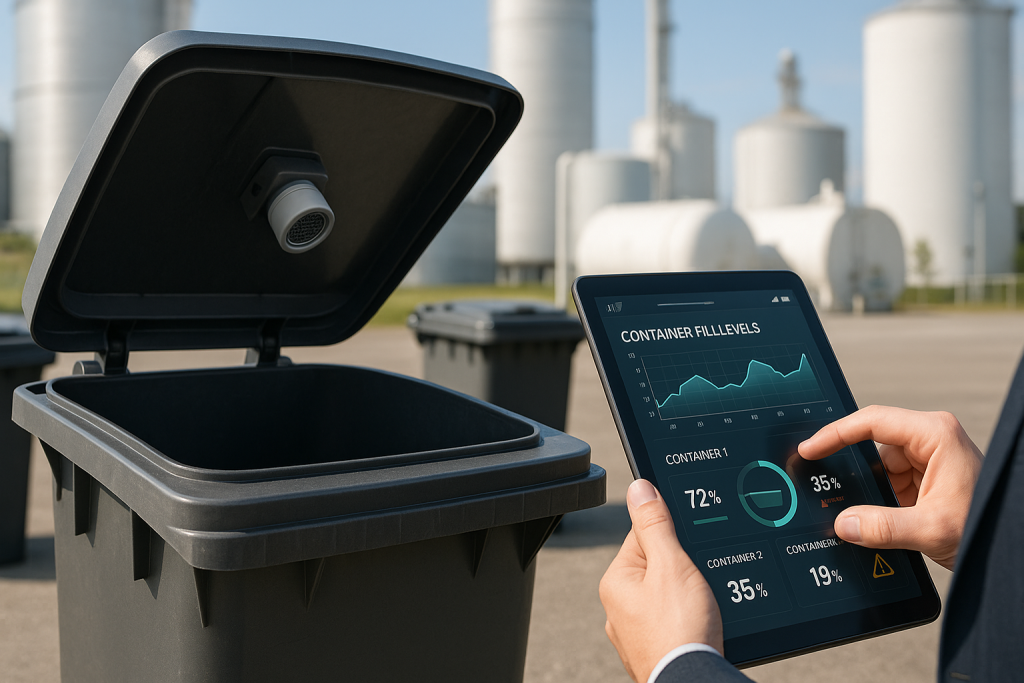
This allows them to manage resources, schedule collections, and plan replenishment with incredible precision. By harnessing the power of sensors and IoT connectivity, fill level monitoring has become the foundational data source for efficiency across numerous industries. This guide explores the science, architecture, and powerful benefits of this essential technology.
What is Fill Level Monitoring?
Fill level monitoring is a system that remotely tracks the volume of solids or liquids within a container. It answers a simple but critical question without any human intervention. How full is this bin, tank, or silo right now? Traditional methods require employees to physically visit and inspect each container. This process is slow, expensive, and often inaccurate. It leads to wasted trips for empty containers or costly overflows from full ones.
Modern fill level monitoring solves these problems entirely. It provides a constant stream of accurate data to a central software platform. This information empowers managers to act proactively based on actual needs, not on a fixed schedule. This system is a critical component of broader initiatives like Smart Waste Management. It provides the raw, actionable data needed to power intelligent route optimization and predictive analytics. The shift from manual guessing to automated knowing is a true game-changer.
The Science Behind the Sensors: How It Works
The magic of fill level monitoring lies in the sensor technology. Different types of sensors are used depending on the material being measured and the operating environment. Understanding how each one works is key to selecting the right tool for the job.
Ultrasonic Sensors: Measuring with Sound
The most common technology for fill level monitoring is the ultrasonic sensor. These devices are highly reliable for measuring both solid and liquid levels in various container types.
The principle behind them is elegantly simple. The sensor, mounted at the top of a container, emits a short pulse of high-frequency sound. This sound wave travels down, hits the surface of the material inside, and reflects back up to the sensor. The device measures the precise time it takes for this echo to return. This is known as the "time-of-flight." Since the speed of sound is a known constant, the sensor's onboard processor can instantly calculate the distance to the material. By subtracting this distance from the container's total height, the system determines the exact fill level.
Ultrasonic sensors are exceptionally versatile. They are ideal for waste bins, grain silos, and water tanks. Their main limitation is that certain soft or irregular materials can sometimes absorb the sound waves, making them less effective.
Infrared (IR) Sensors: Detecting with Light
Infrared sensors offer another method for monitoring levels. Instead of sound, they use a beam of infrared light to determine if a container has reached a specific point.
An IR sensor typically works as a threshold detector. It sends out a beam of light. If the material level is low, the beam travels its full path without interruption. When the material rises and blocks the beam, the sensor is triggered. It then sends an alert signaling that the container has reached that preset fill level.
While less common for providing continuous variable measurements, IR sensors are very effective and often lower-cost solutions. They are excellent for applications where the primary need is an alert at a specific high or low point, rather than a constant percentage reading.
Radar Sensors: Unmatched Performance in Harsh Conditions
For the most demanding industrial environments, radar sensors provide superior performance. These advanced devices operate on a similar principle to ultrasonic sensors but use radio waves instead of sound waves.
The use of radio waves gives radar sensors several distinct advantages. They are virtually unaffected by factors like dust, temperature changes, pressure, or moisture inside the container. This makes them the ideal choice for monitoring challenging materials. Examples include fine powders, sticky liquids, or corrosive chemicals. Their accuracy remains high even when conditions are difficult. While they represent a higher initial investment, their reliability in harsh settings is unmatched.
The Complete System Architecture
A fill level monitoring solution is more than just a sensor. It is an integrated system of hardware and software components working in unison to deliver actionable data.
First is the sensor unit itself. This is the hardware installed in the container. These devices are built to be incredibly durable. They are housed in rugged, weatherproof casings to withstand extreme temperatures and conditions. Power is typically supplied by a long-life battery designed to last for many years without replacement.
Second is the communication gateway. The sensor must transmit its data wirelessly to the internet. It does this using specialized IoT networks. Technologies like LoRaWAN (Long Range Wide Area Network) or NB-IoT (Narrowband IoT) are perfect for this task. They are designed to send small packets of data over long distances using very little power. This ensures reliable communication and maximizes the sensor's battery life.
Third is the central software platform. This is the command center of the entire system. It is a cloud-based application that managers access via a web browser or mobile app. The platform receives data from all deployed sensors and presents it in an intuitive format. Users can view a map with the real-time status of every container. They can also analyze historical data, identify trends, and generate detailed performance reports.
Finally, there is the alerting mechanism. The software platform automatically sends notifications when a container's fill level crosses a predefined threshold. These alerts can be delivered instantly via email, text message, or a push notification on a mobile app. This ensures that the right personnel are notified immediately, allowing for a swift and timely response.
Key Applications Across Diverse Industries
The versatility of fill level monitoring makes it a valuable tool for a wide range of industries. Any business that stores and moves bulk materials can benefit from this technology.
In waste management, it is the technology that powers smart cities. Sensors in public litter bins and large commercial dumpsters report when they are full. This data is used to create optimized collection routes, eliminating unnecessary trips and preventing unsightly overflows.
For liquid storage and tank management, the technology is essential. Fuel distributors use it to monitor tank levels at gas stations, enabling proactive replenishment. Water utilities track levels in reservoirs and water towers. Industrial plants monitor tanks of chemicals, ensuring safety and preventing costly spills or production shutdowns.
In the agriculture sector, fill level monitoring modernizes farm operations. Sensors in grain silos and feed bins provide farmers with accurate inventory data. This helps them manage their supply chain, plan harvests, and ensure they never run out of animal feed. Monitoring water levels in irrigation tanks and troughs also helps conserve this precious resource.
Within manufacturing and logistics, the system optimizes the flow of raw materials. Sensors can be installed in hoppers and bins on the production line. They alert staff when materials need to be refilled, preventing line stoppages. This leads to a smoother, more efficient production process.
The Business Case: Tangible Benefits of Monitoring
Adopting fill level monitoring delivers a powerful return on investment through a variety of measurable benefits. These advantages create a more efficient, cost-effective, and sustainable operation.
The most immediate impact is on operational efficiency. The system completely eliminates the need for manual container checks. This frees up valuable employee time for more productive tasks. Collection or delivery routes are no longer based on a fixed schedule. They are dynamically created based on real-time needs, ensuring every trip is necessary and productive.
This efficiency translates directly into significant cost reduction. Optimized routes mean fewer miles driven. This drastically cuts expenditures on fuel, which is often a fleet's largest operating cost. Fewer trips also result in less wear and tear on vehicles, leading to lower maintenance bills and a longer lifespan for the fleet. By preventing overflows, businesses also avoid costly cleanup expenses and potential regulatory fines.
Safety and compliance are also greatly enhanced. In industrial settings, the overflow of hazardous materials can pose a serious safety risk to employees and the environment. Automated monitoring provides an early warning system that prevents such incidents. It creates a digital record of container levels, which helps organizations demonstrate compliance with environmental regulations.
Finally, the technology revolutionizes inventory management. Businesses can move from a reactive "just-in-case" model to a proactive "just-in-time" supply chain. Accurate, real-time data on material levels prevents stock-outs that can halt production. It also reduces the need to carry excess inventory, freeing up capital and storage space.
Conclusion: The Future of Resource Management is Data-Driven
Fill level monitoring is a foundational technology for the future of efficient operations. It provides the critical visibility needed to manage resources intelligently. By replacing outdated manual processes with automated, real-time data, it allows organizations across every industry to do more with less. The insights generated by these simple yet powerful sensors unlock new levels of performance and sustainability.
This technology makes our cities cleaner, our industries safer, and our supply chains more resilient. For any organization looking to optimize its operations, reduce costs, and gain a competitive edge, investing in fill level monitoring is not just an option. It is a strategic necessity in a world that increasingly runs on data.
Frequently Asked Questions (FAQ)
1. What materials can be measured with these sensors? The technology is highly versatile and can measure a wide variety of materials. Ultrasonic sensors are excellent for most solids, like general waste or grains, and many liquids. Radar sensors are better for fine powders, sticky substances, or corrosive chemicals. The right sensor choice depends entirely on the specific application.
2. How are the sensors installed in the containers? Installation is typically a quick and simple process. The sensor is a small, self-contained unit that is usually mounted on the inside top surface of a container. It can be attached with a secure bracket and industrial-strength screws. The process for a single container often takes only a few minutes.
3. Is the software platform difficult to use? No, modern software platforms are designed with the user in mind. They feature intuitive, web-based dashboards with clear graphics like maps and charts. The systems are built to be user-friendly, requiring minimal training for managers and staff to begin leveraging the data for daily operations.
4. How does the system perform in extreme weather conditions? The sensor hardware is specifically engineered for durability. The units are enclosed in rugged, IP67-rated casings. This means they are fully protected against dust and can withstand being submerged in water. They are designed to operate reliably across a wide range of temperatures, from extreme cold to intense heat.


