
The Ultimate Guide to Garbage Vehicle Tracking Systems
A garbage vehicle tracking system is a technology solution that revolutionizes fleet operations. It uses GPS and other sensors to provide real-time visibility into every vehicle's location and activity. This technology moves waste collection beyond guesswork and manual reporting. It provides managers with the data they need to optimize routes, ensure accountability, and cut operational costs.
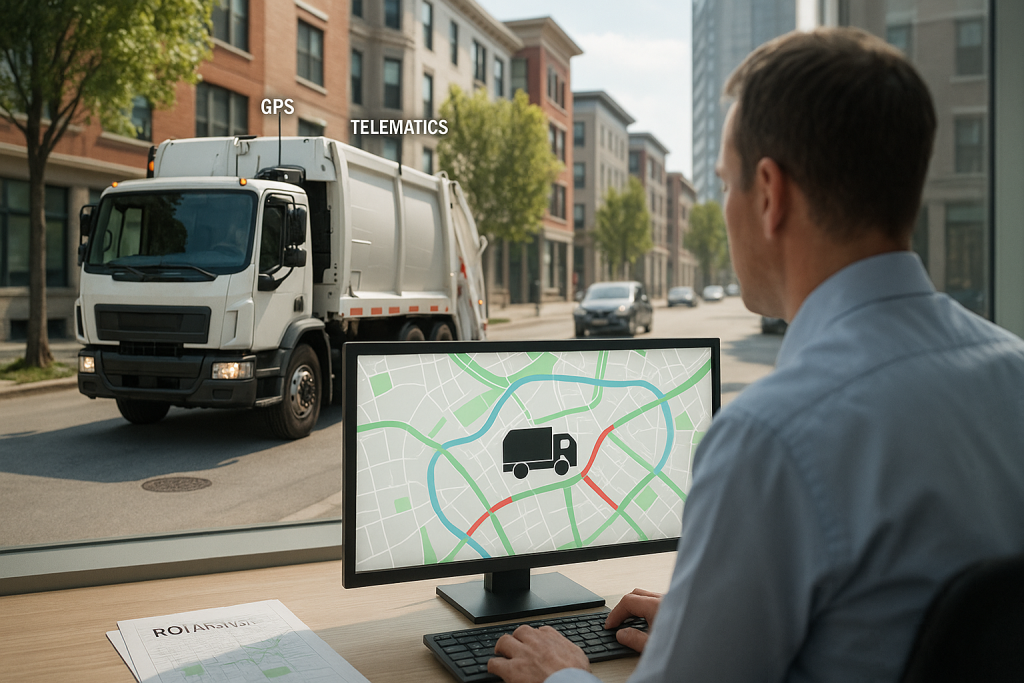
The system's core function is to answer critical questions: Where are my trucks right now? Are they on schedule? How can we perform this job more efficiently? By harnessing this data, waste management organizations can achieve unprecedented levels of control and performance, making our communities cleaner and services more reliable.
What Exactly Is a Garbage Vehicle Tracking System?
A garbage vehicle tracking system combines hardware, software, and cellular communication. It creates a comprehensive monitoring and management solution for waste collection fleets. Small hardware devices installed in each truck collect and transmit data. This data flows to a central software platform. Managers can then access this information through a computer or mobile device.
Traditional fleet management often suffered from a lack of information. Managers did not know about delays or deviations until after they happened. This reactive approach led to missed collections, wasted fuel, and customer complaints. A tracking system changes this dynamic completely. It provides the live intelligence needed for proactive management. This technology is a cornerstone of any modern Smart Waste Management strategy. It provides the foundational data needed for higher-level optimization and analytics.
The Core Technologies: A Look Under the Hood
Several key technologies work together to power a robust vehicle tracking system. Each component gathers a specific type of data, contributing to a complete picture of fleet operations.
1. Global Positioning System (GPS) Tracking
GPS is the foundation of any vehicle tracking system. It provides the precise location data that all other features rely on.
- How It Works: A GPS receiver installed in the garbage truck communicates with a network of satellites orbiting the Earth. By triangulating signals from multiple satellites, the receiver can calculate its exact latitude and longitude with remarkable accuracy.
- Data Transmission: The GPS device then transmits this location data over a cellular network to the provider's servers. From there, it is displayed on the management software's map interface. High-quality systems provide updates as frequently as every few seconds.
- Accuracy: Modern GPS technology is highly accurate. It can typically pinpoint a vehicle's location within a few meters. This precision is essential for verifying service at specific addresses or bins.
2. Telematics and On-Board Diagnostics (OBD-II)
While GPS tells you where a vehicle is, telematics tells you how it is performing. Telematics devices often plug directly into a vehicle's On-Board Diagnostics (OBD-II) port.
- Vehicle Health Data: These devices pull a wealth of information directly from the vehicle's engine computer. This includes fuel levels, engine RPM, fault codes, and mileage. This data helps predict maintenance needs before a breakdown occurs.
- Driver Behavior Monitoring: Telematics captures crucial information about driving habits. It can detect events like speeding, harsh braking, rapid acceleration, and excessive idling. This data is invaluable for improving driver safety and reducing fuel waste.
- Fuel Management: By tracking fuel consumption and idle time, managers can identify the most significant sources of fuel waste. Reducing engine idling is one of the quickest ways a tracking system delivers a return on investment.
3. Geofencing: Creating Virtual Boundaries
Geofencing is a powerful feature that uses GPS data to automate tracking and alerts. A geofence is a virtual perimeter drawn around a real-world geographic area on the software's map.
- How It Is Used: Managers can create geofences around important locations. These include service routes, landfills, transfer stations, depots, and restricted areas.
- Automated Alerts: The system can automatically trigger an alert or record an event when a vehicle enters or exits a geofenced zone. For example, it can automatically log the time a truck arrives at the landfill and the time it leaves.
- Task Verification: Geofencing provides undeniable proof of service. It confirms that a truck traveled through a specific neighborhood during its designated service window, which helps resolve customer disputes quickly.
4. Additional Sensors for Enhanced Data
Beyond GPS and telematics, other sensors can be integrated to capture more specific operational data.
- RFID Readers: Radio-Frequency Identification (RFID) readers can be mounted on the truck's lifting arm. When paired with RFID tags on each waste bin, the system automatically records every single pickup. This provides granular proof of service for individual customers.
- Power Take-Off (PTO) Sensors: A PTO sensor detects when auxiliary equipment on the truck is being used. For a garbage truck, this means it can track every time the lifting arm or compactor is engaged, verifying that work is being performed.
- Video Telematics (Dashcams): Smart dashcams integrate with the tracking system. They record video footage of the road and can automatically upload clips of critical events like harsh braking or collisions. This provides crucial context and protects drivers from false claims.
Key Features of an Effective Tracking Platform
When evaluating a garbage vehicle tracking system, the software platform is just as important as the hardware. The platform is where data becomes actionable intelligence. Key features to look for include:
- Real-Time Map View: An intuitive map that shows the current location and status of all vehicles.
- Route Replay: The ability to replay a vehicle's journey from any previous day to investigate incidents or verify service.
- Customizable Dashboards: At-a-glance views of key performance indicators (KPIs) like miles driven, total idle time, and number of speeding events.
- Automated Reporting: The ability to schedule and automatically receive reports on fleet activity, fuel usage, and driver performance.
- Instant Alerts: Customizable alerts sent via email or text for events like speeding, geofence entry/exit, or excessive idling.
- Driver Scorecards: Reports that rank drivers based on safety and efficiency metrics, encouraging better performance.
- Maintenance Scheduling: Tools to track vehicle service needs and set reminders for routine maintenance based on mileage or engine hours.
- Integration Capabilities: The ability to share data with other software systems, such as route optimization or billing platforms.
The Transformative Benefits of Vehicle Tracking
Implementing a garbage vehicle tracking system delivers powerful benefits across the entire organization, from financial savings to improved safety and customer satisfaction.
1. Drastic Improvements in Operational Efficiency
- Ensured Route Adherence: Managers can instantly see if drivers are following the planned, optimized routes. Deviations can be identified and corrected immediately, not days later.
- Reduced Vehicle Idling: Idling is a major source of wasted fuel. The system identifies which drivers and vehicles have the highest idle times, allowing managers to address the issue through training and policy.
- Automated Task Verification: Geofencing and RFID data eliminate the need for manual check-ins or paperwork. This saves time for both drivers and administrative staff.
- Smarter Dispatching: If an unscheduled pickup is required, dispatchers can see the nearest available truck on the map and send it directly, improving response times.
2. Significant Financial Savings and ROI
- Lower Fuel Expenditures: Less idling, efficient routing, and correcting poor driving habits like speeding lead directly to lower fuel consumption. Many fleets report fuel savings of 10-20%.
- Reduced Maintenance Costs: Proactive maintenance alerts prevent costly emergency repairs. Better driving habits also lead to less wear and tear on brakes, tires, and engine components.
- Elimination of Unauthorized Vehicle Use: Tracking ensures that trucks are only used for official business during work hours. This stops side jobs or personal trips that add mileage and liability.
3. Enhanced Accountability and Transparency
- Indisputable Proof of Service: When a customer claims their bin was missed, managers can instantly pull up the vehicle's history. They can confirm if the truck was on their street and at what time, resolving disputes with facts.
- Improved Driver Performance: When drivers know their performance is being monitored, they are more likely to be punctual, follow routes, and operate their vehicles safely.
- Digital Service Records: The system creates a permanent, digital log of all fleet activity. This is essential for compliance, internal audits, and reporting to stakeholders.
4. A Stronger Culture of Safety and Security
- Monitor and Correct Unsafe Driving: The system flags dangerous behaviors like speeding or harsh braking in real-time. This allows managers to provide immediate coaching to prevent accidents.
- Faster Emergency Response: In case of an accident or breakdown, managers know the vehicle's exact location. They can dispatch emergency services or a repair crew without delay.
- Theft Recovery: A hidden GPS tracker is one of the most effective tools for recovering a stolen vehicle, protecting a high-value asset.
Integrating Tracking with Route Optimization
A vehicle tracking system and a route optimization platform are two sides of the same coin. Route optimization software uses algorithms to create the most efficient plan. The tracking system ensures that plan is executed correctly.
The relationship is a continuous feedback loop. The optimization software creates the ideal route. The tracking system monitors the actual time it takes for drivers to complete each segment of that route. This real-world data can then be fed back into the optimization platform to make future routes even more accurate and realistic.
Conclusion: An Essential Tool for Modern Fleets
A garbage vehicle tracking system is far more than a simple dot on a map. It is a comprehensive management tool that provides the data, visibility, and control needed to run a modern waste collection fleet. By leveraging this technology, organizations can unlock massive gains in efficiency, reduce their operational costs, and improve safety.
It fosters a culture of accountability and provides the transparency that customers and stakeholders expect. In an industry where every minute and every gallon of fuel counts, vehicle tracking is no longer a luxury. It is an essential investment for any organization committed to operational excellence and sustainable service delivery.
Frequently Asked Questions (FAQ)
1. How accurate is the GPS tracking? Commercial-grade GPS systems are extremely accurate, typically pinpointing a vehicle’s location to within 2-5 meters. This level of precision is more than sufficient for verifying service to a specific address.
2. Will the system work in areas with poor cellular coverage? High-quality tracking devices are designed to handle this. They will continue to record location data even when out of cellular range. Once the vehicle re-enters an area with coverage, the device will transmit all the stored data.
3. Can this system track vehicles other than garbage trucks? Absolutely. The technology is universal for any vehicle. It can be used to track supervisor pickups, container delivery trucks, and any other support vehicles in the fleet, providing a single platform to manage all assets.
4. How difficult is it to install the tracking devices? Installation is typically straightforward. Simpler OBD-II devices just plug into the port, which takes seconds. More advanced, hardwired installations are usually handled by professional technicians and can be completed in under an hour per vehicle.
5. What kinds of reports can the system generate? A robust system can generate dozens of customizable reports. Common reports include daily activity summaries, fuel efficiency reports, driver safety scorecards, idle time reports, and geofence entry/exit logs.


