
The ROI of Smart Sanitation: A Financial Guide for City Managers
City managers face a constant challenge. You must deliver better services to your community. You must also maintain strict fiscal discipline. Every line item in the municipal budget is under scrutiny. Few areas are as large, or as traditionally inefficient, as waste management. For decades, this has been seen as a fixed operational cost. It was a budget item to be managed, not optimized.
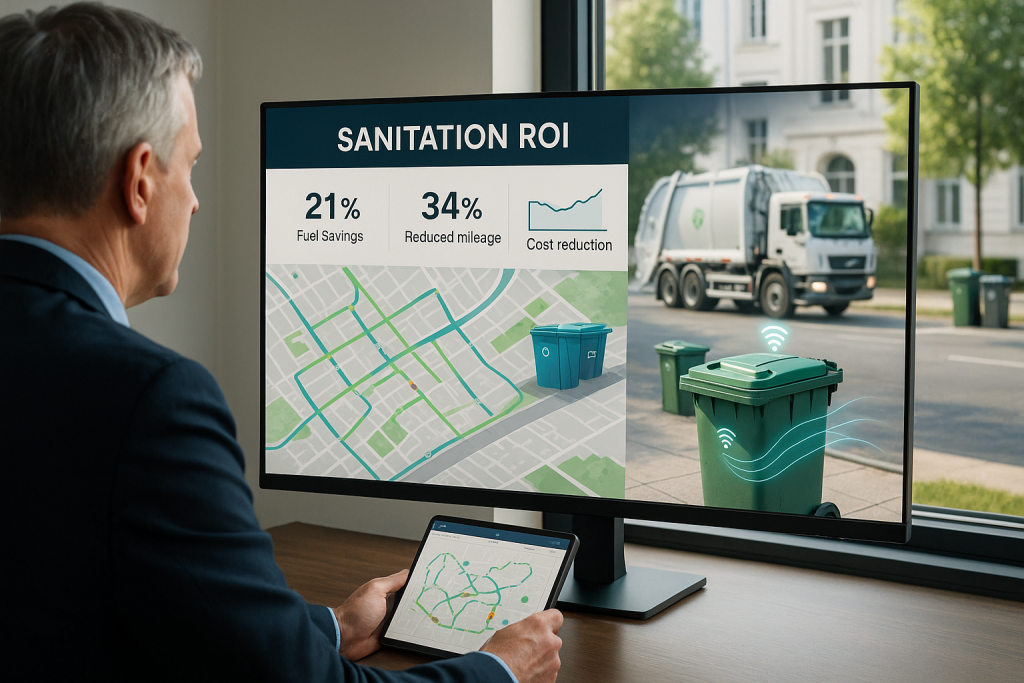
That perspective is now changing. Modern technology offers a new way forward. It allows cities to transform waste collection. It turns a major expense into a model of efficiency. This is not about spending more. It is about investing strategically.
An intelligent sanitation system delivers a powerful return on investment. It achieves this by dramatically cutting daily operational costs. This financial guide is written for you. It will show you how to analyze the costs. It will help you project the savings. And it will provide a clear roadmap for building a compelling budget proposal.
Shifting the Mindset: From Cost Center to Strategic Investment
The first step is a shift in financial perspective. Traditional waste management is a classic operational expenditure (OpEx). You spend money on fuel, labor, and maintenance every single day. These costs are relentless and tend to rise over time. There are very few levers to pull to reduce them significantly. You are locked into an inefficient model.
A Smart Waste Management system changes this dynamic. It requires an initial capital expenditure (CapEx). This is a one-time, planned investment in technology. You invest in sensors, software, and deployment. The purpose of this CapEx is to unlock massive, recurring OpEx savings. You are spending once to save money every single day for years to come.
This investment is more than just a cost-cutting measure. It is an investment in data and intelligence. It provides the tools for continuous improvement. It makes your sanitation department more resilient and future-ready. Thinking of this as a strategic investment is key. It reframes the conversation from "how much does it cost" to "what is its return."
Understanding the Full Picture: How to Calculate Total Cost of Ownership (TCO)
A smart financial decision looks beyond the initial price tag. To build a credible budget, you must understand the Total Cost of Ownership (TCO). TCO gives you a complete financial view of the investment. It covers all costs over the system's expected lifespan. This prevents hidden fees and ensures accurate forecasting. TCO is typically broken into two main categories.
Initial Capital Expenditures (CapEx)
This includes all the upfront costs to get the system running.
- Hardware Costs. This is the primary capital expense. It includes the cost of the smart sensors for each bin. It also covers the IoT gateways that create the network. Finally, it includes any in-cab devices for the collection trucks.
- Software Licensing and Setup. Some systems have a one-time software license fee. This may also include initial platform configuration. It ensures the software is tailored to your city's needs.
- Installation and Deployment. This is the cost of labor for the physical rollout. It involves crews installing sensors in the bins. It also includes setting up and testing the network gateways.
- Initial Team Training. Your teams need to learn the new system. This cost covers training for collection crews. It also includes training for supervisors and data analysts. This ensures a smooth and successful transition.
Ongoing Operational Expenditures (OpEx)
These are the recurring costs to run and maintain the system.
- Software-as-a-Service (SaaS) Fees. Most modern systems use a SaaS model. This is a predictable monthly or annual fee. It covers software access, updates, and new features. This model avoids large, periodic upgrade costs.
- Data Connectivity. The sensors need to communicate. This requires a data plan. These are often low-cost plans designed for IoT devices. The cost is calculated per sensor, per month.
- Maintenance and Support. This covers ongoing technical support. It also includes hardware warranties and replacement policies. A good support contract ensures system reliability and uptime.
- Long-Term Battery Replacement. The sensor batteries are designed to last for many years. A typical lifespan is seven to ten years. Your TCO model should include a future budget line item. This will cover the cost of battery replacements down the road.
The Payback: Identifying and Quantifying Major Cost Savings
Once you understand the costs, you can project the savings. The Return on Investment (ROI) is the most critical metric. It shows how quickly the system pays for itself. It also shows the total financial benefit over time. The formula is simple: ROI = (Net Savings / Total Cost) x 100.
The key is to identify all areas of savings. These are divided into direct and indirect financial returns.
Direct Savings (Hard ROI)
These are the most tangible and easily measured savings. They will form the core of your financial case.
- Reduced Fuel Consumption. This is the single largest area of savings. Route optimization is the primary driver. Trucks no longer travel to empty or half-full bins. Routes are shorter and more direct. Cities consistently report fleet mileage reductions of 40% to 50%. This results in a massive and immediate decrease in fuel costs.
- Lower Labor Costs and Overtime. With optimized routes, crews complete their work faster. A route that once took eight hours might now take five. This increased efficiency reduces the need for overtime pay. It allows you to reallocate labor resources to other tasks. Your workforce becomes more productive without adding staff.
- Decreased Vehicle Maintenance. Less time on the road means less wear and tear. A 40% reduction in mileage directly impacts your fleet. It extends the life of each vehicle. It reduces the frequency of oil changes and tire replacements. It lowers the budget needed for engine and transmission repairs. These savings add up quickly across an entire fleet.
Indirect Savings (Soft ROI)
These benefits have a real financial impact but can be harder to quantify. They should still be included in your proposal.
- Lower Insurance Premiums. A fleet that drives fewer miles has a lower risk profile. Less time in traffic means a lower probability of accidents. This can lead to reduced insurance premiums over time.
- Reduced Landfill Tipping Fees. Tipping fees are the price you pay to dump waste at a landfill. These fees are often based on weight. A smart system improves your ability to manage recycling. Better data helps divert heavy materials like glass and organics. This reduces the total tonnage sent to the landfill, cutting costs.
- Avoidance of Environmental Fines. Many regions have regulations on emissions or landfill use. A smarter, cleaner operation helps you meet these targets. This can help you avoid costly fines for non-compliance.
4. Making the Case: How to Build a Winning Budget Proposal
With your TCO and ROI analysis complete, you can build your proposal. This document should be clear, concise, and data-driven. It must present a compelling case to stakeholders. Follow these steps to create a winning proposal.
Step 1: Benchmark Your Current Operations. You cannot prove savings without a clear baseline. Gather at least 12 months of historical data. Record your exact costs for fuel, vehicle maintenance, and labor overtime. Know your current landfill tonnage and tipping fees. This data is the foundation of your entire financial model.
Step 2: Propose a Pilot Program. A full city-wide rollout requires a large upfront investment. A pilot program is a smarter starting point. Propose a limited deployment in one or two specific areas. Choose routes with a mix of residential and commercial bins. This approach lowers the initial financial risk. It allows you to prove the technology's effectiveness. It will generate real-world performance data for your city.
Step 3: Present a Clear Financial Model. Use the data from your baseline and the vendor's projections. Create a simple spreadsheet model. Show the TCO for the pilot program. Project the direct savings in fuel, labor, and maintenance. Calculate a clear payback period. For example: "We project the pilot will pay for itself in 18 months." Then, use this data to project the savings of a full, city-wide deployment. Use charts to visualize the cumulative savings over five and ten years.
Step 4: Highlight Strategic Non-Financial Benefits. Your case should not be purely about numbers. Briefly include the other benefits we have discussed. Mention the positive ESG impact. Highlight the improvements to public health and city cleanliness. Emphasize the value of the data for future urban planning. These strategic benefits strengthen your overall argument.
Step 5: Outline a Phased, City-Wide Rollout. Show that you have a long-term vision. Use the pilot program as Phase 1. Propose a multi-year plan to expand the system. Target the highest-density areas first to maximize early ROI. A phased approach makes the investment more manageable. It allows you to scale the system across multiple budget cycles.
Conclusion: A Fiscally Sound Investment in the Future
Investing in an intelligent sanitation system is a fiscally responsible decision. The technology has matured. The financial benefits are proven. The initial capital expenditure is quickly recovered. It is replaced by years of significant operational savings. This allows you to free up budget for other critical community needs.
This guide has provided a clear framework. You can now calculate the costs, project the returns, and build a powerful case. By embracing this technology, you are not just cleaning your streets more efficiently. You are making a sound financial investment in your city's future. You are building a more sustainable and economically prudent community.


