
12V optischer Flüssigkeitsstandsensor
Anstatt einen allgemeinen Sensor zu wählen und die Schaltung später anzupassen, Diese Seite hilft Käufern, zuerst die elektrische Übereinstimmung zu bestätigen: 12V-Versorgung, Ausgangslogik, Stromlast, Verkabelungsschutz, Kabelanforderungen, und die reale Panzerumgebung.
12V-Optische Pegelsensor-Fähigkeiten
HojellyTek stellt photoelektrische optische Flüssigkeitspegelsensoren für Käufer her, die ein sauberes digitales oder analoges Signal von einem kompakten, tankmontierten Sensor benötigen. Für 12V-Gleichstromprojekte, die wichtigste Anforderung ist nicht nur: "Kann es mit 12V eingeschaltet werden.,"sondern ob die vollständige elektrische Konfiguration zum Steuerungssystem passt.
Eine 12V-Konfiguration kann angepasst werden für:
- 12V-DC-Steuerplatinen, Relaismodule, Pumpensteuerungen, und MCU-Eingänge
- Niedriger Stromverbrauch bei batteriebetriebenen oder solarbetriebenen Geräten
- Schutz gegen Umwärtspolarität bei Feldverdrahtungsfehlern
- NPN, PNP, oder andere Ausgangslogik entsprechend der Empfangsschaltung
- Kabellänge, Steckertyp, und Anforderungen an die Drahtfarbe
- Kunststoff, PTFE, 316 Edelstahl, oder glasbenetzte Schnitte
- Gewinde, Flansch, Seitenwand, oder maßgefertigte Panzermontage
- Wasser, Kühlmittel, Öl, Brennstoff, Reinigungsmittel, oder kompatible Industrieflüssigkeiten
Für einen umfassenderen Überblick über die Sensorfamilie, Siehe unsere Optischer Pegelsensor Seite.
Passen Sie die 12V-Versorgung an, bevor Sie den Sensor auswählen
Ein 12V-optischer Flüssigkeitsstandsensor wird häufig in Systemen verwendet, bei denen die Versorgung nicht vollkommen stabil ist. Selbstfahrend, WOHNMOBIL, Solarenergie, und Batteriegeräte können als "12V" bezeichnet werden,Aber die tatsächliche Arbeitsspannung kann sich durch das Laden verschieben, Batterieentladung, Lichtmaschinenverhalten, Lange Kabelstrecken, oder Lastumschaltung.
Deshalb besteht der erste Auswahlschritt darin, den akzeptablen Spannungsbereich des Sensors mit der tatsächlichen Stromquelle zu bestätigen. Ein Käufer sollte nicht nur "12V" sagen. Die RFQ sollte erklären, ob die Stromversorgung von einem regulierten Gleichstromadapter stammt, Fahrzeugbatterie, Wohnmobil-Batteriebank, Solar-Ladungsregler, Lithium-Batteriepack, oder PCB-Leistungsschienen.
Für 12V-Projekte, Unser Team überprüft:
- Ob der Sensor an eine regulierte oder batteriebasierte 12V-Versorgung angeschlossen wird.
- Ob die Sensorausgabe normalerweise hoch sein muss, Normalerweise niedrig, Nass-aktiv, oder trocken-aktiv
- Ob das empfangende Gerät ein 12V-Relais ist, SPS-Eingang, MCU-Eingang, Alarmtafel, oder Pumpenregler
- Ob für Feldverkabelung ein Umkehrpolitätsschutz erforderlich ist
- Egal, ob die Kabelführung innerhalb eines Geräts kurz oder quer über ein Tanksystem hinweg ist
- Ob der Sensor einen integrierten Stecker oder fliegende Leitungen benötigt
Das ist wichtig, weil ein Sensorausgang, der gut mit einem kleinen MCU-Eingang funktioniert, möglicherweise nicht für das direkte Schalten einer Relaisspule geeignet ist, es sei denn, Ausgangsstrom und Schaltungsdesign sind bestätigt. Zur Relaissteuerung, Der Sensor muss möglicherweise einen Zwischenschaltkreis antreiben, Transistorstufe, Relaismodul, oder Controller-Eingang je nach Last.
Ausgangstypen für 12V-Relais, MCU, und Kontrollgremien
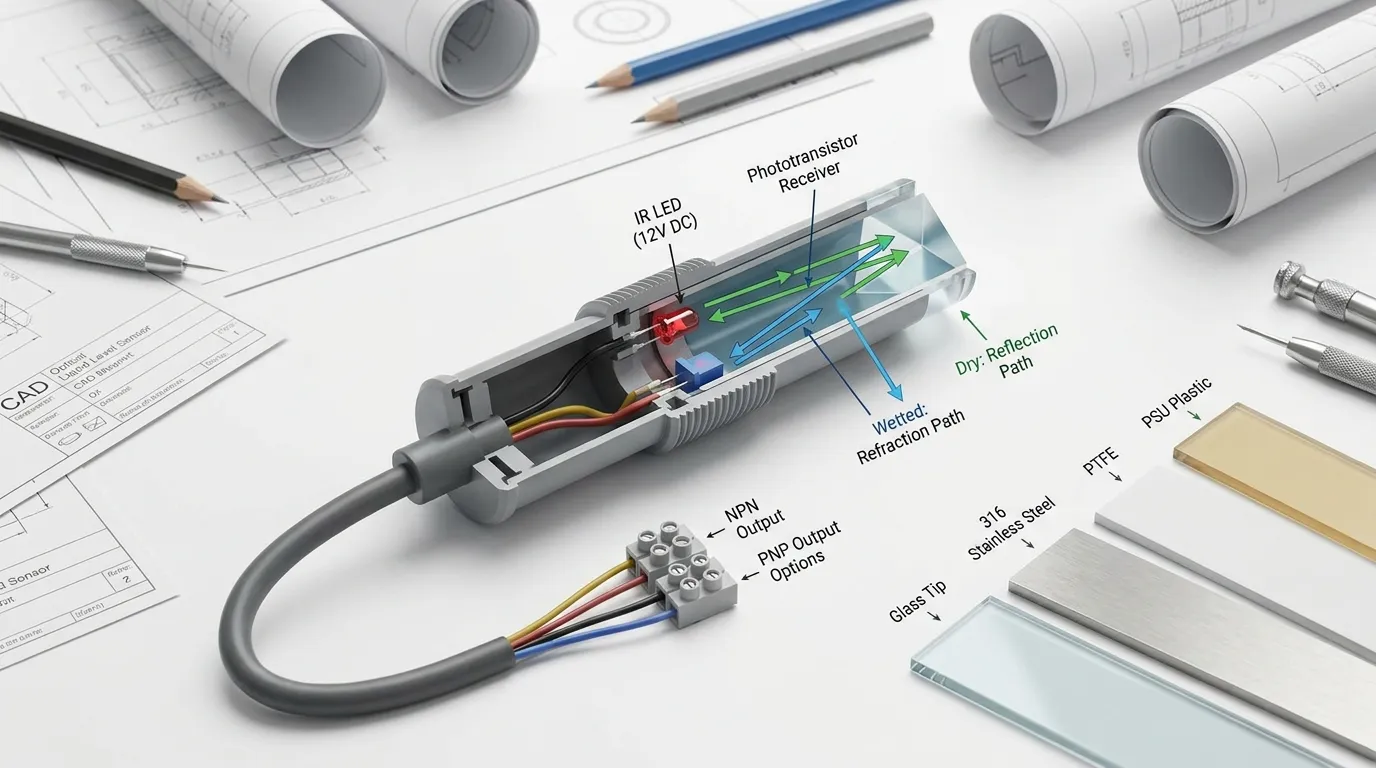
Der Ausgangstyp ist nach der Spannung die wichtigste Konfigurationswahl. Ein 12V-Sensor kann physikalisch korrekt sein, aber elektrisch falsch, wenn der Ausgang nicht mit der Empfangsschaltung übereinstimmt.
NPN-Ausgabe
Der NPN-Ausgang wird üblicherweise ausgewählt, wenn der Steuereingang ein sinkendes Signal erwartet. Einfach ausgedrückt, Der Sensorausgang zieht die Signalleitung beim Aktivieren zur Masse. Dies kann für viele Gleichstrom-Steuerplatinen nützlich sein, SPS-ähnliche Eingänge, oder Schnittstellenschaltungen.
Vor der Bestellung einer NPN-Version, Bestätigen Sie die Eingabe-Pull-up-Methode, Eingangsspannung, Nass-/Trockenlogik, und ob der Sensorausgang nur mit einem Signaleingang verbunden ist oder eine Last schalten soll..
PNP-Ausgabe
PNP-Ausgang wird verwendet, wenn die Empfangsschaltung ein Quellensignal erwartet. In dieser Konfiguration, Der Ausgang liefert bei Aktivierung positive Spannung an den Eingang. Dies ist in vielen industriellen DC-Eingangsdesigns und einigen Steuermodulen üblich.
Für ein 12V-System, Bestätigen Sie, ob der Eingangsanschluss ein positives 12V-Signal erwartet und ob der Regler dieselbe Massereferenz wie die Sensorversorgung teilt.
MCU oder Logikeingang
Für MCU-basierte Produkte, Der Sensor kann nicht direkt an einen 12V-Logikpin angeschlossen werden. Viele Mikrocontroller verwenden niedrigere Logikspannungen, daher muss die Schnittstellenschaltung überprüft werden. Der Sensor kann so konfiguriert werden, dass er mit der Steuerplatine kommuniziert, Aber der Platinendesigner sollte die Eingangsspannungsgrenzen bestätigen, Pull-up/Pull-down-Design, und Signalaufbereitung.
4–20 mA Ausgang
Einige Käufer verlangen 4–20 mA, wenn sie ein robustes analoges Signal für einen Controller oder ein Überwachungssystem benötigen. Dies ist besonders relevant, wenn das System eine Übertragung über Entfernung oder Integration in einen industriellen Steuerkreis benötigt. Für einen Punktpegelschalter in einem kompakten 12V-Produkt, Digitaler Ausgang ist oft einfacher, der erforderliche Signaltyp sollte jedoch in der RFQ-Stufe definiert werden.
Wie die optische Messspitze in einem 12V-System funktioniert
Ein 12V-optischer Sensor verwendet weiterhin das gleiche kompakte photoelektrische Messprinzip: eine IR-LED sendet Licht in eine Prismenspitze, und ein Phototransistor oder Empfänger erkennt das reflektierte Lichtmuster. Wenn das Prisma trocken ist, Licht reflektiert anders als wenn die Spitze durch Flüssigkeit benetzt wird. Der interne Schaltkreis wandelt diesen trockenen/feuchten Zustand in einen elektrischen Ausgang um.
Für Käufer, Der wichtige Punkt ist nicht die Theorie selbst, sondern die Auswahlwirkung:
- Die Prismaspitze muss die Flüssigkeit am richtigen Schaltpunkt berühren.
- Schaum, Blasen, Beschichtung, oder Rückstände können die Erkennungszuverlässigkeit beeinflussen.
- Dunkel, Sticky, oder kristallisierende Flüssigkeiten benötigen Material- und Installationsprüfung.
- Der Sensor muss so montiert sein, dass die Messspitze nicht von Tankwänden blockiert wird, Dichtmittel, oder mechanische Teile.
- Die Ausgangslogik muss übereinstimmen, ob die Maschine ausgelöst werden soll, wenn der Tank voll ist, leer, Niedrig, oder überlaufen.
Deshalb überprüft HojellyTek sowohl den elektrischen Stromkreis als auch die flüssige Umgebung, bevor es eine 12V-Konfiguration empfiehlt.
12V Elektrische Spezifikationstabelle
| Spezifikationselement | 12V-Konfigurationsanleitung |
|---|---|
| Versorgungstyp | 12V-Gleichstromsystem, Bestätigt gegenüber der tatsächlichen Energiequelle |
| Spannungstoleranz | Bestätigen Sie auf der RFQ-Stufe basierend auf dem regulierten Adapter, Fahrzeugbatterie, Wohnmobilbatterie, Solarbatterie, oder Steuerbordversorgung |
| Aktuelle Auslosung | Niedrigstromkonfiguration für Gleichstrom- und batteriebetriebene Geräte |
| Ausgabeoptionen | NPN, PNP, MCU/Steuerbord-Signal, oder 4–20 mA, wenn erforderlich, |
| Relaisverbindung | Bestätigen Sie den Strom der Relaisspule und die Schnittstellenschaltung vor direktem Schalten |
| MCU-Verbindung | Logikspannung bestätigen, Bodenreferenz, und Eingangsschutz |
| Schutz | Für Feldverkabelung kann ein Umwärtspolaritätsschutz spezifiziert werden. |
| Kabel | Individuelle Kabellänge, Jacke, Drahtfarbe, und Steckverbinder pro Projekt verfügbar |
| Montage | Gewinde, Seitenwand, Flansch, oder individuelle Montage entsprechend Panzerdesign |
| Benetzte Materialien | Netzteil, PTFE, 316 Edelstahl, Glas, oder projektspezifische Materialauswahl |
| Typische Flüssigkeiten | Wasser, Kühlmittel, Öl, Brennstoff, oder kompatible Prozessflüssigkeiten nach Überprüfung |
| Anwendungsgebiete | Selbstfahrend, WOHNMOBIL, Solarenergie, Batteriesysteme, kleine Panzer, Alarmmodule, Pumpensteuerung |
Verkabelungscheckliste für die 12V-Gleichstrominstallation
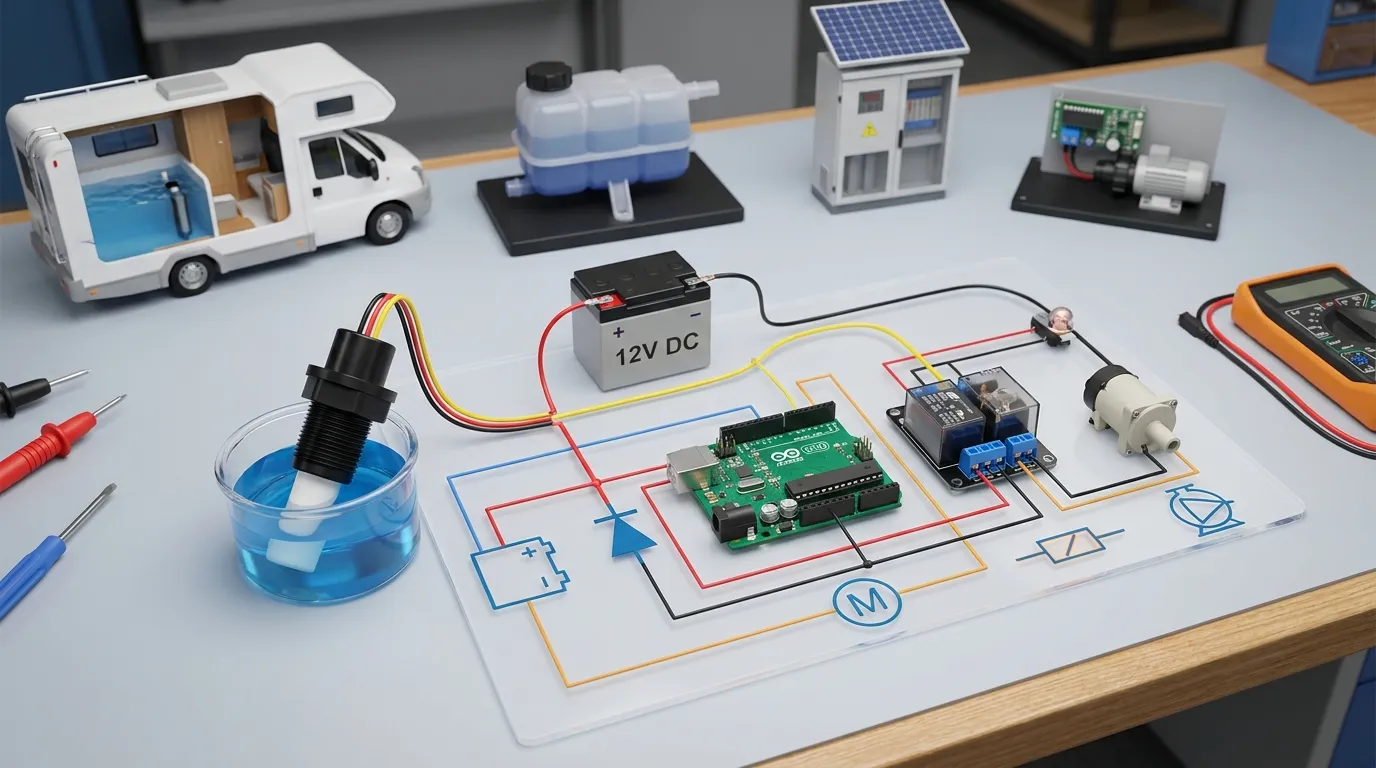
Verwenden Sie diese Checkliste, bevor Sie Ihre Bestellung oder Mustereinheiten für Verkabelung bestätigen.
- Bestätigen Sie die Stromquelle
Sagen Sie uns, ob der Sensor von einem regulierten 12V-Gleichstromadapter versorgt wird., Fahrzeugbatterie, Wohnmobilbatterie, Solarbatteriebank, Lithiumbatterie-System, oder Steuerleiterplatte. - Bestätigen Sie den gemeinsamen Grund
Für die meisten Gleichstromkreise, Der Sensor und der empfangende Controller müssen die korrekte Massereferenz teilen. Wenn der Controller-Eingang isoliert ist, Der Verkabelungsplan sollte überprüft werden. - Wählen Sie NPN- oder PNP-Ausgabe
Wählen Sie den Output-Typ nicht nach Gewohnheit. Passen Sie es dem Steuereingang zu.. NPN sinkt typischerweise; PNP ist typischerweise die Beschaffung. - Überprüfen Sie die Relaislast vor der direkten Verbindung
Eine 12V-Relaisspule kann mehr Strom ziehen, als ein kleiner Sensorausgang direkt schalten sollte. Wenn der Sensor ein Relais steuert,, Bestätigen Sie, ob sie mit einem Relaismodul-Eingang verbunden ist, Transistortreiber, oder Relaisspule. - Definiere Nass/Trocken-Logik
Entscheiden Sie, was der Ausgang tun soll, wenn die Prismenspitze trocken ist, und was sie beim Befeuchten tun soll.. Dies beeinträchtigt den Pumpenschutz, Überlaufalarm, und niedrigstufiges Abschaltverhalten. - Schutz vor umgekehrter Verdrahtung
Ein Umwärtspolaritätsschutz wird für von Außendiensttechnikern installierte Geräte empfohlen, Wohnmobilnutzer, Fahrzeugwerkstätten, oder verteilte Serviceteams. - Kabelverlauf und Länge bestätigen
Lange Kabel, Bewegliche Fahrzeugteile, Hochstromverdrahtung, und Outdoor-Routen können die Wahl der Jacke beeinflussen, Abschirmungsbedarf, Steckertyp, und Dehnungsentlastung. - Teste mit der echten Flüssigkeit
Wasser, Kühlmittel, Öl, Brennstoff, und gemischte Flüssigkeiten verhalten sich an der Prismaspitze anders. Es wird empfohlen, vor der Produktionsgenehmigung mit der Zielflüssigkeit zu testen.
Material und Montageoptionen für 12V-Panzer
Der benetzte Körper und der Prismabereich sollten entsprechend der Flüssigkeitskompatibilität ausgewählt werden, Temperatur, Mechanische Spannung, und Reinigungsbedingungen.
Netzteil oder Ingenieurkunststoff wird oft für kompaktes Wasser verwendet, Gerät, und allgemeine Tankanwendungen, bei denen Korrosionsbeständigkeit und geringes Gewicht eine Rolle spielen.
PTFE wird für stärkere chemische Beständigkeit oder anspruchsvollere Flüssigkeiten ausgewählt, bei denen Standardkunststoffe möglicherweise nicht geeignet sind.
316 Edelstahl eignet sich für robuste Industrietanks, Kühlsysteme, Ölbezogene Anwendungen, und Metalltankbaugruppen, bei denen mechanische Festigkeit wichtig ist.
Glassensor-Tipps kann dort verwendet werden, wo optische Klarheit vorhanden ist, Chemische Kompatibilität, oder eine höherwertige benetzte Leistung ist erforderlich.
Die Befestigung kann nach Panzerwandgestaltung konfiguriert werden. Gewindemontage ist bei kompakten Tanks und Ausrüstungspaneelen üblich. Eine Seitenwandinstallation kann die Prismenspitze genau am niedrigen oder hohen Punkt platzieren. Flansch- oder maßgeschneiderte Gehäuse können für OEM-Ausrüstung in Betracht gezogen werden, bei denen die Tankstruktur bereits fest installiert ist.
Für Käufer, die Spannungsfamilien vergleichen, unsere 5V-IR-Wassersensor Page ist nützlich für Niederspannungs-Steuerplatinen, während unsere Optischer Wechselspannungssensor Seite unterstützt Projekte, die wechselstrombetriebene Konfigurationen statt 12V DC benötigen.
Typische 12V-Anwendungen
Kühlmittel- und Waschtanks für Automobile
12V-DC-Systeme sind in Fahrzeugen üblich, daher werden optische Sensoren häufig für Kühlmitteltanks verwendet, Waschflüssigkeitsreservoirs, Überlauferkennung, oder niedrige Alarmstellen. Die Hauptsorgen sind die Vibrationen, Temperatur, Flüssigkeitskompatibilität, Kabelführung, und Schutz vor Verdrahtungsfehlern. Für ein spezielles Fahrzeugbeispiel, Siehe unsere Kühltanksensor Seite.
Wohnmobil-Süßwasser- und Abwassersysteme
Wohnmobilsysteme arbeiten üblicherweise mit einer 12V-Batterieversorgung. Ein kompakter optischer Punktsensor kann Low-Level-Sensoren unterstützen, Voller Tank, oder Alarmanzeigen, wenn mechanische Schwimmer durch Bewegung oder begrenzten Platz beeinträchtigt werden könnten. Käufer sollten überprüfen, ob die Flüssigkeit sauberes Wasser ist, Grauwasser, Oder ein anderes Medium für Panzer.
Solar- und Batterie-Backup-Systeme
Solarbetriebene Geräte und Batterieschränke benötigen oft Niedrigstromsensoren zur Wasserspeicherung, Kühlmittelzirkulation, Leckage-Erkennung, oder zusätzliche Tanküberwachung. Der Stromverbrauch ist wichtig, da das System über längere Zeit mit gespeicherter Energie betrieben werden kann.
Pumpenschutz und Tiefflugabschaltung
Ein 12V-optischer Sensor kann als Signalpunkt für den Trockenlaufschutz verwendet werden, Niedrigflug-Cutoff, oder Nachfüllsteuerung. Der Sensor sollte in der Regel ein Regler- oder Relaismodul versorgen, anstatt als Hochleistungsschaltkomponente behandelt zu werden, ohne die Last zu überprüfen.
Kleine OEM-Tanks und DC-Geräte
Für kompakte OEM-Produkte, Die wichtigsten Faktoren sind die Sensorgröße, Kabelausgang, Steckverbinder, Montagegewinde, Nass-/Trockenlogik, und wiederholbare Produktionsqualität. OEM/ODM-Anpassungen sind für nicht-standardisierte Tankgeometrien oder gebrandete Gerätebaugruppen verfügbar..
5-Schrittprojektprozess
1. Untersuchung
Senden Sie die Bewerbung ein, Flüssigtyp, Panzermaterial, Umschaltpunkt, 12V-Stromquelle, Ausgangsanforderungen, Montageposition, Kabellänge, und erwartete Auftragsnutzung. Fotos oder Zeichnungen helfen unserem Team, den Tankaufbau schneller zu verstehen.
2. Spezifikations- und Anpassungsbewertung
Wir bestätigen die elektrische Übereinstimmung, Ausgabetyp, Material, Faden, Kabel, Steckverbinder, und logisches Verhalten. Für OEM/ODM-Projekte, HojellyTek kann die Gehäusegröße überprüfen, Prismenstil, Drahtfarben, Labels, und Verpackungsbedarf.
3. Beispiel
Eine Probenkonfiguration kann für elektrische und flüssige Tests vorbereitet werden. Der Käufer sollte den Sensor mit der echten Flüssigkeit testen, Realer Controller-Eingang, und die tatsächliche Kabelstrecke, wo möglich,.
4. Produktion und Qualitätskontrolle
Nach der Genehmigung, Die Produktion folgt der bestätigten Konfiguration. QC konzentriert sich auf das Erscheinungsbild, Verdrahtung, Ausgabeverhalten, Elektrische Abstimmung, und vereinbarte Projektanforderungen.
5. Schifffahrt
Als Hersteller und Exporteur in Shenzhen, Wir unterstützen ausländische Käufer in den USA, WIR, Indien, und andere Märkte. Versanddetails werden entsprechend der Bestellgröße bestätigt, Ziel, und Kundenpräferenz.
Voraussetzungen zum Bestätigen vor der Bestellung
Bereiten Sie diese Details vor, wenn Sie ein Angebot anfordern:
- 12V-Leistungsquellentyp: Regulierter Adapter, Batterie, Solarregler, Fahrzeugsystem, oder PCB-Schiene
- Ausgangstyp: NPN, PNP, MCU-Eingang, Relaismodul-Eingang, oder 4–20 mA
- Nass-/Trocken-Ausgangslogikanforderung
- Relais- oder Eingangslastinformationen
- Zielflüssigkeit und ob sie Rückstände hinterlässt, Schaum, Blasen, oder Beschichtung
- Tankmaterial, Wanddicke, und Montagerichtung
- Präferenz für das Wohnmaterialmaterial: Plastik, PTFE, 316 Edelstahl, oder Glas
- Gewinde- oder Befestigungsanforderung
- Kabellänge, Steckverbinder, und Drahtfarbe
- Innen, Im Freien, Fahrzeug, oder Batterie-System-Umgebung
- Erwartete Probenmenge und Produktionsnutzung
12V-Sensor-Konfigurationsvergleich
| Konfigurationswahl | Beste Passform | Der Käufer sollte das überprüfen |
|---|---|---|
| 12V NPN digitaler Ausgang | Steuertafeln, die sinkenden Output erwarten | Eingabe-Pull-up, Nass-/Trockenlogik, Laststrom |
| 12V PNP digitaler Ausgang | Eingaben, die ein positives Quellsignal erwarten | Gemeinsames Spielfeld, Eingangsspannung, Controller-Verkabelung |
| 12V-Relaismodul-Signal | Pumpe, Alarm, Nachfüllen, oder Cutoff-Kontrolle | Relaismodul-Eingangsstrom und Auslöselogik |
| 12V MCU-Schnittstelle | Maßgeschneiderte PCB oder eingebettete Produkte | MCU-Logikspannung und Schutzschaltung |
| 4–20 mA Option | Fernüberwachung oder analoge Steuereingang | Empfängerkompatibilität und Schleifendesign |
| Edelstahl- oder glasbenetztes Design | Kühlmittel, Öl, Brennstoff, oder verlangende Flüssigkeiten | Flüssigkeitskompatibilität und Installationsbelastung |
| Kunststoff- oder PTFE-benetztes Design | Wasser, Chemikalie, oder kompakte OEM-Systeme | Chemische Beständigkeit und Montagestruktur |
Warum sich für HojellyTek entscheiden
HojellyTek ist ein Hersteller von optischen und flüssigen Levelsensoren in Shenzhen mit eigenem R&D, Erfahrung mit photoelektrischer optischer Sensorik, sowie OEM/ODM-Unterstützung für kundenspezifische Sensorkonfigurationen. Wir arbeiten mit Käufern, die mehr als nur einen Katalogteil benötigen: Spannungsabstimmung, Ausgangslogik, Wohnmaterial, Kabel, Steckverbinder, und die Montage muss an die Endausrüstung passen.
Unsere Fabrik unterstützt optische Flüssigkeitspegelsensoren., Optische Pegelschalter, Infrarot-Wasserstandsensormodule, Optionen zur kontinuierlichen Pegelmessung, und smarte Tanküberwachungslösungen. Für verbundene Tanküberwachungsprojekte, Die Integration von Tuya- oder Smart Life-Apps kann ebenfalls diskutiert werden, wo es relevant ist..
Käufer entscheiden sich für uns, wenn sie direkte Kommunikation per Fabrik benötigen, Exportunterstützung, und Konfigurationsflexibilität für die Industrie, Automobil, WOHNMOBIL, Gerät, Solarenergie, und batteriebetriebene Systeme.
FAQs zu 12V-optischen Flüssigkeitspegelsensoren
Kann ein 12V-optischer Flüssigkeitspegelsensor mit einem 12V-Relais funktionieren??
Ja, aber die Relaislast muss überprüft werden. Viele Sensoren sind so konstruiert, dass sie ein Signalausgang liefern, Keine Relaisspule direkt antreiben. Zur Relaissteuerung, Bestätigen Sie, ob der Sensor mit einem Relaismodul-Eingang verbunden ist, Fahrerkurs, oder Controller.
Sollte ich für ein 12V-System NPN- oder PNP-Ausgang wählen??
Wähle NPN, wenn dein Eingang ein sinkendes Signal erwartet, und wähle PNP, wenn es ein Quellsignal erwartet. Die richtige Wahl hängt von deinem Controller ab, Relaismodul, Verdrahtungsdesign, und Anforderungen an die Nass-/Trockenlogik.
Ist ein Schutz gegen umkehrende Polarität notwendig??
Es wird dringend für vor Ort installierte 12V-Systeme empfohlen, Insbesondere in der Automobilindustrie, WOHNMOBIL, Solarenergie, und Batterieausrüstung. Umgekehrte Verkabelung kann während Wartung oder Installation auftreten, Schutz verbessert also die praktische Zuverlässigkeit.
Kann der Sensor in Kühlmitteltanks von Autos verwendet werden??
Ja, Optische Sensoren können zur Wahrnehmung des Kühlmittelbehälters konfiguriert werden, aber materiell, Temperatur, Schwingung, Kabelführung, und die Flüssigkeitskompatibilität muss vor der Produktion überprüft werden.
Kann ich die Kabellänge und den Anschluss anpassen??
Ja. Kabellänge, Drahtfarbe, Steckverbindertyp, Mantelanforderungen, und die Beschriftung kann je nach Projekt angepasst werden. Lange Kabelstrecken sollten während der RFQ-Phase besprochen werden..
Ist 12V besser als 5V für die optische Flüssigkeitspegelmessung?
Keiner von beiden ist automatisch besser. Ein 5V-Sensor eignet sich oft für Niederspannungselektronik und kompakte Platinen, während 12V in der Automobilindustrie üblich ist, WOHNMOBIL, Solarenergie, Batterie, Staffel, und Gleichstromregelungssysteme. Wählen Sie die Spannung, die zur Leistungsarchitektur des Geräts passt.
Fordern Sie ein Angebot für einen 12V-optischen Sensor an
Schick deinen 12V-Versorgungstyp, Ausgangsanforderungen, Zielflüssigkeit, Montagezeichnung, Kabellänge, und Anwendungsdetails an HojellyTek zur Prüfung. Unser Team kann helfen, die korrekte 12V-Konfiguration des optischen Flüssigkeitspegelsensors für Ihr Relais zu bestätigen, MCU, Pumpenregler, Wohnmobil-Panel, Sonnensystem, oder Autotank.
Fordern Sie ein Angebot per WhatsApp oder per E-Mail mit Ihrer Zeichnung an, Flüssigtyp, und Verdrahtungsanforderungen.


